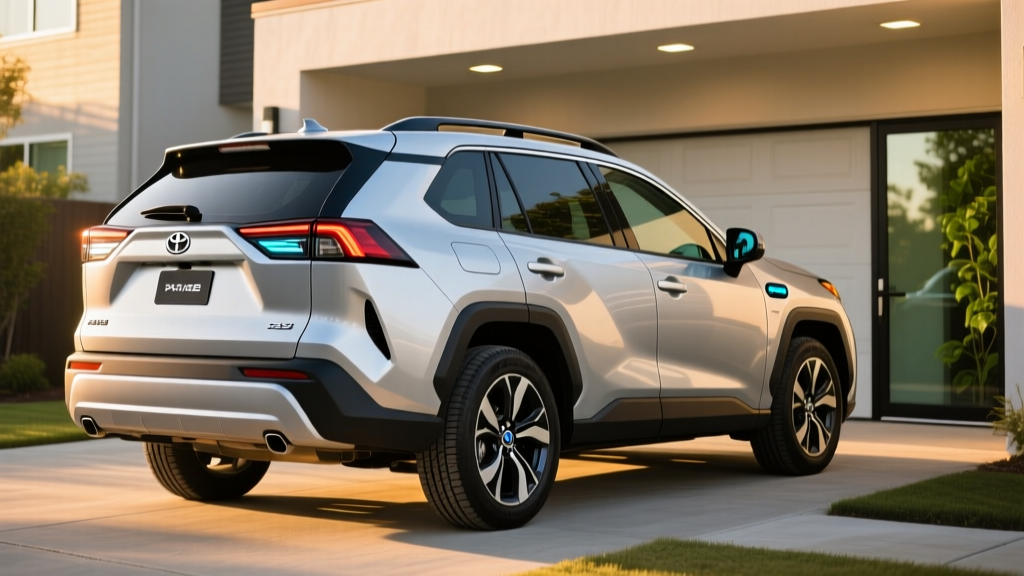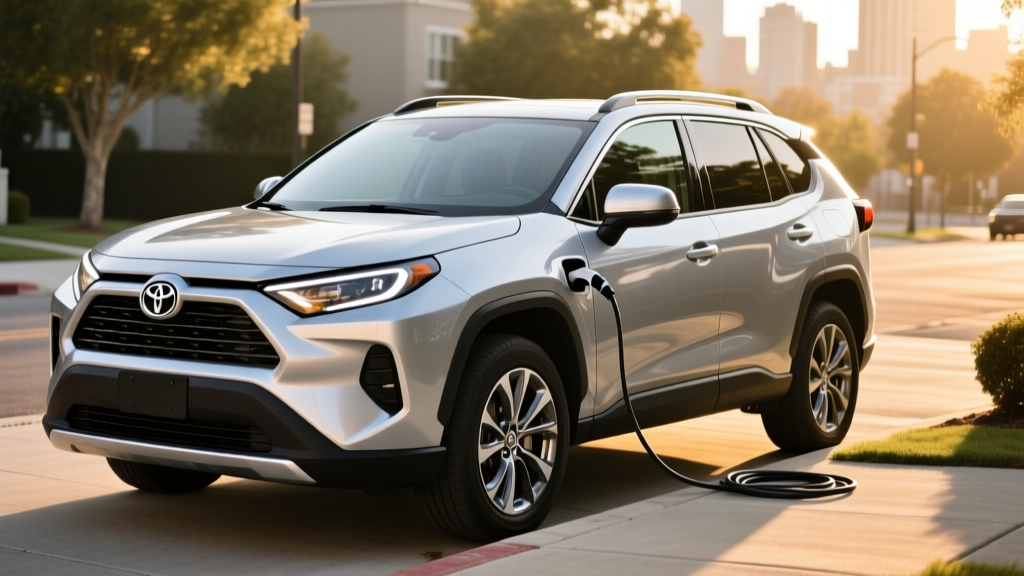
The 2025 RAV4 XLE Hybrid at a Glance
The Toyota RAV4 Hybrid has held the top spot among non-plug-in hybrid SUVs for years, and the 2025 model year keeps that formula intact. The XLE trim sits in the sweet spot of the lineup — adding features like a power-adjustable driver's seat, dual-zone climate control, and a 7-inch touchscreen over the base LE, without the premium price jump to the Limited or Woodland Edition.
For buyers weighing the 2025 RAV4 XLE Hybrid against a full EV or a conventional gas crossover, the appeal is straightforward: 39 MPG combined with no plug, no range anxiety, and a starting MSRP of $34,725 (including destination). Let's break down exactly what you're getting.
| Spec | Value |
|---|---|
| EPA Fuel Economy (City / Hwy / Combined) | 41 / 38 / 39 MPG |
| Powertrain | 2.5L 4-cyl + 3 electric motors (AWD-i) |
| Combined Horsepower | 219 hp |
| Drivetrain | Electronic AWD (standard) |
| Hybrid Battery | 1.6 kWh NiMH (sealed, self-charging) |
| 0–60 mph | ~7.4 seconds |
| Cargo Volume (behind rear seats) | 37.6 cu ft |
| Starting MSRP (XLE trim) | $34,725 |
| Federal Tax Credit | Not eligible (§30D applies to PHEVs/BEVs only) |
| Hybrid Battery Warranty | 10 years / 150,000 miles |
Fuel Economy: EPA Numbers vs. Real-World MPG
The EPA rates the 2025 RAV4 Hybrid at 41 MPG city, 38 MPG highway, and 39 MPG combined. Those numbers apply across all RAV4 Hybrid trims with the AWD-i drivetrain, including the XLE.
Real-world results vary based on driving conditions, but the RAV4 Hybrid has a well-documented tendency to exceed its EPA city rating in stop-and-go traffic. That's because Toyota's series-parallel hybrid system relies heavily on the electric motors at low speeds, with the gas engine shutting off frequently. Owners who drive predominantly in urban and suburban conditions commonly report 42–45 MPG on the dashboard computer.
Highway driving tells a different story. At sustained speeds above 70 mph, aerodynamic drag reduces the hybrid advantage, and real-world highway fuel economy tends to land between 34–37 MPG. Cold weather further impacts efficiency — expect a 5–10% drop in combined MPG during winter months, as the engine runs more often to provide cabin heat and maintain battery temperature.
| Condition | City MPG | Highway MPG | Combined MPG |
|---|---|---|---|
| EPA Estimate | 41 | 38 | 39 |
| Real-World (Suburban/City) | 42–45 | — | 40–44 |
| Real-World (Highway 70+ mph) | — | 34–37 | 34–37 |
| Cold Weather (below 35°F) | 37–40 | 33–36 | 35–37 |
HEV vs. PHEV: Understanding the RAV4 Hybrid Lineup
Toyota sells the RAV4 in two electrified flavors, and the distinction matters for your wallet and your routine:
RAV4 Hybrid (HEV)
- No plug required — charges itself via regenerative braking and the gas engine
- 1.6 kWh battery (small, lightweight)
- 39 MPG combined at all times
- No electric-only driving range
- Starts at $34,725 (XLE)
- No federal tax credit
RAV4 Prime (PHEV)
- Plug-in capable — charges from a wall outlet or public charger
- 18.1 kWh battery (larger, heavier)
- 42 miles electric-only, then 38 MPG combined as hybrid
- 302 hp combined (significantly more powerful)
- Starts at ~$44,515 (SE trim)
- May qualify for federal §30D credit (subject to income, sourcing rules)
The 2025 RAV4 XLE Hybrid is the conventional HEV. You never plug it in. The gasoline engine and regenerative braking keep the small hybrid battery charged. If you want electric-only driving and the ability to charge at home, you're looking at the RAV4 Prime — a different vehicle with a higher price and different trim structure.
Powertrain and Performance
The 2025 RAV4 Hybrid uses Toyota's fourth-generation hybrid system paired with a 2.5-liter Dynamic Force four-cylinder engine. Here's the powertrain breakdown:
- Gas engine: 2.5L inline-4, 176 hp / 163 lb-ft torque
- Front electric motor: 118 hp / 149 lb-ft
- Rear electric motor (AWD-i): 54 hp / 89 lb-ft
- Net combined output: 219 hp
- Transmission: eCVT (electronically controlled continuously variable)
The rear motor gives the RAV4 Hybrid standard electronic all-wheel drive — it engages automatically when the system detects front-wheel slip or when extra traction is needed. Unlike mechanical AWD systems, there's no driveshaft connecting the axles; the rear motor is independently controlled.
The 0–60 mph time of approximately 7.4 seconds puts it ahead of the gas-only RAV4 (which runs closer to 8.7 seconds) and makes highway merging confident. The eCVT is smooth but can produce the characteristic "rubber band" drone under hard acceleration — a trait common to Toyota hybrids. In normal driving, the transitions between electric and gas power are nearly imperceptible.
Pricing, Trims, and Tax Credit Eligibility
The 2025 RAV4 XLE Hybrid starts at $34,725 including the $1,395 destination charge. Popular options that push the price higher include:
- Convenience Package (power liftgate, tonneau cover): ~$835
- Weather Package (heated seats, heated steering wheel): ~$915
- Technology Package (JBL audio, 9-inch touchscreen): ~$1,235
A well-equipped XLE Hybrid typically lands between $36,000 and $38,000 before dealer adjustments.
Battery Reliability, Warranty, and Replacement Cost
Toyota's hybrid battery reliability record is among the best in the industry. The RAV4 Hybrid uses a nickel-metal hydride (NiMH) battery pack — a mature, well-understood chemistry that Toyota has refined since the original Prius in 1997. Unlike the lithium-ion packs in full EVs, the RAV4's 1.6 kWh NiMH pack operates within a narrow state-of-charge window (roughly 40–80%), managed by the vehicle's computer to minimize degradation.
Based on long-term ownership data and fleet reports, RAV4 Hybrid batteries routinely last 150,000–200,000+ miles before any capacity loss becomes noticeable. Complete failure within the warranty period is uncommon but does happen — and Toyota replaces it at no cost.
If you do need a replacement outside warranty, the cost for a new OEM hybrid battery pack runs approximately $2,500–$4,000 including labor at a Toyota dealership. Refurbished or reconditioned packs from third-party suppliers can bring that down to $1,500–$2,500. This is dramatically less than a full EV battery replacement, which can exceed $10,000–$15,000.
Who Should Choose the 2025 RAV4 XLE Hybrid?
Choose the RAV4 Hybrid if:
- You want maximum MPG with zero lifestyle changes (no charging, no plugs)
- You live in an apartment or lack home charging access
- Your budget is $34K–$38K and you need a practical AWD crossover
- You take frequent long road trips and don't want to plan around chargers
- You plan to keep the vehicle 8–12 years and want proven hybrid reliability
Look at a PHEV or EV instead if:
- You have home charging and want electric-only daily commuting (consider the RAV4 Prime)
- You want to qualify for the $7,500 federal tax credit (requires a PHEV or BEV)
- You prioritize acceleration — the RAV4 Prime does 0–60 in 5.7 seconds vs. 7.4 here
- Your daily commute is under 40 miles and you want zero gas use on weekdays
- You want one-pedal driving or full EV silence
The RAV4 XLE Hybrid occupies a specific niche: it's the highest-efficiency option for buyers who aren't ready or able to plug in. Compared to the gas-only RAV4 (27 MPG combined), the hybrid saves roughly $500–$700 per year in fuel costs at 15,000 miles driven annually and $3.50/gallon gas. That fuel savings pays back the hybrid's modest price premium over the gas model within 2–3 years.
Pros and Cons
Pros
- 39 MPG combined — often exceeds EPA city rating in real driving
- Standard AWD across all hybrid trims
- 10-year/150,000-mile hybrid battery warranty
- Smooth, quiet hybrid transitions in daily driving
- Strong resale value (RAV4 Hybrid consistently leads its segment)
- Practical cargo space (37.6 cu ft) with no battery intrusion
Cons
- No federal tax credit eligibility (HEV, not PHEV)
- eCVT drone under hard acceleration
- Highway MPG drops noticeably above 70 mph
- 7-inch touchscreen in XLE feels dated vs. competitors
- No spare tire — uses a tire repair kit
- Dealer markups still common in high-demand markets
Frequently Asked Questions
How many MPG does the 2025 RAV4 XLE Hybrid get?
The EPA rates it at 41 city / 38 highway / 39 combined MPG. In real-world suburban driving, owners commonly see 40–44 MPG combined. Highway-heavy driving at 70+ mph typically yields 34–37 MPG.
Does the RAV4 Hybrid need to be plugged in?
No. The RAV4 Hybrid is a conventional hybrid (HEV). It charges its own battery through regenerative braking and the gasoline engine. You simply fill it with gas like any other car. If you want a RAV4 that plugs in, you need the RAV4 Prime (PHEV).
Is the RAV4 Hybrid reliable? What about battery replacement?
Toyota's hybrid system is one of the most proven in the industry. The hybrid battery is covered for 10 years / 150,000 miles. Real-world data shows these batteries commonly last 150,000–200,000+ miles. If replacement is needed outside warranty, expect $2,500–$4,000 for a new OEM pack — far less than an EV battery swap.
Does the 2025 RAV4 Hybrid qualify for any tax credit?
No federal tax credit applies to conventional hybrids. The IRS §30D Clean Vehicle Credit requires plug-in capability and a minimum battery capacity that the RAV4 Hybrid does not meet. Some state or utility programs may offer small hybrid rebates — check your local jurisdiction. The RAV4 Prime (PHEV) may qualify for up to $7,500 federally, subject to IRS eligibility rules.
How does the RAV4 Hybrid compare to the RAV4 Prime?
The RAV4 Prime (PHEV) offers 42 miles of electric-only range, 302 hp, and potential federal tax credit eligibility — but starts around $44,515, roughly $10,000 more than the XLE Hybrid. If you can charge at home and your commute is under 42 miles, the Prime can run months without using gas. If you lack charging access or want a lower purchase price, the Hybrid is the better fit.
What is the towing capacity of the RAV4 Hybrid?
The 2025 RAV4 Hybrid is rated to tow up to 1,750 pounds — adequate for a small utility trailer or a pair of jet skis, but not suitable for most campers or boat trailers. If you need more towing capacity, the gas-only RAV4 Adventure trim is rated for 3,500 pounds.