Quick Verdict: The RAV4 Hybrid XLE Premium in 2025
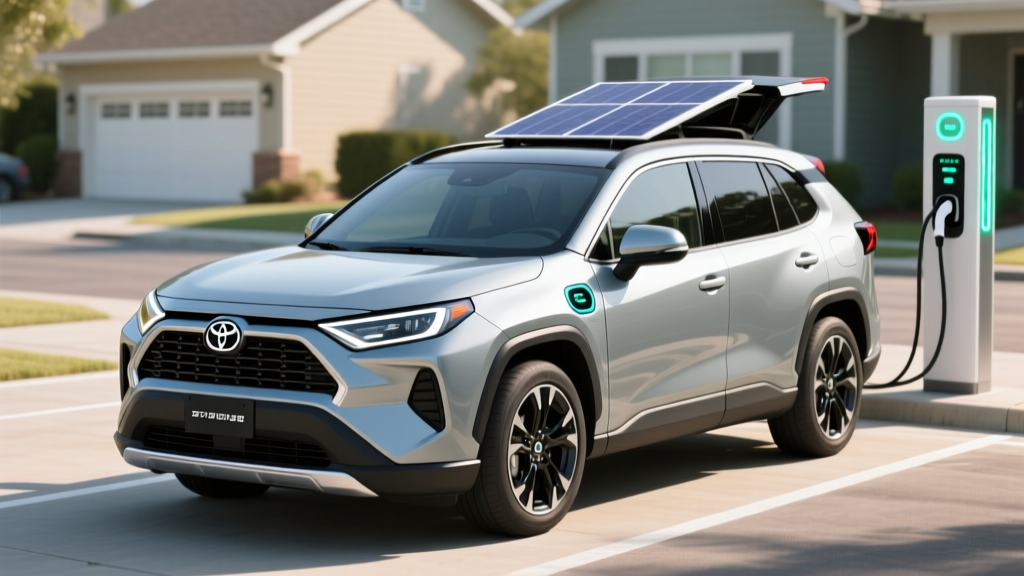
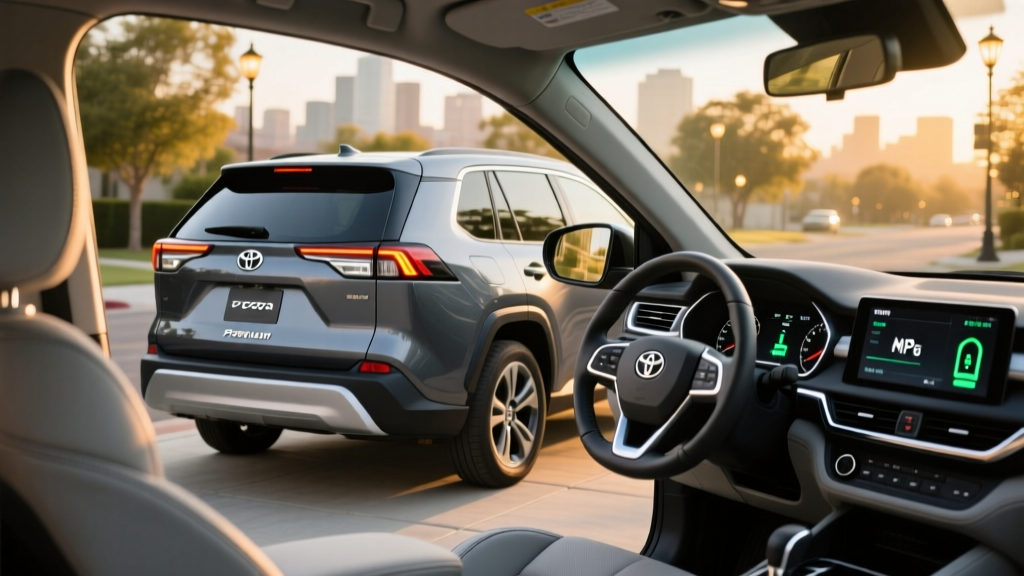
The 2025 Toyota RAV4 Hybrid XLE Premium sits in the sweet spot of Toyota's hybrid SUV lineup. It pairs the proven 219-horsepower hybrid powertrain with the XLE's upgraded interior — SofTex seats, a power liftgate, and the 10.5-inch Toyota Audio Multimedia touchscreen — without pushing into RAV4 Prime (PHEV) pricing. If you want a compact hybrid SUV that never needs plugging in, delivers consistent 37–41 MPG in real-world driving, and costs roughly $5,000–$8,000 less than the plug-in RAV4 Prime, this trim earns its spot on the shortlist.
But the RAV4 Hybrid family also includes the RAV4 Prime plug-in hybrid (PHEV), which offers 42 miles of electric-only range and qualifies for federal tax credits the conventional hybrid does not. This guide breaks down exactly what the XLE Premium delivers, how it compares to the PHEV, and whether a full EV might serve you better.
HEV vs PHEV: Which RAV4 Hybrid Are We Talking About?
Toyota sells two fundamentally different electrified RAV4 models, and the distinction matters for your wallet and daily routine:
| Feature | RAV4 Hybrid (HEV) | RAV4 Prime (PHEV) |
|---|---|---|
| Powertrain type | Conventional hybrid — no plug | Plug-in hybrid — charges via outlet or station |
| Combined horsepower | 219 hp | 302 hp |
| Battery capacity | ~1.6 kWh (NiMH, self-charging) | 18.1 kWh usable (lithium-ion) |
| Electric-only range | Not applicable (motor assists engine) | 42 miles (EPA) |
| EPA combined MPG / MPGe | 39 MPG | 94 MPGe (electric) / 38 MPG (gas-only) |
| Needs to plug in? | No — regenerative braking recharges | Yes, for EV range; runs on gas if not charged |
| Federal tax credit (§30D) | Not eligible | Up to $7,500 (subject to eligibility rules) |
| Starting MSRP (2025) | ~$31,900 (LE base) | ~$43,690 (SE base) |
The 2025 Toyota RAV4 Hybrid XLE Premium is the conventional HEV. It recovers energy through regenerative braking and the gasoline engine — you never plug it in. The RAV4 Prime is the PHEV variant with a larger battery, a charge port, and the ability to drive 42 miles on electricity alone before the gas engine takes over.
Fuel Economy: EPA Ratings and Real-World MPG
The 2025 RAV4 Hybrid (all trims including the XLE Premium) carries the same EPA fuel-economy ratings thanks to the shared powertrain and AWD-i all-wheel-drive system:
| Driving Cycle | EPA Rating | Real-World Expectation |
|---|---|---|
| City | 41 MPG | 40–44 MPG (hybrids excel in stop-and-go) |
| Highway | 38 MPG | 34–38 MPG (sustained 70+ mph reduces regen benefit) |
| Combined | 39 MPG | 37–41 MPG depending on driving mix |
Why real-world often beats EPA in the city: Toyota's hybrid system shuts off the 2.5-liter four-cylinder engine at low speeds and in stop-and-go traffic, relying on the electric motor. Every brake application recovers kinetic energy back into the small traction battery. On a 10-mile urban commute with traffic lights, owners routinely report 42–44 MPG. Highway driving is the opposite: the gasoline engine runs continuously at steady speed, and aerodynamic drag dominates. Expect 34–36 MPG at 75 mph on the interstate.
Cold-weather impact: In freezing temperatures (below 32°F), expect a 5–10% MPG reduction. The engine runs more often to generate cabin heat and keep the catalytic converter warm. This is far less severe than EV range loss in cold weather (typically 20–30%), making the HEV a practical choice in northern climates.
Source: EPA Fuel Economy — 2025 Toyota RAV4 Hybrid AWD
Powertrain and Performance Specs
| Specification | 2025 RAV4 Hybrid XLE Premium |
|---|---|
| Engine | 2.5L Dynamic Force 4-cylinder (176 hp / 163 lb-ft) |
| Front electric motor | 118 hp / 149 lb-ft |
| Rear electric motor (AWD-i) | 54 hp / 89 lb-ft |
| Net combined horsepower | 219 hp |
| Transmission | Electronic Continuously Variable (eCVT) |
| Drivetrain | Electronic On-Demand AWD |
| 0–60 mph | 7.4 seconds |
| Towing capacity | 1,750 lbs |
| Fuel tank | 14.5 gallons |
| Total driving range | ~565 miles (EPA combined) |
| Battery type | Nickel-Metal Hydride (NiMH), ~1.6 kWh |
The 219-hp combined output makes the RAV4 Hybrid noticeably quicker than most naturally aspirated compact SUVs. The eCVT is smooth — there are no shift shocks — but it produces the characteristic "rubber-band" drone under hard acceleration. For merging and passing, the instant electric-motor torque fills in before the engine revs build, which is the hybrid system's biggest drivability advantage over turbocharged gas engines with turbo lag.
The AWD-i system uses the rear electric motor to send torque to the rear wheels when slip is detected or during cornering. It is not a rugged off-road system, but it handles rain, light snow, and gravel roads confidently. The 1,750-lb towing capacity covers a small utility trailer but not a boat or camper — if you need more, the gas-only RAV4 Adventure trim tows up to 3,500 lbs.
XLE Premium Trim: What You Get for the Money
The XLE Premium sits above the XLE and below the Limited in the 2025 RAV4 Hybrid lineup. Key additions over the standard XLE include:
- SofTex synthetic leather upholstery
- Power-adjustable front seats
- Power liftgate with height adjustment
- Silver-painted roof rails
- 18-inch alloy wheels (specific design)
- 10.5-inch Toyota Audio Multimedia touchscreen with wireless Apple CarPlay and Android Auto
- Wireless charging pad
- Toyota Safety Sense 2.5+ (pre-collision, lane tracing, adaptive cruise, blind-spot monitor)
2025 MSRP (estimated): The RAV4 Hybrid XLE Premium starts around $36,300 including destination charge. Adding packages like the Weather Package (heated steering wheel, heated front seats, rain-sensing wipers) or the Technology Package (panoramic view monitor, front and rear parking assist with automatic braking) can push the sticker to $38,000–$39,500.
Tax Credit Eligibility: What the RAV4 Hybrid Does (and Doesn't) Qualify For
The conventional RAV4 Hybrid (HEV) does not qualify for the federal §30D Clean Vehicle Credit. That credit applies only to plug-in electric vehicles (BEVs and PHEVs) that meet battery-sourcing, critical-mineral, MSRP, and buyer-income requirements under current IRS rules.
Federal §30D credit applies to the RAV4 Prime (PHEV), not the RAV4 Hybrid (HEV):
- Vehicle must have a plug and minimum 7 kWh battery capacity — RAV4 Hybrid has ~1.6 kWh and no plug
- MSRP must be under $80,000 for SUVs — both RAV4 variants qualify on price
- Buyer AGI must not exceed $150,000 (single) / $300,000 (joint) / $225,000 (head of household)
- Battery components and critical minerals must meet phased-in domestic-sourcing percentages
- Credit is up to $7,500 and can be transferred to the dealer as a point-of-sale discount
Source: IRS Clean Vehicle Tax Credits
State and local incentives: Some states offer separate rebates or HOV-lane access for conventional hybrids, but these vary widely by jurisdiction and change frequently. Check your state energy office or department of environmental quality for current programs. A tax professional can confirm your eligibility for any credits.
Battery Warranty, Lifespan, and Replacement Cost
2025 Toyota Hybrid Battery Warranty:
- Coverage: 10 years / 150,000 miles (whichever comes first) in all 50 states
- What's covered: Defects and capacity loss below a specified threshold
- Hybrid system components: Inverter, control module, and electric motors also covered under the 8-year/100,000-mile hybrid system warranty
How long do Toyota hybrid batteries actually last? Toyota's hybrid NiMH batteries have an exceptional longevity track record. Data from fleet operators and long-term owners shows most RAV4 Hybrid batteries retain 85–90%+ capacity at 150,000 miles. Failures before 200,000 miles are uncommon. The Prius, which uses similar chemistry, has documented cases of original batteries exceeding 300,000 miles.
The small (~1.6 kWh) NiMH battery in the RAV4 Hybrid operates within a narrow state-of-charge window — the system never fully charges or fully depletes it, which dramatically reduces stress and slows degradation. This is fundamentally different from a full EV battery that cycles through a much wider range daily.
Replacement cost if out of warranty: A new OEM hybrid battery pack for the RAV4 Hybrid typically costs $2,000–$4,000 including labor at a Toyota dealer. Refurbished or reconditioned packs from third-party suppliers run $1,000–$2,500. This is a fraction of full-EV battery replacement costs ($8,000–$20,000+) and comparable to a major gas-car repair like a transmission rebuild.
RAV4 Hybrid vs RAV4 Prime vs Full EV: Which Fits You?
Choose the RAV4 Hybrid (HEV, including XLE Premium) if:
- You cannot charge at home (apartment, street parking, no garage outlet access)
- You want maximum simplicity — no plug, no charging apps, no route planning around chargers
- Your budget is $35,000–$40,000 and you don't want to stretch to PHEV pricing
- You drive a mix of city and highway and want consistent 37–41 MPG everywhere
- You live in a cold climate where EV range loss is a concern
Choose the RAV4 Prime (PHEV) if:
- You can install a Level 2 home charger and your daily commute is under 40 miles
- You want to drive on electricity most days but take gas-free road trips without range anxiety
- You qualify for the up-to-$7,500 federal tax credit (check IRS income and sourcing rules)
- You want the performance upgrade — 302 hp and a 5.7-second 0–60 time
- You can absorb the higher MSRP (~$43,690 starting) even after the credit
Choose a full EV (like the Toyota bZ4X, Hyundai Ioniq 5, or Tesla Model Y) if:
- You have reliable home Level 2 charging and your daily driving is under 250 miles
- You want zero tailpipe emissions and the lowest per-mile fuel cost
- You're ready to plan road trips around DC fast-charging stops
- You want the lowest long-term maintenance cost (no engine oil, spark plugs, or exhaust system)
Reliability, Safety, and Ownership Costs
Toyota's hybrid system is one of the most proven in the industry, with over 25 years of continuous refinement since the original Prius. The RAV4 Hybrid shares its powertrain architecture with the Camry Hybrid and Highlander Hybrid, benefiting from massive production volume and iterative reliability improvements.
Safety ratings: The 2025 RAV4 (including Hybrid variants) earned the IIHS Top Safety Pick+ designation when equipped with specific headlights, and it carries a 5-Star Overall rating from NHTSA. Toyota Safety Sense 2.5+ is standard on all trims and includes full-speed adaptive cruise control, lane departure alert with steering assist, automatic high beams, and road sign assist.
Estimated 5-year ownership cost advantage vs. gas-only RAV4: At 15,000 miles per year, $3.40/gallon regular unleaded, the RAV4 Hybrid (39 MPG combined) uses roughly 577 gallons per year ($1,962) vs. the gas RAV4 AWD (30 MPG combined) at 500 gallons ($1,700) — wait, the hybrid saves about $400–$600 per year in fuel depending on your local gas prices and driving mix. Over five years, that's $2,000–$3,000 in fuel savings, which largely offsets the hybrid's ~$1,500–$2,000 price premium over the gas model.
Insurance: RAV4 Hybrid insurance premiums are typically within 3–5% of the gas model — not the 10–20% premium some full EVs carry. Get quotes from your insurer before purchasing, as rates vary by ZIP code and driving history.
Source: IIHS — 2025 Toyota RAV4 Safety Ratings
Pros and Cons: 2025 RAV4 Hybrid XLE Premium
Pros
- Consistent 37–41 MPG real-world with no behavior change required
- No plug-in charging needed — ideal for apartment dwellers and street parkers
- Strong reliability record; 10-year/150,000-mile hybrid battery warranty
- Smooth, responsive 219-hp hybrid powertrain with standard AWD
- XLE Premium adds meaningful comfort upgrades at a reasonable price point
- Low battery replacement cost ($2,000–$4,000) if ever needed out of warranty
- Toyota Safety Sense 2.5+ standard on all trims
Cons
- No federal tax credit eligibility (HEV, not PHEV)
- eCVT drone under hard acceleration — not sporty
- 1,750-lb towing capacity is low for the segment
- XLE Premium lacks the ventilated seats and premium audio of the Limited trim
- Infotainment system functional but not class-leading in graphics or responsiveness
- Rear cargo space slightly reduced vs. gas RAV4 due to hybrid battery placement (~37.5 cu ft vs. ~37.6 cu ft — negligible but measurable)
Frequently Asked Questions
How many MPG does the 2025 RAV4 Hybrid XLE Premium get?
The EPA rates it at 41 city / 38 highway / 39 combined MPG. In real-world driving, city-heavy commuters often see 40–44 MPG, while sustained highway driving at 75+ mph drops to 34–38 MPG. Cold weather reduces economy by roughly 5–10%.
Does the RAV4 Hybrid need to be plugged in?
No. The RAV4 Hybrid is a conventional hybrid (HEV). Its small battery recharges through regenerative braking and the gasoline engine. You fuel it like any other car — with gasoline at a gas station. Only the RAV4 Prime (PHEV variant) has a plug and can charge from an outlet.
Does the 2025 RAV4 Hybrid XLE Premium qualify for any tax credit?
It does not qualify for the federal §30D Clean Vehicle Credit, which requires a plug-in vehicle with at least 7 kWh of battery capacity. The RAV4 Hybrid has approximately 1.6 kWh and no charge port. Some states may offer separate hybrid incentives — check your state energy office. The RAV4 Prime PHEV may qualify for up to $7,500 federally, subject to income, MSRP, and battery-sourcing rules.
How reliable is the RAV4 Hybrid, and what does a battery replacement cost?
Toyota's hybrid system has a 25+ year track record. The hybrid battery is covered for 10 years / 150,000 miles. Most batteries last well beyond 200,000 miles based on fleet and long-term owner data. If replacement is needed out of warranty, expect $2,000–$4,000 for an OEM pack at a dealer, or $1,000–$2,500 for a refurbished unit.
Should I get the RAV4 Hybrid or the RAV4 Prime PHEV?
Choose the Hybrid if you can't charge at home, want a lower purchase price ($36,300 vs. $43,690+), and are satisfied with 39 MPG everywhere. Choose the Prime if you have home charging, your commute is under 42 miles (so you can drive on electricity daily), you qualify for the federal tax credit, and you want 302 hp. The credit can narrow the price gap substantially.
What's the difference between the XLE and XLE Premium trims?
The XLE Premium adds SofTex synthetic leather seats, power-adjustable front seats, a power liftgate, silver roof rails, and an upgraded wheel design over the standard XLE. Both share the same hybrid powertrain, 10.5-inch touchscreen, and Toyota Safety Sense 2.5+ suite. The XLE Premium typically costs $1,500–$2,000 more than the standard XLE.
How does the RAV4 Hybrid compare to a full EV like the Tesla Model Y?
The Model Y offers 300+ miles of range, zero tailpipe emissions, and lower per-mile fuel cost (electricity vs. gas). But it requires home charging access, costs $44,000+ before incentives, and demands road-trip planning around DC fast chargers. The RAV4 Hybrid costs less upfront, needs no charging infrastructure, and eliminates range anxiety entirely — at the trade-off of still burning gasoline and having higher per-mile fuel costs than electric.