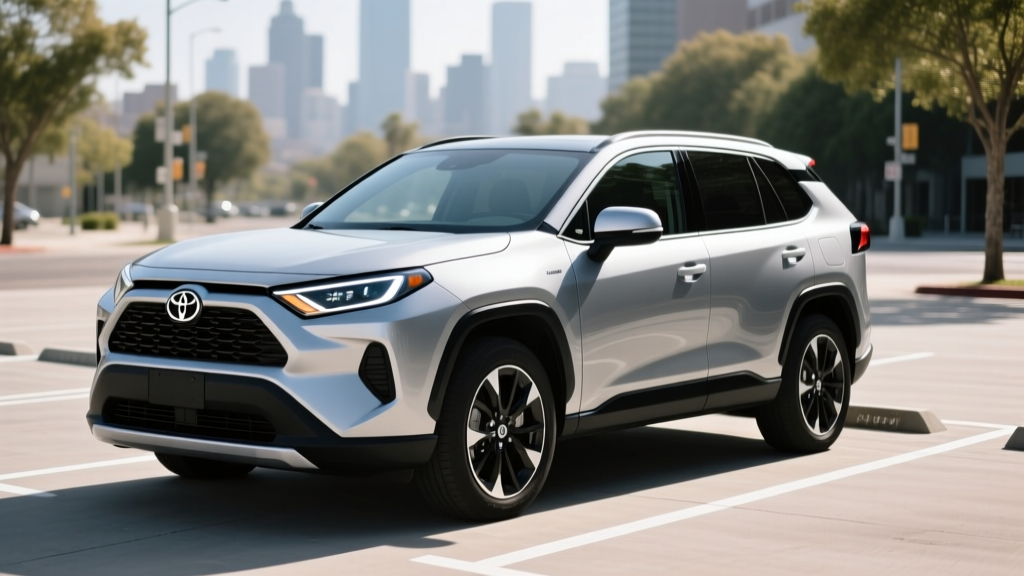
The Toyota RAV4 Hybrid remains one of the best-selling electrified vehicles in America, and for good reason: it delivers genuine fuel savings without requiring any change to your daily routine. No plugs, no charging apps, no range anxiety. Among its trims, the XLE sits in the sweet spot — offering a meaningful step up in features from the base LE without the premium price of the Woodland Edition or Limited. If you've been searching for the 2025 Toyota RAV4 Hybrid XLE MSRP and official Toyota specs, this guide consolidates everything you need to make an informed purchase decision.
Official 2025 RAV4 Hybrid XLE Pricing and Trim Breakdown
For the 2025 model year, Toyota has kept the RAV4 Hybrid lineup competitive despite rising vehicle costs across the industry. Below is the MSRP structure for the RAV4 Hybrid trims, with destination charges included as listed by Toyota:
| Trim | MSRP (incl. destination) | Key Additions Over Lower Trim |
|---|---|---|
| LE (base) | $33,595 | AWD, TSS 2.5, 8" touchscreen, LED headlights |
| XLE | $35,095 | Blind-spot monitor, dual-zone climate, smart key, alloy wheels |
| XLE Premium | $37,595 | SofTex seats, moonroof, power liftgate |
| SE | $37,995 | Sport-tuned suspension, 19" wheels, paddle shifters |
| Woodland Edition | $38,490 | TRD-tuned suspension, all-terrain tires, roof rack |
| Limited | $41,095 | Panoramic moonroof, 12.3" digital cluster, JBL audio |
The XLE at $35,095 represents the strongest value proposition in the lineup. You get Toyota Safety Sense 2.5, all-wheel drive as standard (all RAV4 Hybrids are AWD — Toyota uses a rear-mounted electric motor for the back axle), blind-spot monitoring with rear cross-traffic alert, and smart key with push-button start. For most buyers, the XLE avoids the compromises of the base LE without paying for luxury features that don't move the needle on daily driving.
Fuel Economy: EPA Ratings and Real-World MPG
The 2025 RAV4 Hybrid carries the same proven powertrain Toyota has refined since the fourth-generation model. The EPA rates it as follows:
| Driving Cycle | EPA Estimate | Real-World Expectation |
|---|---|---|
| City | 41 MPG | 42–45 MPG (hybrids excel in stop-and-go) |
| Highway | 38 MPG | 34–37 MPG (aerodynamic drag at 70+ mph) |
| Combined | 39 MPG | 37–41 MPG (varies with driving mix) |
The critical insight for hybrid buyers: hybrids typically beat their EPA city rating in real-world driving and fall slightly short on the highway. This is the opposite of gas-only vehicles. Toyota's hybrid system recovers energy through regenerative braking, meaning heavy traffic and frequent stops actually improve your city MPG. Owners who do predominantly urban and suburban driving regularly report 42–45 MPG on the EPA's fuel economy site and in owner forums.
Highway efficiency drops because the electric motor assists less at sustained high speeds, and the RAV4's boxy crossover shape creates aerodynamic drag that the 2.5-liter Atkinson-cycle engine must overcome largely on its own. Expect 34–37 MPG on flat interstate driving at 70–75 mph, and somewhat less in mountainous terrain or when fully loaded with cargo.
Powertrain Specs: Engine, Motors, and Total Output
The 2025 RAV4 Hybrid uses Toyota's fifth-generation hybrid system, pairing a naturally aspirated 2.5-liter four-cylinder engine with three electric motors (two front, one rear). Here are the exact numbers:
| Specification | Value |
|---|---|
| Engine | 2.5L 4-cylinder Atkinson-cycle |
| Engine Horsepower | 176 hp @ 5,700 rpm |
| Front Motor Output | 118 hp (88 kW) |
| Rear Motor Output (AWD) | 54 hp (40 kW) |
| Net Combined System HP | 219 hp |
| Transmission | eCVT (planetary gearset, not belt-driven) |
| Drivetrain | Electronic On-Demand AWD (standard) |
| 0–60 mph | 7.4 seconds |
| Towing Capacity | 1,750 lbs |
That 219 combined horsepower gives the RAV4 Hybrid respectable acceleration — 7.4 seconds to 60 mph is adequate for merging and passing, and it feels quicker than the number suggests thanks to instant electric motor torque at low speeds. The eCVT is Toyota's proven planetary gearset design, not the rubber-band-feeling belt CVTs found in some competitors. It's smooth, reliable, and essentially maintenance-free.
The electronic AWD system deserves special mention. There's no mechanical driveshaft connecting the front and rear axles. Instead, the rear electric motor engages automatically when the system detects front-wheel slip, providing confident traction in rain and light snow. This is standard on every RAV4 Hybrid trim — there's no FWD-only version.
Hybrid (HEV) vs. Plug-In Hybrid (PHEV): Which RAV4 Is Right for You?
Toyota sells two electrified RAV4 variants, and buyers frequently confuse them. Here's the critical distinction:
| Feature | RAV4 Hybrid (HEV) | RAV4 Prime (PHEV) |
|---|---|---|
| Plugs in to charge? | No — self-charging via regen + engine | Yes — 18.1 kWh battery, plug-in capable |
| Electric-only range | ~1 mile at low speed (EV mode) | 42 miles EPA electric-only |
| Combined system HP | 219 hp | 302 hp |
| EPA Combined MPG | 39 MPG | 38 MPG (hybrid mode) / 94 MPGe (with charge) |
| Starting MSRP | $33,595 | $44,590 |
| Federal tax credit | Not eligible (§30D) | Not eligible (credit phased out for Toyota) |
| Best for | Apartment dwellers, no home charging access | Homeowners with garage outlet, short commutes |
The RAV4 Hybrid (HEV) is a conventional hybrid. It never needs to be plugged in. The small traction battery recharges through regenerative braking and the gasoline engine. You simply fill up at a gas station and drive — exactly like a conventional car, but with 35–40% better fuel economy.
The RAV4 Prime is a plug-in hybrid (PHEV) with a larger 18.1 kWh battery that provides 42 miles of electric-only driving before the gasoline engine kicks in. If your commute is under 40 miles round-trip and you can charge at home (even a standard 120V outlet works, though slowly), the Prime can function as a daily EV while retaining full gas-engine range for road trips. However, the Prime starts nearly $11,000 higher and Toyota's federal tax credit eligibility has been exhausted under current IRS §30D rules.
Battery Warranty, Lifespan, and Replacement Costs
Hybrid battery longevity is the single most common concern among first-time hybrid buyers. Toyota addresses this with one of the strongest hybrid battery warranties in the industry:
2025 RAV4 Hybrid Battery Coverage
- Hybrid battery warranty: 10 years / 150,000 miles (whichever comes first)
- Hybrid system components: 8 years / 100,000 miles (inverter, motors, control module)
- Transferable: Yes — warranty transfers to subsequent owners automatically
- Coverage threshold: Battery capacity loss that causes measurable fuel economy decline or triggers a diagnostic code
In practice, Toyota hybrid batteries have demonstrated exceptional longevity. Data from fleet operators and long-term owners shows that the nickel-metal hydride (NiMH) battery pack in the RAV4 Hybrid typically retains 85–90% of its original capacity at 150,000 miles. Complete failures before 200,000 miles are uncommon. Toyota's hybrid system is deliberately conservative — it never fully charges or fully depletes the battery, keeping it in a 40–80% state-of-charge window that dramatically extends cell life.
If replacement is eventually needed out of warranty, a new OEM RAV4 Hybrid battery from Toyota currently costs between $3,000 and $4,500 including installation at a dealership. Refurbished and aftermarket options are available for $1,500–$2,500. Given the 10-year/150,000-mile warranty, most owners will never face this expense during their ownership period.
Who Should Buy the RAV4 Hybrid XLE — and Who Shouldn't
Strengths
- 39 MPG combined with no behavioral changes required
- Standard AWD with no fuel economy penalty vs. FWD competitors
- 10-year/150,000-mile hybrid battery warranty
- Strong resale value — RAV4 Hybrids hold value better than most EVs
- Proven reliability track record with millions of Toyota hybrids on the road
- No charging infrastructure dependency
Limitations
- No federal tax credit eligibility (HEVs excluded from §30D)
- eCVT drone under hard acceleration (common to all Toyota hybrids)
- 1,750-lb towing capacity is modest for the class
- Cabin noise at highway speeds above 70 mph
- No DC fast charging (not applicable — it's an HEV, not a PHEV)
- Infotainment system is functional but not class-leading
Choose the RAV4 Hybrid XLE if: You want maximum fuel savings with zero lifestyle compromise. You live in an apartment or don't have access to home charging. Your daily driving involves a mix of city, suburban, and highway miles. You plan to keep the vehicle 8+ years and want Toyota's legendary reliability.
Consider a full EV instead if: You have reliable Level 2 home charging, drive under 250 miles daily, want to eliminate gas station visits entirely, and are motivated by lower per-mile energy costs (electricity at $0.14/kWh costs roughly $0.04/mile in an efficient EV vs. $0.10/mile in the RAV4 Hybrid at $3.50/gallon).
Stick with a gas-only SUV if: You drive fewer than 8,000 miles per year (the hybrid premium won't pay back), you regularly tow over 2,000 lbs, or you're shopping in the used market where gas-only RAV4s are significantly cheaper.
Ownership Economics: 5-Year Cost Projection
| Cost Factor | RAV4 Hybrid XLE | RAV4 Gas (LE AWD) | Difference |
|---|---|---|---|
| MSRP | $35,095 | $32,195 | +$2,900 |
| Fuel (15,000 mi/yr × 5 yrs, $3.50/gal) | $6,730 | $9,375 | −$2,645 |
| Maintenance (5 yrs estimated) | $2,800 | $3,200 | −$400 |
| Estimated resale value (5 yrs) | $22,500 | $18,000 | +$4,500 |
| Net 5-Year Cost | $22,125 | $26,770 | Saves $4,645 |
The RAV4 Hybrid XLE pays for its premium within roughly 3 years through fuel savings alone, and the stronger resale value widens the gap further. This analysis doesn't include potential state incentives — some states offer rebates for hybrid purchases, though these vary by jurisdiction and change frequently. Check your state's energy office or fueleconomy.gov's incentive finder for current programs.
Frequently Asked Questions
Does the 2025 RAV4 Hybrid qualify for the federal EV tax credit?
No. The federal §30D Clean Vehicle Credit applies only to plug-in electric vehicles (BEVs and PHEVs) that meet battery sourcing and MSRP requirements. The RAV4 Hybrid is a conventional HEV that cannot be plugged in, so it does not qualify for the $7,500 federal credit. Some states offer separate hybrid incentives — check your local programs.
How many MPG does the 2025 RAV4 Hybrid XLE actually get?
The EPA rates all RAV4 Hybrid trims at 41 city / 38 highway / 39 combined MPG. In real-world driving, city-dominant commuters regularly see 42–45 MPG, while highway-heavy drivers should expect 34–37 MPG. The combined real-world average for most owners falls between 37 and 41 MPG depending on driving mix, terrain, and climate.
Do I need to plug in the RAV4 Hybrid to charge it?
No. The RAV4 Hybrid is a conventional (non-plug-in) hybrid. The battery charges automatically through regenerative braking and the gasoline engine. You never plug it in — you simply refuel at a gas station like any other vehicle.
How long will the hybrid battery last and what does replacement cost?
Toyota warranties the RAV4 Hybrid battery for 10 years or 150,000 miles. Real-world data shows most Toyota hybrid batteries last 200,000+ miles with gradual capacity loss. Out-of-warranty replacement costs $3,000–$4,500 for a new OEM battery, or $1,500–$2,500 for a refurbished unit.
Is the RAV4 Hybrid XLE better value than the RAV4 Prime PHEV?
For most buyers, yes. The XLE starts at $35,095 vs. $44,590 for the Prime — nearly $11,000 less. Unless you can charge at home daily and your commute is under 42 miles round-trip, the Hybrid's lower price and simpler ownership make it the better financial choice. The Prime's 302 hp and electric-only commuting are compelling, but the price gap takes years of fuel savings to recover.
Is the RAV4 Hybrid reliable?
Toyota's hybrid powertrain is among the most proven in the industry, with over 20 million hybrid vehicles sold globally since 1997. The RAV4 Hybrid consistently earns top reliability ratings from Consumer Reports and J.D. Power. The eCVT transmission has no belts or clutches to wear, and the hybrid system has fewer moving parts than a conventional automatic transmission.