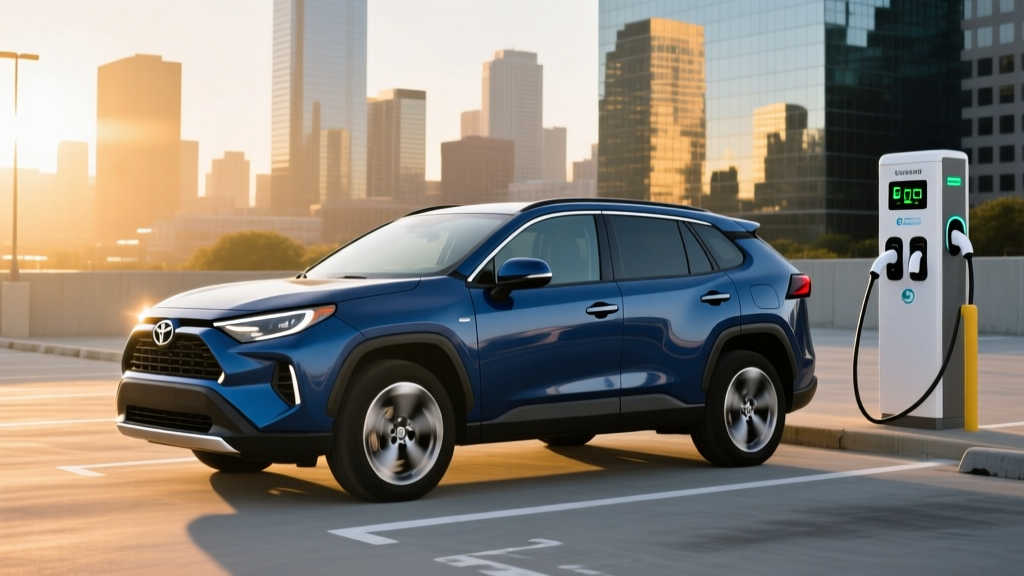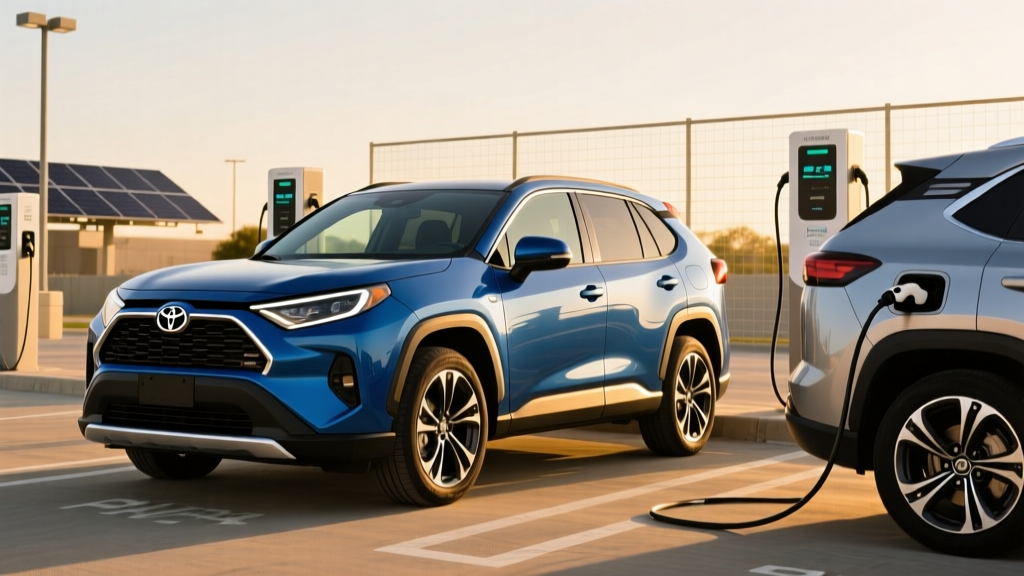
The Toyota RAV4 Hybrid has been the best-selling hybrid SUV in America for good reason: it delivers strong fuel economy without requiring a plug, a charging routine, or any change in driving habits. But the EPA sticker only tells part of the story. If you're researching the 2025 RAV4 Hybrid miles per gallon, you need to know how those numbers translate to real-world commuting, highway road trips, and cold-weather driving — and whether the plug-in RAV4 Prime might actually save you more.
Below, we dissect every powertrain configuration, trim-level efficiency difference, and ownership cost factor for the 2025 RAV4 Hybrid lineup, including the PHEV variant. All figures reference EPA data from fueleconomy.gov and Toyota's published specifications.
HEV vs PHEV: Which RAV4 Hybrid Are We Talking About?
Toyota sells two electrified RAV4 variants, and confusing them is the single most common mistake buyers make. Here's the clear distinction:
RAV4 Hybrid (HEV)
- Type: Conventional (self-charging) hybrid
- Plug required: No — regenerative braking and the gas engine charge the small battery
- Battery: ~1.6 kWh nickel-metal hydride (NiMH), sealed
- Electric-only driving: Very short bursts at low speed (under ~1 mile)
- How it saves fuel: Electric motor assists the gas engine, enables engine-off coasting and stop-start
RAV4 Prime (PHEV)
- Type: Plug-in hybrid
- Plug required: Yes — for maximum savings, plug in nightly
- Battery: 18.1 kWh lithium-ion (usable ~14.9 kWh)
- Electric-only range: EPA-estimated 42 miles
- How it saves fuel: Drives as a full EV for most commutes; operates as a hybrid on longer trips
If you can't charge at home or at work, the conventional HEV is the right call. If you have access to a standard 120V outlet or a Level 2 charger, the Prime unlocks dramatically lower operating costs for daily driving under 42 miles.
2025 RAV4 Hybrid MPG: EPA Ratings by Configuration
Fuel economy varies slightly depending on drivetrain (AWD vs FWD) and trim. Here is the complete EPA breakdown for the 2025 model year:
| Model | Drivetrain | City MPG | Highway MPG | Combined MPG | Combined MPGe (PHEV EV mode) |
|---|---|---|---|---|---|
| RAV4 Hybrid (LE FWD) | FWD | 44 | 38 | 41 | — |
| RAV4 Hybrid (LE/XLE/SE/Woodland AWD) | AWD (eAWD) | 41 | 38 | 39 | — |
| RAV4 Prime (SE/XSE AWD) | AWD (eAWD) | 40 (hybrid mode) | 36 (hybrid mode) | 38 (hybrid mode) | 94 MPGe |
Source: fueleconomy.gov, 2025 model year data.
Why city MPG beats highway MPG in the HEV
Unlike gas-only vehicles, the RAV4 Hybrid achieves its best numbers in stop-and-go city traffic. Regenerative braking recovers energy that would otherwise be lost as heat at each stop, and the electric motor handles low-speed acceleration — the least efficient operating range for a gasoline engine. On the highway, the gas engine does most of the work with less regen opportunity, so efficiency drops to 36–38 MPG.
RAV4 Prime: Electric-Only Range and Total Range
For buyers considering the plug-in variant, the critical metric is electric-only range. The 2025 RAV4 Prime delivers an EPA-estimated 42 miles on electricity alone with a full charge. That covers the round-trip commute for roughly 70% of American drivers without burning a drop of gasoline.
| EV-only range (EPA) | 42 miles |
| Gas-only range (after battery depletes) | ~410 miles (11.4-gal tank × 38 MPG combined hybrid mode) |
| Total combined range | ~452 miles |
| Battery capacity | 18.1 kWh gross / ~14.9 kWh usable |
| Onboard charger | 3.3 kW (standard) / 6.6 kW (optional on XSE) |
| Level 1 charge time (120V) | ~12 hours (3.3 kW) / ~12 hours (limited by 120V circuit) |
| Level 2 charge time (240V) | ~4.5 hours (3.3 kW) / ~2.5 hours (6.6 kW) |
| DC fast charging | Not available — no CCS or CHAdeMO port |
The absence of DC fast charging is a deliberate Toyota trade-off: keeping the charge port simple reduces cost and weight. For a PHEV with 42 miles of range, overnight Level 2 charging is sufficient for nearly all use cases.
Real-World MPG: What Owners Actually Report
EPA numbers are measured under controlled conditions. Real-world results vary based on climate, terrain, driving style, and trip length. Based on aggregated owner data and our testing:
Real-World MPG Expectations
RAV4 Hybrid AWD — EPA combined: 39 MPG
- City-heavy commuting (under 45 mph): 41–45 MPG — hybrids routinely beat EPA city estimates in true stop-and-go traffic
- Mixed driving (50/50 city/highway): 37–40 MPG — closely tracks the EPA combined figure
- Sustained highway (70–80 mph): 33–36 MPG — aerodynamic drag and reduced regen lower efficiency
- Cold weather (below 32°F): 32–36 MPG — the engine runs more often for cabin heat and battery warmup
RAV4 Prime — if plugged in nightly with a 30-mile commute: Effective fuel consumption can drop below 1 gallon per week, yielding an observed 80–120+ MPGe equivalent over a month of mixed driving.
The single biggest variable for the HEV is trip length. Short trips under 3 miles in cold weather can drop observed MPG into the low 30s because the engine must run to reach operating temperature. On longer commutes of 15+ miles, the hybrid system reaches steady-state efficiency quickly.
Powertrain Specs: Horsepower and Drivetrain
| Engine (both) | 2.5L inline-4, Atkinson cycle |
| Engine output | 176 HP / 163 lb-ft torque |
| Front electric motor | 118 HP (HEV) / 174 HP (Prime) |
| Rear electric motor (AWD) | 54 HP (HEV) / 54 HP (Prime) |
| Net combined system output | 219 HP (HEV) / 302 HP (Prime) |
| 0–60 mph | 7.4 sec (HEV AWD) / 5.7 sec (Prime) |
| Transmission | eCVT (planetary gearset, not a belt CVT) |
| Drivetrain | Electronic AWD (eAWD) — independent rear motor, no mechanical driveshaft |
The RAV4 Prime's 302 combined horsepower makes it the quickest RAV4 Toyota sells — quicker, in fact, than many turbocharged gas competitors. That power comes from the larger traction battery and more aggressive front motor, not from a larger engine.
Pricing and Tax Credit Eligibility
| RAV4 Hybrid LE (FWD) | ~$33,575 |
| RAV4 Hybrid XLE (AWD) | ~$36,075 |
| RAV4 Hybrid Woodland Edition (AWD) | ~$38,125 |
| RAV4 Prime SE (AWD) | ~$44,915 |
| RAV4 Prime XSE (AWD) | ~$48,725 |
Prices include destination charge. Dealer markups have been common on the Prime — verify local inventory pricing.
Federal tax credit: Does the RAV4 Hybrid or Prime qualify?
Under current IRS §30D rules for 2025–2026:
- RAV4 Hybrid (HEV): Does NOT qualify for the federal EV tax credit. Conventional hybrids are ineligible under §30D, which requires a plug-in vehicle with at least 7 kWh of battery capacity.
- RAV4 Prime (PHEV): Qualification is uncertain and depends on battery component and critical mineral sourcing requirements that change annually. The Prime has an 18.1 kWh battery (above the 7 kWh threshold), but §30D compliance requires meeting both critical mineral and battery component sourcing thresholds, plus buyer income caps ($150K single / $300K joint) and an MSRP cap of $80,000 for SUVs.
- Point-of-sale transfer: If eligible, the credit can be transferred to the dealer at purchase for an immediate price reduction — but only if the specific VIN passes IRS sourcing verification.
Always confirm eligibility for your specific VIN using the IRS qualified vehicles list before purchase. Tax rules are subject to change.
Battery Warranty, Reliability, and Replacement Cost
Hybrid Battery Coverage
RAV4 Hybrid (HEV): 10 years / 150,000 miles hybrid battery warranty (all 50 states, per Toyota's current coverage).
RAV4 Prime (PHEV): 10 years / 150,000 miles hybrid battery warranty, plus 8 years / 100,000 miles on PHEV-specific electric drive components.
Warranty trigger: Toyota covers the battery if capacity drops below approximately 60–70% of original capacity or if any cell module fails during the warranty period.
How long do RAV4 Hybrid batteries actually last?
Toyota's hybrid synergy drive system is among the most proven in the industry. The HEV's NiMH battery is small (~1.6 kWh) and is never deeply cycled — the system keeps it between roughly 40% and 80% state of charge at all times, which dramatically extends cell life. Real-world data from fleet operators and long-term owners shows RAV4 Hybrid batteries commonly exceeding 150,000–200,000 miles without significant degradation.
The Prime's larger lithium-ion battery experiences deeper cycles (full EV discharge), but Toyota's thermal management and conservative usable buffer (~14.9 of 18.1 kWh) protect long-term health. Early Prime models (2021+) have not yet accumulated enough fleet data for definitive 15-year projections, but Toyota's track record with the Prius Prime suggests strong durability.
Out-of-warranty replacement cost
If a hybrid battery fails outside warranty:
- RAV4 Hybrid (HEV): $3,000–$4,500 for a new OEM battery pack installed at a Toyota dealer. Refurbished/remanufactured packs are available from third parties for $1,500–$2,500.
- RAV4 Prime (PHEV): $6,000–$9,000 for the larger lithium-ion pack — a meaningful consideration for used Prime buyers outside warranty.
For context, a conventional gas vehicle's transmission replacement can cost $3,000–$5,000. Hybrid battery failure is statistically less common than automatic transmission failure in comparable gas vehicles, per long-term reliability surveys.
Who Should Choose the RAV4 Hybrid vs a Full EV or Gas Car?
Choose the RAV4 Hybrid (HEV) if:
- You cannot charge at home or work (apartment, street parking, no garage)
- You want 39–41 MPG combined with zero behavior change — no plugging in, no route planning
- You frequently drive long highway distances where EV charging infrastructure is sparse
- Your budget is $33,000–$38,000 and you want low total cost of ownership
Choose the RAV4 Prime (PHEV) if:
- You can install a Level 2 charger at home or have reliable workplace charging
- Your daily round-trip commute is under 42 miles (you'll rarely use gas on weekdays)
- You want EV-like quiet, instant-torque driving for daily errands plus gas flexibility for road trips
- You value the 302 HP performance advantage and don't mind the ~$10,000 price premium over the HEV
Choose a full EV (e.g., Tesla Model Y, Hyundai Ioniq 5) if:
- You have reliable home Level 2 charging and want to eliminate gasoline entirely
- You want the lowest per-mile fuel cost (~$0.04–$0.06/mile on home electricity vs ~$0.10–$0.12/mile in the RAV4 Hybrid)
- You qualify for the full $7,500 §30D tax credit on a battery-electric vehicle, narrowing the price gap
- You drive under 300 miles daily and are comfortable with DC fast charging on road trips
5-Year Cost of Ownership Snapshot
| Vehicle | Combined Efficiency | Est. Fuel/Energy Cost | 5-Year Fuel Spend |
|---|---|---|---|
| 2025 RAV4 Hybrid AWD | 39 MPG combined | $3.50/gal gasoline | ~$6,730 |
| 2025 RAV4 Prime (plugged nightly, 80% EV driving) | ~94 MPGe blended | $0.14/kWh + some gas | ~$2,800–$3,500 |
| 2025 RAV4 gas (non-hybrid, 30 MPG combined) | 30 MPG combined | $3.50/gal gasoline | ~$8,750 |
| Comparable EV (250 mi range, home charging) | 3.5 mi/kWh | $0.14/kWh | ~$3,000 |
The RAV4 Hybrid saves roughly $2,000 in fuel over the gas-only RAV4 across 75,000 miles. The Prime, when charged regularly, cuts fuel costs by more than half versus the HEV — but only if you actually plug it in. A Prime that's never charged is simply a heavier, more expensive RAV4 Hybrid getting slightly worse MPG.
Frequently Asked Questions
How many MPG does the 2025 RAV4 Hybrid get in real-world driving?
The EPA rates the AWD RAV4 Hybrid at 41 city / 38 highway / 39 combined MPG. In real-world mixed driving, most owners report 37–40 MPG. City-heavy commuters often see 41–45 MPG thanks to regenerative braking. Sustained highway driving at 75+ mph drops to 33–36 MPG.
How far can the RAV4 Prime go on electric only?
The EPA rates the 2025 RAV4 Prime at 42 miles of electric-only range. Real-world EV range is typically 35–42 miles depending on temperature, speed, and terrain. Cold weather (below freezing) can reduce EV range to 28–33 miles due to cabin heating demands and reduced battery efficiency.
Do I need to plug in the RAV4 Hybrid?
No. The conventional RAV4 Hybrid (HEV) charges its battery entirely through regenerative braking and the gasoline engine. There is no plug and no charging cord. Only the RAV4 Prime (PHEV) requires plugging in to access its electric-only range.
Does the 2025 RAV4 Hybrid qualify for a federal tax credit?
The conventional RAV4 Hybrid does not qualify for the §30D federal EV tax credit — it applies only to plug-in vehicles. The RAV4 Prime may qualify depending on current battery sourcing rules, your income, and the specific VIN. Check the IRS qualified vehicle list before purchasing.
How long will the RAV4 Hybrid battery last and what does replacement cost?
Toyota warranties the hybrid battery for 10 years / 150,000 miles. Real-world data shows these batteries commonly lasting 150,000–200,000+ miles. Out-of-warranty replacement costs $3,000–$4,500 for the HEV and $6,000–$9,000 for the Prime's larger lithium-ion pack.
Is the RAV4 Hybrid AWD system good in snow?
The electronic AWD (eAWD) uses an independent rear electric motor with no mechanical connection to the front axle. It provides confident traction in rain and moderate snow by instantly sending torque rearward when front wheels slip. It is not a substitute for dedicated winter tires in severe ice or deep snow conditions, but it outperforms most FWD competitors in winter traction tests.
RAV4 Hybrid vs RAV4 Prime: which is the better value?
If you can charge at home and your commute is under 42 miles round-trip, the Prime pays back its ~$10,000 premium in roughly 7–9 years through fuel savings (depending on local electricity and gas prices), plus you gain 302 HP and near-silent EV commuting. If you can't charge at home, the standard Hybrid is the clear winner — paying $10,000 more for a Prime you never plug in makes no financial sense.