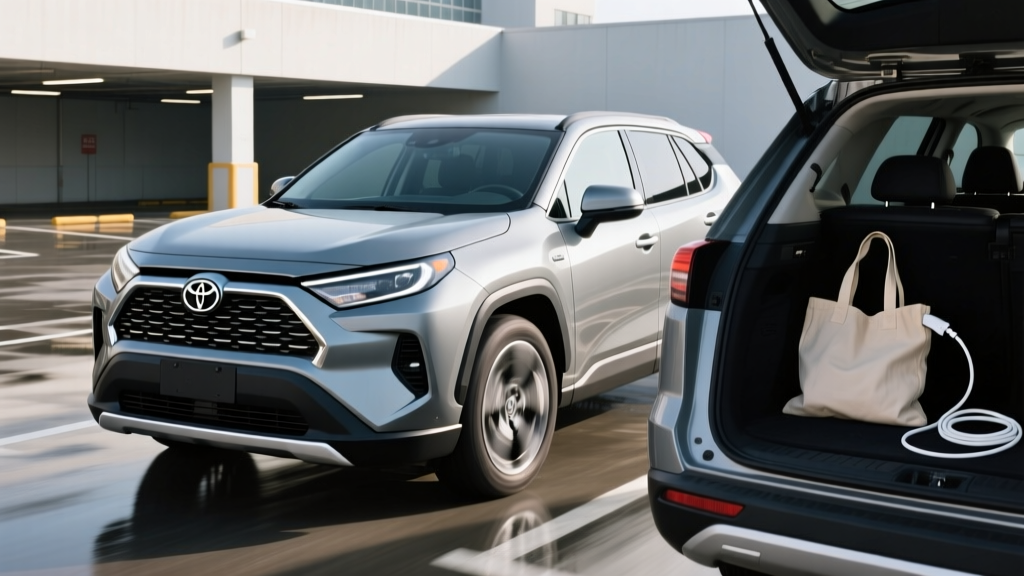
The Toyota RAV4 Hybrid has been the best-selling hybrid SUV in America for years, and the 2025 RAV4 Hybrid Limited sits at the top of that lineup. It packages Toyota's proven hybrid synergy drive with premium trim features, all-wheel drive standard, and an EPA-estimated 40 MPG combined. For buyers who want meaningful fuel savings without plugging in, worrying about range, or changing their driving habits, this trim makes a compelling case. But at a starting MSRP pushing $40,000, does the Limited justify its premium over the LE or XLE? Here's every number that matters.
2025 RAV4 Hybrid Limited: Key Specs at a Glance
| Specification | 2025 RAV4 Hybrid Limited |
|---|---|
| Powertrain | 2.5L 4-cyl + 3 electric motors (AWD) |
| Combined Horsepower | 219 hp (net system) |
| EPA MPG (City / Hwy / Combined) | 41 / 38 / 40 |
| Fuel Tank | 14.5 gallons |
| Total Driving Range | ~580 miles (EPA est.) |
| 0–60 mph | 7.4 seconds |
| Drivetrain | Electronic AWD (eAWD) |
| Cargo Volume (behind rear seats) | 37.5 cu ft |
| Towing Capacity | 1,750 lbs |
| Base MSRP | $39,745 (excl. $1,395 destination) |
| Hybrid Battery Warranty | 10 years / 150,000 miles |
All 2025 RAV4 Hybrid trims share the same powertrain and battery. The Limited adds SofTex-trimmed heated and ventilated front seats, a 9-inch touchscreen with wireless Apple CarPlay and Android Auto, a JBL premium audio system, a panoramic moonroof option, and Toyota Safety Sense 2.5+ as standard. You're paying for comfort and tech, not additional hybrid performance.
Fuel Economy: EPA Numbers vs. Real-World MPG
| Driving Condition | EPA Estimate | Real-World Expectation |
|---|---|---|
| City | 41 MPG | 42–45 MPG (hybrids excel in stop-and-go) |
| Highway | 38 MPG | 34–37 MPG (aerodynamic drag, sustained speed) |
| Combined | 40 MPG | 38–42 MPG (varies by driving mix) |
According to fueleconomy.gov, the 2025 RAV4 Hybrid AWD achieves 41 city / 38 highway / 40 combined MPG. Annual fuel cost is estimated at approximately $1,550 based on 15,000 miles driven and current national average gas prices — roughly $700–$900 less per year than a comparable gas-only RAV4 AWD (28 MPG combined) at the same mileage.
HEV vs. PHEV: Is the RAV4 Hybrid a Plug-In?
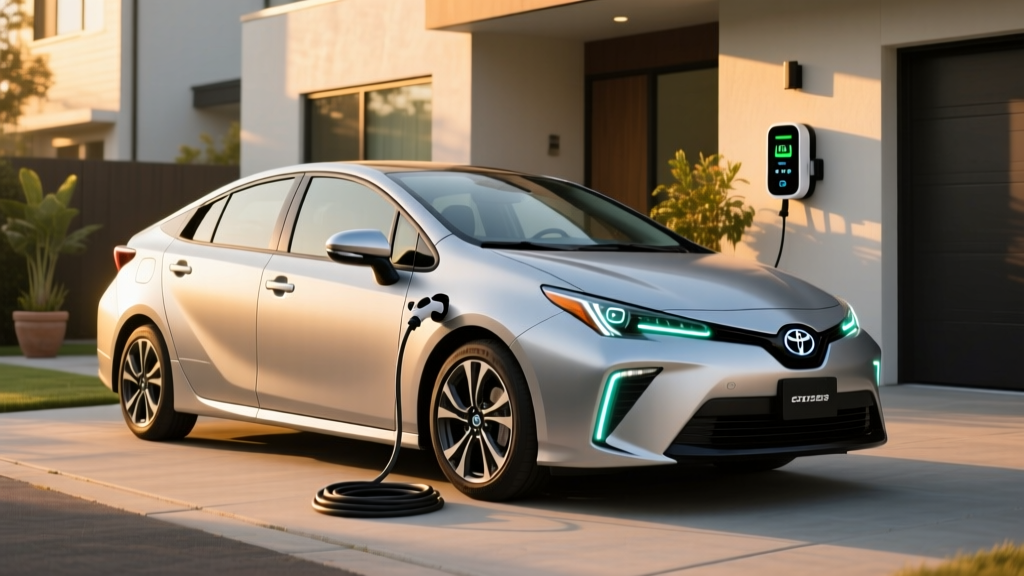
The 2025 RAV4 Hybrid is a conventional hybrid (HEV), not a plug-in hybrid (PHEV). It charges its own battery through regenerative braking and the gasoline engine. You never plug it in. If you want a plug-in RAV4 with electric-only driving, you're looking for the RAV4 Prime (PHEV), which is a separate model.
| Feature | RAV4 Hybrid (HEV) | RAV4 Prime (PHEV) |
|---|---|---|
| Plug-in charging required? | No — self-charging | Yes — plug in for EV range |
| Electric-only range | None (EV assist only) | 42 miles (EPA est.) |
| Combined horsepower | 219 hp | 302 hp |
| Battery capacity | ~1.6 kWh (small buffer) | 18.1 kWh |
| Level 2 charge time | N/A | ~2.5 hours (240V) |
| DC fast charging | No | No |
| Starting MSRP | ~$31,595 (LE) | ~$43,695 (SE) |
| Federal tax credit (§30D) | Not eligible | Not eligible (discontinued credit) |
| Combined MPG (hybrid mode) | 40 MPG | 38 MPG (after EV range depleted) |
The RAV4 Prime delivers 42 miles of electric-only range and 94 MPGe when charged, making it ideal for drivers with short commutes and access to home charging. However, its higher MSRP ($12,000+ more than the Hybrid Limited) and limited dealer availability make the standard Hybrid the more accessible choice. The Prime's federal tax credit eligibility has been affected by evolving §30D sourcing requirements — check IRS qualifying vehicle lists for current-year status before relying on credit assumptions.
Powertrain Deep Dive: How the Hybrid System Works
The 2025 RAV4 Hybrid pairs a 2.5-liter Dynamic Force inline-four engine (176 hp, 163 lb-ft) with three electric motor-generators:
- MG1 (front): Acts as a generator and engine starter; manages the planetary gearset that serves as the continuously variable transmission (eCVT).
- MG2 (front): The primary drive motor, contributing 88 kW (118 hp) to front-wheel propulsion and handling the bulk of regenerative braking.
- MG3 (rear): A 40 kW (54 hp) independent rear motor that provides electronic on-demand AWD — no mechanical driveshaft connects the front and rear axles.
Net system output is 219 hp. The eCVT isn't a belt-and-cone CVT like those in many gas cars; it's a power-split device that blends engine and motor power seamlessly. The result is smooth, linear acceleration with no gear-shift shock. The 0–60 mph time of 7.4 seconds is adequate for merging and passing, though it's not quick by EV standards (a Tesla Model Y hits 60 in ~5 seconds).
The hybrid battery is a nickel-metal hydride (NiMH) pack located under the rear seats. Toyota has used NiMH in its hybrids for over 25 years — it's heavier and less energy-dense than lithium-ion, but exceptionally durable and well-suited to the shallow charge-discharge cycles that hybrid driving demands. Total usable capacity is approximately 1.6 kWh, which is enough to propel the vehicle at low speeds on electric power alone for short distances (typically under 1 mile at low speed), but this is not designed for sustained EV driving.
Pricing, Trims, and Tax Credit Eligibility
| 2025 RAV4 Hybrid Trim | Base MSRP | Key Additions Over Previous Trim |
|---|---|---|
| LE | $31,595 | Base hybrid, TSS 2.5+, 8" touchscreen |
| XLE | $33,095 | Blind-spot monitor, dual-zone climate, alloy wheels |
| XLE Premium | $35,595 | SofTex seats, power liftgate, moonroof |
| SE | $36,595 | Sport-tuned suspension, 19" wheels |
| Woodland Edition | $37,095 | All-terrain tires, TRD-tuned suspension |
| XSE | $37,595 | Sport appearance, heated front seats |
| Limited | $39,745 | JBL audio, ventilated seats, 9" screen, premium interior |
All prices exclude Toyota's $1,395 destination charge. Popular options on the Limited include the panoramic moonroof ($1,075) and advanced technology package, which can push the out-the-door price above $43,000.
Reliability, Battery Warranty, and Replacement Cost
Toyota's hybrid reliability record is among the strongest in the industry. The Prius, Camry Hybrid, and RAV4 Hybrid have accumulated billions of real-world miles, and hybrid battery failures before 150,000 miles are statistically rare. The NiMH chemistry used in the RAV4 Hybrid is inherently stable and doesn't suffer the same thermal degradation risks as some lithium-ion packs in full EVs.
Battery replacement cost: If the hybrid battery does fail outside of warranty, a new OEM replacement battery from Toyota currently costs approximately $2,500–$3,500 for the part, with labor adding $500–$800 at a dealership. Third-party refurbished NiMH packs are available for $1,500–$2,000. This is dramatically less than full EV battery replacements, which can exceed $10,000–$20,000.
According to IIHS, the 2025 RAV4 earns top marks in crashworthiness testing, and Toyota Safety Sense 2.5+ includes pre-collision braking with pedestrian detection, full-speed dynamic radar cruise control, lane departure alert with steering assist, and lane tracing assist. These are SAE Level 1 driver-assistance features — they support the driver but do not replace active attention.
Who Should Choose the RAV4 Hybrid Limited?
Choose the 2025 RAV4 Hybrid Limited if:
- You want 40+ MPG without changing how you fuel up — no plugs, no charging apps, no route planning.
- You drive 12,000–18,000 miles per year and want to save $700–$900 annually on fuel vs. a gas RAV4.
- You want standard AWD for snow and rain without the fuel penalty of a mechanical AWD system.
- You value premium features (ventilated seats, JBL audio) but don't want to pay luxury-brand prices.
- You plan to own the vehicle 8–10+ years and want proven long-term reliability.
Consider a PHEV (RAV4 Prime) instead if:
- Your daily commute is under 40 miles round-trip and you have access to Level 2 home charging.
- You want to drive on electricity most days but keep gas flexibility for road trips.
- You can absorb the $12,000+ price premium and potential wait times for dealer availability.
Consider a full EV (e.g., Tesla Model Y, Hyundai Ioniq 5, Ford Mustang Mach-E) instead if:
- You have reliable home Level 2 charging and your daily driving is under 250 miles.
- You want to eliminate gas entirely and qualify for the $7,500 federal tax credit (income and sourcing eligibility permitting).
- You prioritize instant torque, one-pedal driving, and lower per-mile energy costs (~$0.04–$0.06/mile on home electricity vs. ~$0.12–$0.15/mile on gas at 40 MPG).
Pros and Cons
Pros
- 41 city MPG — real-world city driving often exceeds EPA estimate
- No plug-in charging required; fuel up at any gas station
- Standard electronic AWD with no fuel-economy penalty
- 10-year / 150,000-mile hybrid battery warranty
- Strong resale value; RAV4 Hybrid holds value well
- Proven reliability with 25+ years of Toyota hybrid data
- Premium features on Limited trim at sub-$42K MSRP
Cons
- No electric-only driving range — it's a hybrid, not a PHEV
- Not eligible for the federal §30D tax credit
- 1,750-lb towing capacity — less than gas RAV4 (3,500 lbs)
- Rear motor AWD is light-duty; not for serious off-road use
- eCVT drone under hard acceleration (common to power-split hybrids)
- Limited trim at ~$41K out-the-door is a significant investment for a compact SUV
- Infotainment, while improved, still lags behind competitors' UI responsiveness
Frequently Asked Questions
How many MPG does the 2025 RAV4 Hybrid Limited get?
The EPA rates it at 41 city / 38 highway / 40 combined MPG. In real-world driving, city-heavy commuters often see 42–45 MPG, while highway-dominant trips at 75+ mph may drop to 34–37 MPG. Cold weather reduces these figures by roughly 5–10%.
Does the RAV4 Hybrid need to be plugged in?
No. The RAV4 Hybrid is a conventional self-charging hybrid (HEV). Its small battery recharges through regenerative braking and the gasoline engine. You fuel it exactly like any other gas car — at a gas station.
What's the difference between the RAV4 Hybrid and the RAV4 Prime?
The RAV4 Hybrid (HEV) never plugs in and gets 40 MPG combined with no electric-only range. The RAV4 Prime (PHEV) has an 18.1 kWh battery, plugs in for 42 miles of electric-only driving, produces 302 hp, and starts at ~$43,695. The Prime is faster, can drive on electricity alone, but costs significantly more.
Is the RAV4 Hybrid reliable? What if the battery dies?
Toyota's hybrid system has one of the best reliability records in the industry, backed by a 10-year / 150,000-mile hybrid battery warranty. Battery failures within warranty are rare. If replacement is needed out of warranty, expect to pay $3,000–$4,300 for a new OEM battery and installation — far less than a full EV battery replacement.
Does the 2025 RAV4 Hybrid qualify for a federal tax credit?
No. The federal §30D clean vehicle credit applies only to plug-in electric vehicles (BEVs and some PHEVs). The conventional RAV4 Hybrid does not qualify. Some states may offer their own hybrid incentives — check the DOE AFDC database for your state's programs.
How does the RAV4 Hybrid AWD system work?
The RAV4 Hybrid uses an electronic AWD system (eAWD) with a dedicated 54 hp electric motor on the rear axle. There's no mechanical driveshaft — the rear motor engages automatically when front-wheel slip is detected, during hard acceleration, or at low speeds for traction. It's designed for rain, snow, and light gravel, not for rock crawling or heavy towing.
What is the towing capacity of the RAV4 Hybrid?
The 2025 RAV4 Hybrid is rated for 1,750 lbs across all trims. This is lower than the gas-only RAV4 AWD (3,500 lbs with the tow prep package), due to the hybrid system's thermal management limits under sustained heavy load. If you need to tow a larger trailer or boat, the gas RAV4 or RAV4 Prime (2,500 lbs) may be more appropriate.
How does the RAV4 Hybrid compare to competitors?
The Honda CR-V Hybrid (40 MPG combined, ~$36K for Sport Touring) is the closest rival, offering slightly more cargo room but less standard AWD confidence in snow. The Hyundai Tucson Hybrid (38 MPG combined) offers more rear-seat legroom but trails slightly on fuel economy. The RAV4 Hybrid's combination of proven reliability, strong resale value, and 41 city MPG keeps it at the top of the segment.
Sources: EPA fuel economy data from fueleconomy.gov, manufacturer specifications from Toyota Motor North America, federal tax credit rules per IRS.gov §30D guidance, and safety ratings from IIHS. Pricing and incentive eligibility reflect 2025 model year data and are subject to change. Consult a tax professional for credit eligibility.