Quick Verdict: The Cayenne E-Hybrid in 2025
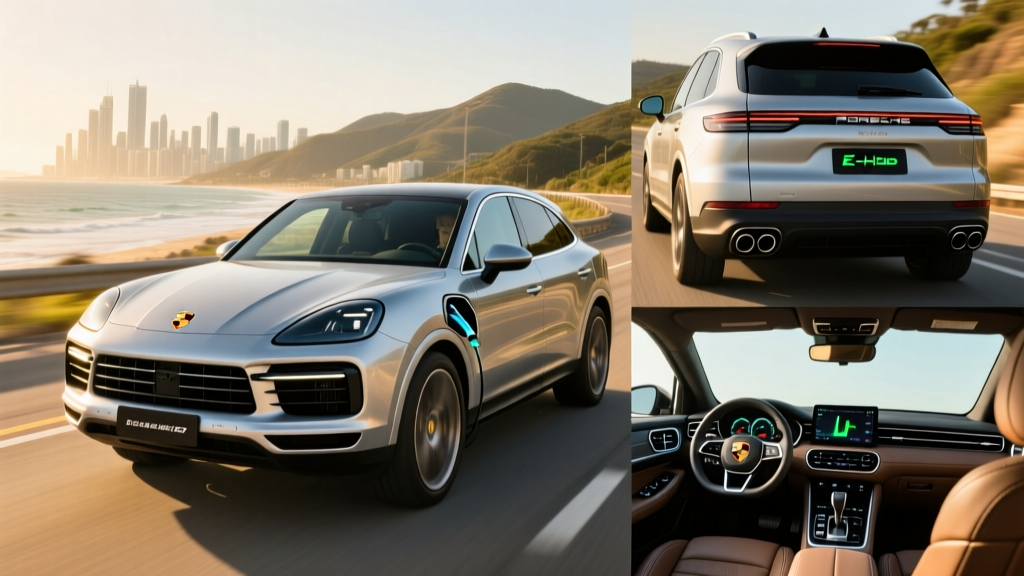
The 2025 Porsche Cayenne E-Hybrid occupies a rare niche: a luxury performance SUV that can genuinely commute on electricity alone while retaining the cross-country flexibility of a gasoline engine. With an EPA-estimated 38 miles of electric-only range, 463 combined horsepower, and a 0-60 mph time of 4.6 seconds, it targets buyers who want daily EV driving without range anxiety on weekend trips. But at a starting MSRP of $91,000, and with a battery too small for DC fast charging, it demands a clear-eyed look at who actually benefits from this powertrain.
| Spec | 2025 Cayenne E-Hybrid |
|---|---|
| Powertrain | 3.0L Turbo V6 + Electric Motor |
| Combined HP / Torque | 463 hp / 479 lb-ft |
| Battery (Gross / Usable) | 25.9 kWh / ~21 kWh (NMC) |
| EPA Electric-Only Range | 38 miles |
| Total Combined Range | ~440 miles |
| EPA MPGe (EV mode) | 46 MPGe |
| EPA MPG (gas, combined) | 21 MPG |
| AC Charging (Level 2) | 7.2 kW max, ~2.5 hrs (0-100%) |
| DC Fast Charging | Not available |
| 0-60 mph | 4.6 seconds |
| Base MSRP | $91,000 |
| Battery Warranty | 8 years / 100,000 miles |
HEV vs PHEV: Where the Cayenne E-Hybrid Fits
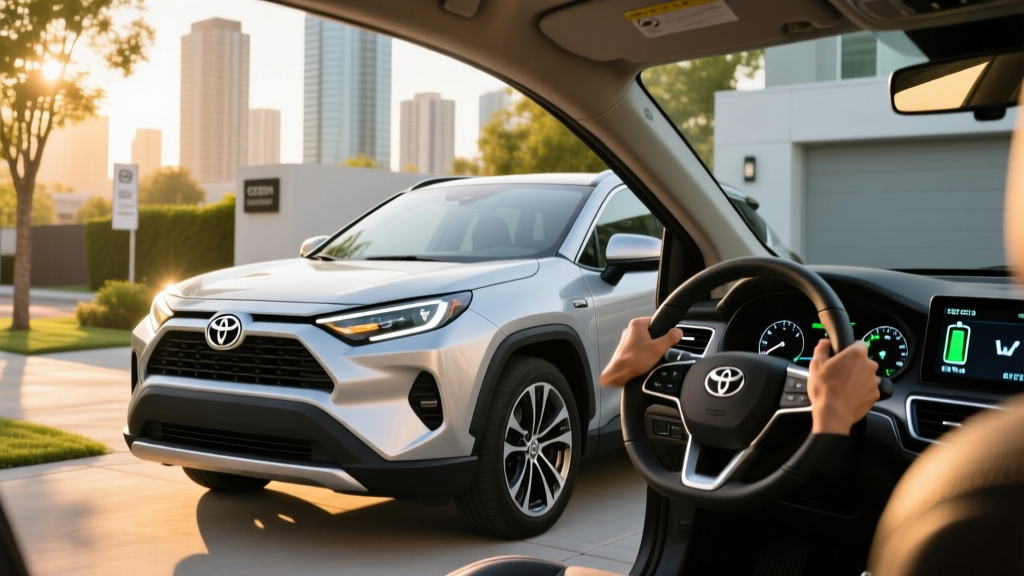
Conventional Hybrid (HEV): A standard hybrid like the Toyota RAV4 Hybrid uses a small battery (~1-2 kWh) recharged entirely by regenerative braking and the engine. You never plug it in. It improves fuel economy but offers no electric-only driving beyond low-speed creeping.
Plug-In Hybrid (PHEV): The 2025 Porsche Cayenne E-Hybrid is a PHEV. Its 25.9 kWh battery pack is large enough to power the vehicle for 38 miles on electricity alone at highway speeds. You plug it in overnight (Level 2 home charger) to replenish that electric range. Once the battery depletes, the gasoline engine takes over seamlessly, and it operates like a conventional hybrid.
The distinction matters practically: if you cannot charge at home or at work, a PHEV loses much of its advantage. You'll be hauling around a heavy battery you never refill, and fuel economy drops to roughly 21 MPG combined on gas alone — no better than many non-hybrid luxury SUVs. The Cayenne E-Hybrid rewards owners who can plug in nightly.
Fuel Economy: EPA Numbers vs Real-World MPG
| Mode | EPA Estimate | Real-World Expectation |
|---|---|---|
| EV-only (MPGe) | 46 MPGe | 40-48 MPGe (weather/terrain dependent) |
| Gas-only (city) | 19 MPG | 18-21 MPG |
| Gas-only (highway) | 22 MPG | 22-25 MPG (cruising) |
| Gas-only (combined) | 21 MPG | 19-23 MPG |
According to fueleconomy.gov, the 2025 Cayenne E-Hybrid achieves 46 MPGe when operating on its battery and 21 MPG combined once the battery is depleted. These figures reflect the vehicle's weight — over 5,000 pounds — and the performance-oriented tuning of its powertrain.
In real-world driving, owners who charge nightly and commute under 35 miles may use almost no gasoline during the work week. On a long road trip, once the battery is spent, expect 22-25 MPG at steady highway speeds and lower figures in stop-and-go traffic. Cold weather reduces electric-only range by roughly 15-25%, so winter commuters may see only 28-32 electric miles before the engine engages.
Electric-Only Range and Charging Specs
The 2025 Cayenne E-Hybrid's 25.9 kWh gross battery (approximately 21 kWh usable, NMC lithium-ion chemistry) delivers an EPA-rated 38 miles of electric-only range. Porsche's E-Hybrid system allows electric driving at speeds up to 84 mph, meaning highway commutes are fully covered — not just neighborhood errands.
Charging is AC-only via a J1772 connector:
- Level 1 (120V household outlet): ~1.4 kW — adds roughly 5 miles of range per hour. A full charge takes approximately 15 hours. Usable only as a trickle top-up.
- Level 2 (240V home charger): Up to 7.2 kW — a full 0-100% charge completes in approximately 2.5 hours. This is the intended daily charging method.
- DC Fast Charging: Not supported. The battery is too small to justify the hardware cost and weight of a DC inlet, which is typical for PHEVs in this class.
Battery Warranty: Porsche covers the high-voltage battery for 8 years or 100,000 miles, whichever comes first, with a capacity retention threshold of 70%. If the battery degrades below 70% of its original capacity within that window, Porsche will repair or replace it. For context, PHEV batteries are smaller and experience shallower charge/discharge cycles than full EV batteries, so degradation tends to be slower. A full battery replacement outside warranty, should it ever be needed, is estimated at $8,000-$14,000 based on current Porsche parts pricing — though this figure has been trending downward as NMC cell costs fall.
Powertrain Deep Dive: Engine + Electric Motor
The Cayenne E-Hybrid pairs a turbocharged 3.0-liter V6 engine (348 hp on its own) with an electric motor integrated into the 8-speed Tiptronic transmission (174 hp). Combined system output is 463 horsepower and 479 lb-ft of torque. The electric motor provides instant torque fill at low RPMs, eliminating the turbo lag typical of the base Cayenne's V6.
Drive modes include E-Power (electric-only), Hybrid Auto (system decides), E-Hold (reserves battery for later), and Sport/ Sport+ (maximum combined output). In Sport+ mode, the engine and motor deliver full combined power, and the 4.6-second 0-60 time puts it firmly in performance-SUV territory — only 0.3 seconds behind the non-hybrid Cayenne S.
All-wheel drive is standard. Towing capacity is rated at 7,700 pounds when properly equipped, matching the conventional Cayenne — the hybrid system adds no towing penalty.
Pricing, Trims, and Tax Credit Eligibility
The 2025 Cayenne E-Hybrid starts at $91,000 MSRP (plus $1,650 destination). The Cayenne E-Hybrid Coupe variant starts at $95,600. Well-optioned examples with Premium Plus packages, adaptive air suspension, and larger wheels routinely reach $110,000-$120,000.
Federal §30D Tax Credit Eligibility (2025 rules per IRS.gov):
- MSRP Cap: SUVs must be under $80,000 — the Cayenne E-Hybrid at $91,000 does not qualify for the federal new-vehicle EV credit.
- Battery Sourcing: Even if it met the price cap, critical mineral and battery component sourcing requirements would need to be verified at point of sale.
- Buyer Income Cap: $300,000 joint / $150,000 single filer AGI limits apply (moot here since MSRP disqualifies it).
- State Incentives: Some states offer rebates for PHEVs regardless of price — check your state's energy office or AFDC state incentive database for specifics.
The Cayenne E-Hybrid's MSRP exceeds the federal cap, so buyers should not expect the $7,500 §30D credit. However, certain states (California, Colorado, New York, among others) may offer separate PHEV rebates or HOV lane access that add tangible value. Consult a tax professional for your specific situation.
Reliability, Ownership Costs, and Battery Longevity
Porsche's hybrid systems have proven durable in the Panamera E-Hybrid and previous Cayenne generations. The high-voltage battery uses NMC chemistry with active liquid thermal management, which keeps cells within optimal temperature ranges during charging and heavy discharge — a key factor in long-term degradation resistance.
Based on industry data and Porsche's track record, PHEV battery packs of this size typically retain 85-92% of original capacity after 8 years of daily cycling. The 70% warranty threshold provides a substantial buffer. Unlike full EVs, the Cayenne E-Hybrid's smaller battery means shallower depth-of-discharge cycles (you use ~21 kWh vs. 80-100 kWh in a full EV), which reduces per-cycle wear.
Ownership cost considerations beyond the battery:
- Insurance: Expect premiums 10-20% higher than a base Cayenne due to the hybrid system's repair complexity and higher MSRP.
- Maintenance: The engine still requires oil changes, but brake wear is significantly reduced thanks to regenerative braking. Some owners report 60,000+ miles on original brake pads.
- Depreciation: Luxury PHEVs depreciate steeper than full EVs in the current market, partly because buyers increasingly prefer either pure EVs or simpler HEVs. Expect ~50-55% value retention at 3 years.
Who Should Choose the Cayenne E-Hybrid?
Choose the Cayenne E-Hybrid if:
- You can charge at home (Level 2) every night and your daily commute is under 35 miles
- You want a luxury performance SUV that eliminates weekday gas use without sacrificing road-trip flexibility
- You need towing capability (7,700 lbs) that most full EVs in this price range cannot match
- You value Porsche's driving dynamics and build quality
Consider a full EV (e.g., Tesla Model X, BMW iX, Rivian R1S) if:
- You drive more than 40 miles daily and want to avoid gasoline entirely
- You want access to DC fast charging for road trips (300+ mile range, 20-minute charge stops)
- You want lower long-term maintenance (no engine oil, spark plugs, or transmission fluid)
Consider a conventional HEV (e.g., Toyota Highlander Hybrid, BMW X5 xDrive50e alternative) if:
- You cannot charge at home — a PHEV's advantage disappears without plugging in
- You want simpler ownership with no charging cable management
Pros
- 38-mile EV range covers most daily commutes
- 463 hp with instant electric torque — genuinely quick
- 7,700-lb towing capacity with no penalty
- No range anxiety on long trips — gasoline backup is seamless
- Regenerative braking extends brake pad life significantly
Cons
- $91,000+ MSRP exceeds federal tax credit cap
- No DC fast charging — road trips run on gas only
- 21 MPG gas-only is unremarkable for a hybrid
- Heavy: 5,000+ lbs affects tire wear and handling vs. non-hybrid Cayenne
- Requires home Level 2 charging to realize full value
Frequently Asked Questions
How many MPG does the 2025 Porsche Cayenne E-Hybrid get?
The EPA rates it at 46 MPGe in electric mode and 21 MPG combined (19 city / 22 highway) when running on gasoline after the battery is depleted. Real-world gas-only highway driving can reach 23-25 MPG at steady speeds.
How far can the Cayenne E-Hybrid go on electric only?
The EPA-estimated electric-only range is 38 miles. In cold weather (below 32°F), expect 28-32 miles due to reduced battery efficiency and cabin heating demands. At highway speeds above 70 mph in warm conditions, 35-38 miles is achievable.
Does the 2025 Cayenne E-Hybrid qualify for a federal tax credit?
No. The federal §30D credit caps SUV MSRP at $80,000, and the Cayenne E-Hybrid starts at $91,000. Some state-level incentives may still apply — check your state's energy office for details.
Is the Cayenne E-Hybrid reliable, and what does battery replacement cost?
Porsche's hybrid systems have a strong reliability record across the Panamera and Cayenne lines. The battery is warrantied for 8 years / 100,000 miles at 70% capacity retention. Out-of-warranty replacement is estimated at $8,000-$14,000, though NMC cell costs continue declining and full replacement is rarely needed within the vehicle's typical ownership life.
Can the Cayenne E-Hybrid DC fast charge?
No. Like most PHEVs, it supports AC charging only — up to 7.2 kW on a Level 2 charger, completing a full charge in about 2.5 hours. The battery is too small to benefit from DC fast charging infrastructure.
How does the Cayenne E-Hybrid compare to the Cayenne S E-Hybrid?
For 2025, Porsche also offers the Cayenne S E-Hybrid (518 hp, twin-turbo V6) and the Cayenne Turbo E-Hybrid (729 hp, twin-turbo V8). These higher trims share the same 25.9 kWh battery and 38-mile electric range but deliver substantially more power — at correspondingly higher prices ($107,000 and $150,000+ respectively).