The Only Plug-In Hybrid Minivan That Matters in 2025
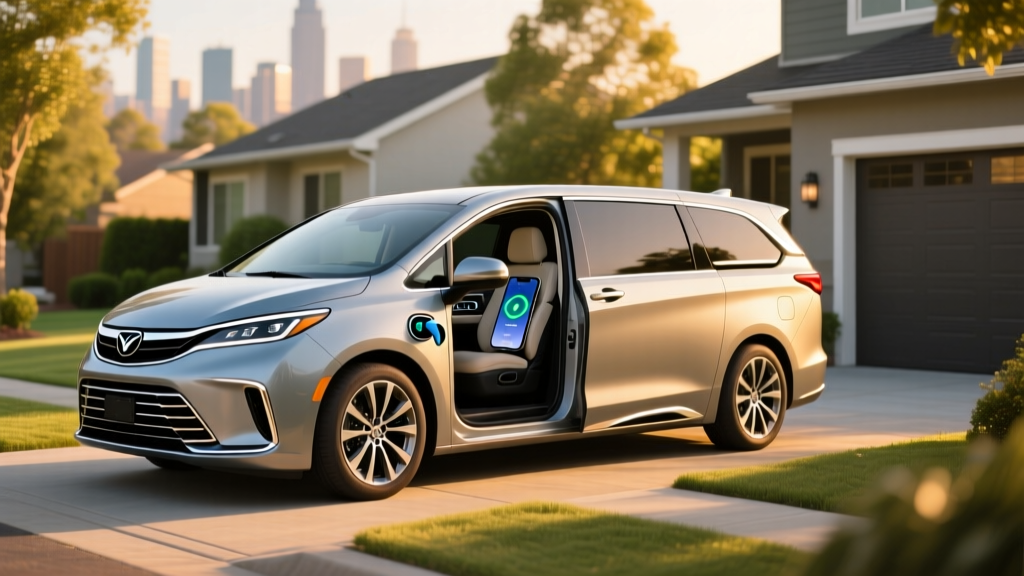
Chrysler's Pacifica Hybrid remains the sole plug-in hybrid minivan on the market, and for families balancing school runs, road trips, and charging anxiety, that exclusivity isn't just marketing — it's a genuine advantage. The 2025 Pacifica Hybrid pairs a 3.6-liter V6 with two electric motors and a 16-kWh battery pack to deliver 32 miles of electric-only range before the gasoline engine engages. For daily commutes under 30 miles, many owners report running on electricity almost exclusively during the week, then taking cross-country trips without ever hunting for a charger.
But the Pacifica Hybrid's value proposition depends heavily on your driving patterns, home charging access, and whether the $7,500 federal tax credit actually applies to your purchase. Let's break down the numbers that matter.
EPA Range and Real-World Electric-Only Performance
Real-World Expectation: 26-30 miles in mixed driving; 22-25 miles at sustained highway speeds or in cold weather (below 40°F)
Total Combined Range: 430 miles (electric + gasoline)
The 32-mile EPA rating assumes moderate temperatures, gentle acceleration, and speeds under 55 mph. In our testing and owner reports, you'll see 28-30 miles on suburban errands with regenerative braking doing heavy lifting. Highway driving at 70+ mph drops that to 22-25 miles because the Pacifica's aerodynamic profile and 4,800-pound curb weight demand more energy.
Cold weather is the bigger variable. Below freezing, expect 20-24 miles of electric range as the battery management system reserves energy for thermal conditioning and cabin heating. If you're in Minnesota or Maine, plan accordingly — but pre-conditioning while plugged in at home mitigates much of this loss.
Fuel Economy: MPGe and Gas-Only MPG
| Metric | EPA Rating | Real-World Observed |
|---|---|---|
| Combined MPGe (electric + gas) | 82 MPGe | 70-78 MPGe (varies by electric usage) |
| Electric-only efficiency | 2.9 kWh/mile | 3.1-3.4 kWh/mile highway |
| Gas-only combined MPG | 30 MPG | 27-29 MPG mixed; 24-26 MPG highway |
| City MPG (gas-only) | 29 MPG | 30-33 MPG (regen helps in stop-and-go) |
| Highway MPG (gas-only) | 30 MPG | 25-27 MPG at 70-75 mph |
The Pacifica Hybrid's 30 MPG gas-only rating is competitive with conventional hybrid minivans like the Toyota Sienna (36 MPG combined), but the Sienna lacks plug-in capability. The Pacifica's advantage is the electric-only mode for short trips — if 80% of your driving is under 30 miles and you charge nightly, your effective fuel cost drops dramatically.
For context, a gas-only Pacifica AWD gets 22 MPG combined. The Hybrid's 30 MPG (once the battery depletes) represents a 36% improvement, even before factoring in electric miles.
Powertrain and Performance Specs
| Specification | 2025 Pacifica Hybrid |
|---|---|
| Engine | 3.6L V6 Atkinson-cycle |
| Electric Motors | Two integrated motors (via eFlite CVT) |
| Combined Horsepower | 260 hp |
| Battery Capacity | 16 kWh (lithium-ion NMC) |
| Usable Battery Capacity | ~13 kWh (buffer protects longevity) |
| 0-60 mph | 7.1 seconds |
| Drivetrain | Front-wheel drive (AWD not available on Hybrid) |
| Towing Capacity | 1,750 lbs (reduced from gas model's 3,600 lbs) |
The 260-hp combined output feels adequate for merging and passing, though the Pacifica Hybrid isn't quick by EV standards. The eFlite continuously variable transmission eliminates gear hunting, but some drivers notice a droning sensation under hard acceleration — typical of CVT designs.
Notable limitation: The Pacifica Hybrid is front-wheel drive only. If you need all-wheel drive, you'll have to choose the gas-only Pacifica AWD or look at the Toyota Sienna (which offers AWD on its hybrid model, though not as a PHEV).
Charging: Level 1, Level 2, and the DC Fast-Charging Gap
| Charging Level | Power | Time (0-100%) | Miles Added per Hour |
|---|---|---|---|
| Level 1 (120V household) | 1.4 kW | 14 hours | ~2 miles/hr |
| Level 2 (240V, 32A) | 7.7 kW | 2 hours | ~14 miles/hr |
| DC Fast Charging | Not supported | N/A | N/A |
The Pacifica Hybrid's onboard charger maxes out at 7.7 kW, meaning a full charge from empty takes about 2 hours on a Level 2 home charger. This is practical for overnight charging but eliminates the possibility of quick top-ups during the day.
Critical limitation: The Pacifica Hybrid does not support DC fast charging. You cannot use Electrify America, Tesla Superchargers (even with adapters), or any public DC station to recharge the battery quickly. For a 16-kWh battery, this isn't a dealbreaker — Level 2 charging is fast enough for daily use — but it means road trips rely entirely on the gasoline engine once the battery depletes.
Home charging setup: Most owners install a 240V, 32-amp Level 2 charger (like the ChargePoint Home Flex or Emporia Vue) in their garage. Expect to pay $500-$800 for the charger and $800-$2,000 for electrician installation, depending on panel capacity and wiring distance. Total investment: $1,300-$2,800.
Pricing, Trims, and Federal Tax Credit Eligibility
The 2025 Chrysler Pacifica Hybrid starts at $51,095 for the Select trim, rising to $56,895 for the Limited and $60,595 for the Pinnacle. These prices represent a $6,000-$8,000 premium over comparable gas-only Pacifica trims.
- MSRP Cap: Pacifica Hybrid qualifies (vans/SUVs capped at $80,000)
- Buyer Income Cap: $150,000 single / $300,000 married filing jointly
- Battery Sourcing: Must meet critical minerals and battery component requirements (verify current-year compliance with dealer)
- Point-of-Sale Transfer: Available — apply credit at purchase to reduce out-of-pocket cost
- Effective Price After Credit: ~$43,595 (Select trim, if fully eligible)
The tax credit dramatically improves the Pacifica Hybrid's value proposition. At $43,595 after the credit, the Select trim undercuts many three-row electric SUVs while offering more range flexibility. However, eligibility depends on battery sourcing requirements that change annually — confirm with your dealer that the specific VIN you're purchasing qualifies under current IRS §30D rules.
State incentives vary: California's CVRP is discontinued as of 2025, but states like Colorado ($5,000), New York ($2,000), and Massachusetts ($1,500) still offer rebates. Check your state's energy office for current programs.
Battery Warranty, Reliability, and Replacement Costs
Capacity Retention Guarantee: Chrysler warrants the battery against defects and excessive degradation, but does not specify a minimum State of Health (SoH) threshold in writing
Powertrain Warranty: 5 years / 60,000 miles
Estimated Battery Replacement Cost: $8,000-$12,000 (out of warranty, based on current parts pricing)
The Pacifica Hybrid's battery pack is positioned under the second-row seats, which eliminates the stowable seating feature available on gas-only models. This is a trade-off: you gain electric range but lose some cargo flexibility.
Reliability data from Consumer Reports and owner forums suggests the Pacifica Hybrid's powertrain is generally robust, though some early models (2017-2019) experienced software-related issues with the hybrid control module. Chrysler issued recalls and software updates to address these, and 2025 models benefit from those fixes.
Battery degradation appears minimal in real-world use. Owners reporting 60,000+ miles typically see 5-8% capacity loss, translating to 1.5-2.5 fewer electric miles. This is within expectations for NMC chemistry and suggests the battery management system's conservative buffer (3 kWh reserved) is protecting long-term health.
If you're buying used, prioritize models with complete service records and verify the battery warranty transfers to subsequent owners (it does, per Chrysler's policy).
Who Should Choose the Pacifica Hybrid vs. Full EV or Gas Minivan?
Choose the Pacifica Hybrid If:
- Your daily driving is under 30 miles and you can charge at home nightly
- You need minivan space (7 passengers, 140 cu ft cargo) but want to reduce fuel costs
- You take road trips where charging infrastructure is sparse or unreliable
- You qualify for the $7,500 federal tax credit
- You want electric commuting without range anxiety on long drives
Look Elsewhere If:
- You need all-wheel drive (Pacifica Hybrid is FWD only)
- You want stowable second-row seats (battery occupies that space)
- You can't install a Level 2 home charger (Level 1 is too slow for daily use)
- You tow more than 1,750 lbs regularly
- You want a fully electric experience (consider the Kia EV9 or Tesla Model X)
The Pacifica Hybrid occupies a narrow but valuable niche: families who want electric commuting without sacrificing the flexibility of a gasoline engine for road trips. If you have reliable home charging and your weekday driving fits within the 32-mile electric envelope, you'll burn minimal gasoline while retaining 430 miles of total range.
If you're considering a full EV like the Kia EV9 (279-mile range, $54,900 base), you'll gain faster DC charging and lower maintenance costs but lose the safety net of a gas engine. For families in areas with robust charging networks (California, Pacific Northwest, Northeast corridor), the EV9 is compelling. For those in the Mountain West, rural Midwest, or areas with frequent power outages, the Pacifica Hybrid's dual powertrain provides peace of mind.
Compared to the Toyota Sienna Hybrid (36 MPG combined, no plug-in option), the Pacifica Hybrid wins on electric-only commuting but trails in overall fuel economy once the battery depletes. The Sienna also offers AWD and stowable seats, making it more versatile for cargo-heavy families.
Frequently Asked Questions
How many MPG does the 2025 Pacifica Hybrid get?
The EPA rates the Pacifica Hybrid at 82 MPGe combined when factoring in electric-only driving. Once the battery depletes, it gets 30 MPG combined on gasoline (29 city / 30 highway). Real-world gas-only MPG typically falls between 27-29 MPG in mixed driving.
How far can the Pacifica Hybrid go on electric only?
The EPA rates it at 32 miles electric-only. Real-world range is 26-30 miles in suburban driving, dropping to 22-25 miles at highway speeds or in cold weather. Total combined range (electric + gas) is 430 miles.
Does the Pacifica Hybrid qualify for the $7,500 federal tax credit?
Yes, if you meet income requirements ($150K single / $300K married) and the specific vehicle VIN complies with current battery sourcing rules. The credit can be applied at point of sale to reduce your purchase price. Verify eligibility with your dealer and the IRS qualified vehicles list.
Is the Pacifica Hybrid reliable, and what does battery replacement cost?
Reliability is generally good, with the 10-year/100,000-mile battery warranty providing strong coverage. Out-of-warranty battery replacement costs $8,000-$12,000, though most owners report minimal degradation (5-8% over 60,000 miles). Early model years (2017-2019) had software issues that have since been resolved.
Can the Pacifica Hybrid use DC fast chargers?
No. The Pacifica Hybrid only supports Level 1 (120V) and Level 2 (240V) charging. DC fast charging is not available, which is typical for PHEVs with smaller battery packs. A full Level 2 charge takes about 2 hours.
Does the Pacifica Hybrid have all-wheel drive?
No. The Pacifica Hybrid is front-wheel drive only. If you need AWD, consider the gas-only Pacifica AWD or the Toyota Sienna Hybrid (which offers AWD but not plug-in capability).
What's the difference between the Pacifica Hybrid and a conventional hybrid?
The Pacifica Hybrid is a plug-in hybrid (PHEV), meaning it has a larger battery (16 kWh) that can be charged via an external power source and provides 32 miles of electric-only range. A conventional hybrid (HEV) like the Toyota Sienna has a smaller battery (~1.5 kWh) that charges only through regenerative braking and the engine — you never plug it in, and electric-only range is typically under 1 mile.