Quick Verdict: The CX-50 Hybrid Premium Plus at a Glance
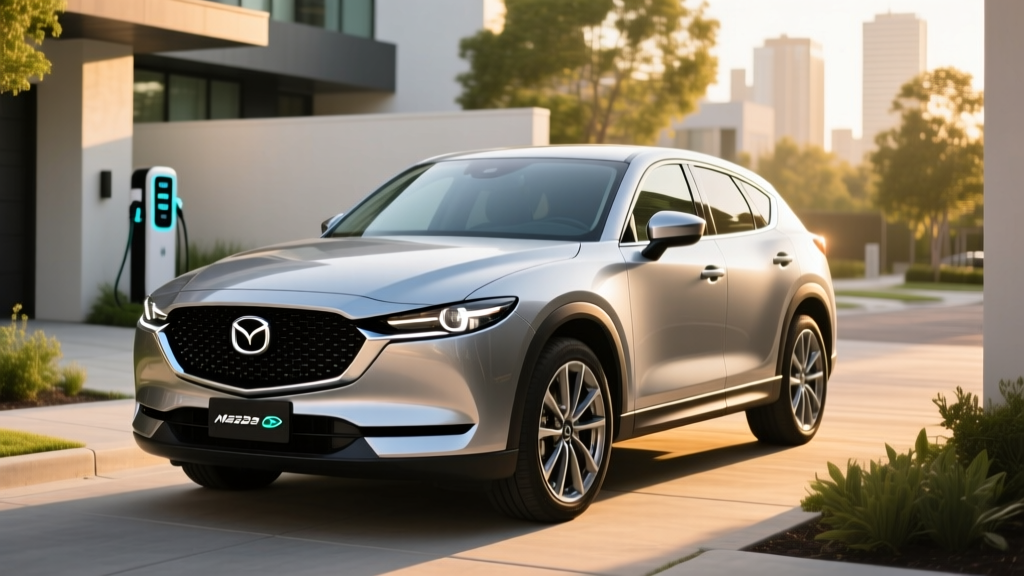
The 2025 Mazda CX-50 Hybrid Premium Plus occupies a specific niche: a compact crossover with genuine off-road styling cues, standard all-wheel drive, and a Toyota-sourced hybrid powertrain that delivers real-world fuel economy close to 38 MPG combined. This top-tier trim adds premium features — panoramic moonroof, ventilated front seats, a 12-speaker Bose audio system, and Nappa leather — pushing the MSRP to approximately $41,560 (including destination). For buyers who want Mazda's driving dynamics and interior refinement without committing to a plug-in hybrid or full EV, the CX-50 Hybrid Premium Plus is a compelling, no-plug-required option.
HEV vs PHEV: What the CX-50 Hybrid Actually Is
Before diving into specs, it's critical to understand what you're buying. The 2025 Mazda CX-50 Hybrid is a conventional hybrid electric vehicle (HEV). It pairs a 2.5-liter four-cylinder engine with an electric motor and a small 1.6 kWh nickel-metal hydride (NiMH) battery pack. The system manages energy automatically — you simply drive and refuel with gasoline like any other car.
| Feature | HEV (CX-50 Hybrid) | PHEV (e.g., RAV4 Prime) | BEV (e.g., Tesla Model Y) |
|---|---|---|---|
| Plug-in charging required? | No | Yes (for EV range) | Yes (always) |
| Electric-only range | ~1 mile (low-speed) | 25–42 miles typical | 250–330+ miles |
| Fuel economy / efficiency | 35–38 MPG combined | 38–40 MPG (gas) + 94+ MPGe | 100–130 MPGe |
| Federal tax credit (§30D) | Not eligible | Up to $7,500 (if eligible) | Up to $7,500 (if eligible) |
| Home charging install needed? | No | Recommended (Level 2) | Required (Level 2) |
| Best for | No home charging, long road trips | Home charging + short commutes | Home charging + lowest fuel cost |
If you have access to home or workplace Level 2 charging and a commute under 30 miles, a PHEV or full EV will deliver lower per-mile energy costs. But if you live in an apartment without charging access, frequently tow, or regularly drive 400+ mile road trips through areas with sparse charging infrastructure, the CX-50 Hybrid's gas-and-go simplicity is a genuine advantage.
Fuel Economy: EPA Ratings and Real-World MPG
The EPA rates the 2025 Mazda CX-50 Hybrid (all trims, including Premium Plus) at 39 MPG city / 37 MPG highway / 38 MPG combined, per fueleconomy.gov. These numbers apply across the lineup because all CX-50 Hybrid trims share the same powertrain, battery, and AWD configuration.
| Metric | City | Highway | Combined |
|---|---|---|---|
| EPA Rating | 39 MPG | 37 MPG | 38 MPG |
| Real-World Expectation | 40–44 MPG | 33–36 MPG | 36–40 MPG |
| Annual Fuel Cost (est.) | ~$1,650 (15,000 mi/yr at $3.50/gal) | ||
Compared to the non-hybrid CX-50 with the turbo 2.5L (25 MPG combined), the hybrid saves roughly 130 gallons of fuel per year at 15,000 miles — about $455 annually at $3.50/gallon. Over a 5-year ownership period, that's roughly $2,275 in fuel savings, partially offsetting the hybrid's higher purchase price.
Powertrain and Performance Specs
Mazda partnered with Toyota for the CX-50 Hybrid's powertrain, using the proven fifth-generation Toyota Hybrid System (THS). Here's the complete spec breakdown:
| Engine | 2.5L DOHC 4-cylinder (176 hp, 163 lb-ft) |
| Electric Motor | Permanent-magnet synchronous (front + rear e-AWD motor) |
| Combined System Output | 219 hp |
| Battery | 1.6 kWh NiMH (sealed, self-charging) |
| Transmission | eCVT (electronically controlled continuously variable) |
| Drivetrain | Electronic AWD (e-AWD) — standard |
| 0–60 MPH | ~7.3 seconds |
| Towing Capacity | 3,500 lbs (with towing package) |
| Cargo Volume | 31.4 cu ft (rear seats up) / 56.4 cu ft (folded) |
| Curb Weight | ~3,915 lbs |
| MSRP (Premium Plus) | ~$41,560 (incl. destination) |
The 219 combined horsepower is adequate for highway merging and passing. The e-AWD system uses the rear electric motor to send torque to the rear axle when slip is detected — there's no mechanical driveshaft. This keeps weight down and allows for packaging efficiency, though it doesn't offer the same low-speed torque vectoring as a traditional mechanical AWD system. For light trail use, snow, and rain, it performs well. For serious off-roading, you'll want a body-on-frame SUV.
Premium Plus Trim: What You Get at the Top
The Premium Plus is the highest trim in the CX-50 Hybrid lineup. Over the Premium trim, it adds:
- Panoramic power moonroof
- Nappa leather-trimmed seats
- Ventilated front seats and heated rear seats
- 12-speaker Bose premium audio system
- Head-up display (HUD)
- Wireless phone charging pad
- 360° surround-view camera
- Front cross-traffic alert and traffic sign recognition
- Polished 20-inch alloy wheels
The 10.25-inch infotainment display uses Mazda Connect with wireless Apple CarPlay and Android Auto. Navigation, a Wi-Fi hotspot, and a 12.3-inch digital instrument cluster are also included. Mazda's interior quality at this price point remains a strong selling point — materials, fit, and finish rival entry-level luxury brands.
Battery Warranty, Reliability, and Replacement Cost
The Toyota Hybrid System powering the CX-50 is one of the most proven hybrid architectures on the road. Toyota has built over 25 million hybrid vehicles globally since the original Prius in 1997, and the NiMH battery packs in this generation have demonstrated exceptional longevity. Independent fleet data shows that the vast majority of Toyota-sourced hybrid batteries last 150,000–200,000+ miles before requiring replacement. Many original Prius batteries are still in service beyond 200,000 miles.
If replacement is eventually needed out of warranty, expect to pay between $2,500 and $4,000 for a new hybrid battery pack installed at a dealership. Refurbished or aftermarket options can reduce this to $1,500–$2,500. Because the CX-50 Hybrid uses a small 1.6 kWh NiMH pack (not a large, expensive lithium-ion PHEV or EV battery), replacement costs are manageable compared to full EVs, where battery swaps can exceed $10,000–$20,000.
For general reliability, the CX-50 carries strong predicted reliability scores from major automotive analysts. Mazda's overall brand reliability has consistently ranked in the top tier in Consumer Reports and J.D. Power surveys, and the Toyota hybrid components add to that confidence.
Tax Credits and Incentives: What Applies to the CX-50 Hybrid
Here's where conventional hybrids differ sharply from PHEVs and EVs. The 2025 Mazda CX-50 Hybrid does not qualify for the federal §30D Clean Vehicle Credit (up to $7,500). That credit, as defined by the IRS, applies only to plug-in electric vehicles with a battery capacity of at least 7 kWh — the CX-50 Hybrid's 1.6 kWh pack falls well short of this threshold.
- ❌ Federal §30D Clean Vehicle Credit ($7,500): Not eligible — not a plug-in vehicle.
- ❌ Federal Used EV Credit (§25E, up to $4,000): Not eligible — not a plug-in vehicle.
- ⚠️ State incentives: Varies by jurisdiction. A few states offer small rebates for conventional hybrids, but most state-level EV incentives also require plug-in capability. Check your state's energy or DMV website for current programs.
- ✅ Employer or utility rebates: Some utilities and employers offer fuel-efficiency rebates that may apply to any hybrid. Check locally.
If the $7,500 federal tax credit is a key part of your purchase math, you'll need to look at PHEVs (like the Toyota RAV4 Prime or Hyundai Tucson PHEV) or full EVs. However, keep in mind that PHEVs and EVs carry higher base prices, and the credit has income caps ($150K single / $300K joint for new vehicles), MSRP caps ($55K for sedans, $80K for SUVs/trucks/vans), and critical-mineral/battery-sourcing requirements that can disqualify otherwise eligible vehicles.
Pros and Cons: The Honest Assessment
✅ Pros
- 38 MPG combined EPA — excellent for an AWD crossover
- No plug-in charging required — gas-and-go simplicity
- Standard AWD with 3,500-lb towing capacity
- Toyota-sourced hybrid system with proven long-term reliability
- Premium Plus interior rivals luxury brands at this price
- Strong real-world city MPG (often exceeds EPA)
- Competitive cargo space and ground clearance (8.3 in.)
❌ Cons
- No federal tax credit eligibility
- Highway MPG drops at speeds above 75 MPH
- eCVT drone under hard acceleration (common to Toyota hybrids)
- Premium Plus price pushes $42K — value gap vs. RAV4 Hybrid Limited
- No electric-only driving beyond ~1 mile at low speed
- Infotainment lacks touchscreen (uses rotary dial controller)
- 20-inch wheels on Premium Plus slightly reduce ride comfort
Who Should Buy the CX-50 Hybrid Premium Plus
This vehicle is the right fit if you:
- Don't have home or workplace charging access — apartment dwellers, street parkers, and those without a garage benefit from the no-plug HEV format.
- Want better fuel economy without changing your driving habits — no route planning around chargers, no preconditioning, no range calculations.
- Prioritize interior quality and driving feel — Mazda's cabin materials, steering feedback, and suspension tuning are a step above most competitors in this segment.
- Regularly tow up to 3,500 lbs — the hybrid system maintains its efficiency advantage even under moderate towing loads, unlike EVs which lose significant range when towing.
- Take frequent long road trips — 400+ mile trips through rural areas with sparse charging infrastructure are a non-issue with a 15.9-gallon fuel tank and ~600 miles of total range.
Look elsewhere if you:
- Have reliable home Level 2 charging — a PHEV or EV will deliver lower per-mile energy costs and may qualify for the $7,500 federal credit.
- Want electric-only commuting — the CX-50 Hybrid cannot drive on electricity alone beyond very low-speed, short-distance maneuvers.
- Are primarily budget-driven — the Toyota RAV4 Hybrid XLE starts around $33,000 and achieves similar MPG, though with a less premium interior.
Frequently Asked Questions
How many MPG does the 2025 Mazda CX-50 Hybrid Premium Plus get?
The EPA rates it at 39 MPG city, 37 MPG highway, and 38 MPG combined. In real-world city driving with frequent stops, many owners report 40–44 MPG. Highway driving above 75 MPH typically yields 33–36 MPG. Cold weather (below 32°F) reduces efficiency by roughly 5–10% due to increased engine operation for cabin heating.
Does the CX-50 Hybrid need to be plugged in?
No. The CX-50 Hybrid is a conventional hybrid (HEV), not a plug-in hybrid. Its 1.6 kWh battery charges automatically through regenerative braking and the gasoline engine. You only ever refuel at a gas station.
How far can it go on electric power alone?
Effectively about 1 mile at very low speeds (under 25 MPH) in EV mode. This is not a vehicle designed for electric-only commuting. The electric motor primarily assists the gasoline engine for improved efficiency and smooth acceleration — it does not replace it.
Is the CX-50 Hybrid reliable, and what does battery replacement cost?
Yes. The Toyota-sourced hybrid system is among the most reliable powertrains in the industry, with millions of units in service worldwide. The hybrid battery is warrantied for 8 years/100,000 miles (10 years/150,000 miles in CARB states). If replacement is needed out of warranty, expect $2,500–$4,000 for a new pack — far less than an EV battery replacement. Most hybrid batteries last 150,000–200,000+ miles.
Does the 2025 CX-50 Hybrid qualify for any tax credit?
No federal tax credit applies. The §30D Clean Vehicle Credit requires a plug-in vehicle with at least 7 kWh of battery capacity; the CX-50 Hybrid has a 1.6 kWh NiMH pack and no plug. Some state or utility rebates may apply — check your local programs. Consult a tax professional for personalized guidance.
How does the CX-50 Hybrid compare to the RAV4 Hybrid?
The Toyota RAV4 Hybrid achieves a slightly higher 41 MPG combined EPA and starts at a lower price (~$33,000 for the XLE). However, the CX-50 Hybrid offers a more premium interior, more engaging driving dynamics, slightly more ground clearance (8.3 vs. 8.1 inches), and a more distinctive exterior design. The RAV4 Hybrid also offers the Prime PHEV variant (42 miles EV range, eligible for the federal credit), which the CX-50 lineup does not.
What is the total driving range on a full tank?
With a 15.9-gallon fuel tank and 38 MPG combined, the theoretical maximum range is approximately 604 miles. In mixed real-world driving, expect 500–570 miles between fill-ups depending on driving style, terrain, and temperature.