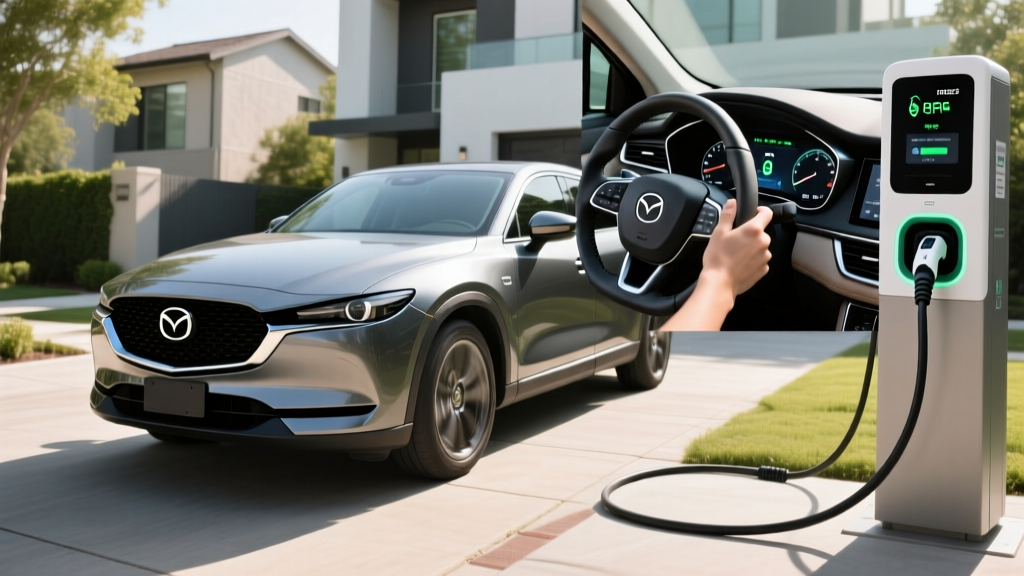
The 2025 Mazda CX-50 Hybrid pairs Mazda's design language with a Toyota-sourced hybrid powertrain, delivering an EPA-estimated 38 MPG combined in a compact crossover that doesn't require a plug. This conventional hybrid (HEV) fills a specific niche for buyers who want electrified efficiency without charging infrastructure concerns.
Powertrain: Toyota Hybrid Synergy Meets Mazda Design
The CX-50 Hybrid uses a 2.5-liter four-cylinder engine paired with two electric motors and a lithium-ion battery pack. This is the same proven Hybrid Synergy Drive system found in the Toyota RAV4 Hybrid, retuned for Mazda's chassis dynamics.
| Specification | Value |
|---|---|
| Combined Horsepower | 219 hp |
| Engine | 2.5L 4-cylinder + 2 electric motors |
| Battery Type | Lithium-ion (sealed, non-plug) |
| Drivetrain | AWD (standard on all trims) |
| 0-60 mph | 7.3 seconds |
| Towing Capacity | 1,500 lbs |
| Cargo Volume | 31.4 cu ft (rear seats up) |
The 219 combined horsepower represents a meaningful upgrade over the non-hybrid CX-50's base 187-hp engine. The electric motors provide instant torque at low speeds, making the hybrid noticeably quicker in city driving despite similar EPA 0-60 estimates.
Fuel Economy: EPA Ratings vs Real-World MPG
| Driving Cycle | EPA MPG |
|---|---|
| City | 39 MPG |
| Highway | 37 MPG |
| Combined | 38 MPG |
Real-World MPG Expectations
EPA Combined: 38 MPG
Real-World Range: Expect 36-40 MPG in mixed driving. Hybrids often exceed EPA city ratings in stop-and-go traffic where regenerative braking maximizes electric motor use. Highway driving at 75+ mph typically yields 34-36 MPG. Cold weather (below 30°F) reduces efficiency by 10-15%, dropping to 32-34 MPG combined until the engine and cabin heat fully warm up.
With a 15.9-gallon fuel tank, the CX-50 Hybrid delivers approximately 600 miles of total range in mixed driving—significantly more than most EVs and comparable to the RAV4 Hybrid's 580-620 mile range.
For context, the non-hybrid CX-50 with the base 2.5L engine achieves 24 city / 30 highway / 27 combined MPG. The hybrid's 11 MPG combined improvement translates to roughly $400-500 in annual fuel savings for drivers covering 15,000 miles per year (assuming $3.50/gallon regular unleaded).
HEV vs PHEV vs EV: Which Electrified CX-50 Fits Your Needs?
Conventional Hybrid (HEV) — The CX-50 Hybrid
- No plug required: Regenerative braking and engine power recharge the battery automatically
- 38 MPG combined with no behavior change needed
- $33,970 starting price (Preferred trim)
- Best for: Apartment dwellers, street parkers, road-trip-heavy drivers, those without 240V outlet access
Plug-In Hybrid (PHEV) — Not Available for CX-50
Mazda does not offer a CX-50 PHEV variant. If you want plug-in capability in this segment, consider the Toyota RAV4 Prime (42 miles electric-only, 38 MPG after battery depletion, $43,690) or Ford Escape PHEV (37 miles electric, 41 MPG combined, $39,995).
Battery Electric Vehicle (BEV)
Full EVs like the Tesla Model Y or Hyundai Ioniq 5 offer lower per-mile energy costs (3-4 cents/mile vs 9-10 cents/mile for the hybrid) but require home Level 2 charging access and involve range planning for trips exceeding 250-300 miles.
Choose the CX-50 Hybrid If:
- You lack reliable home charging access (apartment, street parking, older electrical panel)
- You regularly drive 300+ miles in a single day without wanting to plan charging stops
- You want 35-40 MPG without changing refueling habits
- You frequently tow light loads (1,500 lbs capacity)
Choose a Full EV If:
- You have Level 2 home charging and drive under 250 miles daily
- You want minimal maintenance (no oil changes, fewer moving parts)
- You prioritize instant torque and one-pedal driving
- Local electricity rates make charging significantly cheaper than gas
Pricing, Trims & Tax Credit Eligibility
| Trim Level | MSRP | Key Features |
|---|---|---|
| Preferred | $33,970 | Heated seats, 10.25" display, power liftgate |
| Premium | $37,350 | Leather, Bose audio, panoramic moonroof |
| Premium Plus | $40,350 | Head-up display, ventilated seats, 20" wheels |
Federal Tax Credit: The CX-50 Hybrid does not qualify for the federal §30D clean vehicle tax credit. That credit applies only to plug-in electric vehicles (BEVs and PHEVs) with battery capacity of at least 7 kWh. Conventional hybrids like the CX-50 are excluded under current IRS rules.
State Incentives: A handful of states (notably Colorado) offer modest hybrid incentives, but these vary by jurisdiction and change frequently. Check your state's energy office or department of revenue for current programs. Most buyers should expect to pay full MSRP minus any dealer negotiation.
Reliability & Battery Warranty
Hybrid Battery Coverage
- Hybrid Battery Warranty: 8 years / 100,000 miles (whichever comes first)
- Powertrain Warranty: 5 years / 60,000 miles
- Basic Warranty: 3 years / 36,000 miles
Mazda's hybrid battery warranty aligns with industry standards. Toyota's identical system in the RAV4 Hybrid has demonstrated excellent longevity, with many examples exceeding 150,000 miles with minimal degradation.
Is the CX-50 Hybrid reliable? The Toyota-sourced hybrid system has a strong track record spanning two decades. The 2.5L hybrid powertrain avoids the turbocharger complexity of Mazda's non-hybrid 2.5T engine, potentially reducing long-term maintenance costs. Consumer Reports rates the CX-50's predicted reliability as average to above-average for the segment.
Battery Replacement Cost: If the hybrid battery fails outside warranty, expect $3,000-4,500 for parts and labor at a dealership. However, failures before 150,000 miles are uncommon based on Toyota's hybrid system history. Individual battery modules can sometimes be replaced for $500-800 if only one cell degrades.
Real-World Ownership Considerations
Maintenance Costs: The CX-50 Hybrid requires standard gasoline-engine maintenance—oil changes every 10,000 miles, brake fluid, coolant, and transmission fluid. Expect $150-200 per oil change at a dealer. Brake wear is typically reduced 30-50% compared to non-hybrids due to regenerative braking handling most deceleration.
Insurance: Hybrid vehicles typically cost 5-10% more to insure than their gasoline counterparts due to higher repair costs if the hybrid system is damaged. Expect annual premiums of $1,400-1,800 depending on your location, driving record, and coverage level.
Cold-Weather Performance: The hybrid system maintains strong efficiency in cold weather compared to EVs, which can lose 20-30% of range below freezing. The CX-50 Hybrid's engine provides cabin heat without draining a large battery, making it practical in northern climates where winter temperatures regularly drop below 20°F.
Pros & Cons
Pros
- 38 MPG combined without plugging in
- 219 hp provides confident acceleration
- Standard AWD on all trims
- 600+ mile total range
- Proven Toyota hybrid reliability
- No charging infrastructure required
Cons
- No federal tax credit eligibility
- 1,500-lb towing capacity (vs 3,500 lbs for non-hybrid turbo)
- CVT transmission lacks the engagement of a traditional automatic
- Premium trims approach $40K without PHEV tax benefits
- No plug-in hybrid variant available
Frequently Asked Questions
How many MPG does the 2025 CX-50 Hybrid get?
The EPA rates the CX-50 Hybrid at 39 city / 37 highway / 38 combined MPG. Real-world mixed driving typically yields 36-40 MPG, with city driving often exceeding the EPA estimate thanks to regenerative braking.
Does the CX-50 Hybrid need to be plugged in?
No. This is a conventional hybrid (HEV), not a plug-in hybrid (PHEV). The battery recharges automatically through regenerative braking and the gasoline engine. You fuel it exactly like a regular car.
How far can the CX-50 Hybrid drive on electric power alone?
The CX-50 Hybrid can operate on electric power only at low speeds (typically under 25 mph) for very short distances—usually less than a mile. It's designed to assist the engine and improve efficiency, not to provide meaningful electric-only range like a PHEV.
Does the CX-50 Hybrid qualify for any tax credit?
No federal tax credit is available. The §30D clean vehicle credit applies only to plug-in vehicles (BEVs and PHEVs). Some states offer modest hybrid incentives, but these vary by location and change frequently.
Is the hybrid battery expensive to replace?
Out-of-warranty replacement costs $3,000-4,500, but the battery is covered for 8 years/100,000 miles. Toyota's identical hybrid system has demonstrated excellent longevity, with failures before 150,000 miles being uncommon.
How does the CX-50 Hybrid compare to the RAV4 Hybrid?
Both use the same 219-hp Toyota hybrid system and achieve similar MPG (RAV4 Hybrid: 40 combined). The CX-50 offers more premium interior materials and Mazda's driving dynamics, while the RAV4 provides slightly better fuel economy, more cargo space (37.5 cu ft), and a lower starting price ($31,900).
Can the CX-50 Hybrid tow a trailer?
Yes, but with a 1,500-pound maximum towing capacity—significantly less than the non-hybrid CX-50 with the 2.5T turbo engine (3,500 lbs). The hybrid is suitable for light utility trailers, bike racks, or small campers, but not boats or larger travel trailers.
The 2025 Mazda CX-50 Hybrid delivers on its core promise: hybrid efficiency without lifestyle compromise. For buyers who want 38 MPG, standard AWD, and premium crossover styling without the complexity of plug-in charging, it's a compelling choice—provided you accept the lack of federal tax incentives and the CVT's character. For those with home charging access and shorter commutes, a PHEV or full EV may offer greater long-term savings, but the CX-50 Hybrid remains the pragmatic choice for electrification without infrastructure dependency.