What the 2025 Mazda CX-5 Hybrid Actually Is
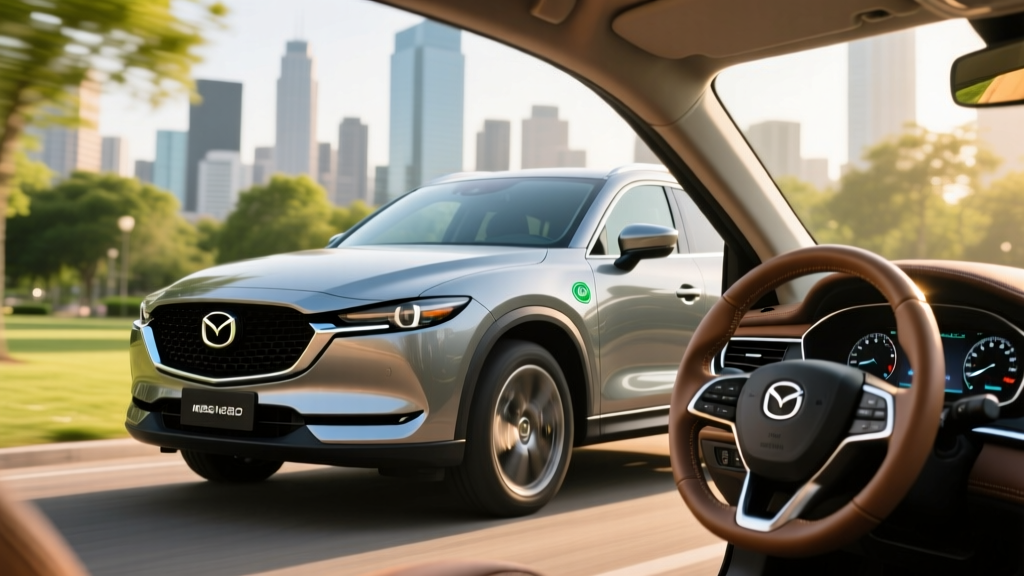
For years, the Mazda CX-5 has been the driver's choice in the compact SUV segment — praised for its interior quality, steering feel, and chassis tuning, but criticized for fuel economy that trailed turbocharged and hybrid rivals. The 2025 Mazda CX-5 Hybrid finally addresses that weakness by integrating a Toyota-sourced hybrid powertrain into Mazda's best-selling nameplate.
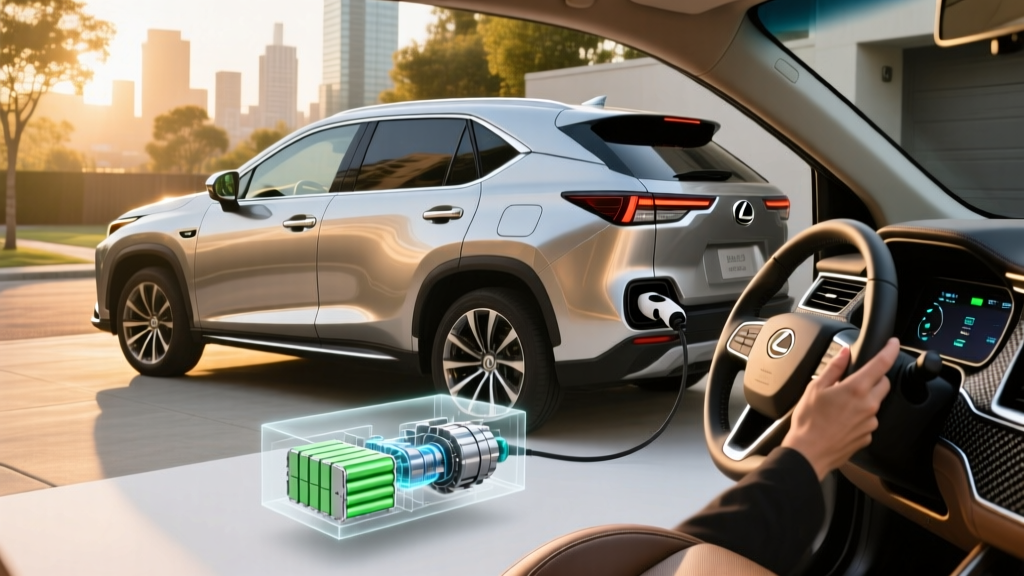
This is a conventional hybrid electric vehicle (HEV), not a plug-in. That means there is no charging port, no electric-only driving mode of meaningful distance, and no need to change your fueling habits. The hybrid system recovers energy during braking and coasting, stores it in a small battery, and uses an electric motor to assist the gasoline engine — reducing fuel consumption without any behavioral change on your part.
Fuel Economy: EPA Ratings vs Real-World MPG
The headline number for the 2025 Mazda CX-5 Hybrid is its EPA-estimated fuel economy, which represents a dramatic improvement over the non-hybrid CX-5's 26 MPG combined rating.
| Metric | FWD | AWD |
|---|---|---|
| City | 40 MPG | 39 MPG |
| Highway | 38 MPG | 37 MPG |
| Combined | 39 MPG | 38 MPG |
Source: EPA / fueleconomy.gov
Real-World Expectations
Toyota's hybrid synergy drive system — the same architecture underpinning the RAV4 Hybrid — has a well-documented tendency to exceed EPA city estimates in stop-and-go driving, where regenerative braking recaptures the most energy. Owners of RAV4 Hybrids routinely report 41–43 MPG in urban commuting. Expect similar results in the CX-5 Hybrid if your commute involves frequent stops.
Highway efficiency is a different story. At sustained 70–80 MPH speeds, the gasoline engine does most of the work, and the CX-5's less aerodynamic profile compared to some rivals means real-world highway figures may land closer to 35–36 MPG, particularly with AWD engaged and in cold weather (below 40°F), where the engine runs more frequently to maintain cabin heat and battery temperature.
Powertrain: Toyota Hybrid Meets Mazda Engineering
The 2025 CX-5 Hybrid uses a variant of Toyota's proven 2.5-liter four-cylinder hybrid system, adapted for Mazda's platform. Here are the key specifications:
| Specification | Detail |
|---|---|
| Engine | 2.5L naturally aspirated 4-cylinder (Atkinson cycle) |
| Electric Motor | Permanent magnet synchronous motor |
| Combined Net Horsepower | 219 hp |
| Transmission | eCVT (planetary gearset, not a belt CVT) |
| Drivetrain | FWD standard; AWD available (electronic rear motor) |
| Hybrid Battery | ~1.6 kWh nickel-metal hydride (NiMH) |
| 0–60 MPH (est.) | ~7.5 seconds |
| Towing Capacity | 1,500 lbs |
The eCVT in this system is Toyota's planetary gearset design — it has no traditional gears or belt, and is widely regarded as one of the most durable transmissions in the industry. The AWD system uses a separate rear-axle electric motor rather than a mechanical driveshaft, which improves packaging and response time.
Pricing, Trims & Tax Credit Eligibility
The 2025 CX-5 Hybrid slots into the upper portion of the CX-5 lineup. Based on Mazda's announced pricing:
- Preferred trim: ~$33,990 MSRP (includes destination)
- Carbon Edition: ~$35,490 MSRP
- Premium trim: ~$37,990 MSRP
- Premium Plus: ~$40,490 MSRP
AWD adds approximately $1,400 to each trim level.
Battery Warranty, Reliability & Replacement Cost
Hybrid battery longevity is consistently the top concern among first-time hybrid buyers. The CX-5 Hybrid benefits from Toyota's decades of hybrid battery engineering.
Mazda covers the hybrid battery and related components for 8 years / 100,000 miles (whichever comes first). In California Air Resources Board (CARB) states — including CA, NY, MA, CT, and others — the warranty extends to 10 years / 150,000 miles under emissions-related component coverage. This aligns with industry-standard hybrid battery protection.
Real-World Longevity Data
Toyota's NiMH hybrid batteries have an exceptional track record. The RAV4 Hybrid and Prius — both using chemically similar battery packs — routinely reach 200,000+ miles without battery replacement. The small 1.6 kWh pack in the CX-5 Hybrid operates within a narrow state-of-charge window (typically 40%–80%), which dramatically reduces stress on the cells and slows degradation.
If replacement is eventually needed out of warranty, a refurbished or new hybrid battery for this platform is expected to cost between $2,500 and $4,000 installed — comparable to the RAV4 Hybrid. Third-party refurbishers often offer units for less.
Overall Reliability Outlook
The CX-5's non-hybrid platform has scored well in IIHS crash testing. The hybrid powertrain inherits Toyota's hybrid reliability reputation — one of the strongest in the industry. The main risk factor is Mazda's relative inexperience with hybrid integration compared to Toyota's own vehicles, though early reports suggest a smooth collaboration.
Hybrid vs PHEV vs Full EV — Which Should You Choose?
The CX-5 Hybrid occupies a specific niche. Here's a decision framework to determine if it's right for you:
| Factor | CX-5 Hybrid (HEV) | PHEV (e.g., RAV4 Prime) | Full EV (e.g., Ioniq 5) |
|---|---|---|---|
| Plugs In? | No | Yes (optional) | Yes (required) |
| Electric-Only Range | ~1 mi (low-speed) | 30–42 mi | 250–320 mi |
| Home Charging Needed? | No | Recommended | Essential |
| Federal Tax Credit | None | Up to $7,500* | Up to $7,500* |
| Fuel Cost (annual est.) | ~$1,650 | ~$800–$1,400 | ~$550–$900 |
| Best For | No charging access; wants simplicity | Home charging + short commutes | Home charging + commitment to electric |
* §30D credit eligibility depends on MSRP caps, buyer income limits, battery mineral sourcing, and assembly location. See IRS.gov for current-year rules.
Choose the CX-5 Hybrid If:
- You live in an apartment or lack access to home/workplace charging
- You want a 35%+ fuel economy improvement without changing any habits
- You prefer Mazda's driving dynamics and interior quality over the RAV4 Hybrid
- You drive 12,000–15,000 miles per year and want to minimize fuel spend without a price premium for PHEV/EV
Look Elsewhere If:
- You have home Level 2 charging and a sub-35-mile commute — a PHEV eliminates most gas use
- You want the $7,500 federal tax credit to offset a higher purchase price
- You want zero tailpipe emissions for daily driving — consider a BEV like the Hyundai Ioniq 5 or Tesla Model Y
How the CX-5 Hybrid Stacks Up Against Rivals
The compact hybrid SUV segment is competitive. Here's how the CX-5 Hybrid measures up:
| Model | Combined MPG | Net HP | Starting MSRP |
|---|---|---|---|
| 2025 Mazda CX-5 Hybrid AWD | 38 MPG | 219 hp | ~$35,390 |
| Toyota RAV4 Hybrid AWD | 39 MPG | 219 hp | ~$33,425 |
| Honda CR-V Hybrid AWD | 37 MPG | 204 hp | ~$35,395 |
| Ford Escape Hybrid AWD | 39 MPG | 210 hp | ~$34,490 |
The CX-5 Hybrid trails the RAV4 Hybrid by 1 MPG combined but offers a more premium cabin, sharper steering, and Mazda's reputation for above-average long-term build quality. The trade-off is a slightly higher starting price and less cargo volume (approximately 30.8 cu ft behind the rear seats vs the RAV4's 37.5 cu ft).
Pros & Cons at a Glance
✓ Pros
- 38–39 MPG combined — a massive improvement over the gas CX-5
- Toyota-sourced hybrid system with proven long-term reliability
- No plug-in charging required — zero lifestyle change
- Mazda's premium interior and engaging driving dynamics
- Strong hybrid battery warranty (8yr/100k mi; 10yr/150k in CARB states)
- Competitive 219 hp — no performance penalty for efficiency
✗ Cons
- No federal §30D tax credit (HEV, not a plug-in)
- Less cargo space than RAV4 Hybrid and CR-V Hybrid
- Higher starting price than the base RAV4 Hybrid
- No PHEV variant available in the CX-5 lineup
- Towing limited to 1,500 lbs (3,500 lbs on some gas CX-5 trims)
- Real-world highway MPG may fall 2–3 MPG below EPA estimate
Frequently Asked Questions
How many MPG does the 2025 Mazda CX-5 Hybrid get?
The EPA rates the CX-5 Hybrid at 39 MPG combined (FWD) or 38 MPG combined (AWD), with city ratings of 39–40 MPG and highway ratings of 37–38 MPG. Real-world city driving often exceeds these figures, while sustained highway driving at 75+ MPH may yield 35–36 MPG.
Does the CX-5 Hybrid need to be plugged in?
No. The CX-5 Hybrid is a conventional self-charging HEV. Its small battery is recharged entirely through regenerative braking and the gasoline engine. There is no charging port on the vehicle.
How far can the CX-5 Hybrid drive on electric power alone?
Effectively less than one mile, and only at very low speeds (under 25 MPH in light-load conditions). The electric motor's role is to assist the engine and enable engine-off coasting — not to provide meaningful electric-only range. If you want electric-only commuting, you need a PHEV or a full BEV.
Is the hybrid battery reliable, and what does replacement cost?
Toyota-derived NiMH hybrid batteries are among the most durable in the industry, routinely lasting 200,000+ miles. The battery is warranted for 8 years/100,000 miles (10 years/150,000 miles in CARB states). Out-of-warranty replacement is estimated at $2,500–$4,000 installed.
Does the 2025 CX-5 Hybrid qualify for any tax credit?
It does not qualify for the federal §30D Clean Vehicle Credit, which requires a plug-in vehicle with a battery capacity of at least 7 kWh. Some states offer separate incentives for hybrid purchases — check your state energy office or AFDC state incentive database for details.
Is the CX-5 Hybrid better than the RAV4 Hybrid?
It depends on priorities. The RAV4 Hybrid offers slightly more cargo space, a lower starting price, and a longer track record. The CX-5 Hybrid counters with a more upscale interior, sportier handling, and comparable fuel economy. Mechanically, they share the same Toyota hybrid architecture — reliability should be similar.
What is the annual fuel cost savings vs the gas CX-5?
At 15,000 miles per year and $3.50/gallon gasoline, the gas CX-5 (26 MPG combined) costs approximately $2,019 annually in fuel. The CX-5 Hybrid (38 MPG combined) costs approximately $1,382 — a savings of roughly $637 per year, or about $3,185 over five years. That offsets most of the hybrid's price premium within the typical ownership period.