Quick Verdict: A Luxury PHEV for the Plug-In Curious
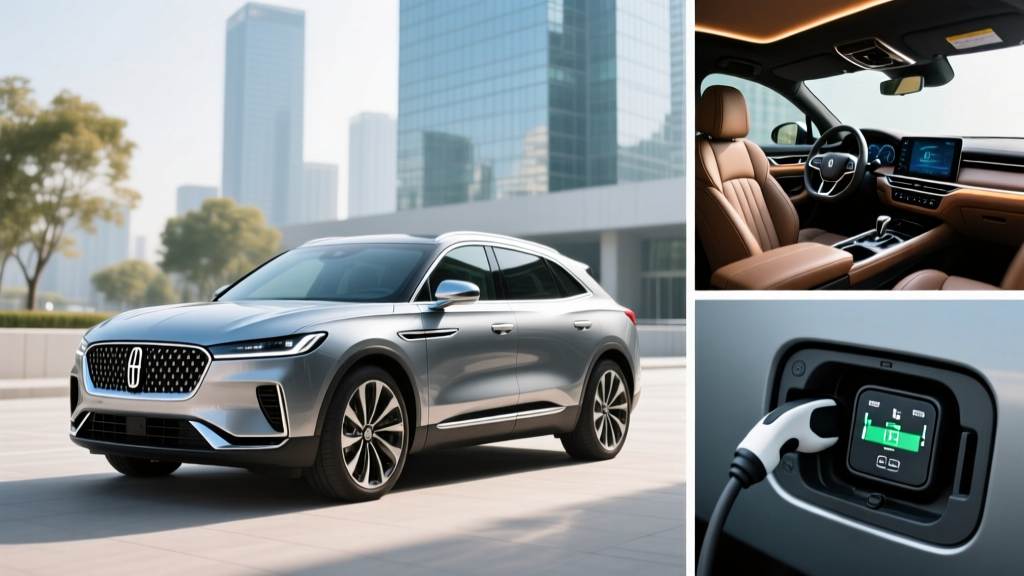
The 2025 Lincoln Corsair Grand Touring is a plug-in hybrid electric vehicle (PHEV) that pairs a turbocharged 2.5-liter four-cylinder engine with an electric motor and a 14.4 kWh lithium-ion battery. It delivers 28 miles of electric-only driving and 33 MPG combined when the gas engine kicks in. Starting at approximately $52,490, it targets luxury compact SUV buyers who want to commute on electricity without committing to a full battery-electric vehicle.
Unlike a conventional hybrid (HEV) such as the Toyota RAV4 Hybrid, the Corsair Grand Touring must be plugged in to unlock its electric-only range. If you never plug it in, it operates as a heavier, less efficient conventional hybrid. That's the central trade-off every buyer needs to understand before signing the paperwork.
HEV vs PHEV: What the Corsair Actually Is
Conventional Hybrid (HEV): Uses a small battery (typically 1-2 kWh) recharged by regenerative braking and the engine. No plug. Examples: Toyota RAV4 Hybrid, Honda CR-V Hybrid. EPA MPG is consistent regardless of driving habits.
Plug-In Hybrid (PHEV): Uses a larger battery (10-20+ kWh) that can be plugged into a wall outlet or Level 2 charger for a meaningful electric-only range before the gas engine activates. Examples: Lincoln Corsair Grand Touring, Toyota RAV4 Prime, Jeep Wrangler 4xe. Efficiency depends heavily on whether you plug in regularly.
The 2025 Lincoln Corsair Grand Touring is strictly a PHEV. Lincoln does not offer a conventional HEV version of the Corsair. If you want a Lincoln hybrid that never needs plugging in, you'd need to look at the Ford Maverick Hybrid (not a Lincoln) or wait for future Lincoln HEV offerings.
Fuel Economy and Electric-Only Range
The EPA rates the 2025 Corsair Grand Touring at 33 MPG combined (34 city / 32 highway) when operating as a hybrid after the battery is depleted. On electric power alone, it earns an EPA-estimated 28 miles of range and 78 MPGe combined. These figures come from fueleconomy.gov.
| Metric | EPA Estimate | Real-World Expectation |
|---|---|---|
| Combined MPG (hybrid mode) | 33 MPG | 30-34 MPG depending on driving style and terrain |
| City MPG (hybrid mode) | 34 MPG | 33-36 MPG — hybrids excel in stop-and-go |
| Highway MPG (hybrid mode) | 32 MPG | 29-31 MPG at sustained 70-80 mph |
| Electric-only range | 28 miles | 22-26 miles in cold weather or at highway speeds |
| MPGe (electric mode) | 78 MPGe | Varies with climate control and driving aggression |
| Total combined range | ~430 miles | ~380-420 miles real-world with mixed use |
Real-world range reality: The EPA's 28-mile electric estimate assumes moderate temperatures and mixed city/suburban driving. In winter conditions (below 40°F), expect 20-24 miles of electric range due to battery chemistry limitations and cabin heating demands. Highway driving at 75+ mph also reduces electric range to roughly 22-24 miles because electric motors are less efficient at sustained high speeds than in stop-and-go traffic.
Hybrids often exceed their EPA city estimates in real-world driving because regenerative braking recaptures energy in traffic. The Corsair is no exception: owners who drive primarily in city conditions frequently report 35-37 MPG in hybrid mode. Highway-only drivers, however, should expect figures closer to 29-31 MPG.
Powertrain and Performance Specs
| Specification | 2025 Lincoln Corsair Grand Touring |
|---|---|
| Engine | 2.5L turbocharged inline-4 |
| Electric motor | Permanent-magnet synchronous, integrated into eCVT |
| Combined horsepower | 266 hp |
| Combined torque | 290 lb-ft (est.) |
| Transmission | eCVT (electronically controlled continuously variable) |
| Drivetrain | AWD (all-wheel drive standard) |
| Battery capacity (usable) | 14.4 kWh lithium-ion |
| 0-60 mph | ~7.0 seconds (est.) |
| Towing capacity | Not recommended for towing |
| Cargo volume (rear seats up) | 27.6 cu ft |
| Cargo volume (rear seats folded) | 56.0 cu ft |
The Corsair Grand Touring uses Ford's proven PHEV powertrain architecture, shared with the Ford Escape PHEV but tuned for Lincoln's luxury character. The 266 combined horsepower is delivered through an eCVT that prioritizes smoothness over sportiness. Acceleration is adequate for merging and passing, but this is not a performance-oriented SUV. The eCVT eliminates shift shock entirely, which suits the Corsair's quiet, composed demeanor.
All-wheel drive is standard on the Grand Touring, using the electric motor to power the rear axle when additional traction is needed. This system operates seamlessly and requires no driver intervention.
Charging: What You Need to Know
The Corsair Grand Touring's 14.4 kWh battery can be recharged three ways: plugging in, regenerative braking, and the gasoline engine. To actually benefit from the 28-mile electric range, you need to plug in regularly.
| Charging Method | Power Level | Time to Full Charge | Notes |
|---|---|---|---|
| Level 1 (120V household outlet) | ~1.4 kW | ~10-11 hours | Convenient overnight option; no electrician needed |
| Level 2 (240V home charger) | ~3.6 kW (onboard charger limit) | ~3.5-4 hours | Requires 240V outlet or hardwired charger |
| DC Fast Charging | Not supported | N/A | No DC fast-charge port on this vehicle |
Critical detail: The Corsair Grand Touring's onboard charger is limited to approximately 3.6 kW. Even if you install a 48-amp Level 2 home charger capable of delivering 11.5 kW, the Corsair will only accept 3.6 kW. This means Level 2 charging times won't improve beyond roughly 3.5 hours regardless of how powerful your home charger is. For most PHEV owners who plug in overnight, this is perfectly adequate — the battery will be fully replenished by morning even on Level 1.
The Corsair uses a standard J1772 connector for AC charging. It does not support DC fast charging, which is typical for PHEVs in this segment. If you need rapid charging on road trips, a full BEV is a better choice.
Battery Warranty, Reliability, and Replacement Cost
Federal mandate: All PHEV batteries sold in the US carry a minimum warranty of 8 years or 100,000 miles (whichever comes first) for capacity retention and defect coverage. In California Air Resources Board (CARB) states, this extends to 10 years or 150,000 miles. Lincoln complies with these requirements on the 2025 Corsair Grand Touring.
Powertrain warranty: Lincoln covers the broader powertrain (engine, transmission, electric motor) for 6 years or 70,000 miles.
Ford's PHEV powertrain, which underpins the Corsair Grand Touring, has been in production since the early 2010s (starting with the Ford Fusion Energi and C-Max Energi). This longevity gives buyers reasonable confidence in reliability. The 14.4 kWh battery is relatively small compared to full BEV packs (60-100+ kWh), which means lower stress per cell and potentially longer lifespan.
Battery replacement cost: If the battery falls outside warranty coverage, a PHEV battery replacement for the Corsair is estimated at $4,000-$7,000 including labor. This is significantly less than a full BEV battery replacement ($10,000-$20,000+), which is one of the financial advantages PHEVs carry over battery-electric vehicles.
For reliability data, consult NHTSA's vehicle listing for any active recalls or technical service bulletins, and check IIHS for crash-test ratings once the 2025 model year has been evaluated.
Pricing and Tax Credit Eligibility
The 2025 Lincoln Corsair Grand Touring starts at approximately $52,490 MSRP including destination charges. Higher trims (Reserve, Black Label) push the price to $57,000-$62,000+ with options.
Does the 2025 Corsair Grand Touring qualify for the federal §30D tax credit?
- MSRP cap: PHEV SUVs must have an MSRP under $80,000. The Corsair qualifies.
- Buyer income cap: Modified adjusted gross income must not exceed $150,000 (single), $225,000 (head of household), or $300,000 (joint). Verify your eligibility with a tax professional.
- Battery sourcing: The §30D credit is split into two halves ($3,750 for critical minerals + $3,750 for battery component manufacturing). Sourcing requirements tighten annually. Check IRS.gov for the current year's approved vehicle list before purchasing.
- Point-of-sale transfer: Eligible buyers can transfer the credit to the dealer at purchase, reducing the upfront price rather than waiting for a tax refund.
- Estimated credit: The Corsair Grand Touring may qualify for up to $3,750 (partial credit) depending on current battery-sourcing compliance. Confirm with your dealer and tax advisor before relying on a specific dollar amount.
State-level incentives vary widely. California, Colorado, New York, and other states offer additional PHEV rebates ranging from $1,000 to $4,000 depending on income and vehicle price. Check your state's energy or environmental agency website for current programs.
Who Should Buy the Corsair Grand Touring — and Who Shouldn't
Choose the 2025 Lincoln Corsair Grand Touring if:
- Your daily commute is under 28 miles round-trip and you can charge at home overnight
- You want a luxury compact SUV but aren't ready for a full BEV due to road-trip habits or charging-desert concerns
- You value a quiet, smooth, composed driving experience over sporty dynamics
- You live in a region with harsh winters where BEV range loss is a concern
- You want the fuel savings of electrification without range anxiety on long trips
Choose a full BEV (like the Tesla Model Y or Genesis GV60) instead if:
- You can install a Level 2 home charger and your daily driving exceeds 30 miles regularly
- You want to eliminate gasoline purchases and oil changes entirely
- You're eligible for the full $7,500 federal tax credit on a qualifying BEV
- You prioritize the lowest possible total cost of ownership over 5+ years
Choose a conventional hybrid (HEV) instead if:
- You cannot plug in at home or work (apartment living, street parking without charger access)
- You want simplicity — no charging cables, no battery-management thinking
- You prefer a lower purchase price (HEVs typically cost $3,000-$8,000 less than PHEVs)
Pros
- 28 miles of electric-only range covers most commutes
- 33 MPG combined is strong for a luxury AWD compact SUV
- Quiet, refined ride quality with Lincoln's signature comfort
- AWD standard with electric rear-axle assist
- No range anxiety — gas engine provides 400+ mile total range
- Smaller battery means lower replacement cost than a BEV
Cons
- No DC fast-charging capability
- 3.6 kW onboard charger limits Level 2 speed
- Electric range drops significantly in cold weather
- Starting price above $52k — premium over non-luxury PHEVs
- Partial federal tax credit at best (battery sourcing dependent)
- eCVT prioritizes smoothness; not engaging for spirited drivers
Frequently Asked Questions
How many MPG does the 2025 Lincoln Corsair hybrid get?
The EPA rates the 2025 Lincoln Corsair Grand Touring at 33 MPG combined (34 city / 32 highway) in hybrid mode after the battery is depleted. In electric mode, it achieves 78 MPGe. Real-world results vary: city drivers often see 35-37 MPG thanks to regenerative braking, while sustained highway driving at 75+ mph may yield 29-31 MPG.
How far can the Corsair Grand Touring go on electric only?
The EPA estimates 28 miles of electric-only range. In real-world conditions, expect 22-26 miles in cold weather or at highway speeds, and up to 28 miles in moderate temperatures with mixed city/suburban driving. Once the battery is depleted, the gasoline engine engages seamlessly and the vehicle continues as a conventional hybrid.
Is the Corsair Grand Touring a hybrid or a plug-in hybrid?
It is a plug-in hybrid (PHEV). This means it has a larger battery than a conventional hybrid and must be plugged in to access its full electric-only range. If you never plug it in, it will still operate as a hybrid, but you'll miss the efficiency benefits of the 28-mile electric range and essentially carry around dead battery weight.
Is the Lincoln Corsair PHEV reliable and what does battery replacement cost?
The Corsair Grand Touring uses Ford's mature PHEV architecture, which has been refined over more than a decade. The battery carries a federally mandated warranty of 8 years/100,000 miles (10 years/150,000 miles in CARB states). Out-of-warranty battery replacement is estimated at $4,000-$7,000. For the latest reliability data, check NHTSA recalls and consumer reporting sources.
Does the 2025 Lincoln Corsair Grand Touring qualify for a tax credit?
It may qualify for a partial federal §30D tax credit of up to $3,750, depending on current battery-sourcing and critical-mineral requirements. Full eligibility depends on your income (caps at $150k single / $300k joint), the vehicle's MSRP (must be under $80k for SUVs — the Corsair qualifies), and the IRS's approved vehicle list for the current year. Consult IRS.gov and a tax professional before relying on a specific credit amount. State incentives may add $1,000-$4,000 depending on your location.
Can I charge the Corsair Grand Touring at a DC fast charger?
No. The 2025 Corsair Grand Touring does not support DC fast charging. It is limited to AC charging via a J1772 connector at up to 3.6 kW (Level 2) or approximately 1.4 kW (Level 1, standard household outlet). A full charge from empty takes about 3.5 hours on Level 2 or 10-11 hours on Level 1.
Hybrid vs PHEV vs EV — which should I choose?
Choose a conventional hybrid (HEV) if you can't plug in at home and want simple, consistent fuel savings. Choose a PHEV like the Corsair Grand Touring if you can charge at home, have a short commute, but still want gas-engine flexibility for road trips. Choose a full BEV if you want zero tailpipe emissions, the lowest per-mile fuel cost, and can commit to home charging and trip planning around DC fast-charging networks.