Quick Verdict: The 2025 Lexus RX 500h+ at a Glance
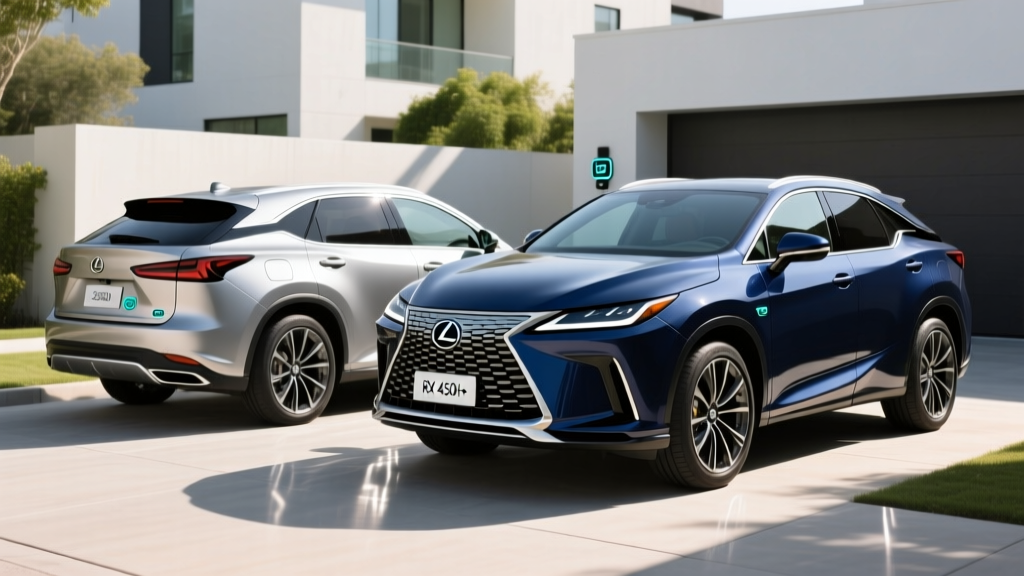
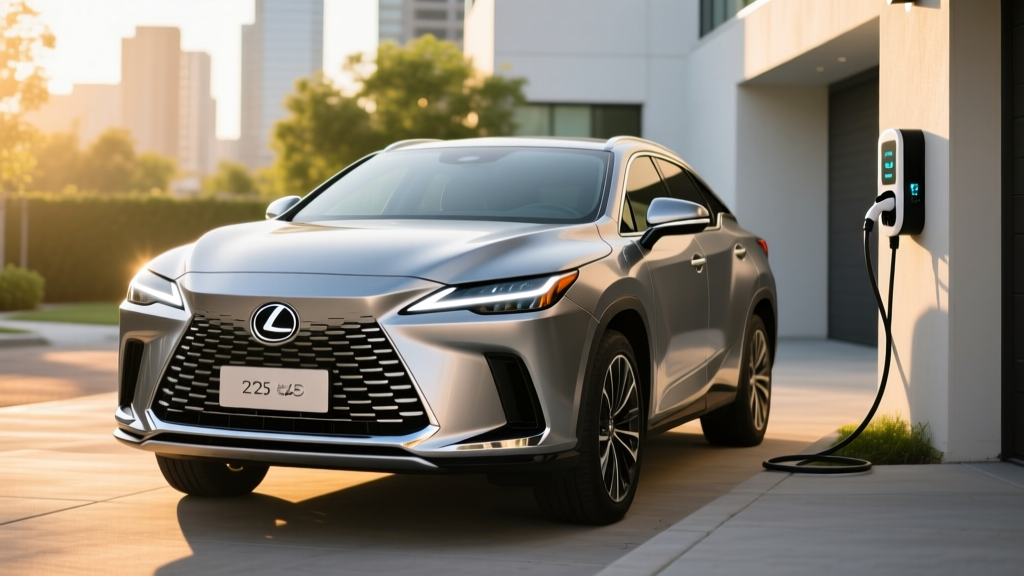
The 2025 Lexus RX 500h+ Luxury is the first plug-in hybrid (PHEV) version of Lexus's best-selling SUV, and it targets a very specific buyer: someone who wants electric-only commuting during the week and gas-powered road-trip flexibility on weekends — without the range anxiety of a full battery-electric vehicle (BEV). With an EPA-estimated 37 miles of electric-only range, a combined 367 horsepower, and a starting MSRP around $71,500 (including destination), the RX 500h+ sits at the premium end of the midsize PHEV segment.
But does the math work? Below, we break down every spec that matters — from real-world MPG and charging times to battery warranty and federal tax credit eligibility — so you can decide whether this PHEV fits your garage, your commute, and your budget.
| Spec | Value |
|---|---|
| EPA Electric-Only Range | 37 miles |
| EPA Combined MPGe | 65 MPGe |
| EPA Combined MPG (gas) | 35 MPG |
| Battery Capacity (usable) | ~18.1 kWh (lithium-ion) |
| Combined System Horsepower | 367 hp |
| 0–60 mph | 6.2 seconds |
| Level 2 Charge Time (0–100%) | ~2.5 hours at 6.6 kW |
| DC Fast Charging | Not supported |
| Base MSRP (Luxury trim) | $71,500 |
| Hybrid Battery Warranty | 10 years / 150,000 miles |
| Federal Tax Credit (§30D) | Up to $7,500 (eligibility varies) |
HEV vs. PHEV: What's the Difference in the RX Lineup?
Lexus offers the 2025 RX in three powertrain flavors, and it's critical not to confuse them:
- RX 350h (conventional hybrid / HEV): Self-charging via regenerative braking and the gas engine. No plug, no electric-only driving beyond very low-speed creeping. EPA-rated at 36 MPG combined.
- RX 500h+ (plug-in hybrid / PHEV): Larger battery you can plug in to charge. Delivers 37 miles of electric-only driving before the gas engine takes over. This is the model we're reviewing.
- RX 500h F Sport Performance (turbo hybrid): A performance-oriented conventional hybrid — no plug, no EV mode, focused on acceleration.
The conventional HEV models never require plug-in charging; they generate electricity internally. The PHEV, by contrast, benefits enormously from nightly plug-in charging — without it, you're just hauling a heavy battery around and getting closer to 35 MPG instead of the 65 MPGe the system is designed for.
Fuel Economy: EPA Numbers and Real-World MPG
According to fueleconomy.gov, the 2025 Lexus RX 500h+ achieves:
| Mode | City | Highway | Combined |
|---|---|---|---|
| Charge-Sustaining (gas hybrid) | 38 MPG | 33 MPG | 35 MPG |
| Charge-Depleting (electric + gas) | 65 MPGe combined | ||
Real-world note: In mixed suburban driving with regular plug-in charging, owners typically report exceeding the EPA combined figure on short commutes (under 30 miles round-trip), since most of those miles are covered on electricity alone. On long highway trips where the battery is depleted, expect the gas-only figure to hover around 30–33 MPG — highway driving is where hybrids lose their city-regen advantage. In cold weather (below 30°F), electric-only range drops roughly 20–30%, meaning you may see closer to 25–28 miles of EV range before the engine kicks in.
Electric-Only Range, Battery, and Charging
The RX 500h+ carries an 18.1 kWh usable lithium-ion battery pack mounted beneath the rear floor. Here's what that translates to in daily use:
- EPA electric-only range: 37 miles — enough for most commutes under 35 miles round-trip.
- Total combined range: Approximately 420–440 miles (electric + full gas tank).
- Level 1 charging (120V household outlet): Roughly 8–10 hours for a full charge — feasible for overnight if you arrive home by early evening.
- Level 2 charging (240V, 6.6 kW onboard charger): Approximately 2.5 hours from empty to full.
- DC fast charging: Not available. The RX 500h+ uses a J1772 connector for AC charging only.
The absence of DC fast charging is a notable limitation. If you rely on public charging infrastructure during the day, you're limited to Level 2 speeds — adequate for workplace charging but not for quick top-ups. For most PHEV owners, however, overnight Level 2 charging at home covers the daily commute entirely.
Powertrain and Performance
The RX 500h+ pairs a 2.5-liter inline-4 Atkinson-cycle engine with front and rear electric motors, producing a combined 367 horsepower. The rear motor enables electronic all-wheel drive (e-AWD) without a mechanical driveshaft. Acceleration to 60 mph takes approximately 6.2 seconds — genuinely quick for a midsize luxury SUV, and the instant torque from the electric motors makes city merging effortless.
The powertrain operates in several modes:
- EV Mode: Pure electric driving up to ~84 mph, ideal for city and suburban use.
- Auto EV/HV Mode: The system intelligently blends electric and gas power based on navigation and driving conditions.
- HV Mode: Forces the engine on to preserve battery charge — useful before entering a city zone where you want electric-only driving later.
- Charge Mode: Uses the gas engine to recharge the battery while driving — a fuel-cost penalty, but handy if you forgot to plug in.
Pricing, Trims, and Federal Tax Credit Eligibility
The 2025 Lexus RX 500h+ is offered primarily in the Luxury trim with available Premium Plus and Executive packages:
| Configuration | MSRP (incl. destination) |
|---|---|
| RX 500h+ Luxury (base) | $71,500 |
| RX 500h+ Luxury w/ Premium Plus Pkg | ~$75,800 |
| RX 500h+ Luxury w/ Executive Pkg | ~$79,500 |
Federal tax credit (§30D): Under current IRS rules, the RX 500h+ may qualify for up to $7,500 in federal tax credits, but eligibility depends on multiple factors that change frequently:
- MSRP cap: SUVs must have an MSRP at or below $80,000 — most RX 500h+ configurations qualify, but the fully loaded Executive package may push above the threshold depending on options.
- Buyer income cap: Modified adjusted gross income must not exceed $300,000 (joint), $225,000 (head of household), or $150,000 (single).
- Battery sourcing: Critical mineral and battery component requirements phase in annually. For 2025, a significant percentage of battery components must be manufactured or assembled in North America, and critical minerals must be sourced from the US or free-trade-agreement countries. Lexus has not published full sourcing details for the RX 500h+ battery — verify current eligibility on fueleconomy.gov before purchasing.
- Point-of-sale transfer: You can elect to transfer the credit to the dealer at purchase, reducing your out-of-pocket cost immediately rather than waiting for tax filing.
Consult a tax professional to confirm your personal eligibility. State incentives may also apply — check your state energy office or AFDC for local programs.
Reliability and Long-Term Ownership Costs
Lexus consistently ranks at or near the top of J.D. Power and Consumer Reports reliability studies, and the hybrid powertrain is among the most proven in the industry — Toyota has sold over 25 million hybrids globally since 1997. The e-CVT transaxle used in the RX 500h+ has no traditional gearbox to fail, and regenerative braking significantly extends brake pad life (often 80,000+ miles before replacement).
5-year estimated ownership advantages vs. gas-only RX 350:
- Fuel savings: ~$1,500–$2,500 over 5 years (75,000 miles) assuming regular plug-in charging and $3.50/gal gas.
- Brake savings: $400–$800 (fewer pad replacements due to regen).
- Insurance: Typically 5–10% higher than the gas RX 350 due to higher replacement-cost valuations.
- Maintenance: Similar to gas RX for oil changes; no transmission fluid service on e-CVT.
Who Should Buy the RX 500h+ (and Who Shouldn't)
Choose the RX 500h+ If:
- Your round-trip commute is under 35 miles and you can charge at home nightly
- You take 3+ road trips per year and don't want to plan around charging stations
- You want Lexus reliability with lower fuel costs
- You lack access to reliable public DC fast charging in your area
- You want a premium midsize SUV without going full EV
Look Elsewhere If:
- You can't install a Level 2 charger at home (a PHEV without home charging is just an expensive hybrid)
- Your commute exceeds 40 miles one-way (you'll burn gas most days anyway)
- You want the lowest possible operating cost (a full BEV like the Tesla Model X or BMW iX wins on fuel)
- Budget is under $60,000 (consider the RX 350h conventional hybrid at ~$53,000)
- You need third-row seating (the RX is strictly 5-passenger)
Frequently Asked Questions
How many MPG does the 2025 Lexus RX plug-in hybrid get?
In charge-sustaining mode (after the battery is depleted), the RX 500h+ returns an EPA-estimated 35 MPG combined (38 city / 33 highway). When regularly charged and driven within its 37-mile electric range, effective consumption is measured in MPGe — 65 MPGe combined — meaning most short commutes use little to no gasoline.
How far can the RX 500h+ go on electric power alone?
The EPA rates it at 37 miles of electric-only range. In real-world conditions — especially in cold weather or at sustained highway speeds above 70 mph — expect 25–30 miles. In mild city driving under 45 mph, some owners report stretching it to 40+ miles.
Does the RX 500h+ qualify for the $7,500 federal tax credit?
It may, but eligibility depends on your income, the vehicle's MSRP (must be ≤$80,000 for SUVs), and battery-component/critical-mineral sourcing rules that tighten each year. Verify on fueleconomy.gov and consult a tax professional before relying on the credit.
How long will the hybrid battery last, and what does replacement cost?
Lexus warrants the hybrid battery for 10 years or 150,000 miles. Historical data from Lexus/Toyota hybrids suggests these packs commonly last 200,000+ miles with gradual capacity loss. Out-of-warranty replacement is estimated at $5,000–$8,000, though this is rarely needed within typical ownership periods.
Should I get the RX 500h+ PHEV or the RX 350h conventional hybrid?
If you can charge at home and your daily driving stays under 35 miles, the PHEV saves significantly on fuel and provides a smoother, quieter electric commute. If you can't charge at home or your daily miles are high, the RX 350h (36 MPG combined, ~$53,000 base) is the more practical and affordable choice — you'll get excellent efficiency without needing a plug.
Is a PHEV better than a full EV for my situation?
A PHEV is the right bridge if you have one vehicle, no reliable public charging access, or frequent long road trips. A full BEV (like the BMW iX or Tesla Model X) offers lower per-mile fuel costs, zero tailpipe emissions, and less maintenance — but requires confidence in charging infrastructure and a higher upfront budget. If this is your household's second vehicle and the primary driver has home charging, a BEV may serve better.