Quick Verdict: The RX Hybrid Lineup at a Glance
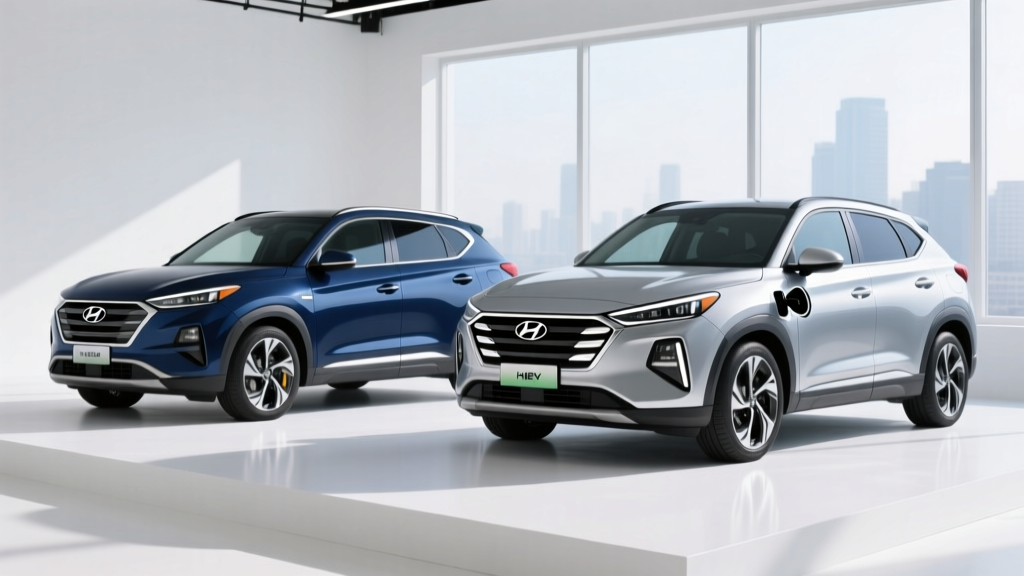
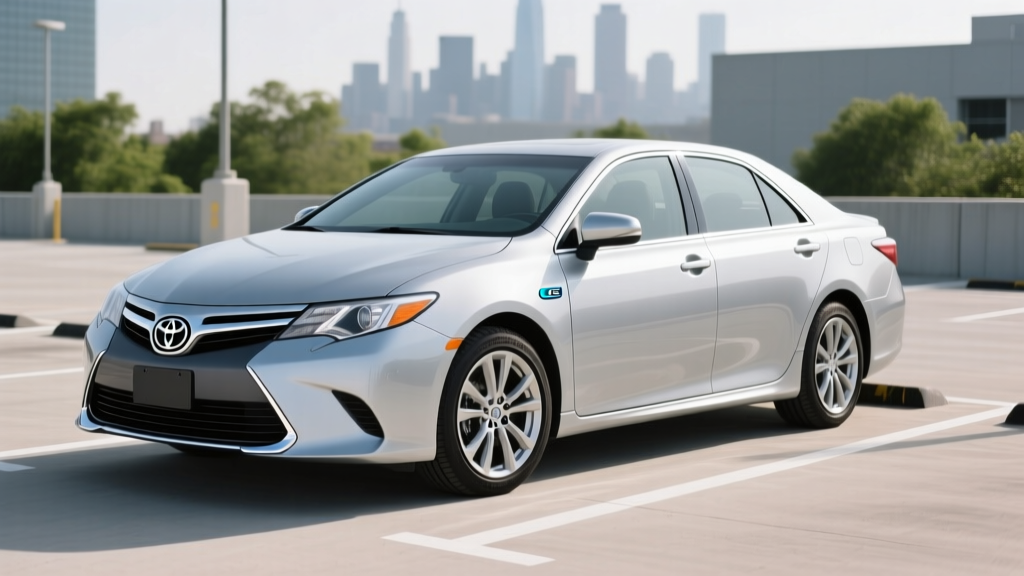
The 2025 Lexus RX Hybrid arrives in two distinct flavors, and choosing between them matters more than most buyers realize. The RX 350h is a conventional hybrid (HEV) — no plug required — delivering an EPA-estimated 36 MPG combined across all trims. The RX 450h+ is a plug-in hybrid (PHEV) with 37 miles of electric-only range before its gas engine kicks in. Both wear the RX badge, but they serve fundamentally different ownership patterns.
If you can charge at home and your daily commute stays under 35 miles, the RX 450h+ lets you drive on electricity most weekdays while keeping a 400+ mile total range for road trips. If charging access is uncertain or you simply want maximum simplicity, the RX 350h squeezes impressive efficiency from every gallon without ever needing a plug.
HEV vs PHEV: Which 2025 Lexus RX Hybrid Are You Looking At?
RX 350h — Conventional Hybrid (HEV)
- No plug-in charging required
- Regenerative braking and engine assist recharge the battery
- Smaller 1.6 kWh nickel-metal hydride battery
- Consistent efficiency regardless of charging access
- Lower starting price, no range-anxiety learning curve
RX 450h+ — Plug-In Hybrid (PHEV)
- 18.1 kWh lithium-ion battery pack (usable capacity ~14.5 kWh)
- 37 miles EPA electric-only range
- Requires plug-in charging to realize PHEV benefits
- Level 2 (240V) charging: ~2.5 hours from empty
- No DC fast charging capability
- Higher upfront cost, potential tax credit eligibility
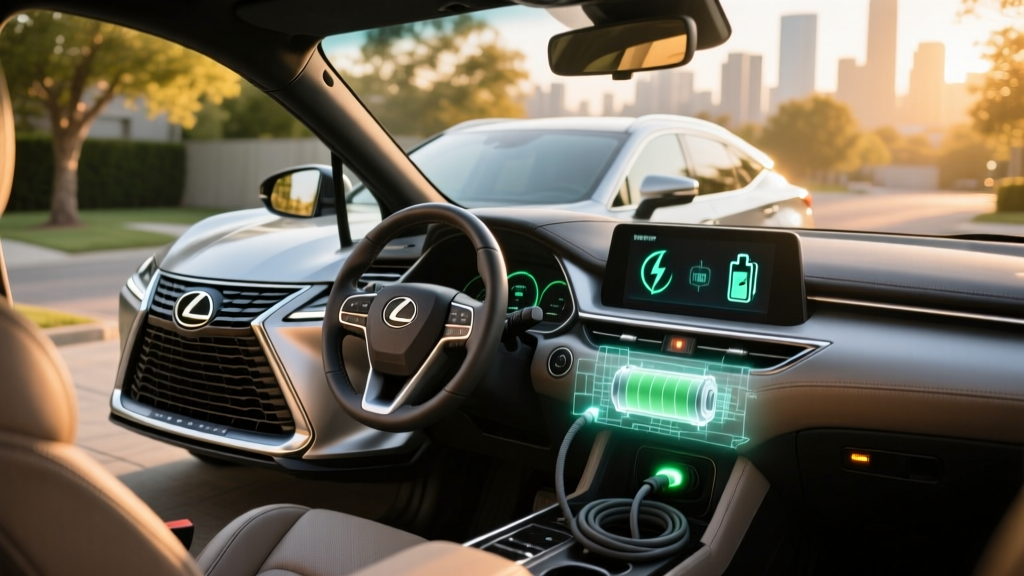
This distinction is critical: the RX 350h never needs to be plugged in. Its hybrid system captures energy from braking and deceleration to keep its small battery charged. The RX 450h+ can operate as a hybrid without plugging in, but you'd be leaving its best feature — 37 miles of zero-emission electric driving — on the table.
Fuel Economy and Electric Range: The Numbers That Matter
| Model | City MPG | Highway MPG | Combined MPG | EV Range (PHEV) | MPGe (EV Mode) |
|---|---|---|---|---|---|
| RX 350h (AWD) | 37 | 34 | 36 | N/A | N/A |
| RX 450h+ (AWD) | 38* | 33* | 35* | 37 mi | 83 MPGe |
*MPG figures for the RX 450h+ apply when operating in hybrid mode after the battery is depleted. Source: fueleconomy.gov
Real-World MPG: What to Actually Expect
Toyota and Lexus hybrid systems consistently deliver real-world city MPG that meets or exceeds EPA estimates, thanks to the electric motor handling low-speed driving where gas engines are least efficient. In mixed suburban driving with moderate stop-and-go traffic, RX 350h owners commonly report 35–38 MPG. Highway cruising at 75+ MPH tends to drop efficiency to 30–33 MPG — the aerodynamic penalty of an SUV body and the engine doing more solo work at sustained speeds.
For the RX 450h+, the real-world electric range sits closer to 32–35 miles in mild weather with mixed driving. Cold temperatures below 40°F can reduce that electric range by 15–20%, bringing it down to roughly 28–31 miles. Highway driving in EV mode also shortens range — expect around 28–30 electric miles at 70 MPH before the 2.5L four-cylinder engine engages.
Powertrain Specs: What's Under the Hood
| Specification | RX 350h | RX 450h+ |
|---|---|---|
| Engine | 2.5L 4-cyl + 2 electric motors | 2.5L 4-cyl + 2 electric motors |
| Combined Horsepower | 246 hp | 302 hp |
| 0–60 MPH | 7.4 sec | 6.2 sec |
| Drivetrain | AWD (eAWD with rear motor) | AWD (eAWD with rear motor) |
| Battery Type | 1.6 kWh NiMH | 18.1 kWh Li-ion |
| Transmission | eCVT | eCVT |
| Towing Capacity | 3,500 lbs | 3,500 lbs |
The RX 450h+ uses a more powerful electric motor system and the larger lithium-ion pack to deliver 56 additional horsepower and a noticeably quicker 0–60 time. Both models use Lexus's eCVT — a planetary gearset, not a belt-driven CVT — which provides smooth, stepless power delivery without the rubber-band feel of traditional CVTs.
Pricing, Trims, and Tax Credit Eligibility
The 2025 RX 350h starts at approximately $51,950 (Premium trim, including destination), with the Luxury and F SPORT Handling trims climbing to roughly $59,000–$62,000. The RX 450h+ begins around $63,550 for the Premium trim, with Luxury and F SPORT Handling variants reaching $68,000–$72,000.
Federal Tax Credit: Does the RX Hybrid Qualify?
Under current IRS §30D rules, the RX 450h+ PHEV may qualify for up to $3,750 in federal tax credits, depending on battery component sourcing and critical mineral requirements that shift annually. The conventional RX 350h does not qualify for the §30D new EV credit, as it lacks sufficient electric-only range.
§30D Eligibility Checklist (2025 Rules)
- Vehicle must be a PHEV or BEV with ≥7 kWh battery (RX 450h+ qualifies at 18.1 kWh)
- MSRP must not exceed $80,000 for SUVs (all RX 450h+ trims currently comply)
- Buyer AGI limits: $150K single / $225K head of household / $300K joint
- Battery components and critical minerals must meet domestic-content thresholds (varies by model year — verify with your dealer and IRS.gov)
- Credit can be transferred to the dealer as a point-of-sale discount (effective Jan 2024)
Critical caveat: Battery sourcing requirements tighten each year. A vehicle that qualified for the full $7,500 in 2024 may only qualify for $3,750 (or zero) in 2025 depending on where its battery minerals and components originate. Always confirm current eligibility with your dealer's finance department and cross-reference the IRS clean vehicle credit list before signing.
Battery Warranty, Lifespan, and Replacement Costs
Lexus Hybrid Battery Coverage
- Hybrid Battery Warranty: 10 years / 150,000 miles (whichever comes first) — transferable to subsequent owners
- Powertrain Warranty: 6 years / 70,000 miles
- Basic Warranty: 4 years / 50,000 miles
Lexus (and parent company Toyota) have built the strongest track record in the industry for hybrid battery longevity. The nickel-metal hydride pack in the RX 350h uses a conservative charge-discharge window — the system never fully depletes or fully charges the battery, which dramatically extends cycle life. Data from millions of Toyota/Lexus hybrids on the road shows that hybrid batteries routinely last 150,000–200,000+ miles with minimal degradation.
The lithium-ion pack in the RX 450h+ is newer technology, but Toyota's thermal management system and buffer strategy (keeping the usable capacity to roughly 80% of total) provide similar longevity protection.
What Does Hybrid Battery Replacement Cost?
Out-of-warranty hybrid battery replacement for the RX 350h typically runs $3,000–$5,000 including labor at a Lexus dealer. Independent hybrid specialists often offer refurbished battery packs for $2,000–$3,500. The RX 450h+ lithium-ion pack replacement is more expensive — estimated at $6,000–$9,000 — though real-world failures within the first 150,000 miles remain exceedingly rare based on Toyota's PHEV history with the RAV4 Prime and Prius Prime.
For context, a transmission replacement on a conventional luxury SUV can cost $4,000–$7,000. The hybrid system eliminates the traditional transmission entirely, offsetting some of the battery replacement risk.
Who Should Choose the 2025 Lexus RX Hybrid?
Choose the RX 350h If:
- You lack reliable home or workplace charging
- You want a simple, proven ownership experience
- Your budget stays under $55,000–$60,000
- You drive 12,000–18,000 miles/year and want to minimize fuel costs without behavioral changes
- You plan to keep the vehicle 8–12 years and value the 10-year battery warranty
Choose the RX 450h+ PHEV If:
- You can install a Level 2 (240V) charger at home
- Your daily round-trip commute is under 35 miles
- You want EV-like daily driving with gas-engine freedom for road trips
- You value the 302 hp powertrain and quicker acceleration
- You can benefit from the potential $3,750 federal tax credit
RX Hybrid vs Full EV vs Gas: The Decision Framework
Choose the RX Hybrid (HEV or PHEV) over a full EV if: you regularly take road trips exceeding 250 miles, live in an area with sparse DC fast-charging infrastructure, or don't want to plan routes around charging stops. The RX 450h+ gives you electric commuting without range anxiety.
Choose a full EV (like the Lexus RZ 450e or Tesla Model Y) over the RX Hybrid if: you have reliable home charging, your daily driving stays under 250 miles, you want zero tailpipe emissions and minimal maintenance (no oil changes, no spark plugs), and you qualify for the full $7,500 federal credit.
Stick with a gas-only SUV if: your annual mileage is very low (under 8,000 miles), where the fuel savings of a hybrid won't offset the higher purchase price within your ownership period, or if you tow near the 3,500-lb maximum frequently and want the simplest possible powertrain.
Charging the RX 450h+ PHEV: What You Need to Know
| Charging Level | Power | Time (0–100%) | Miles Added/Hour |
|---|---|---|---|
| Level 1 (120V household outlet) | ~1.4 kW | ~11 hours | ~4–5 mi/hr |
| Level 2 (240V, home or public) | ~6.6 kW (onboard charger max) | ~2.5 hours | ~15–18 mi/hr |
| DC Fast Charging | Not supported | N/A | N/A |
The RX 450h+ does not support DC fast charging — a deliberate engineering choice. The 18.1 kWh battery is small enough that Level 2 charging fully replenishes it in roughly 2.5 hours, which covers most overnight and workplace charging scenarios. A standard 120V outlet will fully charge the pack overnight in about 11 hours, which works for lower-mileage drivers.
For home Level 2 installation, budget $800–$2,000 for a quality 32–48 amp charger and professional electrical work, assuming your panel has capacity. If a panel upgrade to 200A is needed, add $1,500–$3,000.
Frequently Asked Questions
How many MPG does the 2025 Lexus RX 350h hybrid get?
The EPA rates the RX 350h at 37 city / 34 highway / 36 combined MPG. In real-world suburban driving, most owners report 34–38 MPG depending on driving style, terrain, and weather. Highway-only driving at 75+ MPH typically yields 30–33 MPG.
How far can the RX 450h+ go on electric power only?
The EPA rates the RX 450h+ at 37 miles of electric-only range. Real-world results typically fall between 32–35 miles in mild weather and 28–31 miles in cold conditions or at sustained highway speeds. Once the battery is depleted, the vehicle operates as a conventional hybrid at an EPA-estimated 35 MPG combined.
Does the 2025 Lexus RX hybrid qualify for a tax credit?
The RX 350h conventional hybrid does not qualify for the federal §30D clean vehicle credit. The RX 450h+ PHEV may qualify for up to $3,750, depending on your income, the vehicle's MSRP (under the $80,000 SUV cap), and current battery-sourcing requirements. Check the IRS clean vehicle credit page for the latest eligibility list, and confirm with your dealer before purchasing.
Is the Lexus RX hybrid reliable? What about battery replacement costs?
Lexus consistently ranks at or near the top of J.D. Power and Consumer Reports reliability surveys, and the hybrid system is one of the most proven powertrains in the industry. The hybrid battery is warrantied for 10 years / 150,000 miles. Out-of-warranty replacement runs $3,000–$5,000 for the RX 350h (NiMH) and an estimated $6,000–$9,000 for the RX 450h+ (lithium-ion), though failures before 150,000 miles are rare based on Toyota/Lexus hybrid history. The IIHS has also rated the RX highly for crash safety.
Should I get the RX 350h hybrid or the RX 450h+ plug-in hybrid?
Choose the RX 350h if you can't charge at home, want a lower purchase price, and prefer the simplest possible ownership experience. Choose the RX 450h+ if you have Level 2 charging access, your daily commute is under 35 miles, and you want the performance bump (302 hp, 6.2-sec 0–60) plus electric-only commuting. If you're weighing a PHEV against a full EV, the RX 450h+ makes sense if you regularly take long road trips and don't want to depend on public DC fast-charging infrastructure.
Does the RX 350h need to be plugged in?
No. The RX 350h is a conventional self-charging hybrid. Its battery is recharged entirely through regenerative braking and the gas engine. You simply fill it with gas and drive — no charging equipment or behavioral changes required.