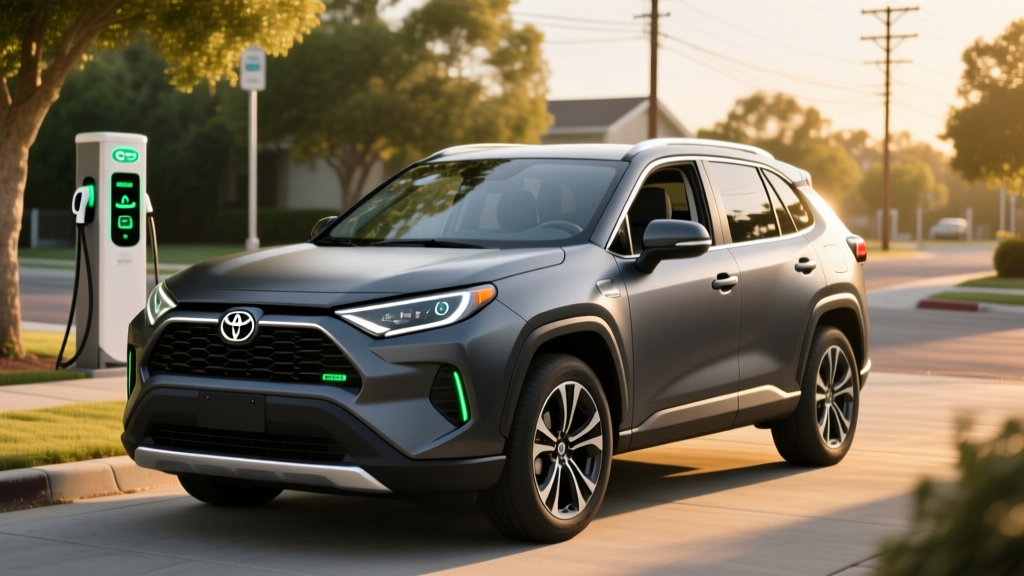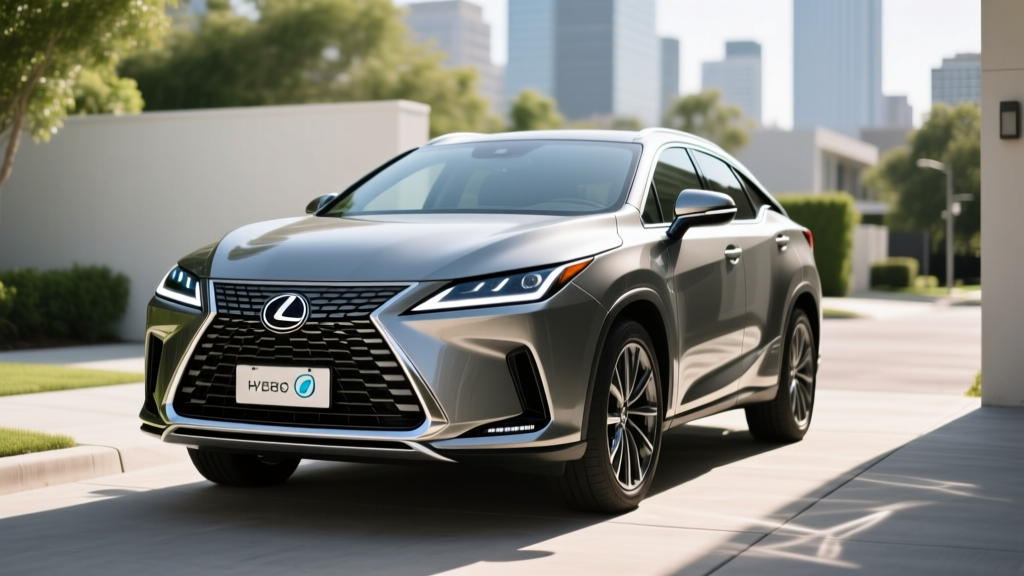
The midsize luxury SUV segment is crowded with electrified options, but the 2025 Lexus RX 350h occupies a specific niche: a conventional hybrid (HEV) that requires zero behavioral change from its owner. No plugging in, no range calculations, no charging apps — just substantially better fuel economy than the gas-only RX 350, wrapped in Lexus reliability. For buyers who want luxury and efficiency without committing to a plug-in hybrid or full battery-electric vehicle, the RX 350h makes a compelling case. Here's exactly what you get, what it costs, and how it stacks up in the real world.
2025 Lexus RX 350h: Quick Specs at a Glance
| Specification | 2025 Lexus RX 350h |
|---|---|
| Powertrain | 2.5L 4-cyl + 2 electric motors (AWD) |
| Combined Horsepower | 246 hp |
| EPA Fuel Economy | 37 city / 34 hwy / 36 combined MPG |
| Drivetrain | Electronic AWD (eAWD) |
| 0–60 mph | 7.4 seconds |
| Hybrid Battery | ~1.6 kWh NiMH (self-charging) |
| Cargo Volume | 29.6 cu ft (behind rear seats) |
| Starting MSRP | $51,950 |
| Hybrid Battery Warranty | 10 years / 150,000 miles |
| Federal Tax Credit | Not eligible (conventional HEV) |
Fuel Economy: EPA Numbers vs. Real-World MPG
The EPA rates the 2025 RX 350h at 37 MPG city, 34 MPG highway, and 36 MPG combined. That's a meaningful improvement over the gas-only RX 350, which returns 22 city / 29 highway / 25 combined — a 44% gain in combined efficiency.
| Driving Scenario | EPA Estimate | Real-World Expectation |
|---|---|---|
| City (stop-and-go) | 37 MPG | 36–40 MPG (hybrids excel here) |
| Highway (70+ mph) | 34 MPG | 30–33 MPG (aero drag, less regen benefit) |
| Combined (mixed) | 36 MPG | 33–37 MPG |
| Cold weather (below 32°F) | — | 28–32 MPG (engine runs more for cabin heat) |
Conventional hybrids like the RX 350h actually tend to exceed their EPA city rating in real-world stop-and-go driving. That's because regenerative braking recaptures energy at every stop, and the electric motors handle low-speed propulsion where gas engines are least efficient. Highway driving is where hybrids lose their advantage — at sustained high speeds, the gasoline engine does most of the work and aerodynamic drag dominates.
In cold weather, expect a 10–15% fuel economy drop. The engine runs more frequently to generate cabin heat (there's no electric resistance heater powerful enough for a large SUV cabin in freezing temps), and the battery is less efficient at low temperatures. This is normal for all hybrids and is far less dramatic than the 20–30% range loss a full EV experiences in winter.
Hybrid vs. Plug-In Hybrid: Understanding the RX Lineup
Lexus offers the RX in three powertrain flavors for 2025, and it's critical to understand the differences before you shop:
| Feature | RX 350h (HEV) | RX 450h+ (PHEV) | RX 350 (Gas) |
|---|---|---|---|
| Type | Conventional Hybrid | Plug-In Hybrid | Gasoline Only |
| Plugs In? | No — self-charging | Yes — 18.1 kWh battery | No |
| Combined MPG / MPGe | 36 MPG | 35 MPG (gas) / 83 MPGe | 25 MPG |
| Electric-Only Range | None (EV assist only) | 37 miles | None |
| Horsepower | 246 hp | 302 hp | 275 hp |
| 0–60 mph | 7.4 sec | 6.2 sec | 7.6 sec |
| Starting MSRP | $51,950 | $62,850 | $48,600 |
| Federal Tax Credit | Not eligible | Up to $7,500 (§30D)* | Not eligible |
*RX 450h+ PHEV eligibility for the IRS §30D clean vehicle credit depends on current-year battery sourcing, buyer income caps ($150K single / $300K joint), and the $80,000 SUV MSRP cap. Confirm eligibility at the point of sale with your dealer.
The RX 350h is a conventional hybrid — it charges its small battery through regenerative braking and the gasoline engine. You never plug it in. The RX 450h+ is a plug-in hybrid (PHEV) with an 18.1 kWh battery that delivers 37 miles of electric-only driving before the gas engine kicks in. If you have home charging and a short commute, the 450h+ can run almost entirely on electricity on weekdays.
The RX 350h is the right call if you lack reliable home charging access (apartment dwellers, street parkers) or simply want efficiency without thinking about it.
Powertrain Details: How the Hybrid System Works
The RX 350h pairs a 2.5-liter Atkinson-cycle four-cylinder engine with two electric motors — one on the front axle and one on the rear — through Lexus's eAWD system. Combined output is 246 horsepower. The rear motor activates on demand for traction, meaning there's no mechanical driveshaft connecting the axles.
The Atkinson-cycle engine sacrifices some low-end power for thermal efficiency, but the electric motors fill that torque gap instantly. The result is smooth, linear acceleration from stops — the 0–60 mph time of 7.4 seconds is adequate for merging and passing, though it won't feel sporty. The continuously variable transmission (eCVT) is tuned for smoothness rather than engagement, which is appropriate for a luxury cruiser.
The hybrid battery is a compact nickel-metal hydride (NiMH) pack located under the rear seats. At roughly 1.6 kWh, it's tiny compared to a PHEV or EV battery — but that's intentional. It only needs to buffer regenerative braking energy and provide short bursts of electric assist. This small size keeps weight down and leaves cargo space uncompromised versus the gas RX.
Pricing, Trims, and Tax Credit Eligibility
The 2025 Lexus RX 350h starts at $51,950 (including destination) for the base trim, which is well-equipped with a 9.8-inch touchscreen, wireless Apple CarPlay/Android Auto, heated front seats, and the full Lexus Safety System+ 3.0 suite. Higher trims climb quickly:
- RX 350h Premium: ~$53,450 — adds panoramic moonroof, power-folding mirrors
- RX 350h Premium+: ~$56,950 — adds 14-inch touchscreen, ventilated seats, navigation
- RX 350h Luxury: ~$60,150 — adds semi-aniline leather, 21-inch wheels, heated rear seats
- RX 350h F SPORT Handling: ~$58,950 — adds adaptive suspension, sport seats, F SPORT styling
Federal Tax Credit Status: The RX 350h does NOT qualify for the IRS §30D new clean vehicle credit. This credit applies only to plug-in vehicles (PHEVs and BEVs) with battery capacities of at least 7 kWh. The RX 350h's ~1.6 kWh NiMH battery falls well below this threshold. If federal incentives are a priority, consider the RX 450h+ PHEV instead.
Some states offer their own hybrid incentives or HOV lane access for efficient vehicles — check your state's energy office or DMV for current programs, as these vary widely and change frequently.
Battery Warranty, Reliability, and Replacement Costs
Hybrid Battery Warranty: Lexus covers the RX 350h hybrid battery for 10 years or 150,000 miles (whichever comes first) in all 50 states. This is among the longest hybrid battery warranties in the luxury segment and applies regardless of state emissions requirements.
General Warranty: 4 years / 50,000 miles basic; 6 years / 70,000 miles powertrain.
Lexus (and parent company Toyota) has the deepest hybrid experience in the industry — the Prius launched in 1997, and their hybrid systems have been refined over nearly three decades. The RX 350h's NiMH battery chemistry is conservative and proven; unlike the larger lithium-ion packs in PHEVs and EVs, NiMH cells degrade very slowly under the shallow charge/discharge cycles a conventional hybrid uses.
Real-world failure data from Toyota/Lexus hybrids shows that most original hybrid batteries last well beyond 150,000 miles. When replacement is eventually needed, expect to pay between $2,000 and $4,000 for a refurbished or new hybrid battery pack, plus labor. This is a fraction of the $10,000–$20,000+ that a full EV battery replacement can cost, because the pack is small and the chemistry is mature.
Lexus consistently ranks at or near the top of J.D. Power and Consumer Reports reliability surveys. The RX specifically has been a reliability benchmark for decades. The hybrid variant adds complexity (two electric motors, power electronics, regenerative braking system), but these components have been in Toyota/Lexus production vehicles for years and are well-understood by dealership service departments nationwide.
Who Should Choose the RX 350h — and Who Shouldn't
Pros
- 36 MPG combined with no plug-in required — works for apartments, street parking, and road trips
- Standard eAWD for all-weather traction without a fuel economy penalty
- 10-year / 150,000-mile hybrid battery warranty
- Proven Lexus reliability and strong resale value
- Smooth, quiet powertrain ideal for commuting
- Lower total cost of ownership than gas RX 350 over 5+ years
Cons
- No federal tax credit (unlike the RX 450h+ PHEV)
- 246 hp is adequate but not exciting — 0-60 in 7.4 sec
- Highway MPG drops to ~30-33 in real-world driving
- eCVT drone under hard acceleration
- $3,350 premium over the gas RX 350 base price
- No electric-only driving mode (that's the PHEV's job)
The Decision Framework
Choose the RX 350h if: You want a luxury midsize SUV with significantly better fuel economy, you don't have reliable home charging, you take regular road trips where charging infrastructure is a concern, and you value long-term reliability over acceleration performance.
Choose the RX 450h+ (PHEV) if: You have Level 2 home charging, your daily commute is under 37 miles round-trip, you want to minimize gasoline use on weekdays, and you qualify for the §30D federal tax credit (which can offset the $10,900 price premium over the 350h).
Choose a full EV (like the Lexus RZ 450e or Tesla Model Y) if: You have home charging, your daily driving is under 200 miles, you want zero tailpipe emissions, and you're ready to plan road trips around DC fast-charging stops.
Stick with the gas RX 350 if: You drive very few miles annually (under 8,000/year), the $3,350 hybrid premium won't pay back in fuel savings within your ownership window, or you prioritize the lowest upfront cost.
5-Year Cost of Ownership Snapshot
Assuming 15,000 miles/year, $3.50/gallon regular, and the EPA combined MPG figures:
| Cost Factor | RX 350h (HEV) | RX 350 (Gas) | RX 450h+ (PHEV)* |
|---|---|---|---|
| Base MSRP | $51,950 | $48,600 | $62,850 |
| Federal Tax Credit | $0 | $0 | Up to $7,500 |
| 5-Yr Fuel Cost (est.) | $7,290 | $10,500 | ~$4,500–$6,500** |
| Net 5-Yr Cost (MSRP + Fuel – Credit) | ~$59,240 | ~$59,100 | ~$60,350–$62,350 |
*PHEV fuel cost depends heavily on how much you drive on electricity vs. gas. **Assumes 60–80% of weekday driving on electric, weekend gas use. Electricity cost varies by utility rate.
The RX 350h and gas RX 350 reach near cost-parity over 5 years, with the hybrid pulling further ahead the longer you own it. The PHEV makes financial sense primarily when you can claim the full $7,500 credit and charge at home cheaply.
Frequently Asked Questions
How many MPG does the 2025 Lexus RX 350h get?
The EPA rates it at 37 city / 34 highway / 36 combined MPG. In real-world city driving with frequent stops, many owners see 38–40 MPG thanks to regenerative braking. Highway driving at 70+ mph typically yields 30–33 MPG.
Does the RX 350h need to be plugged in?
No. The RX 350h is a conventional hybrid (HEV). Its small battery charges through regenerative braking and the gasoline engine. You fuel it at a gas station like any other car — there's no plug, no charging cable, and no electric-only range.
How far can the RX 350h drive on electric power alone?
Effectively zero miles on electric-only. The hybrid system uses the electric motors to assist the gas engine and enable very brief low-speed EV creep (under 1 mile at parking-lot speeds), but it cannot sustain electric-only driving. If you want 37 miles of electric-only range, look at the RX 450h+ PHEV.
Is the RX 350h hybrid battery reliable, and what does replacement cost?
Yes. Lexus covers the hybrid battery for 10 years / 150,000 miles, and Toyota/Lexus hybrid batteries routinely exceed 150,000 miles before any significant degradation. If replacement is needed outside warranty, expect $2,000–$4,000 for a new or refurbished pack.
Does the 2025 RX 350h qualify for a federal tax credit?
No. The IRS §30D clean vehicle credit requires a plug-in vehicle with at least 7 kWh of battery capacity. The RX 350h's ~1.6 kWh NiMH battery does not meet this threshold. The plug-in RX 450h+ may qualify for up to $7,500, subject to income limits, MSRP caps, and battery-sourcing requirements — verify current eligibility on irs.gov.
Hybrid vs. PHEV vs. EV — which RX is right for me?
Choose the RX 350h (HEV) if you can't charge at home or want simplicity. Choose the RX 450h+ (PHEV) if you have home charging and a short commute but still want gas flexibility for road trips. Choose a full EV if you have reliable home charging, drive under 200 miles daily, and want to eliminate gasoline entirely.
How does the RX 350h perform in snow and rain?
The eAWD system provides on-demand rear-axle torque, giving the RX 350h solid all-weather traction without the fuel economy penalty of a mechanical AWD system. It's not a substitute for winter tires in severe conditions, but it handles typical snow and rain confidently.