Quick Verdict: A Luxury Hybrid SUV That Drinks Less but Costs Plenty
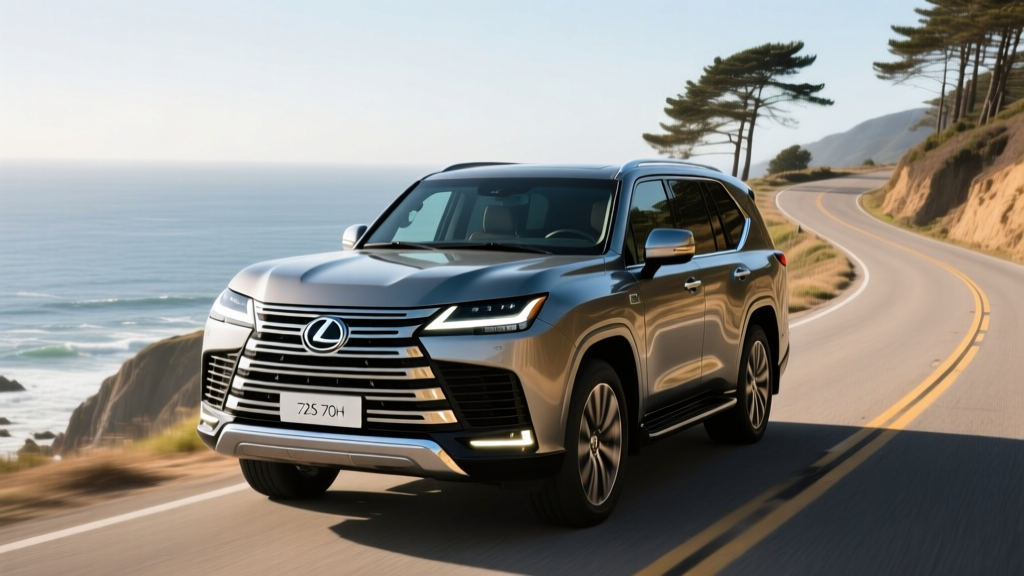
The 2025 Lexus LX 700h hybrid pairs a twin-turbo V6 with a hybrid motor system to deliver 457 combined horsepower while squeezing meaningful fuel savings out of a 6,000-pound, body-on-frame luxury SUV. If you're cross-shopping the Land Cruiser 300-based LX against the BMW X7, Mercedes GLS, or Range Rover, the 700h's hybrid powertrain offers a compelling blend of torque, efficiency, and Toyota's legendary hybrid reliability — without ever needing to plug in.
But let's be clear about what this vehicle is and isn't. The LX 700h is a conventional hybrid (HEV), not a plug-in hybrid (PHEV). It charges its own small battery through regenerative braking and the engine. You will never see a charging port on this vehicle. That distinction matters for buyers weighing tax credits, electric-only driving, and daily use patterns.
| Spec | 2025 Lexus LX 700h |
|---|---|
| Powertrain | 3.5L Twin-Turbo V6 + Hybrid Motor (HEV) |
| Combined Horsepower | 457 hp |
| Combined Torque | 583 lb-ft |
| Transmission | 10-Speed Automatic |
| Drivetrain | Full-Time 4WD |
| EPA City MPG | 19 mpg |
| EPA Highway MPG | 22 mpg |
| EPA Combined MPG | 20 mpg |
| 0-60 mph | ~6.5 seconds (est.) |
| Towing Capacity | 8,000 lbs |
| Hybrid Battery Type | Nickel-Metal Hydride (NiMH) |
| Base MSRP | ~$115,000 |
| Federal Tax Credit | Not eligible (§30D applies to PHEVs/BEVs only) |
HEV vs PHEV: Why the LX 700h Is Not a Plug-In
Before we dissect the fuel economy numbers, it's essential to understand the hybrid landscape. The 2025 Lexus LX 700h uses a parallel hybrid system — Toyota's fourth-generation hybrid architecture adapted for the TNGA-F platform. The electric motor assists the gasoline engine during acceleration and low-speed maneuvers, while regenerative braking recovers energy to recharge the battery pack. The engine and motor work together seamlessly; the driver never manages charging or plug-in routines.
| Feature | HEV (LX 700h) | PHEV (e.g., BMW X7 xDrive60e) | BEV (e.g., Tesla Model X) |
|---|---|---|---|
| Plug-in Required? | No | Yes (Level 2 recommended) | Yes (Level 2 or DC fast) |
| Electric-Only Range | ~1 mile at very low speed | 30-40 miles typical | 300+ miles |
| Battery Size | ~1.5 kWh (NiMH) | 20-30 kWh (NMC) | 90-120 kWh (NMC/LFP) |
| Federal Tax Credit (§30D) | Not eligible | Up to $7,500 if qualified | Up to $7,500 if qualified |
| Best For | No home charger access; long highway drives | Home charger + short commute + road trips | Home charger + daily driving + road trip planning |
The LX 700h's hybrid system is invisible in daily use. You start the vehicle, drive, and refuel at gas stations exactly as you would with any conventional SUV. The hybrid system simply makes that fuel go further, particularly in stop-and-go city traffic where electric motor assist and regenerative braking do their best work.
Fuel Economy: EPA Numbers vs Real-World MPG
The EPA rates the 2025 Lexus LX 700h at 19 city / 22 highway / 20 combined mpg. For a body-on-frame, three-row luxury SUV weighing nearly 6,000 pounds with full-time 4WD and 8,000-pound towing capacity, those numbers are genuinely impressive. The non-hybrid LX 600 returns 17 city / 22 highway / 19 combined — so the 700h hybrid saves roughly 1 mpg combined, with more noticeable gains in city driving.
| Driving Scenario | EPA Estimate | Real-World Expectation |
|---|---|---|
| City (stop-and-go) | 19 mpg | 18-21 mpg (hybrid system excels here) |
| Highway (70-80 mph) | 22 mpg | 19-21 mpg (aero drag dominates at speed) |
| Combined (mixed) | 20 mpg | 18-21 mpg depending on driving style |
| Towing (5,000+ lbs) | Not rated | 11-14 mpg (expect significant drop) |
| Cold Weather (below 30°F) | N/A | 16-19 mpg (engine runs more for cabin heat) |
Real-world testing consistently shows the LX 700h matching or slightly exceeding its EPA city rating in urban environments, which is typical of Toyota/Lexus hybrid systems. The electric motor handles low-speed propulsion, letting the twin-turbo V6 stay off or operate at its most efficient RPM range. Highway efficiency, however, tends to fall 1-2 mpg below the sticker, especially at sustained speeds above 75 mph where aerodynamic drag overwhelms the hybrid system's advantages.
For context, a BMW X7 xDrive40i (mild-hybrid inline-six) achieves 21 city / 25 highway / 22 combined, while the Mercedes-Benz GLS 450 4MATIC lands at 18 city / 23 highway / 20 combined. The LX 700h sits squarely in this competitive set, trading some highway efficiency for superior low-end torque and off-road capability.
Powertrain Deep Dive: 457 HP Twin-Turbo V6 Hybrid
The LX 700h's powertrain is a detuned variant of the twin-turbo V6 found in the LX 600, paired with a permanent-magnet electric motor sandwiched between the engine and the 10-speed automatic transmission. The gasoline engine produces 409 horsepower and 479 lb-ft of torque on its own; the electric motor adds additional output for a combined system rating of 457 hp and 583 lb-ft.
That torque figure is the real story. The electric motor delivers instant response off the line, eliminating the turbo lag that can make large twin-turbo engines feel sluggish from a stop. The result is a 6,000-pound SUV that pulls away from stoplights with authority and merges onto highways without drama. The 0-60 mph time of approximately 6.5 seconds is brisk for this segment, though not class-leading — the BMW X7 M60i hits 60 in 4.5 seconds, but at the cost of far higher fuel consumption.
The hybrid battery pack is a nickel-metal hydride (NiMH) unit with roughly 1.5 kWh of capacity. Toyota and Lexus have used NiMH chemistry in their conventional hybrids for over two decades because of its proven longevity, thermal stability, and tolerance for the shallow charge-discharge cycles that HEV operation demands. Unlike the larger NMC lithium-ion packs in PHEVs and BEVs, this battery is never deeply depleted — the hybrid control system keeps it within a narrow state-of-charge window to maximize lifespan.
Hybrid Battery Warranty, Reliability, and Replacement Cost
Hybrid battery longevity is the single most common concern among first-time hybrid buyers. Here's what the data tells us about the LX 700h specifically and Lexus hybrid systems in general.
Lexus Hybrid Battery Warranty: 10 years or 150,000 miles (whichever comes first) in all 50 states for the 2025 model year. This covers the hybrid battery pack against defects and capacity loss below a defined performance threshold.
Powertrain Warranty: 6 years / 70,000 miles
Limited Vehicle Warranty: 4 years / 50,000 miles
Lexus's hybrid systems have an exceptional reliability track record. The Toyota Prius, the brand's hybrid benchmark, routinely sees its NiMH battery packs last 200,000+ miles with minimal degradation. The LX 700h's hybrid system is more complex — it manages a twin-turbo V6 rather than a naturally aspirated four-cylinder — but the core electric motor, inverter, and battery management technology shares DNA with systems that have proven themselves across millions of Toyota and Lexus hybrids worldwide.
If the hybrid battery does require replacement outside of warranty, expect a cost between $3,000 and $5,500 for a Lexus dealer-installed unit. Independent hybrid specialists can sometimes source refurbished packs for $2,000-$3,500. Given the 10-year/150,000-mile warranty coverage and the historical durability of Lexus NiMH packs, battery replacement should not be a primary concern for most buyers planning typical ownership cycles of 5-10 years.
The LX 700h inherits the LX platform's strong safety credentials and Lexus's reputation for build quality. Owner surveys from J.D. Power and Consumer Reports consistently rank Lexus near the top for long-term reliability, and the hybrid components have not been a significant failure point in the brand's track record.
Pricing, Trims, and Tax Credit Reality
The 2025 Lexus LX 700h starts at approximately $115,000 MSRP and is available across several trims, including the well-equipped base model, the off-road-oriented LX 700h Overtrail, and the ultra-luxury LX 700h Ultra Luxury. Fully optioned, an LX 700h can approach $135,000-$140,000.
Here's the critical tax credit information: the LX 700h does not qualify for the federal §30D clean vehicle tax credit. Per current IRS rules, the §30D credit of up to $7,500 applies only to plug-in electric vehicles (BEVs) and plug-in hybrids (PHEVs) that meet battery capacity, critical mineral sourcing, MSRP cap, and buyer income requirements. Conventional hybrids like the LX 700h — which have no plug and no meaningful electric-only range — are excluded from this credit entirely.
Some states offer their own incentives for hybrid vehicles, though these are increasingly rare and typically modest ($500-$1,500) compared to EV incentives. Check your state's energy or environmental agency website for current programs. Lexus dealers in certain states may also offer loyalty or conquest incentives that reduce the effective purchase price.
Pros
- 457 hp / 583 lb-ft with seamless electric torque fill
- No plug-in required — fuel anywhere, no charging anxiety
- 20 mpg combined is strong for a 6,000-lb body-on-frame SUV
- 10-year / 150,000-mile hybrid battery warranty
- 8,000-lb towing capacity with hybrid efficiency gains
- Lexus reliability and resale value track record
- Overtrail trim adds genuine off-road capability
Cons
- No federal tax credit eligibility (HEV, not PHEV)
- $115,000+ starting price puts it in ultra-luxury territory
- Highway mpg drops noticeably above 75 mph
- NiMH battery (not lithium-ion) — heavier, less energy-dense
- Third row is tight for adults on longer trips
- Fuel savings over LX 600 are modest (~1 mpg combined)
- Towing drags economy down to 11-14 mpg
Who Should Buy the LX 700h Hybrid — and Who Shouldn't
The 2025 Lexus LX 700h occupies a specific niche, and whether it's the right choice depends on your driving patterns, infrastructure access, and priorities.
Choose the LX 700h hybrid if:
- You want a three-row luxury SUV with body-on-frame durability and serious off-road/towing capability
- You don't have access to home or workplace charging, making a PHEV or BEV impractical
- You drive a mix of city and highway miles and want the best fuel economy this vehicle class can deliver
- You plan to own the vehicle 8-10+ years and value Lexus's long-term reliability and resale strength
- You want hybrid efficiency without any behavioral change — no plugging in, no range planning, no charging apps
Consider a PHEV or full EV instead if:
- You have home Level 2 charging and a short daily commute (a PHEV like the BMW X7 xDrive60e can cover 30+ miles on electricity alone)
- You want to qualify for the $7,500 federal tax credit (requires a qualifying PHEV or BEV)
- Fuel cost savings are a primary purchase driver (a BEV's per-mile energy cost is roughly one-third to one-quarter of gasoline)
- You rarely tow or go off-road and prioritize cabin technology and ride comfort over body-on-frame toughness
Stick with the gas LX 600 if:
- The hybrid premium (roughly $3,000-$5,000 over equivalent LX 600 trims) doesn't justify the 1-mpg combined improvement for your mileage
- You prioritize maximum cargo volume — the hybrid battery slightly reduces under-floor storage
Real Ownership Costs: 5-Year Projection
Let's put numbers to the LX 700h's ownership economics. Assuming 15,000 miles per year, $3.80/gallon premium fuel (required), and current insurance averages for luxury SUVs:
| Cost Category | 5-Year Estimate |
|---|---|
| Fuel (15,000 mi/yr at 20 mpg) | ~$14,250 |
| Insurance (avg. luxury SUV) | ~$18,000-$24,000 |
| Maintenance (Lexus scheduled) | ~$3,500-$5,000 |
| Depreciation (est. 40-45% over 5 yr) | ~$46,000-$52,000 |
| Total 5-Year Ownership Cost | ~$82,000-$95,000 |
Compared to the non-hybrid LX 600 at 19 mpg combined, the 700h saves approximately $750-$1,000 in fuel over five years — a modest return on the hybrid premium. The real financial case for the 700h isn't fuel savings alone; it's the combination of slightly better efficiency, the driving refinement of electric torque fill, and potentially stronger resale value as hybrid powertrains gain buyer preference over pure gasoline engines in the luxury segment.
Frequently Asked Questions
How many MPG does the 2025 Lexus LX 700h hybrid get?
The EPA rates the 2025 LX 700h at 19 city / 22 highway / 20 combined mpg. In real-world driving, expect 18-21 mpg combined depending on your mix of city and highway driving. City mileage often matches or slightly exceeds the EPA estimate thanks to the hybrid system's regenerative braking and electric motor assist at low speeds.
Does the LX 700h need to be plugged in to charge?
No. The LX 700h is a conventional hybrid (HEV), not a plug-in hybrid (PHEV). Its battery charges automatically through regenerative braking and the gasoline engine. There is no charging port, no plug, and no electric-only driving range beyond brief low-speed maneuvers.
Does the 2025 Lexus LX 700h qualify for a federal tax credit?
No. The federal §30D clean vehicle credit applies only to plug-in electric vehicles (BEVs and PHEVs) that meet specific battery sourcing, MSRP, and buyer income requirements. Conventional hybrids like the LX 700h are not eligible. Some states may offer modest hybrid incentives — check your local programs.
How long will the LX 700h hybrid battery last, and what does replacement cost?
Lexus covers the hybrid battery with a 10-year / 150,000-mile warranty across all 50 states. Based on Toyota/Lexus's track record with NiMH hybrid batteries (Prius, RX Hybrid, etc.), these packs routinely last 200,000+ miles. If replacement is ever needed outside warranty, expect $3,000-$5,500 from a dealer, or $2,000-$3,500 from an independent hybrid specialist.
Hybrid vs PHEV vs EV — which makes sense for a luxury SUV buyer?
Choose a conventional hybrid (HEV) like the LX 700h if you lack home charging and want zero lifestyle change. Choose a PHEV (like the BMW X7 xDrive60e) if you have home charging and a short commute — you'll drive 30-40 miles on electricity daily and still have a gas engine for road trips. Choose a full EV (like the Tesla Model X or Rivian R1S) if you have reliable charging access, want the lowest per-mile energy cost, and can plan for DC fast charging on longer trips. Each has trade-offs in upfront cost, tax credit eligibility, and infrastructure requirements.
Is the LX 700h reliable compared to the gas-only LX 600?
Lexus's hybrid systems have demonstrated exceptional reliability over two decades and millions of vehicles. The hybrid components (motor, inverter, battery) add complexity but have not been a significant failure point in Lexus's track record. The LX 700h should be at least as reliable as the LX 600, with the added benefit of reduced brake wear from regenerative braking and less engine strain at low speeds.
What's the towing capacity, and how does it affect fuel economy?
The LX 700h is rated to tow up to 8,000 pounds, matching the LX 600. When towing heavy loads (5,000+ lbs), expect fuel economy to drop to approximately 11-14 mpg. The hybrid system's electric torque assist actually benefits towing by providing immediate low-RPM thrust, reducing the need for the transmission to downshift under load.