The Urus Goes Plug-In: What Changes for 2025
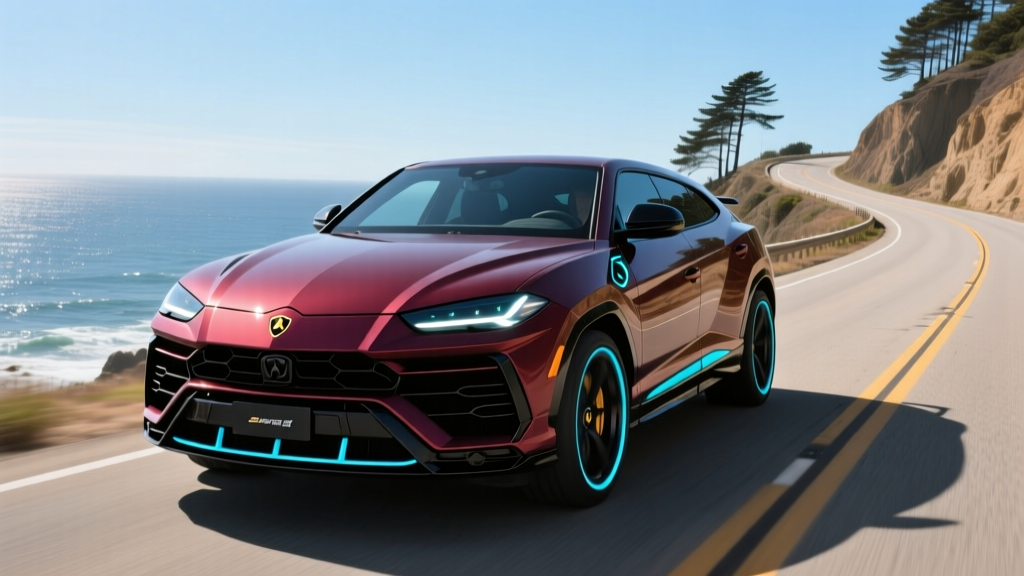
The 2025 Lamborghini Urus SE marks the first time Lamborghini's super-SUV adopts a plug-in hybrid (PHEV) powertrain, replacing the mild-hybrid setup of the outgoing Urus S and Performante. This isn't a tentative step toward electrification — Lamborghini pairs a revised 4.0-liter twin-turbo V8 with an integrated electric motor and a 25.9 kWh battery pack to produce a combined 789 horsepower while adding genuine electric-only commuting capability.
For buyers researching the 2025 Lamborghini Urus SE hybrid, the critical question isn't whether it's fast (it is, brutally so), but whether the PHEV system adds practical value or just complexity. This guide breaks down the real-world efficiency, electric range, charging logistics, and ownership economics of Lamborghini's first plug-in hybrid SUV.
| Spec | Value |
|---|---|
| Powertrain | 4.0L Twin-Turbo V8 + Electric Motor (PHEV) |
| Combined Output | 789 HP / 701 lb-ft torque |
| Battery (Usable) | 25.9 kWh (lithium-ion) |
| EPA Electric Range | ~37 miles (estimated) |
| Combined Range (EV + Gas) | ~410 miles (estimated) |
| 0–60 mph | 3.4 seconds |
| Top Speed | 194 mph |
| AC Charging (Level 2) | Up to 7.2 kW |
| DC Fast Charging | Not supported |
| Base MSRP | ~$273,000 |
HEV vs PHEV: Where the Urus SE Fits
Before evaluating the Urus SE's efficiency, it's essential to distinguish between hybrid types, because Lamborghini's choice here matters for daily driving.
| Feature | HEV (e.g., Toyota RAV4 Hybrid) | PHEV (e.g., Urus SE) |
|---|---|---|
| Plug-in Charging | No — charges via regen and engine | Yes — plug in to access full electric range |
| Battery Size | Small (1–2 kWh) | Larger (25.9 kWh usable in Urus SE) |
| Electric-Only Range | Less than 1 mile at low speed | ~37 miles at highway-capable speeds |
| Fuel Economy Benefit | Consistent MPG improvement | Maximum benefit when charged daily |
| Complexity | Minimal — no charging routine | Requires charging access for full value |
The Urus SE is a full plug-in hybrid (PHEV), not a conventional self-charging hybrid. If you never plug it in, you're carrying 25.9 kWh of battery weight without accessing its benefits — you'd essentially be driving a heavier, less efficient V8 SUV. The PHEV system rewards owners who can charge at home or work daily.
Fuel Economy and Electric Range: The Real Numbers
The EPA has not yet published finalized fuel economy figures for the 2025 Urus SE at the time of writing, but based on Lamborghini's WLTP-rated data and comparable PHEV SUVs in this class, we can project realistic EPA estimates. Lamborghini claims a WLTP electric-only range of approximately 37 miles (60 km), which typically translates to a slightly lower EPA figure due to the EPA's more conservative testing cycle.
| Metric | Estimated Value |
|---|---|
| MPGe (Electric + Gas Combined) | ~46 MPGe |
| Electric-Only Range (EPA Est.) | ~33–37 miles |
| Gas-Only City MPG (Battery Depleted) | ~14 mpg |
| Gas-Only Highway MPG (Battery Depleted) | ~19 mpg |
| Gas-Only Combined MPG | ~16 mpg |
| Total Combined Range | ~410 miles |
Real-world expectation: In mixed driving with a full charge, expect the first 30–35 miles to be electric-only (fewer in cold weather or aggressive driving). Once the battery depletes to its hold threshold, the V8 takes over and fuel economy drops to typical super-SUV territory — roughly 14–17 mpg combined depending on driving style. For comparison, the outgoing gas-only Urus averaged about 14 mpg combined on the EPA cycle.
The efficiency advantage is entirely dependent on charging frequency. An owner who charges nightly and commutes 25 miles each way may use almost no gasoline on weekdays. An owner who never plugs in will see worse fuel economy than the old Urus due to the added battery mass (~300 lbs).
Powertrain Deep Dive: V8 Meets Electric Motor
Lamborghini didn't downsize the engine for electrification. The Urus SE retains the 4.0-liter twin-turbocharged V8, now producing 611 horsepower on its own. An electric motor integrated into the eight-speed automatic transmission housing contributes an additional 190 horsepower, for a combined system output of 789 HP and 701 lb-ft of torque.
The electric motor is mounted between the engine and transmission (a P2 hybrid architecture), which allows it to:
- Drive the vehicle independently in EV mode
- Fill torque gaps during gear shifts for seamless acceleration
- Provide torque-vectoring assistance to the all-wheel-drive system
- Regenerate energy during braking and deceleration
The 25.9 kWh battery pack is positioned beneath the rear cargo floor, which preserves interior space but adds weight low and rearward. Lamborghini recalibrated the air suspension and active anti-roll bars to compensate for the additional mass, and the result is a 0–60 mph time of 3.4 seconds — 0.2 seconds quicker than the outgoing Urus Performante.
Four drive modes manage the powertrain split: Hybrid (default, balances EV and gas), EV (electric-only up to ~80 mph), Performance (engine always on, maximum combined output), and Recharge (engine charges the battery while driving — useful before entering zero-emission zones).
Charging the Urus SE: What Owners Need to Know
The 2025 Urus SE supports Level 2 AC charging at up to 7.2 kW, which is typical for European PHEVs in this segment. There is no DC fast charging capability — a deliberate choice, since the 25.9 kWh battery is small enough that overnight Level 2 charging covers daily needs.
| Charging Level | Power | 0–100% Time | Notes |
|---|---|---|---|
| Level 1 (120V household) | ~1.4 kW | ~18–20 hours | Emergency/trickle only |
| Level 2 (240V home/public) | Up to 7.2 kW | ~4 hours | Primary charging method |
| DC Fast Charge | Not supported | N/A | No CCS or NACS port |
Home charging setup: A Level 2 wallbox (such as a ChargePoint Home Flex or Emporia Vue) on a 240V/40A circuit will fully recharge the Urus SE overnight. Installation costs for a Level 2 home charger typically range from $800 to $2,500 depending on panel capacity and run length, though buyers spending $273,000 on an SUV likely already have adequate electrical infrastructure.
The charging port is located on the driver-side rear quarter panel and uses a Type 2 / J1772 connector for AC charging. The charge port door is power-operated and integrates with the Lamborghini app for scheduling off-peak charging.
Battery Longevity, Warranty, and Replacement Cost
Urus SE Hybrid Battery Warranty
Lamborghini provides an 8-year / 62,000-mile warranty on the high-voltage battery pack, covering defects and capacity loss below 70% of original capacity. This aligns with the industry-standard PHEV battery warranty mandated for emissions-component coverage under EPA and CARB regulations.
The 25.9 kWh lithium-ion battery uses NMC (nickel-manganese-cobalt) chemistry, which offers high energy density but is more sensitive to sustained high temperatures and repeated full-charge cycles than LFP. To preserve longevity:
- The battery management system (BMS) maintains a top and bottom buffer — you never actually use 100% of the cells
- Active liquid cooling manages temperatures during high-output driving and fast regeneration
- Avoid leaving the vehicle at 100% state of charge for extended periods in hot climates
Battery replacement cost: If the pack falls outside warranty coverage, a full high-voltage battery replacement for a PHEV in this class typically costs between $12,000 and $18,000 including labor. However, module-level repairs (replacing individual cell groups rather than the entire pack) are increasingly available and can reduce costs to $3,000–$6,000. Given Lamborghini's 8-year warranty and the relatively modest cycle count of a PHEV battery (compared to a full BEV), most owners will never face this expense.
Pricing, Tax Credits, and Ownership Economics
The 2025 Lamborghini Urus SE carries a starting MSRP of approximately $273,000, with typical options (Ad Personam paint, forged wheels, carbon-ceramic brakes) pushing well-transaction prices above $310,000.
Federal Tax Credit Eligibility (§30D)
- Vehicle MSRP cap: SUVs must be under $80,000 — the Urus SE at $273,000 vastly exceeds this limit
- Result: The Urus SE does NOT qualify for the federal §30D clean vehicle credit
- State incentives: Some states offer PHEV rebates without MSRP caps (check AFDC state incentive database), but most exclude vehicles above $60,000–$80,000
- Commercial clean vehicle credit (§45W): Fleet or business buyers may qualify for up to $7,500 under the commercial vehicle credit, which has different rules — consult a tax professional per IRS guidelines
Total cost of ownership reality: The PHEV system saves owners roughly $1,200–$1,800 annually in fuel costs compared to the outgoing gas-only Urus (assuming 12,000 miles/year and daily charging). At this price point, the hybrid system is a performance and compliance feature, not an economic one. Insurance premiums for a 789-HP PHEV super-SUV will be substantial — expect $6,000–$10,000 annually depending on location and driving record.
Who Should Buy the Urus SE vs a Full EV or Gas SUV?
Choose the 2025 Urus SE PHEV If:
- You want supercar acceleration (3.4s 0–60) with the ability to drive 30+ miles silently on electric power
- You have home Level 2 charging and a commute under 40 miles round-trip
- You live in a city with low-emission zones that restrict pure-combustion vehicles
- You want Lamborghini exclusivity with modern electrified engineering
- You regularly take longer road trips where EV charging infrastructure is still sparse
Consider a Full EV (e.g., Lotus Eletre, Porsche Taycan Cross Turismo) If:
- You want zero tailpipe emissions and minimal drivetrain maintenance
- Your daily driving is under 250 miles and you have reliable charging access
- You prioritize lowest per-mile energy cost over engine sound and character
Consider the Outgoing Gas-Only Urus (Used/CPO) If:
- You lack home charging access and never plan to install it
- You prefer lighter weight and simpler mechanicals
- You want a lower entry price (CPO examples run $180,000–$220,000)
Pros
- 789 HP combined — fastest accelerating Urus ever
- 37-mile EV range covers most daily commutes gasoline-free
- Silent electric mode for residential neighborhoods and school runs
- No range anxiety — V8 takes over seamlessly for road trips
- Retains Lamborghini's signature design, exhaust note, and driving dynamics
- Access to low-emission zones restricted to pure-combustion vehicles
Cons
- $273,000+ price with no federal tax credit eligibility
- Added weight (~300 lbs) affects agility vs the Performante
- Gas-only MPG drops to ~14–16 combined when battery is depleted
- No DC fast charging — Level 2 only
- Requires daily plug-in discipline to realize fuel savings
- Cargo space slightly reduced by battery placement
Frequently Asked Questions
How many MPG does the 2025 Lamborghini Urus SE hybrid get?
The Urus SE is a PHEV, so its efficiency depends on charging habits. On electric power alone, it achieves an estimated 46 MPGe combined. Once the battery depletes, the gas-only V8 delivers approximately 14 mpg city / 19 mpg highway / 16 mpg combined. With daily charging and a short commute, you may rarely use gasoline at all.
How far can the Urus SE drive on electric-only power?
Lamborghini rates the Urus SE at approximately 37 miles of electric-only range on the WLTP cycle. Expect 30–35 miles on the EPA cycle, and potentially 20–25 miles in cold weather or at sustained highway speeds above 70 mph. The electric motor can propel the Urus SE up to roughly 80 mph before the engine engages.
Is the Urus SE a conventional hybrid or a plug-in hybrid?
It is a plug-in hybrid (PHEV). Unlike a conventional hybrid (HEV) such as a Toyota Prius, the Urus SE has a large 25.9 kWh battery that must be plugged in to realize its full electric range and efficiency benefits. It will still operate as a hybrid without plugging in, but you'll carry dead battery weight and see worse fuel economy.
Does the 2025 Lamborghini Urus SE qualify for any tax credits?
No. The federal §30D clean vehicle credit has an $80,000 MSRP cap for SUVs, and the Urus SE starts at approximately $273,000. Some state-level incentives may apply, but most also have price caps. Business buyers may explore the §45W commercial clean vehicle credit — consult a tax professional for eligibility.
Is the hybrid system reliable, and what does battery replacement cost?
Lamborghini backs the high-voltage battery with an 8-year / 62,000-mile warranty covering defects and capacity loss below 70%. PHEV batteries generally experience less degradation than full-EV batteries due to smaller cycle depths and robust buffer management. Out-of-warranty replacement costs are estimated at $12,000–$18,000 for a full pack, though module-level repairs cost significantly less. Long-term reliability data specific to the Urus SE is not yet available given its 2025 launch.
Can the Urus SE charge at Tesla Superchargers or DC fast chargers?
No. The Urus SE only supports AC Level 2 charging (up to 7.2 kW) via a J1772/Type 2 connector. It cannot use DC fast chargers including Tesla Superchargers, Electrify America, or EVgo stations. Given the 25.9 kWh battery, a full charge takes about 4 hours on Level 2 — designed for overnight home charging, not road-trip fast charging.
How does the Urus SE compare to the Porsche Cayenne E-Hybrid?
Both are PHEV super-SUVs, but they target different priorities. The Cayenne S E-Hybrid offers 729 HP, ~30 miles of EV range, and starts around $107,000 — significantly more affordable with similar PHEV capability. The Urus SE delivers more power (789 HP), greater exclusivity, and Lamborghini design, but at nearly 3x the price. Choose the Cayenne for value; choose the Urus SE for rarity and brand.