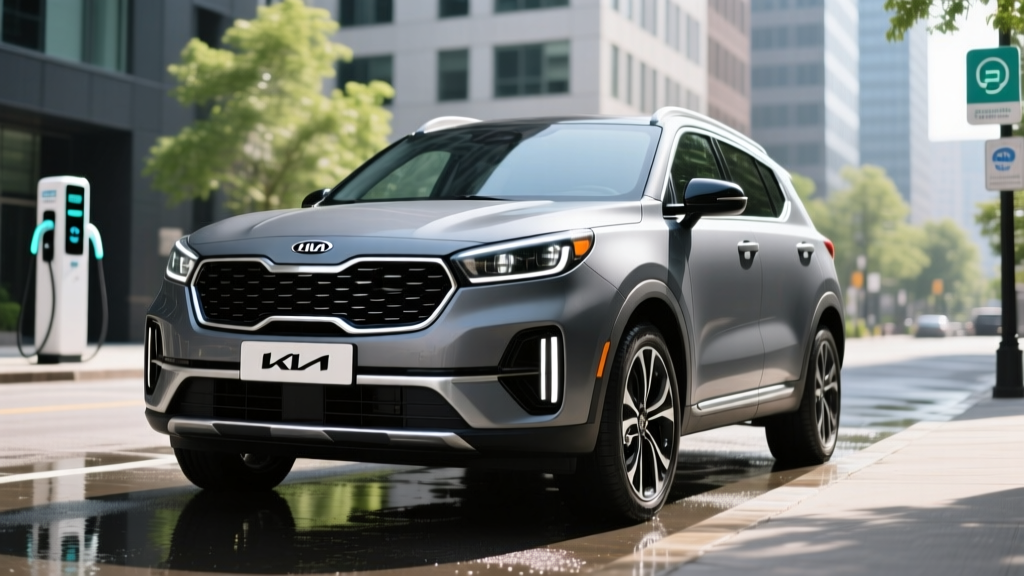
If you've been searching for the 2025 Kia Sportage Hybrid SX-Prestige MPG numbers to decide whether this top-trim compact SUV delivers on its fuel-economy promises, you're in the right place. The Sportage Hybrid pairs a turbocharged 1.6-liter engine with an electric motor for a combined 231 horsepower — enough to make it one of the quicker hybrids in its class — while returning EPA ratings that undercut most gas-only competitors by a wide margin. But EPA stickers don't tell the whole story. Below, we reconcile the official figures with real-world driving patterns, compare the conventional hybrid (HEV) to the plug-in variant (PHEV), and walk through ownership costs, battery longevity, and tax-credit eligibility so you can buy with confidence.
HEV vs. PHEV: Which Sportage Hybrid Are We Talking About?
Kia sells two electrified Sportage variants, and confusing them is the most common buyer mistake in this segment. Here's the critical distinction:
Sportage Hybrid (HEV)
- No plug required — the 1.49 kWh battery recharges via regenerative braking and the gasoline engine
- No electric-only driving range to speak of (the motor assists the engine; it doesn't replace it)
- Lower MSRP, simpler ownership, no charging infrastructure needed
- Target buyer: apartment dwellers, street parkers, anyone without access to a plug
Sportage Plug-In Hybrid (PHEV)
- Larger 13.8 kWh battery that you plug in at home or at public Level 2 chargers
- EPA-rated 34 miles of electric-only range before the gas engine engages
- Higher MSRP but eligible for partial federal and state incentives
- Target buyer: homeowners with a garage, short commuters who want EV-like daily driving
This article focuses primarily on the 2025 Kia Sportage Hybrid (HEV) in the top-tier SX-Prestige trim, with PHEV comparisons where relevant. If you need a plug, skip ahead to the PHEV section.
2025 Kia Sportage Hybrid SX-Prestige MPG: The EPA Numbers
According to fueleconomy.gov, the 2025 Kia Sportage Hybrid equipped with all-wheel drive (standard on SX-Prestige) carries the following EPA fuel-economy estimates:
| Driving Cycle | EPA Estimate (AWD) | Real-World Expectation |
|---|---|---|
| City | 38 MPG | 39–43 MPG (hybrids excel in stop-and-go) |
| Highway | 38 MPG | 33–36 MPG (sustained 70+ mph reduces regen benefit) |
| Combined | 38 MPG | 35–40 MPG depending on commute mix |
The FWD-only Sportage Hybrid (available on lower trims, not the SX-Prestige) bumps the combined rating to 43 MPG, but the SX-Prestige comes exclusively with AWD. That 5-MPG penalty buys you year-round traction and a slightly more planted feel in wet conditions — a worthwhile trade for most buyers in snow-belt states.
Real-World MPG: What Owners Actually Report
The beauty of a conventional hybrid like the Sportage HEV is that real-world city driving often exceeds the EPA city estimate. Regenerative braking recaptures energy at every stoplight, and the engine shuts off frequently at low speeds. On suburban commutes with frequent stops, 40–43 MPG is achievable without hypermiling.
Highway driving is where hybrids lose their advantage. At a steady 75 mph, the electric motor provides minimal assistance, and the turbocharged 1.6-liter engine does most of the work. Expect 33–36 MPG on long interstate trips. Cold weather further reduces efficiency — winter fuel economy can dip to 31–34 MPG combined as the engine runs more often to heat the cabin and the battery's charge-acceptance rate drops.
Powertrain and Performance: 231 HP With Hybrid Efficiency
| Specification | 2025 Sportage Hybrid SX-Prestige |
|---|---|
| Engine | 1.6L turbocharged 4-cylinder |
| Electric Motor | 47.7 kW (64 hp) permanent-magnet synchronous |
| Combined System Output | 231 hp / 258 lb-ft torque |
| Transmission | 6-speed automatic |
| Drivetrain | AWD (standard on SX-Prestige) |
| Hybrid Battery (traction) | 1.49 kWh lithium-ion (HEV) |
| 0–60 mph | ~7.1 seconds (est.) |
| Towing Capacity | 2,000 lbs |
| Fuel Tank | 13.7 gallons |
The 231-horsepower combined output puts the Sportage Hybrid ahead of the Toyota RAV4 Hybrid (219 hp) and Honda CR-V Hybrid (204 hp). The 6-speed automatic — rather than the CVT found in most competitors — gives acceleration a more natural, stepped feel that enthusiasts appreciate, though it sacrifices a fraction of efficiency in the process.
Pricing: What the SX-Prestige Trim Actually Costs
The 2025 Kia Sportage Hybrid SX-Prestige carries a starting MSRP of approximately $38,590 (including destination). That positions it as a premium offering in the compact hybrid SUV segment, but the SX-Prestige trim is loaded:
- Panoramic sunroof
- Harman Kardon premium audio
- Heated and ventilated front seats, heated steering wheel
- Navigation with a 12.3-inch touchscreen
- Highway Driving Assist 2 (Level 2 ADAS)
- LED projection headlights
- Power liftgate
Tax Credit Eligibility
Here's where the HEV vs. PHEV distinction matters for your wallet. Under current IRS §30D rules, the conventional Sportage Hybrid (HEV) does not qualify for the federal clean-vehicle tax credit. Only battery-electric vehicles and plug-in hybrids with a battery capacity of at least 7 kWh are eligible.
The Sportage PHEV may qualify for up to $7,500 under §30D, but eligibility depends on several factors that change frequently:
- MSRP cap: SUVs must be priced at or below $80,000 — the Sportage PHEV clears this easily
- Buyer income cap: AGI must not exceed $150,000 (single) or $300,000 (joint)
- Battery sourcing: Critical-mineral and battery-component requirements phase in annually and can reduce or eliminate the credit — check the latest IRS guidance or consult a tax professional before relying on this credit
- Point-of-sale transfer: Eligible buyers can transfer the credit to the dealer for an upfront price reduction
Bottom line: If the federal credit matters to your purchase decision, you need the PHEV, not the HEV. Factor in your state's additional incentives — some states (California, Colorado, New York) offer their own rebates for PHEVs.
Battery Warranty, Reliability, and Replacement Costs
Kia Hybrid Battery Warranty
10 years / 100,000 miles (whichever comes first) on the hybrid battery pack and all hybrid-specific components, including the electric motor, inverter, and related electronics. This is one of the longest hybrid warranties in the segment and transfers to the second owner on newer models — check your specific warranty documentation.
Kia's hybrid system has proven reliable across multiple model cycles. The 1.49 kWh battery in the HEV is small and conservatively managed — it never fully charges or fully depletes, which dramatically extends cell life. Most hybrid batteries outlast the vehicle itself; failures within the warranty period are uncommon.
If you do face a replacement outside warranty, a hybrid battery pack for the Sportage HEV typically runs $2,000–$4,000 including labor — a fraction of full EV battery replacement costs. The PHEV's larger 13.8 kWh pack would cost more, roughly $5,000–$8,000, but carries the same 10-year/100,000-mile coverage.
For general reliability data, check IIHS ratings and J.D. Power dependability studies. The Sportage has earned strong safety scores, and Kia's brand-level reliability has trended upward over the past several model years.
Sportage Hybrid vs. Sportage PHEV: Which Should You Buy?
| Factor | Sportage Hybrid (HEV) | Sportage Plug-In Hybrid (PHEV) |
|---|---|---|
| EPA Combined MPG | 38 MPG (AWD) | 35 MPG (gas) + 84 MPGe (electric) |
| Electric-Only Range | N/A | 34 miles (EPA) |
| Battery Capacity | 1.49 kWh | 13.8 kWh |
| Plug-In Charging | Not required | Level 1 (~9 hrs) / Level 2 (~3.5 hrs) |
| DC Fast Charging | N/A | Not supported |
| Combined Horsepower | 231 hp | 261 hp |
| Starting MSRP (top trim) | ~$38,590 | ~$43,590 |
| Federal Tax Credit | Not eligible | Up to $7,500 (eligibility varies) |
Choose the Sportage Hybrid (HEV) if:
- You don't have reliable access to a plug at home or work
- Your commute involves mostly highway miles where PHEV electric range offers little benefit
- You want the lowest upfront price and simplest ownership experience
- You drive more than 15,000 miles per year and want consistent MPG without planning around charging
Choose the Sportage PHEV if:
- You can install a Level 2 charger at home and your round-trip commute is under 34 miles
- You qualify for the federal §30D credit and/or state PHEV incentives, narrowing the price gap
- You want EV-quiet daily driving with the security of a gas engine for road trips
- You value the extra 30 hp the PHEV powertrain provides (261 hp combined)
Choose a Full EV (like the Kia EV6) if:
- You have home charging and rarely drive more than 250 miles in a single day
- You want to eliminate gasoline entirely and minimize maintenance (no oil changes, fewer moving parts)
- You qualify for the full $7,500 federal credit and your state offers additional EV rebates
Pros and Cons: 2025 Kia Sportage Hybrid SX-Prestige
Pros
- 38 MPG combined AWD is excellent for a turbocharged compact SUV
- 231 hp makes it one of the quickest hybrids in the segment
- 10-year/100,000-mile hybrid battery warranty
- SX-Prestige trim is loaded with premium features at a reasonable price
- 6-speed automatic avoids the drone of a CVT
- Real-world city MPG often exceeds EPA estimate
Cons
- AWD-only on SX-Prestige drops MPG vs. FWD lower trims
- HEV does not qualify for federal tax credits
- Highway MPG drops noticeably above 70 mph
- No DC fast charging (not applicable to HEV, but PHEV also lacks it)
- 13.7-gallon tank means more frequent fill-ups than some competitors
- Cabin noise under hard acceleration is more noticeable than in the RAV4 Hybrid
Frequently Asked Questions
How many MPG does the 2025 Kia Sportage Hybrid SX-Prestige actually get?
The EPA rates the AWD Sportage Hybrid SX-Prestige at 38 MPG city, 38 highway, and 38 combined. In real-world driving, city-heavy commutes can yield 40–43 MPG, while sustained highway driving at 75 mph typically returns 33–36 MPG. Cold weather and mountain driving will reduce these figures.
Does the Sportage Hybrid need to be plugged in?
No. The conventional Sportage Hybrid (HEV) never needs to be plugged in. Its small 1.49 kWh battery recharges through regenerative braking and the gasoline engine. If you want plug-in capability with electric-only driving, look at the Sportage PHEV instead.
How far can the Sportage PHEV go on electric power alone?
The 2025 Sportage PHEV is EPA-rated for 34 miles of electric-only range on a full charge of its 13.8 kWh battery. Total combined range (electric + gas) exceeds 430 miles. Charging takes approximately 3.5 hours on a 240V Level 2 charger. The PHEV does not support DC fast charging.
Is the Sportage Hybrid reliable, and what does battery replacement cost?
Kia's hybrid system has demonstrated strong reliability across multiple model years. The hybrid battery is covered by a 10-year/100,000-mile warranty. Out-of-pocket replacement cost for the HEV battery is estimated at $2,000–$4,000, though most hybrid batteries last the lifetime of the vehicle.
Does the 2025 Sportage Hybrid qualify for any tax credits?
The conventional Sportage Hybrid (HEV) does not qualify for the federal §30D clean-vehicle tax credit — only BEVs and PHEVs are eligible. The Sportage PHEV may qualify for up to $7,500, but eligibility depends on your income, the vehicle's battery sourcing, and current IRS rules. Consult IRS.gov or a tax professional for your specific situation.
How does the Sportage Hybrid compare to the RAV4 Hybrid and CR-V Hybrid?
The Sportage Hybrid's 231 hp gives it a power advantage over the RAV4 Hybrid (219 hp) and CR-V Hybrid (204 hp). Its 38 MPG combined (AWD) is slightly below the RAV4 Hybrid AWD's 39 MPG combined but competitive with the CR-V Hybrid AWD's 37 MPG combined. The Sportage's 6-speed automatic provides a more engaging drive than the CVTs in both competitors, at a marginal efficiency cost.