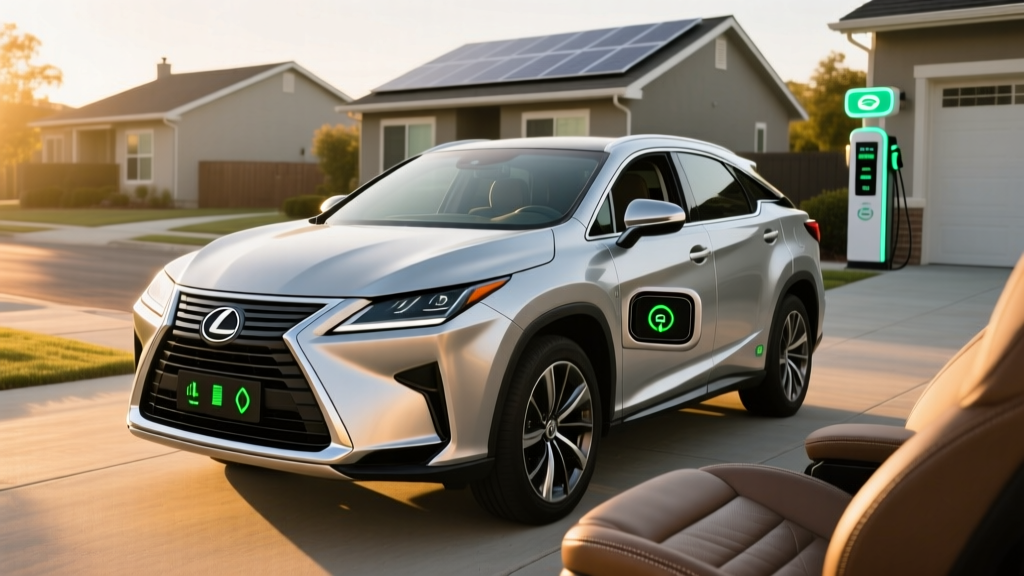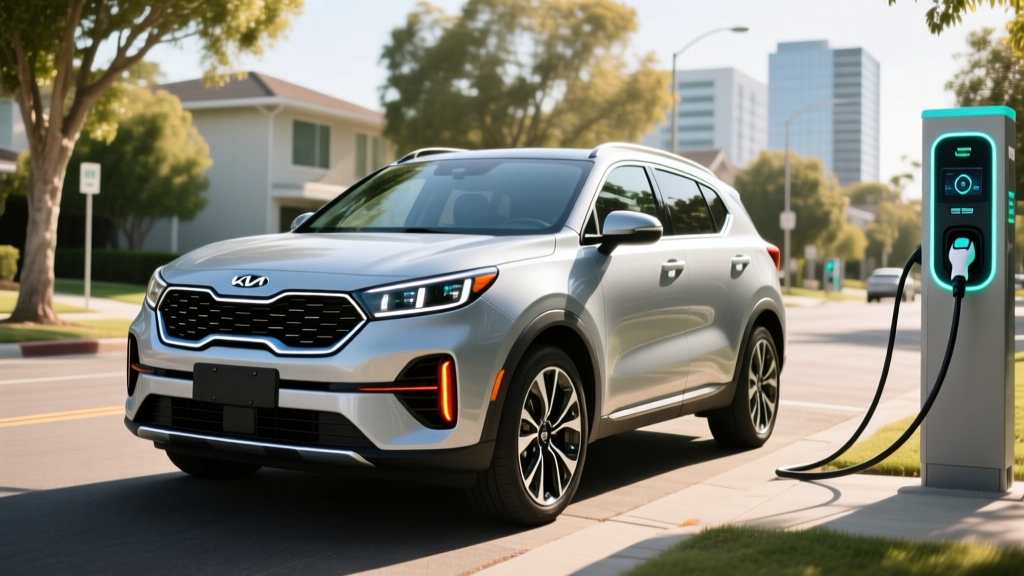
The 2025 Kia Sportage Hybrid LX sits at an interesting crossroads in the compact crossover segment. As the base trim in Kia's hybrid lineup, it offers the same 261-horsepower turbocharged powertrain and 43 MPG city rating as higher trims, but at a starting MSRP of $31,490 — undercutting rivals like the Toyota RAV4 Hybrid LE and Honda CR-V Hybrid by several hundred dollars. For buyers weighing a conventional hybrid against a plug-in hybrid or a full battery-electric vehicle, the Sportage Hybrid LX demands a close look at the numbers.
This review covers the HEV (conventional hybrid) variant specifically. Kia also sells a Sportage Plug-In Hybrid (PHEV) with a larger battery and electric-only range, which we address in the comparison sections below. If you're searching for the 2025 Kia Sportage Hybrid LX, you're looking at the self-charging hybrid — no plug required.
HEV vs PHEV: Which Sportage Hybrid Are You Actually Buying?
Before examining specs, it's critical to distinguish the two electrified Sportage models Kia offers for 2025:
| Feature | Sportage Hybrid (HEV) | Sportage Plug-In Hybrid (PHEV) |
|---|---|---|
| Powertrain | 1.6L turbo + electric motor | 1.6L turbo + larger electric motor |
| Combined HP | 261 hp | 261 hp |
| Battery Capacity | ~1.49 kWh (small buffer) | 13.7 kWh usable |
| Electric-Only Range | None (motor assists engine) | EPA-est. 34 miles |
| Plug-In Required? | No — charges via regen & engine | Yes — Level 1 or Level 2 |
| DC Fast Charging | N/A | No (AC only, ~3.3 kW onboard) |
| Level 2 Charge Time (0-100%) | N/A | ~3 hours 45 minutes |
| EPA Combined MPG / MPGe | 43 MPG combined (FWD) | 84 MPGe combined / 35 MPG gas-only |
| Starting MSRP | $31,490 (LX FWD) | $39,990 (X-Line) |
| Federal Tax Credit (§30D) | Not eligible | Not eligible (PHEV battery <7 kWh threshold for full credit; sourcing rules also apply) |
Bottom line: The Sportage Hybrid LX is a conventional HEV. You never plug it in. The small 1.49 kWh battery charges through regenerative braking and the gasoline engine. If you want electric-only commuting, you need the PHEV — but it costs roughly $8,500 more and requires home charging access to realize its efficiency advantage.
Fuel Economy: EPA Ratings and Real-World MPG
The headline number for the 2025 Kia Sportage Hybrid LX is strong, especially in city driving where hybrids shine thanks to low-speed electric motor assist and regenerative braking.
| Drivetrain | City MPG | Highway MPG | Combined MPG |
|---|---|---|---|
| FWD (LX, EX) | 42 | 44 | 43 |
| AWD (LX, EX) | 38 | 38 | 38 |
Source: fueleconomy.gov
Real-World MPG: What Owners Actually See
Kia's hybrid system, shared with the Hyundai Tucson Hybrid, uses a 6-speed automatic transmission rather than the e-CVT found in Toyota and Honda hybrids. This gives the Sportage a more natural driving feel but slightly less optimization in stop-and-go traffic.
In real-world mixed driving, expect:
- City-heavy commutes: 40-44 MPG (FWD) — hybrids often meet or exceed EPA city estimates because regenerative braking recovers energy that gas cars waste as heat.
- Highway cruising at 70-80 mph: 35-39 MPG (FWD) — aerodynamic drag dominates at higher speeds, and the turbo 1.6L works harder than a larger naturally aspirated engine would.
- Cold weather (below 35°F): Expect a 5-10% reduction, bringing combined to roughly 37-40 MPG (FWD). The engine runs more frequently to provide cabin heat and maintain battery temperature.
- AWD penalty: The AWD model's 38 MPG combined is honest — the rear axle motor adds weight and mechanical drag. Real-world AWD figures tend to land between 34-37 MPG.
Compared to the gas-only Sportage (28 MPG combined FWD), the hybrid saves roughly 150-180 gallons of fuel per year at 15,000 miles — approximately $450-$540 annually at $3.00/gallon.
Powertrain and Performance Specs
| Specification | 2025 Sportage Hybrid LX |
|---|---|
| Engine | 1.6L turbocharged 4-cylinder |
| Electric Motor | 44 kW (59 hp) permanent-magnet synchronous |
| Combined System Output | 261 hp / 258 lb-ft torque |
| Transmission | 6-speed automatic |
| Drivetrain | FWD standard, AWD available |
| 0-60 mph | ~7.1 seconds (FWD, est.) |
| Towing Capacity | 2,000 lbs |
| Cargo Volume | 39.6 cu ft (behind rear seats) |
| Curb Weight | ~3,780 lbs (FWD) |
| Fuel Tank | 13.7 gallons |
| Total Range (FWD, combined) | ~589 miles |
The 261-horsepower combined output puts the Sportage Hybrid well ahead of the RAV4 Hybrid (219 hp) and CR-V Hybrid (204 hp). The turbocharged engine provides strong mid-range torque, and the 6-speed automatic avoids the rubber-band drone associated with CVTs. However, the Sportage Hybrid is not as quick off the line as some competitors — the 0-60 time of approximately 7.1 seconds is adequate but not sporty.
The AWD system uses a separate rear-axle electric motor rather than a mechanical driveshaft, providing on-demand traction without the efficiency penalty of a traditional AWD system. This is common in modern hybrid crossovers and works well in rain and light snow.
Pricing, Trims, and Tax Credit Eligibility
The 2025 Kia Sportage Hybrid is offered in three trims. Here's the MSRP breakdown:
- LX FWD: $31,490
- LX AWD: $33,390
- EX AWD: $35,190
- SX-Prestige AWD: $39,590
All prices include destination. The LX trim includes an 8-inch touchscreen with wireless Apple CarPlay and Android Auto, a 10.25-inch digital instrument cluster, heated front seats, LED headlights, and Kia's full suite of ADAS features (forward collision-avoidance assist, lane keeping assist, blind-spot monitoring, rear cross-traffic alert).
Federal Tax Credit: Does the Sportage Hybrid LX Qualify?
No. Under IRS §30D rules, the federal clean vehicle credit applies only to battery electric vehicles (BEVs) and plug-in hybrids (PHEVs) with a battery capacity of at least 7 kWh. The Sportage Hybrid's ~1.49 kWh battery does not meet this threshold.
The Sportage PHEV, despite having a 13.7 kWh battery, also faces eligibility challenges under current rules due to critical-mineral sourcing and battery-component manufacturing requirements. As of the 2025 tax year, most Kia PHEVs do not qualify for the full $7,500 credit. Always verify current eligibility on the IRS Clean Vehicle Credit page or consult a tax professional before purchasing.
Some states and utilities offer separate rebates for hybrid vehicles. These vary by jurisdiction — check your state energy office or local utility for current programs.
Battery Warranty, Reliability, and Replacement Cost
Hybrid battery longevity is a top concern for buyers, and Kia addresses this with one of the strongest warranties in the industry.
| Coverage | Term |
|---|---|
| Hybrid Battery Warranty | 10 years / 100,000 miles (original owner) |
| Hybrid Battery Warranty (transferable) | 10 years / 100,000 miles (first owner); 5 yr / 60,000 mi (subsequent) |
| Hybrid System Components | 10 years / 100,000 miles |
| Basic Vehicle Warranty | 5 years / 60,000 miles |
| Powertrain Warranty | 10 years / 100,000 miles |
Real-World Battery Degradation
The Sportage Hybrid's 1.49 kWh lithium-ion battery pack is small and operates within a narrow state-of-charge window — typically between 40% and 80% SoC. This shallow cycling dramatically reduces degradation compared to a full BEV battery that cycles between 10% and 90%. Based on data from similar Hyundai/Kia hybrid systems (Tucson Hybrid, Sorento Hybrid), owners report minimal capacity loss over 100,000+ miles.
Toyota's RAV4 Hybrid, which has been on the market longer, shows that hybrid batteries routinely last 150,000-200,000 miles before significant degradation. Kia's system uses similar lithium-ion chemistry and conservative charge management.
Battery Replacement Cost
If the hybrid battery fails outside warranty, replacement costs typically range from $2,500 to $4,000 including parts and labor for the Sportage Hybrid's small pack. This is substantially less than a BEV battery replacement ($8,000-$20,000+) because the pack is small and modular. Independent hybrid specialists often offer refurbished packs at the lower end of this range.
Kia's hybrid system has proven reliable in early years, and IIHS has awarded the 2025 Sportage strong crash-test ratings, though specific long-term reliability data from Consumer Reports and J.D. Power should be monitored as the model matures.
Who Should Buy the Sportage Hybrid LX — And Who Shouldn't
Pros
- 43 MPG combined (FWD) — among the best in the compact crossover segment
- 261 hp is the most powerful in its hybrid class
- No plug-in required — zero behavior change from a gas car
- 10-year / 100,000-mile hybrid battery warranty
- $31,490 base price undercuts RAV4 Hybrid and CR-V Hybrid
- Strong standard ADAS suite on the base LX trim
- ~589 miles of total range per tank
Cons
- AWD drops MPG to 38 combined — a meaningful penalty
- No federal tax credit eligibility
- 6-speed automatic is less efficient than e-CVT in heavy stop-and-go
- Highway MPG lags some diesel and efficient gas competitors
- No spare tire (tire repair kit standard)
- PHEV variant exists but costs $8,500 more and requires charging access
Decision Framework: Hybrid vs PHEV vs EV
Choose the Sportage Hybrid LX (HEV) if:
- You lack access to home or workplace charging (apartment, street parking)
- You drive more than 15,000 miles/year and want maximum fuel savings without plug-in hassle
- You want the lowest upfront cost in the electrified Sportage lineup
- Your commute is city-heavy, where the hybrid system recovers the most energy
Choose the Sportage PHEV if:
- You have Level 2 home charging and a commute under 34 miles round-trip
- You want to drive mostly on electricity during the week and take gas-powered road trips on weekends
- You live in a state offering PHEV rebates that offset the higher MSRP
Choose a full BEV (like the Kia EV6 or Hyundai Ioniq 5) if:
- You have reliable home Level 2 charging
- You want zero tailpipe emissions and minimal maintenance (no oil changes, no engine)
- You qualify for the $7,500 federal tax credit, which can offset the higher purchase price
- Your daily driving is under 250 miles and you're comfortable with DC fast charging for road trips
How the Sportage Hybrid LX Stacks Up Against Competitors
| Model | Combined MPG | HP | Base MSRP | Hybrid Battery Warranty |
|---|---|---|---|---|
| 2025 Kia Sportage Hybrid LX FWD | 43 | 261 | $31,490 | 10 yr / 100k mi |
| 2025 Toyota RAV4 Hybrid LE AWD | 39 | 219 | $33,575 | 10 yr / 150k mi |
| 2025 Honda CR-V Hybrid Sport FWD | 40 | 204 | $35,850 | 8 yr / 100k mi (10/150k in CARB states) |
| 2025 Hyundai Tucson Hybrid Blue FWD | 38 | 226 | $33,970 | 10 yr / 100k mi |
The Sportage Hybrid LX leads in horsepower and ties or beats competitors on city MPG, while coming in at the lowest base MSRP. The RAV4 Hybrid's advantage is its standard AWD with a smaller MPG penalty and Toyota's long-proven hybrid track record. The CR-V Hybrid offers the most interior space. The Tucson Hybrid shares the Sportage's powertrain but is tuned slightly differently and priced higher.
Ownership Costs Over 5 Years
| Cost Category | Sportage Hybrid LX FWD | Gas Sportage LX FWD (2.5L) |
|---|---|---|
| MSRP | $31,490 | $28,590 |
| Fuel (75,000 mi at $3.00/gal) | $5,233 (43 MPG) | $8,036 (28 MPG) |
| Maintenance (est. 5 yr) | $2,800 | $3,200 |
| Insurance (est. avg) | $7,500 | $7,000 |
| Estimated Depreciation | $14,200 | $13,500 |
| 5-Year Total (est.) | $61,223 | $60,326 |
The hybrid's $2,900 fuel savings over five years nearly offsets its $2,900 higher purchase price. The maintenance advantage is modest — hybrid owners save on brake pad replacements (regenerative braking reduces wear) but still need oil changes, as the turbo engine runs frequently. Insurance tends to be slightly higher for the hybrid due to its higher replacement-cost valuation.
Where the hybrid truly wins is at higher annual mileage. At 20,000 miles/year, the fuel savings expand to roughly $3,600 over five years, making the hybrid the clear financial choice.
Frequently Asked Questions
How many MPG does the 2025 Kia Sportage Hybrid LX get?
The FWD model is EPA-rated at 42 city / 44 highway / 43 combined MPG. The AWD model drops to 38 city / 38 highway / 38 combined. In real-world driving, city-heavy commuters often meet or slightly exceed EPA estimates, while sustained highway driving above 70 mph tends to return 35-39 MPG for the FWD model.
Does the Sportage Hybrid LX need to be plugged in?
No. The Sportage Hybrid (HEV) is a conventional hybrid that charges its small battery through regenerative braking and the gasoline engine. You fuel it like any other car. Only the Sportage Plug-In Hybrid (PHEV) requires an external power source.
How far can the Sportage PHEV go on electric only?
The 2025 Sportage PHEV has an EPA-estimated 34 miles of electric-only range from its 13.7 kWh battery. Once depleted, it operates as a conventional hybrid with an EPA rating of 35 MPG combined. Total combined range (electric + gas) is approximately 430 miles.
Is the Sportage Hybrid reliable, and what does battery replacement cost?
Kia's hybrid system has proven reliable in early years, backed by a 10-year / 100,000-mile hybrid battery warranty. Based on data from similar Hyundai/Kia hybrids, the small battery pack shows minimal degradation over 100,000+ miles. Out-of-warranty replacement typically costs $2,500-$4,000 — far less than a BEV battery.
Does the 2025 Kia Sportage Hybrid qualify for any tax credit?
The conventional Sportage Hybrid (HEV) does not qualify for the federal §30D clean vehicle credit, which requires a battery of at least 7 kWh and applies only to BEVs and PHEVs. The Sportage PHEV meets the battery-size threshold but may not qualify due to critical-mineral and battery-component sourcing requirements under current IRS rules. Check irs.gov for the latest eligibility list, and consult a tax professional.
How does the Sportage Hybrid compare to a full EV like the Kia EV6?
The EV6 offers 310 miles of EPA range, zero tailpipe emissions, and qualifies for potential federal tax credits. However, it requires home charging infrastructure, has a higher starting price (~$42,000 before credits), and demands route planning for road trips beyond its range. The Sportage Hybrid is the pragmatic choice for buyers without reliable charging access or who frequently drive long distances in areas with sparse DC fast-charging infrastructure.
What is the towing capacity of the Sportage Hybrid?
The 2025 Sportage Hybrid is rated to tow up to 2,000 pounds when properly equipped — sufficient for a small utility trailer or a pair of dirt bikes, but not enough for most campers or boat trailers. Towing will reduce fuel economy by roughly 20-30%.