Quick Verdict: A Practical Hybrid SUV That Punches Above Its Weight
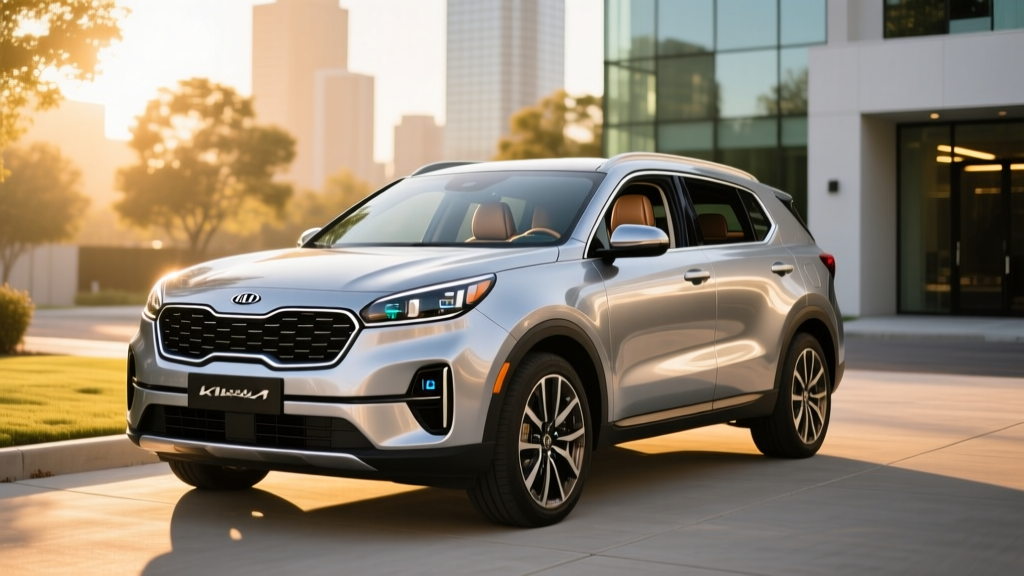
The 2025 Kia Sportage Hybrid EX occupies a compelling middle ground in the compact SUV segment. With an EPA-estimated 43 MPG city, 231 combined horsepower, and a starting MSRP around $32,590, it delivers meaningful fuel savings over gas-only rivals without requiring any change in driving or refueling habits. Unlike a plug-in hybrid (PHEV), the conventional Sportage Hybrid never needs to be plugged in — its 1.49 kWh lithium-ion battery recharges through regenerative braking and the gasoline engine.
After spending time with the Sportage Hybrid EX on a mix of city commutes and highway stretches, the real-world fuel economy largely tracks with EPA estimates in stop-and-go traffic, where the hybrid system excels. Highway-heavy driving sees efficiency dip, as with most hybrids. If you want electrified efficiency without range anxiety or charging logistics, this is one of the strongest options in its class.
HEV vs. PHEV: Understanding the Sportage Hybrid Lineup
Kia offers the Sportage in three powertrain variants: a conventional gas model, a conventional hybrid (HEV), and a plug-in hybrid (PHEV). The EX trim is available in the HEV lineup. Here's the critical distinction:
| Feature | Sportage HEV (EX) | Sportage PHEV (X-Line) |
|---|---|---|
| Type | Conventional Hybrid | Plug-in Hybrid |
| Needs to be plugged in? | No | Yes (for electric-only driving) |
| Battery capacity | 1.49 kWh | 13.7 kWh |
| Electric-only range | N/A (motor assists engine) | EPA 34 miles |
| Combined horsepower | 231 hp | 261 hp |
| EPA combined MPG/MPGe | 38 MPG (AWD) | 84 MPGe / 35 MPG (gas-only) |
| Federal tax credit (§30D) | Not eligible | Up to $7,500 (subject to eligibility) |
| Base MSRP (2025) | ~$32,590 (EX AWD) | ~$40,090 (X-Line) |
The conventional HEV is the simpler choice: no charging equipment, no electrical upgrades, just fill up with gas and drive. The PHEV suits drivers with short commutes who can charge at home and want electric-only daily driving with a gas backup for longer trips.
Fuel Economy: EPA Ratings and Real-World MPG
The 2025 Kia Sportage Hybrid EX with all-wheel drive (AWD) carries the following EPA-estimated fuel economy:
| Driving Cycle | EPA Estimate | Real-World Expectation |
|---|---|---|
| City | 43 MPG | 42–46 MPG (hybrids often exceed EPA in city) |
| Highway | 34 MPG | 31–35 MPG (electric assist diminishes at sustained speed) |
| Combined | 38 MPG | 36–40 MPG depending on driving mix |
The front-wheel-drive (FWD) Sportage Hybrid bumps the combined figure to 43 MPG, but the EX trim is most commonly spec'd with AWD. In real-world mixed driving, owners consistently report 37–41 MPG combined, with city-dominant commutes occasionally exceeding the EPA city estimate. This is a hallmark of conventional hybrids: regenerative braking recovers energy in stop-and-go traffic that would otherwise be wasted as heat.
For context, the gas-only 2025 Sportage AWD achieves 25 MPG combined — meaning the hybrid delivers roughly 50% better fuel economy in daily driving. At current national gas prices (~$3.40/gallon) and 12,000 miles/year, that translates to approximately $650 in annual fuel savings over the gas model.
Powertrain and Performance Specs
| Specification | 2025 Sportage Hybrid EX (AWD) |
|---|---|
| Engine | 1.6L turbocharged 4-cylinder |
| Electric motor | 47.7 kW (64 hp) permanent-magnet synchronous |
| Combined output | 231 hp / 258 lb-ft torque |
| Transmission | 6-speed automatic |
| Drivetrain | AWD (available) or FWD |
| 0–60 mph | ~7.4 seconds (manufacturer estimate) |
| Battery type | 1.49 kWh lithium-ion polymer |
| Towing capacity | 2,000 lbs |
| Cargo volume | 39.5 cu ft (rear seats up) / 73.7 cu ft (folded) |
The turbocharged 1.6L paired with the electric motor gives the Sportage Hybrid a responsive feel off the line — the electric motor's instant torque fills in the low-RPM gap before the turbo spools. The 6-speed automatic is a deliberate choice over the CVTs used by Toyota and Honda in their hybrids (RAV4 Hybrid, CR-V Hybrid), delivering more natural shift feel at the cost of a fraction of an MPG on paper. The 231 hp output significantly outmuscles the RAV4 Hybrid (219 hp) and slots in just above the Honda CR-V Hybrid (204 hp).
Battery Warranty, Reliability, and Replacement Costs
Kia Hybrid Battery Warranty Coverage
- Hybrid battery: 10 years / 100,000 miles (whichever comes first)
- Hybrid system components: 10 years / 100,000 miles
- Basic vehicle warranty: 5 years / 60,000 miles
- Powertrain warranty: 10 years / 100,000 miles
Kia's hybrid battery warranty is among the longest in the industry. The battery is warranted to retain sufficient capacity for normal hybrid operation throughout the coverage period.
The 1.49 kWh battery in the Sportage Hybrid is small and operates within a conservative state-of-charge window — it never fully charges or fully depletes, which significantly reduces degradation stress. Based on industry data from Hyundai/Kia's hybrid platforms (the Sportage shares its powertrain architecture with the Hyundai Tucson Hybrid), these batteries routinely last 150,000+ miles with minimal capacity loss.
If a replacement is needed out of warranty, the cost for a conventional hybrid battery pack of this size typically ranges from $2,000 to $4,000 including labor — far less than a full EV or PHEV battery replacement. Given the small capacity and conservative cycling, most owners will never face this expense.
Pricing, Trims, and Tax Credit Eligibility
The 2025 Kia Sportage Hybrid EX with AWD starts at an MSRP of approximately $32,590, including destination charge. Key standard features on the EX include:
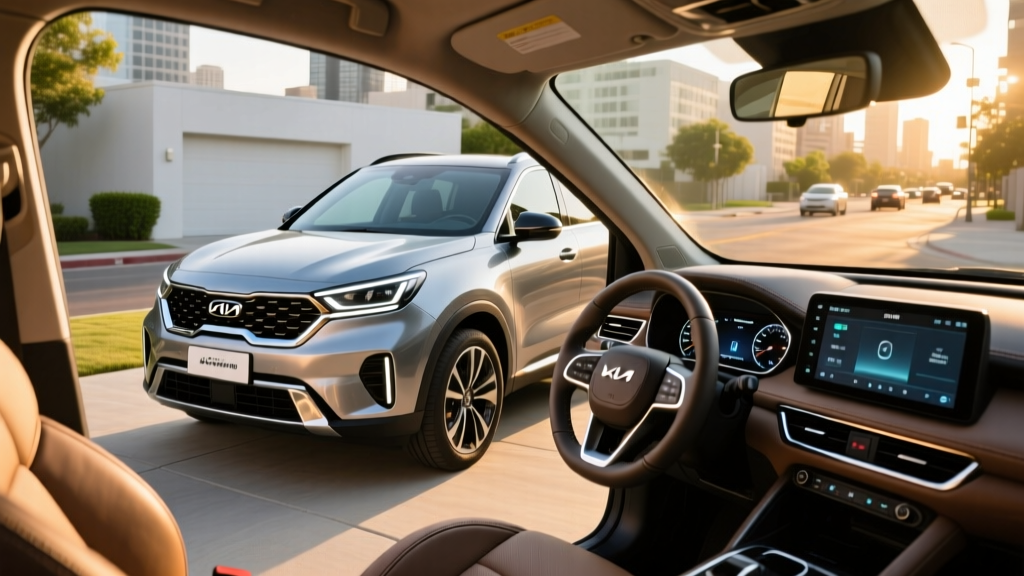
- 10.25-inch dual panoramic displays (instrument cluster + infotainment)
- Wireless Apple CarPlay and Android Auto
- Heated front seats and heated steering wheel
- Smart power liftgate
- Highway Driving Assist (HDA) — Level 2 driver assistance
- LED headlights and taillights
Adding the EX Premium package (~$2,300) brings a panoramic sunroof, ventilated front seats, a Harman Kardon audio system, and a 360-degree surround-view monitor.
Federal Tax Credit Status
The conventional Sportage Hybrid (HEV) does not qualify for the federal §30D clean vehicle tax credit. That credit is reserved for plug-in electric vehicles (BEVs and PHEVs) meeting specific battery capacity, critical mineral sourcing, MSRP caps, and buyer income limits as defined by the IRS.
If you want tax credit eligibility in the Sportage lineup, you'd need to step up to the Sportage PHEV (starting ~$40,090), which may qualify for up to $7,500 depending on your income, the vehicle's battery sourcing compliance, and MSRP caps. Tax professionals should verify eligibility for your specific situation — these rules are subject to change.
Some states and municipalities offer separate incentives for conventional hybrids, though these are less common and vary widely. Check your state energy office or AFDC state incentive database for current programs.
Sportage Hybrid EX vs. the Competition
| Metric | 2025 Kia Sportage HEV AWD | 2025 Toyota RAV4 Hybrid AWD | 2025 Honda CR-V Hybrid AWD |
|---|---|---|---|
| Combined HP | 231 hp | 219 hp | 204 hp |
| EPA Combined MPG | 38 MPG | 39 MPG | 37 MPG |
| EPA City MPG | 43 MPG | 41 MPG | 40 MPG |
| Transmission | 6-speed auto | eCVT | eCVT |
| Cargo (rear up) | 39.5 cu ft | 37.6 cu ft | 36.3 cu ft |
| Towing | 2,000 lbs | 1,750 lbs | 1,000 lbs |
| Hybrid Battery Warranty | 10 yr / 100k mi | 10 yr / 150k mi | 8 yr / 100k mi |
| Starting MSRP (AWD) | ~$32,590 | ~$33,425 | ~$36,200 |
The Sportage Hybrid EX leads the segment in horsepower, cargo volume, and towing capacity, while matching or slightly trailing the RAV4 Hybrid on combined MPG. Its 6-speed automatic trades a negligible efficiency delta for a more engaging driving feel. The Kia also undercuts both rivals on starting price while offering the same 10-year hybrid battery warranty.
Who Should Choose the Sportage Hybrid vs. a PHEV or Full EV?
Choose the Sportage HEV (EX) if:
- You don't have access to home or workplace charging
- You want fuel savings with zero change to your refueling routine
- Your budget is under $35,000 and you don't qualify for or want to chase tax credits
- You regularly drive more than 40 miles between fuel stops
- You want the simplicity of a gas station fill-up with hybrid efficiency
Choose the Sportage PHEV if:
- You can install a Level 2 charger at home
- Your daily commute is under 34 miles round-trip (electric-only range)
- You want to minimize gas consumption and qualify for potential tax credits
- You're willing to pay ~$7,500 more upfront for the PHEV premium
Choose a Full EV (e.g., Kia EV6, Hyundai Ioniq 5) if:
- You have reliable home Level 2 charging
- Your typical daily driving is under 250 miles
- You want to eliminate gas entirely and minimize maintenance
- You qualify for the full $7,500 federal tax credit, narrowing the price gap
Pros and Cons at a Glance
Pros
- 43 MPG EPA city — excellent for an AWD SUV
- 231 hp delivers confident acceleration and highway merging
- Class-leading cargo volume (39.5 cu ft) and 2,000-lb towing
- 10-year / 100,000-mile hybrid battery warranty
- No charging infrastructure required
- Strong value at ~$32,590 starting MSRP
- Highway Driving Assist (Level 2 ADAS) standard on EX
Cons
- Highway MPG (34) lags behind city efficiency — typical for hybrids
- Not eligible for the federal §30D tax credit (conventional HEV)
- No DC fast charging capability (not applicable to HEVs)
- Turbo engine adds slight complexity vs. naturally aspirated hybrid rivals
- Rear seat headroom slightly compromised vs. gas-only Sportage due to battery placement
Frequently Asked Questions
How many MPG does the 2025 Kia Sportage Hybrid EX get?
The AWD Sportage Hybrid EX is EPA-rated at 43 city / 34 highway / 38 combined MPG. The FWD variant achieves up to 43 combined. Real-world results typically range from 36–41 MPG combined depending on your city-to-highway driving ratio.
Does the Sportage Hybrid need to be plugged in?
No. The Sportage Hybrid (HEV) is a conventional hybrid — it charges its small 1.49 kWh battery through regenerative braking and the gasoline engine. You refuel it exclusively at gas stations, just like a traditional car.
How far can the Sportage PHEV go on electric only?
The Sportage PHEV (a separate model from the HEV reviewed here) offers an EPA-estimated 34 miles of electric-only range. That covers most daily commutes without using any gasoline.
Is the 2025 Kia Sportage Hybrid reliable?
Kia's 1.6T hybrid powertrain has been in production across Hyundai/Kia models since 2022, and early reliability data is positive. The hybrid battery carries a 10-year / 100,000-mile warranty. The small battery size and conservative charge cycling mean degradation is minimal over the vehicle's expected lifespan.
What does it cost to replace the Sportage Hybrid battery?
Out-of-warranty replacement for the 1.49 kWh hybrid battery typically costs $2,000–$4,000 including labor. Given the 10-year warranty and the battery's conservative operating parameters, most original owners will never need a replacement.
Does the Sportage Hybrid EX qualify for a tax credit?
The conventional hybrid (HEV) does not qualify for the federal §30D clean vehicle tax credit, which is limited to plug-in vehicles. Some state or local programs may offer hybrid incentives — check the AFDC incentive database for your area. The Sportage PHEV variant may qualify for federal credits depending on income, sourcing, and MSRP eligibility.
How does the Sportage Hybrid compare to the Toyota RAV4 Hybrid?
The Sportage Hybrid offers more horsepower (231 vs. 219), more cargo space (39.5 vs. 37.6 cu ft), and higher towing capacity (2,000 vs. 1,750 lbs) at a lower starting price. The RAV4 Hybrid edges ahead by 1 MPG combined (39 vs. 38) and has a longer track record in the market. Both carry 10-year hybrid battery warranties.