Quick Verdict: A Practical Hybrid SUV With Real-World Efficiency
The 2025 Kia Sportage EX Hybrid occupies a specific niche: buyers who want electrified efficiency without plugging in, changing habits, or paying a premium for a full EV. With an EPA-estimated 38 MPG combined, a 231-horsepower turbocharged hybrid powertrain, and a starting MSRP around $33,090, the Sportage HEV delivers measurable fuel savings over its gas-only sibling while avoiding the range and charging concerns of a battery-electric vehicle.
After examining EPA data, real-world driving patterns, and ownership economics, the Sportage EX Hybrid makes the most sense for drivers covering 12,000–18,000 miles annually in mixed city/highway conditions who lack reliable home charging access for a PHEV or BEV. It's not the most efficient hybrid in its class — the Toyota RAV4 Hybrid edges it out — but the Sportage counters with a more premium interior, stronger acceleration, and Kia's industry-leading warranty.
| Specification | 2025 Kia Sportage EX Hybrid |
|---|---|
| Powertrain | 1.6L Turbo I4 + Electric Motor (HEV) |
| Combined Horsepower | 231 hp / 258 lb-ft torque |
| Transmission | 6-Speed Automatic |
| EPA Fuel Economy | 38 city / 38 highway / 38 combined MPG |
| Drivetrain | AWD (standard on EX Hybrid) |
| Fuel Tank | 13.7 gallons |
| Total Range | ~520 miles |
| 0–60 mph | ~7.1 seconds (est.) |
| Cargo Volume | 39.5 cu ft (rear seats up) |
| Towing Capacity | 2,000 lbs |
| Base MSRP (EX Hybrid AWD) | $33,090 |
| Hybrid Battery Warranty | 10 years / 100,000 miles |
| Federal Tax Credit | Not eligible (conventional HEV) |
HEV vs. PHEV: Understanding What the Sportage EX Hybrid Is (and Isn't)
This is a critical distinction many shoppers confuse. The 2025 Kia Sportage EX Hybrid is a conventional hybrid electric vehicle (HEV). It does not plug in. It has no electric-only driving mode of meaningful distance. It recovers energy through regenerative braking and uses a small battery buffer to assist the gasoline engine — but every mile ultimately draws from gasoline.
| Feature | Sportage HEV (This Model) | Sportage PHEV | Full EV (e.g., EV6) |
|---|---|---|---|
| Plugs In? | No | Yes (Level 1/2) | Yes (Level 1/2/DC) |
| Electric-Only Range | None (motor assists engine) | ~34 miles | 232–310+ miles |
| Fuel Source | Gasoline only | Gasoline + electricity | Electricity only |
| EPA Efficiency | 38 MPG combined | 84 MPGe / 35 MPG gas | 117–134 MPGe |
| Home Charging Needed? | No | Recommended (Level 2) | Essential |
| Federal Tax Credit (§30D) | Not eligible | Up to $7,500* | Up to $7,500* |
| Starting MSRP | ~$33,090 | ~$39,990 | ~$42,600 |
*PHEV/EV federal tax credit eligibility depends on MSRP caps, buyer income limits, battery sourcing requirements, and point-of-sale transfer rules under IRS §30D. See IRS.gov for current-year qualification details. The conventional HEV does not qualify for any federal purchase credit.
Kia also sells a Sportage Plug-In Hybrid (PHEV) with a 13.8 kWh battery and approximately 34 miles of electric-only range. If you have access to Level 2 home charging and a commute under 35 miles round-trip, the PHEV variant can eliminate most daily gasoline use. But it costs roughly $6,900 more upfront and requires you to plug in regularly to realize its efficiency advantage. The HEV is the simpler, lower-commitment choice.
Fuel Economy: EPA Numbers vs. Real-World MPG
The EPA rates the 2025 Kia Sportage EX Hybrid AWD at 38 MPG city, 38 highway, and 38 combined, according to fueleconomy.gov. The identical city and highway figures reflect the hybrid system's ability to recapture energy in stop-and-go traffic while maintaining efficiency at cruising speeds.
| Driving Condition | EPA Estimate | Real-World Expectation |
|---|---|---|
| City (stop-and-go) | 38 MPG | 36–42 MPG (hybrids often exceed EPA in city) |
| Highway (70–80 mph) | 38 MPG | 33–37 MPG (aero drag reduces hybrid advantage) |
| Combined (mixed) | 38 MPG | 35–40 MPG |
| Cold Weather (<32°F) | Not rated separately | 30–34 MPG (engine runs more for cabin heat) |
Why Real-World City MPG Can Exceed the Sticker
Conventional hybrids like the Sportage HEV thrive in urban driving. Every stoplight and slowdown triggers regenerative braking, converting kinetic energy back into battery charge. The electric motor then assists from a standstill — the least efficient operating point for any gasoline engine. Drivers who do 70%+ city driving frequently report 40–42 MPG in warm weather, exceeding the EPA estimate.
Highway driving tells a different story. At sustained speeds above 70 mph, aerodynamic drag dominates and the electric motor provides minimal assist. Expect 33–37 MPG on long interstate trips. Cold weather compounds this: the gasoline engine must run continuously to provide cabin heat (the HEV lacks the electric heat pump found in some PHEVs and BEVs), dropping observed economy to the low 30s.
Cost to Fuel: Sportage HEV vs. Gas-Only Sportage
The gas-only 2025 Sportage AWD is rated at 23 city / 27 highway / 25 combined MPG. At $3.40/gallon (national average) and 15,000 miles/year:
- Gas-only Sportage AWD: 600 gallons/year = ~$2,040/year
- Sportage EX Hybrid AWD: 395 gallons/year = ~$1,343/year
- Annual fuel savings: ~$697/year
- 5-year fuel savings: ~$3,485
The hybrid's ~$2,500 price premium over the gas-only EX AWD pays for itself in roughly 3.5 years at current fuel prices — before accounting for the hybrid's potentially higher resale value.
Powertrain Deep Dive: 231 HP Turbo Hybrid System
The Sportage HEV pairs a 1.6-liter turbocharged inline-4 (producing approximately 178 hp on its own) with a 44 kW (59 hp) electric motor integrated into the transmission housing. Combined system output is 231 horsepower and 258 lb-ft of torque, routed through a 6-speed automatic transmission to standard all-wheel drive.
This is notably more power than competitors like the Toyota RAV4 Hybrid (219 hp combined) and Honda CR-V Hybrid (204 hp combined). The turbo engine provides strong mid-range pull for highway merging, while the electric motor fills in torque at low RPMs where turbo lag would otherwise be noticeable. The result is a 0–60 mph time of approximately 7.1 seconds — quick for a compact hybrid SUV.
The hybrid battery is a small ~1.5 kWh lithium-ion pack positioned under the rear seats. Unlike a PHEV or BEV, this battery is never depleted to a low state of charge — the system constantly shuttles energy in and out of a narrow operating window (roughly 40–60% SoC) to maximize longevity. You will never see a "range" figure for this battery because it exists to buffer energy, not to drive the car independently.
Pricing, Trims, and Tax Credit Reality
The 2025 Kia Sportage Hybrid is offered in three trims. All include standard AWD:
| Trim | MSRP | Key Features |
|---|---|---|
| Blue Hybrid | $30,090 | 43 MPG (FWD only), base infotainment |
| EX Hybrid | $33,090 | AWD, 38 MPG, heated seats, smart liftgate |
| SX-Prestige Hybrid | $37,490 | AWD, panoramic sunroof, leather, Harman Kardon audio |
Note: The Blue Hybrid trim achieves a higher 43 MPG combined but is FWD only. If AWD is a priority (and for most buyers in snow-belt states, it is), the EX Hybrid at 38 MPG is the volume trim.
Federal Tax Credit: Not Eligible
The conventional Sportage HEV does not qualify for the IRS §30D New Clean Vehicle Credit. That credit applies only to plug-in vehicles (PHEVs and BEVs) meeting specific battery sourcing, MSRP cap, and buyer income requirements. If a federal incentive is a dealbreaker, you would need to look at the Sportage PHEV (which may qualify for up to $7,500 depending on sourcing and your tax situation) or a fully electric SUV like the Hyundai Ioniq 5 or Kia EV6.
Some states and utilities offer rebates for conventional hybrids — check your local utility and state energy office for current programs.
Battery Longevity, Warranty, and Replacement Costs
This is the question every hybrid buyer asks: What happens when the battery dies?
Kia Hybrid Battery Warranty
- Coverage: 10 years / 100,000 miles (whichever comes first)
- What's covered: Battery capacity loss below a defined threshold, cell failure, hybrid system components
- Transferable: No — coverage applies to original owner only (powertrain warranty transfers to 5yr/60k for second owners)
- Also covered: Hybrid motor, inverter, and related control electronics for 10yr/100k
How Long Will the Battery Actually Last?
Kia's hybrid battery is engineered for the life of the vehicle. Because the system keeps the battery in a narrow state-of-charge window (never fully charging or fully depleting it), degradation is minimal. Toyota's hybrid batteries — which use a similar management strategy — routinely exceed 200,000 miles without replacement. Kia's lithium-ion pack uses comparable engineering principles.
Real-world failure data from Hyundai/Kia's hybrid fleet (Sonata Hybrid, Niro, Sorento Hybrid) shows battery replacement rates well under 2% within the warranty period. Most hybrid battery failures are isolated cell issues that can be repaired at the module level rather than requiring a full pack replacement.
Out-of-Warranty Replacement Cost
If the battery fails after 10 years or 100,000 miles, a full hybrid battery replacement for the Sportage HEV is estimated at $2,000–$3,500 (parts and labor) based on comparable Hyundai/Kia hybrid models. This is far less than a BEV or PHEV battery replacement because the pack is small (~1.5 kWh vs. 60–80+ kWh in a full EV). Third-party refurbishment shops are increasingly available and can reduce costs to $1,200–$2,000.
Driving Impressions, Interior, and Daily Livability
The Sportage EX Hybrid drives like a well-sorted compact SUV with a subtle efficiency advantage. The transition between electric-motor assist and gasoline engine is seamless — most drivers won't notice when the engine shuts off at stops or re-engages under acceleration. The 6-speed automatic avoids the droning "rubber-band" feel of CVT-equipped competitors (Toyota RAV4 Hybrid, Honda CR-V Hybrid), delivering defined gear changes that feel more natural.
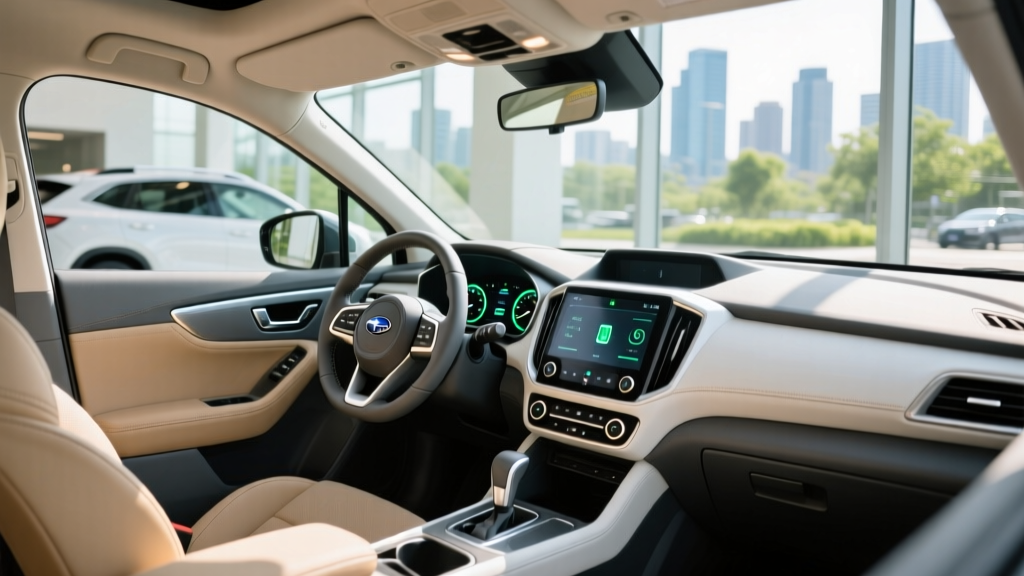
Ride quality is firm but compliant, and the AWD system provides confident traction in rain and light snow. The Sportage's cabin is a genuine differentiator: the EX trim includes a curved dual-screen display (12.3-inch digital cluster + 12.3-inch infotainment), heated front seats, wireless Apple CarPlay/Android Auto, and a suite of ADAS features including adaptive cruise control, lane-keeping assist, and blind-spot monitoring.
Cargo space is generous at 39.5 cubic feet behind the rear seats — competitive with the RAV4 (37.6 cu ft) and CR-V (36.3 cu ft). The hybrid battery placement under the rear seat preserves the full cargo floor without the hump or intrusion found in some older hybrid designs.
Who Should Buy the Sportage EX Hybrid (and Who Shouldn't)
Choose the Sportage EX Hybrid If:
- You drive 12,000–18,000 miles/year in mixed city/highway conditions
- You want better fuel economy without plugging in or changing habits
- You need AWD for snow or rain but don't want a gas-guzzling SUV
- You value Kia's 10-year/100,000-mile powertrain and hybrid warranty
- Your budget is $33,000–$37,000 and you want a premium interior at that price
- You don't have access to home or workplace Level 2 charging
Look at a PHEV or Full EV Instead If:
- You have Level 2 charging at home and a commute under 35 miles (consider the Sportage PHEV)
- You want to eliminate gasoline entirely (consider the Kia EV6 or Hyundai Ioniq 5)
- Federal tax credit eligibility is a priority (PHEVs and BEVs may qualify for up to $7,500)
- You drive mostly highway miles at 80+ mph (hybrid advantage diminishes; a diesel or efficient gas car may match it)
- You need more than 2,000 lbs of towing capacity
Pros
- 38 MPG combined with standard AWD — strong for the class
- 231 hp provides confident acceleration vs. competitors
- 10-year/100,000-mile hybrid battery warranty
- Premium interior with dual 12.3-inch screens standard on EX
- No plugging in, no habit changes, no charging anxiety
- 39.5 cu ft cargo space — class-competitive
Cons
- No federal tax credit (HEV ineligible under §30D)
- Highway MPG drops to low-to-mid 30s at sustained 75+ mph
- Toyota RAV4 Hybrid offers slightly more cargo space and proven long-term reliability track record
- Blue Hybrid (43 MPG) is FWD only — AWD costs 5 MPG
- 2,000-lb tow rating is modest for SUV buyers with trailers
Frequently Asked Questions
How many MPG does the 2025 Kia Sportage EX Hybrid get?
The EPA rates the Sportage EX Hybrid AWD at 38 MPG city, 38 highway, and 38 combined. In real-world driving, expect 36–42 MPG in city conditions (hybrids excel in stop-and-go), 33–37 MPG on the highway, and 30–34 MPG in cold weather below freezing. The FWD-only Blue Hybrid trim achieves 43 MPG combined but lacks AWD.
Does the Sportage Hybrid plug in?
No. The Sportage EX Hybrid is a conventional hybrid (HEV). It charges its small battery through regenerative braking and the gasoline engine. You fuel it exclusively at gas stations. If you want a plug-in version, Kia offers the Sportage PHEV separately, with ~34 miles of electric-only range.
Is the Kia Sportage Hybrid reliable?
Kia's hybrid powertrain has a solid reliability record across the Niro, Sorento Hybrid, and Hyundai Sonata Hybrid platforms that share similar architecture. The 10-year/100,000-mile hybrid battery warranty provides strong protection. Hybrid battery failure rates in the Hyundai/Kia fleet are well under 2% within the warranty period. Long-term data beyond 10 years is still accumulating, but the narrow SoC management strategy is proven to extend battery life significantly.
What does it cost to replace the hybrid battery?
An out-of-warranty hybrid battery replacement for the Sportage HEV is estimated at $2,000–$3,500 including labor. Because the pack is small (~1.5 kWh), this is far cheaper than a BEV battery replacement. Module-level repair (replacing individual cells rather than the full pack) can reduce costs to $1,200–$2,000 at specialist shops.
Does the 2025 Kia Sportage Hybrid qualify for a tax credit?
No. The conventional HEV does not qualify for the federal §30D New Clean Vehicle Credit, which is limited to plug-in vehicles (PHEVs and BEVs). Some state and utility programs offer hybrid rebates — check local programs. If a federal credit is essential, the Sportage PHEV may qualify for up to $7,500 depending on your income, the vehicle's MSRP, and battery sourcing requirements.
Hybrid vs. PHEV vs. EV — which is right for me?
HEV (this car): Best for drivers without home charging who want better MPG with zero lifestyle change. Fuel it at gas stations; drive normally.
PHEV: Best for drivers with home Level 2 charging and commutes under 35 miles. You get EV-like daily driving with a gas engine for road trips.
BEV (full EV): Best for drivers with reliable home charging, access to public DC fast charging for road trips, and a desire to eliminate gasoline entirely. Lower per-mile fuel cost but higher upfront price.
How does the Sportage Hybrid compare to the Toyota RAV4 Hybrid?
The RAV4 Hybrid offers 41 MPG combined (vs. 38), slightly more cargo space (37.6 cu ft behind the second row but more with seats folded), and Toyota's longer-established hybrid reputation. The Sportage counters with more horsepower (231 vs. 219), a more premium interior, a conventional automatic transmission (vs. CVT), and a longer warranty (10yr/100k vs. 8yr/100k on hybrid components). Both are strong choices; the decision often comes down to whether you prioritize maximum MPG (RAV4) or power and interior quality (Sportage).
Sources: EPA fuel economy data from fueleconomy.gov; Kia specifications from Kia.com; IRS §30D tax credit rules from IRS.gov.