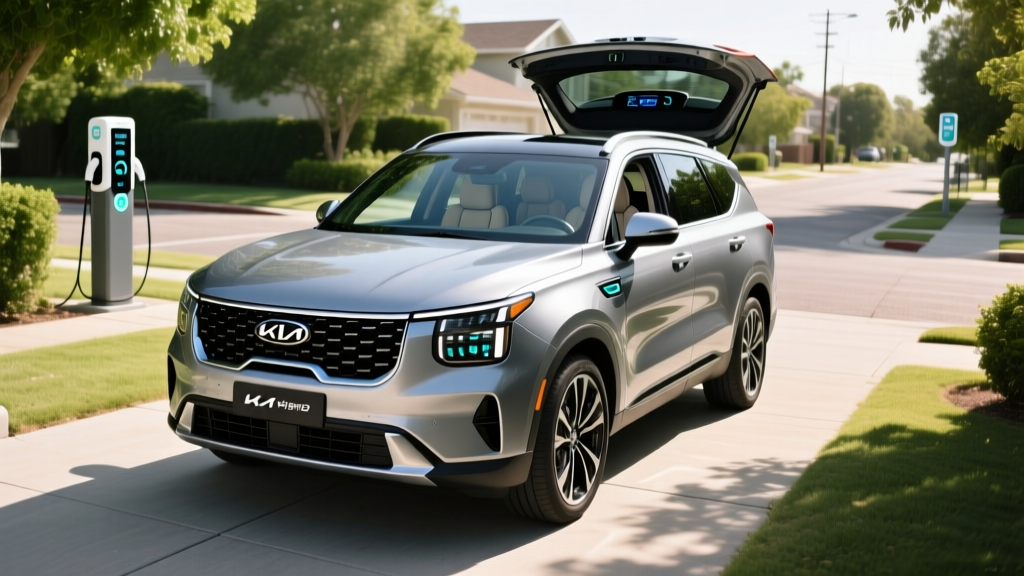
The three-row midsize SUV segment is crowded, but few models thread the needle between family practicality, fuel efficiency, and a sensible starting price the way the 2025 Kia Sorento Hybrid does. With a refreshed design for the 2025 model year, updated infotainment, and a turbocharged hybrid powertrain that prioritizes real-world drivability over peak efficiency numbers, the Sorento Hybrid earns its spot on shortlists alongside the Toyota Highlander Hybrid and Honda CR-V Hybrid (though the latter lacks a third row).
Below, we break down every critical spec — EPA fuel economy, powertrain output, battery warranty, pricing by trim, tax credit eligibility, and real-world MPG expectations — so you can decide if the 2025 Sorento Hybrid fits your garage and your budget.
2025 Kia Sorento Hybrid Powertrain and Performance Specs
The 2025 Sorento Hybrid pairs a turbocharged 1.6-liter four-cylinder engine with a 47.7 kW (64 hp) electric motor integrated into a 6-speed automatic transmission. This is a conventional hybrid (HEV) — it does not plug in. The battery recharges through regenerative braking and the gasoline engine, so there is no charging cord to manage and no electric-only driving range to monitor.
| Spec | Value |
|---|---|
| Engine | 1.6L turbocharged GDI 4-cylinder |
| Engine Output | 178 hp / 195 lb-ft torque |
| Electric Motor | 47.7 kW (64 hp) / 195 lb-ft torque |
| Combined System Output | 261 hp / 277 lb-ft torque |
| Transmission | 6-speed automatic (no CVT) |
| Drivetrain | AWD (standard on all trims) |
| 0–60 mph (est.) | ~7.5 seconds |
| Towing Capacity | 2,000 lbs (braked) |
The conventional 6-speed automatic is a deliberate choice by Kia. Unlike the CVTs found in the Toyota Highlander Hybrid or RAV4 Hybrid, the Sorento's gearbox delivers familiar, stepped shifts that most drivers find more natural — especially on highway merges and passing maneuvers. The tradeoff is a fractional efficiency loss compared to a CVT's optimized ratio management, but the 261 hp output makes the Sorento Hybrid one of the most powerful vehicles in its class.
EPA Fuel Economy: How Many MPG Does the Sorento Hybrid Get?
The EPA rates the 2025 Kia Sorento Hybrid AWD at 34 mpg city, 34 mpg highway, and 34 mpg combined. That uniformity across city and highway is unusual — most hybrids skew heavily toward city efficiency — and it reflects the turbo engine's highway capability paired with the electric motor's city assist.
| Drive Cycle | EPA MPG |
|---|---|
| City | 34 mpg |
| Highway | 34 mpg |
| Combined | 34 mpg |
| Fuel Tank | 14.8 gallons |
| Total Range (est.) | ~503 miles |
Real-World MPG vs. EPA Sticker
In mixed driving with moderate highway use, owners and independent testers typically report 30–33 mpg combined — slightly below the EPA figure. The turbocharged engine consumes more fuel under hard acceleration and sustained highway speeds above 75 mph than a naturally aspirated hybrid like the Highlander's. In city-dominant commutes (stop-and-go under 45 mph), the electric motor does more heavy lifting, and real-world results can meet or slightly exceed the 34 mpg city rating.
Cold weather reduces fuel economy by roughly 5–10% due to engine warm-up cycles and increased battery internal resistance. Expect 28–31 mpg combined in sub-freezing winter conditions.
2025 Sorento Hybrid vs. Sorento Plug-In Hybrid: Which One?
Kia offers the Sorento in two electrified variants, and confusing them at the dealership is easy. Here is the distinction:
| Feature | Sorento Hybrid (HEV) | Sorento Plug-In Hybrid (PHEV) |
|---|---|---|
| Plug-in charging required? | No | Yes |
| Battery Capacity | ~1.49 kWh | 13.8 kWh |
| Electric-Only Range | N/A (motor assists only) | 32 miles (EPA) |
| Combined System HP | 261 hp | 261 hp |
| EPA Combined MPG/MPGe | 34 mpg | 79 MPGe (electric) / 34 mpg (gas) |
| Level 2 Charge Time | N/A | ~3 hours 25 min (0–100%) |
| DC Fast Charging | N/A | No DC fast charge capability |
| Starting MSRP | $38,365 | $51,990 |
| Federal Tax Credit (§30D) | Not eligible | Up to $7,500 (eligibility varies) |
Choose the HEV if you cannot charge at home, want a lower purchase price, and drive mostly mixed or highway miles. Choose the PHEV if you have Level 2 home charging, your daily commute is under 30 miles round-trip, and you want to drive on electricity most weekdays while retaining gas-engine flexibility for road trips.
Pricing, Trims, and Tax Credit Eligibility
The 2025 Sorento Hybrid is offered in three trims, all with standard AWD:
| Trim | MSRP |
|---|---|
| S Hybrid | $38,365 |
| EX Hybrid | $41,865 |
| SX Prestige Hybrid | $47,165 |
Destination charges add approximately $1,395. The EX trim is the volume seller, adding features like a panoramic sunroof, leatherette seating, and Highway Driving Assist 2.
Does the Sorento Hybrid Qualify for a Federal Tax Credit?
No. The conventional Sorento Hybrid (HEV) does not qualify for the IRS §30D Clean Vehicle Credit. That credit applies only to plug-in electric vehicles (BEVs and PHEVs) with qualifying battery sourcing and critical-mineral content. The HEV's small ~1.49 kWh battery is not large enough, and the vehicle lacks plug-in capability.
The Sorento Plug-In Hybrid may qualify for up to $7,500 under §30D, but eligibility depends on the buyer's modified adjusted gross income (AGI caps: $150K single / $300K joint), the vehicle's MSRP (SUV cap: $80,000 — the PHEV qualifies), and battery-component and critical-mineral sourcing requirements that shift annually. Consult a tax professional or the IRS Clean Vehicle Credit pages before assuming eligibility. The point-of-sale transfer option is available for qualifying PHEV purchases, letting dealers apply the credit as a down-payment reduction.
Battery Warranty, Reliability, and Replacement Cost
Hybrid battery longevity is consistently the top concern among first-time hybrid buyers. Kia addresses this with one of the strongest warranty packages in the industry.
2025 Sorento Hybrid — Warranty Coverage
- Hybrid Battery: 10 years / 100,000 miles (whichever comes first)
- Hybrid System Components (motor, inverter, controller): 10 years / 100,000 miles
- Powertrain (engine, transmission): 10 years / 100,000 miles
- Bumper-to-Bumper: 5 years / 60,000 miles
The Sorento Hybrid's ~1.49 kWh lithium-ion battery pack operates under relatively mild stress compared to a PHEV or BEV battery. It never fully discharges and rarely reaches full charge — the battery management system keeps the state of charge within a narrow, longevity-friendly window (roughly 40–80%). This shallow-cycling strategy is why hybrid batteries routinely outlast their warranty periods by significant margins.
Is the Sorento Hybrid Reliable?
Kia's 1.6T hybrid powertrain has been in production since the 2021 model year across the Sorento, Tucson (corporate cousin Hyundai), and Sportage lineups. Early-model-year issues have largely been addressed through software updates. The conventional 6-speed automatic avoids the long-term durability questions that surround some CVT designs. NHTSA safety ratings and IIHS testing should be consulted for the latest crash-test results as they are published.
Battery Replacement Cost
If the hybrid battery fails outside warranty coverage — uncommon before 150,000+ miles given the shallow-cycling design — replacement cost at a Kia dealer typically ranges from $2,500 to $4,000 including labor. Independent hybrid specialists can sometimes source refurbished packs for $1,500–$2,500. Given the 10-year/100,000-mile warranty, most original owners will never face this expense.
Who Should Buy the Sorento Hybrid — and Who Shouldn't?
Pros
- 261 hp makes it one of the quickest hybrids in the three-row segment
- Standard AWD on every trim
- 10-year / 100,000-mile hybrid battery and powertrain warranty
- Conventional 6-speed automatic — no CVT drone
- Third-row seating (tight for adults, fine for children)
- Competitive pricing vs. Toyota Highlander Hybrid
Cons
- Real-world highway MPG falls slightly below EPA sticker
- Third-row cargo space is limited (even among three-row hybrids)
- No federal tax credit for the HEV variant
- Turbo engine requires premium fuel for maximum output (regular acceptable with reduced power)
- No DC fast charging (PHEV variant)
Decision Framework: Hybrid vs. PHEV vs. Full EV
Choose the Sorento Hybrid (HEV) if: You lack home charging access, want three rows, and drive 12,000–18,000 miles per year in mixed conditions. The HEV eliminates range anxiety and charging logistics entirely.
Choose the Sorento Plug-In Hybrid (PHEV) if: You can install a Level 2 charger at home, your weekday driving stays under 30 miles, and you want electric-only commuting with gas-engine road-trip flexibility. Factor in the potential $7,500 tax credit to offset the higher MSRP.
Choose a full EV (like the Kia EV9) if: You have reliable home and workplace charging, your daily driving is predictable, you want the lowest per-mile energy cost (~$0.04–0.06/mile vs. ~$0.12–0.15/mile for the hybrid), and you can accept a higher purchase price offset by federal credits and fuel savings.
2025 Sorento Hybrid vs. Key Competitors
| Spec | Kia Sorento Hybrid | Toyota Highlander Hybrid | Mazda CX-70 PHEV |
|---|---|---|---|
| Combined HP | 261 hp | 243 hp | 327 hp |
| EPA Combined MPG | 34 mpg | 35 mpg | 56 MPGe / 25 mpg gas |
| Third Row | Yes | Yes | No (2-row) |
| Starting MSRP | $38,365 | $42,090 | $55,850 |
| Transmission | 6-speed auto | eCVT | 8-speed auto |
| Federal Tax Credit | None | None | Up to $7,500 |
The Highlander Hybrid edges out the Sorento by 1 mpg combined and has a longer track record, but it starts nearly $4,000 higher and uses a CVT that some drivers find monotonous. The CX-70 PHEV offers more power and tax-credit eligibility but sacrifices the third row and costs significantly more.
Frequently Asked Questions
How many MPG does the 2025 Kia Sorento Hybrid actually get?
The EPA rates it at 34 mpg city / 34 mpg highway / 34 mpg combined. Real-world mixed driving typically yields 30–33 mpg, with city-dominant routes meeting or slightly exceeding the EPA figure. Cold weather and sustained high-speed highway driving reduce efficiency by 5–10%.
Does the Sorento Hybrid need to be plugged in?
No. The Sorento Hybrid (HEV) is a conventional self-charging hybrid. Its small battery recharges through regenerative braking and the gasoline engine. You fuel it like any other gas vehicle — no charging cord, no plug, no electric-only range.
How far can the Sorento Plug-In Hybrid go on electric only?
The Sorento PHEV achieves an EPA-rated 32 miles of electric-only range on a full charge of its 13.8 kWh battery. That covers most daily commutes. After the battery depletes, the vehicle operates as a conventional hybrid at 34 mpg combined. Total combined range (electric + gas) exceeds 430 miles.
Is the hybrid battery reliable, and what does replacement cost?
Kia covers the hybrid battery for 10 years / 100,000 miles. The battery operates in a shallow charge-discharge window that minimizes degradation. Out-of-warranty replacement typically costs $2,500–$4,000 at a dealer, but most batteries last well beyond 150,000 miles under normal use.
Does the 2025 Sorento Hybrid qualify for any tax credit?
The conventional Hybrid (HEV) does not qualify for the federal §30D Clean Vehicle Credit — that credit requires plug-in capability and minimum battery capacity. The Sorento Plug-In Hybrid (PHEV) may qualify for up to $7,500, subject to buyer income limits, MSRP caps, and battery-sourcing requirements. Check current IRS guidelines before purchasing. Some states offer separate hybrid or PHEV rebates — check your state energy office for current programs.
What is the difference between the Sorento Hybrid and Plug-In Hybrid?
The HEV is a self-charging hybrid with no plug, 34 mpg combined, and a starting price of $38,365. The PHEV has a 13.8 kWh battery, 32 miles of electric-only range, requires Level 2 home charging for maximum benefit, starts at $51,990, and may qualify for a federal tax credit. Both share the same 261 hp powertrain output and AWD drivetrain.