Quick Verdict: The Efficiency-First Crossover That Doesn't Ask You to Plug In
The 2025 Kia Niro Hybrid occupies a specific and increasingly popular niche: a compact crossover that delivers Prius-rivaling fuel economy without requiring a single change to your refueling habits. No plug, no range anxiety, no home charger installation. You fill it with gas and go — you just visit the gas station far less often than your neighbors.
With an EPA-estimated 53 MPG city, a starting MSRP of $26,990, and Kia's proven 1.6-liter hybrid powertrain, the Niro HEV is one of the most accessible high-efficiency vehicles on the market. But it's not the only Niro in the showroom. Kia also sells the Niro Plug-In Hybrid (PHEV) and the fully electric Niro EV. This guide focuses on the conventional hybrid while clearly mapping where the PHEV and EV variants fit — so you can choose the right electrified Niro for your driving life.
2025 Kia Niro Hybrid: Core Specifications
| Specification | Niro Hybrid (HEV) | Niro Plug-In Hybrid (PHEV) |
|---|---|---|
| Powertrain | 1.6L GDI 4-cyl + electric motor | 1.6L GDI 4-cyl + electric motor |
| Combined Horsepower | 139 HP | 180 HP |
| Combined Torque | 195 lb-ft | 195 lb-ft |
| Transmission | 6-speed dual-clutch automatic | 6-speed dual-clutch automatic |
| Battery | 1.56 kWh (lithium-ion polymer) | 11.1 kWh (lithium-ion polymer) |
| EPA City / Hwy / Combined MPG | 53 / 54 / 53 | 49 / 47 / 48 (hybrid mode) |
| Electric-Only Range (PHEV) | N/A (self-charging) | 33 miles (EPA est.) |
| Total Range | ~590 miles | ~460 miles (combined EV + gas) |
| Fuel Tank Capacity | 11.1 gallons | 10.0 gallons |
| 0–60 mph | ~9.8 seconds | ~7.2 seconds |
| Cargo Volume (rear seats up / down) | 22.8 / 63.7 cu ft | 19.4 / 54.6 cu ft |
| Drivetrain | FWD | FWD |
| Starting MSRP | $26,990 (LX) | $34,490 (LX) |
Source: fueleconomy.gov and Kia America specifications. EPA estimates — your mileage will vary with driving conditions.
HEV vs. PHEV vs. EV: Which Niro Fits Your Life?
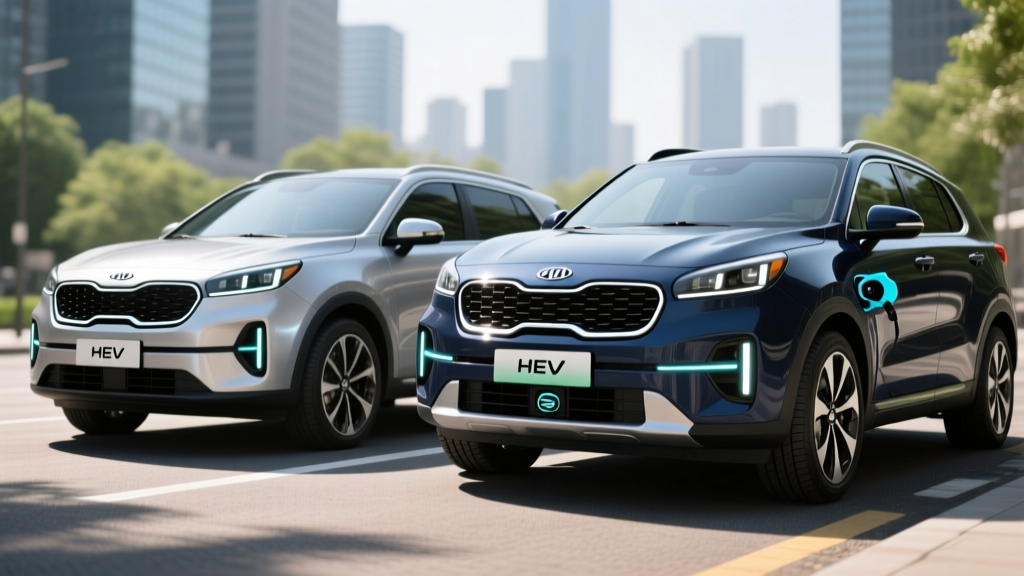
Kia's Niro lineup can confuse first-time hybrid shoppers. Here's the critical distinction:
Conventional Hybrid (HEV) — The Niro Hybrid
You never plug it in. The small 1.56 kWh battery recharges through regenerative braking and the gasoline engine. It operates as a seamless system: the electric motor assists the gas engine at low speeds and during acceleration, then the engine takes over at highway cruising. The result is dramatically better city fuel economy than a gas-only car — without any change to how you refuel.
Plug-In Hybrid (PHEV) — The Niro Plug-In Hybrid
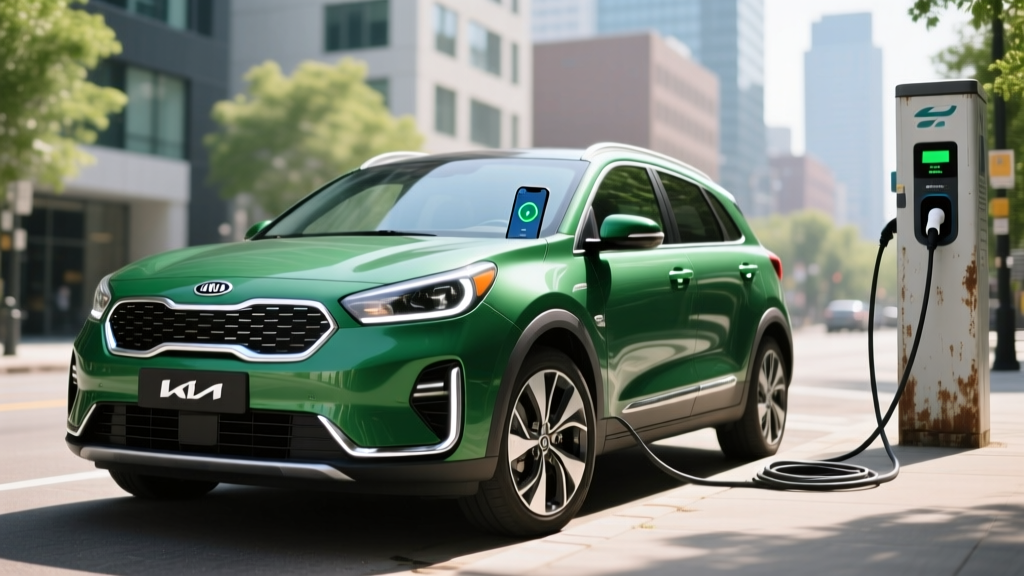
You plug it in (but don't have to). The larger 11.1 kWh battery provides an EPA-estimated 33 miles of pure electric driving — enough for most daily commutes. Once that electric range depletes, it operates exactly like a conventional hybrid, switching to the gas engine seamlessly. Charging takes about 2 hours and 45 minutes on a Level 2 (240V) home charger. The Niro PHEV does not support DC fast charging — it uses a standard J1772 connector for Level 1 (120V) and Level 2 (240V) only.
Battery Electric (BEV) — The Niro EV
You always plug it in. Zero gasoline. A 64.8 kWh battery delivers an EPA-estimated 239 miles of range. DC fast charging peaks at roughly 77 kW (10–80% in approximately 45 minutes). Best for drivers with reliable home or workplace charging who want zero tailpipe emissions and the lowest per-mile fuel cost.
| Factor | Niro HEV | Niro PHEV | Niro EV |
|---|---|---|---|
| Plugging in required? | No | Optional (but recommended) | Yes, always |
| Home charger needed? | No | Recommended (Level 2) | Yes (Level 2 strongly recommended) |
| Daily commute under 30 miles? | Great fit | Ideal — runs on electricity alone | Ideal |
| Frequent road trips (300+ mi)? | Best fit | Good — operates as hybrid after EV range | Requires route planning for charging |
| Apartment/no garage access? | Best fit | Limited benefit without charging | Challenging without reliable charging |
| Lowest upfront cost | Yes ($26,990) | No ($34,490) | No (~$39,600) |
Fuel Economy: EPA Sticker vs. Real-World MPG
The 2025 Niro Hybrid's EPA estimates are strong across the board: 53 city / 54 highway / 53 combined on the LX and EX trims with 16-inch wheels. Step up to the SX Touring trim with 18-inch wheels and the numbers dip slightly to 49 city / 50 highway / 49 combined — still exceptional, but wheel size matters for efficiency.
| Trim | EPA City | EPA Highway | EPA Combined | Real-World Expectation |
|---|---|---|---|---|
| LX / EX (16" wheels) | 53 MPG | 54 MPG | 53 MPG | 48–56 MPG (city-favoring) |
| SX / SX Touring (18" wheels) | 49 MPG | 50 MPG | 49 MPG | 44–52 MPG |
Real-World MPG: What Owners Actually See
Hybrids like the Niro frequently exceed their EPA estimates in stop-and-go city driving, where regenerative braking recaptures energy at every light and the electric motor handles low-speed crawling. On fueleconomy.gov's owner-reported data, many Niro Hybrid drivers log averages between 50 and 58 MPG in mixed urban commuting.
However, sustained highway driving at 75+ mph, cold-weather operation (below 35°F), and hilly terrain will pull real-world numbers below the EPA sticker. Expect highway-heavy trips to yield 45–50 MPG in moderate temperatures and potentially 40–45 MPG in winter conditions. The gasoline engine runs more at sustained high speeds, reducing the hybrid system's efficiency advantage.
Powertrain Deep Dive: How the Hybrid System Works
The Niro Hybrid pairs a 1.6-liter gasoline direct-injection (GDI) four-cylinder engine producing 104 HP with a 32 kW (43 HP) permanent-magnet synchronous electric motor integrated into the transmission housing. Combined system output is 139 HP and 195 lb-ft of torque.
Unlike the continuously variable transmissions (CVTs) found in the Toyota Prius and Honda Accord Hybrid, Kia uses a 6-speed dual-clutch automatic transmission (DCT). This choice gives the Niro more conventional shift feel — no rubber-band CVT drone under hard acceleration — at a minor trade-off in absolute efficiency smoothness. In practice, the DCT is well-calibrated and most drivers won't notice the difference.
The 1.56 kWh lithium-ion polymer battery is small by EV standards (a fraction of even a PHEV's pack), but it's precisely sized for its role: storing energy from regenerative braking and providing electric assist during acceleration. It never propels the car on electricity alone for meaningful distances. That's by design — the HEV system optimizes the gas engine's operating range rather than replacing it.
Pricing, Trims, and Tax Credit Eligibility
| Trim (HEV) | 2025 MSRP | Key Features |
|---|---|---|
| LX | $26,990 | 8" touchscreen, wireless Apple CarPlay/Android Auto, Smart Cruise Control, Lane Keeping Assist |
| EX | $29,590 | 10.25" digital cluster, heated front seats, Smart Key, roof rails |
| SX Touring | $35,290 | 10.25" nav, Harman Kardon audio, leather seats, power liftgate, 18" wheels |
Federal Tax Credit: What the Niro Hybrid Qualifies For
The conventional Niro Hybrid (HEV) does not qualify for the federal §30D Clean Vehicle Credit — that credit applies to battery electric vehicles and plug-in hybrids only. The Niro PHEV may qualify for up to $3,750 under current IRS rules, depending on battery component and critical mineral sourcing requirements. The full $7,500 credit requires meeting both sourcing thresholds, which vary by model year and supply-chain compliance.
Key §30D requirements for the PHEV (not the HEV):
- Buyer income caps: $150,000 single / $300,000 joint MAGI
- MSRP cap: $80,000 for SUVs (Niro qualifies easily)
- Battery critical mineral and component sourcing thresholds (per IRS guidelines)
- Point-of-sale transfer available at participating dealers
For the Niro Hybrid HEV: no federal tax credit, but some states and utilities offer rebates for any hybrid purchase. Check your state energy office and local utility for current programs.
Battery Longevity, Warranty, and Replacement Cost
Hybrid battery anxiety is the number-one concern we hear from prospective buyers. Here's the data:
Kia's Hybrid Battery Warranty
Kia covers the Niro Hybrid's battery pack with a 10-year / 100,000-mile limited warranty — one of the longest in the industry. This covers defects and capacity loss below a defined threshold (typically 70% state of health). The hybrid system components — motor, inverter, onboard charger — carry the same 10-year/100,000-mile coverage.
For comparison, Toyota covers the Prius hybrid battery for 10 years/150,000 miles. Hyundai matches Kia at 10/100,000. Honda covers hybrid batteries at 8 years/100,000 miles.
| Component | Warranty Coverage |
|---|---|
| Hybrid Battery Pack | 10 years / 100,000 miles |
| Hybrid System (motor, inverter) | 10 years / 100,000 miles |
| Basic Vehicle Warranty | 5 years / 60,000 miles |
| Powertrain (engine, transmission) | 10 years / 100,000 miles |
Battery Replacement Cost: What to Budget For
If your Niro Hybrid battery fails outside warranty, replacement cost from a Kia dealer typically ranges from $2,500 to $4,500 for parts and labor. This is significantly less than a full EV battery replacement ($8,000–$20,000+) because the HEV battery pack is small (1.56 kWh) and less complex.
In practice, hybrid battery failures before 150,000 miles are uncommon. Toyota Prius batteries routinely last 200,000+ miles, and Kia's lithium-ion polymer packs have shown similar durability in fleet data. The Niro has been on the market since 2017, providing an 8-year track record. We are not seeing widespread premature battery failures in owner forums or NHTSA complaint data.
Is the 2025 Kia Niro Hybrid Reliable?
The Niro Hybrid shares its powertrain with the Hyundai Ioniq Hybrid and Kia's own hybrid-equipped models, a system that has proven dependable over multiple generations. The 6-speed DCT is a known quantity — well past early-model-year teething issues. Consumer reliability surveys consistently rate the Niro Hybrid as average to above-average for the compact crossover segment. The NHTSA lists no major powertrain-related recalls for recent Niro Hybrid model years.
Who Should Choose the Niro Hybrid — And Who Shouldn't
Choose the Niro Hybrid If:
- You want dramatically better fuel economy without changing your refueling routine
- You live in an apartment or lack access to home/workplace charging
- Your budget is under $30,000 and you want a crossover form factor
- You drive mostly city and suburban miles (where hybrid efficiency peaks)
- You take regular road trips and don't want to plan around charging stations
- You want a long warranty with minimal maintenance (no oil changes more than every 7,500–10,000 miles)
Look Elsewhere If:
- You need AWD — the Niro Hybrid is FWD only (the Toyota RAV4 Hybrid offers AWD)
- You want electric-only daily commuting — consider the Niro PHEV or a full EV
- You need rapid acceleration — 139 HP and a 9.8-second 0–60 won't thrill performance-oriented drivers
- You regularly tow — the Niro Hybrid is not rated for towing
- You want the lowest possible per-mile fuel cost — a full EV at $0.04–$0.06/mile beats even 53 MPG at current gas prices
Decision Framework
Choose the Niro HEV if your priority is simplicity: no plug, no range planning, no charger install, just exceptional MPG at an accessible price.
Choose the Niro PHEV if you have Level 2 charging at home or work and a commute under 33 miles — you'll drive on electricity most days and use gas only for longer trips.
Choose the Niro EV if you have reliable home charging, want zero tailpipe emissions, and your longest regular trip is under 200 miles (or you're willing to plan DC fast-charging stops).
Frequently Asked Questions
How many MPG does the 2025 Kia Niro Hybrid get?
The EPA estimates 53 city / 54 highway / 53 combined for the LX and EX trims. The SX Touring with 18-inch wheels rates at 49/50/49. Real-world owners frequently report 50–58 MPG in city-heavy driving, with highway-only trips yielding 45–50 MPG in warm weather.
Does the Niro Hybrid need to be plugged in?
No. The conventional Niro Hybrid (HEV) is a self-charging system. It recovers energy through regenerative braking and the gasoline engine. You fuel it exclusively at gas stations — exactly like a conventional car. Only the Niro Plug-In Hybrid (PHEV) benefits from plugging in.
How far can the Niro PHEV go on electric only?
The 2025 Niro Plug-In Hybrid delivers an EPA-estimated 33 miles of electric-only range on its 11.1 kWh battery. Once depleted, it switches seamlessly to hybrid mode and operates like the conventional HEV, achieving approximately 48 MPG combined for the rest of your trip.
Does the Niro Hybrid qualify for a federal tax credit?
The conventional Niro Hybrid (HEV) does not qualify for the federal §30D Clean Vehicle Credit — that credit applies only to plug-in vehicles (PHEVs and BEVs). The Niro PHEV may qualify for up to $3,750 depending on current-year battery sourcing rules and your income. Check IRS §30D guidelines for current eligibility.
What is the hybrid battery replacement cost?
Out-of-warranty replacement runs approximately $2,500–$4,500 for parts and labor. However, the battery is covered under Kia's 10-year/100,000-mile warranty, and real-world data suggests these packs routinely last 150,000–200,000+ miles before significant degradation.
Is the Niro Hybrid reliable long-term?
Yes. The Niro's hybrid powertrain has been in production since 2017 with no widespread reliability issues. The 6-speed DCT is proven, and Kia's 10-year/100,000-mile powertrain and hybrid battery warranty provides strong long-term protection. NHTSA complaint data shows no pattern of premature hybrid system failures.
How does the Niro Hybrid compare to the Toyota Prius?
The Prius (57 city / 56 highway / 57 combined on LE trim) edges out the Niro on fuel economy by roughly 4 MPG combined and offers available AWD. The Niro counters with a more conventional crossover ride height, slightly more cargo space behind the rear seats (22.8 vs. 20.3 cu ft), and Kia's 10-year powertrain warranty vs. Toyota's 3-year/36,000-mile basic. Both are excellent choices — the Prius wins on pure efficiency, the Niro on crossover practicality and warranty length.