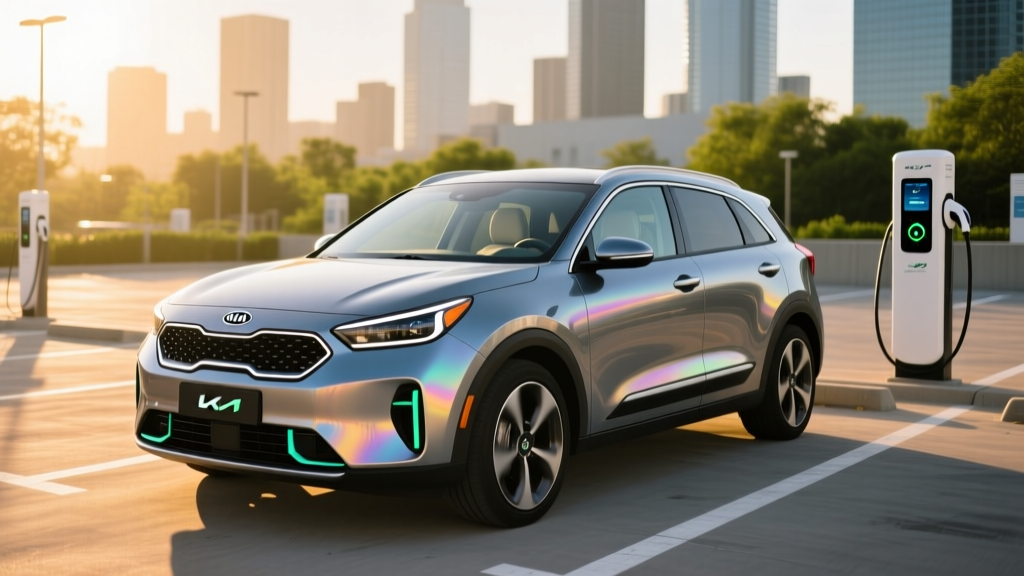
The subcompact crossover segment is crowded, but the 2025 Kia Niro Hybrid occupies a specific niche: a practical, efficiency-first hybrid that prioritizes fuel economy over performance theatrics. With EPA ratings reaching 53 MPG combined and a starting price under $28,000, the Niro HEV remains one of the most accessible hybrids on the market. But Kia also offers the Niro Plug-In Hybrid (PHEV), which adds electric-only driving for short commutes. Understanding which version fits your driving pattern — and what real-world ownership actually looks like — is the key to making the right call.
In this guide, we break down every 2025 Kia Niro Hybrid and PHEV trim with exact EPA figures, real-world MPG observations, battery warranty coverage, and current federal tax credit eligibility under IRS §30D rules.
2025 Kia Niro Hybrid vs. Niro Plug-In Hybrid: What's the Difference?
Before diving into specs, it's critical to understand that Kia sells the Niro in two distinct electrified flavors. Confusing them is the most common mistake buyers make at the dealership.
Conventional Hybrid (HEV)
- No plug required. The battery recharges through regenerative braking and the gasoline engine.
- 1.6L turbocharged 4-cylinder + electric motor producing 139 combined horsepower.
- Best for: Drivers without home charging access, high-mileage commuters, and buyers who want maximum simplicity.
- Fuel only. You never need to think about charging — just fill up at any gas station.
Plug-In Hybrid (PHEV)
- Plugs in to charge. A larger 11.1 kWh battery pack enables electric-only driving.
- 1.6L turbocharged 4-cylinder + more powerful electric motor producing 180 combined horsepower.
- 33 miles of EPA-rated electric-only range before the gasoline engine engages.
- Best for: Drivers with home Level 2 charging and commutes under 33 miles who want EV-like daily driving with gas-engine backup for road trips.
Both versions share the same exterior dimensions, cargo space (22.8 cu ft behind the rear seats), and interior layout. The powertrain and battery are where they diverge significantly.
EPA Fuel Economy: 2025 Kia Niro Hybrid MPG by Trim
The conventional Niro HEV is available in three trims for 2025: LX, EX, and SX Touring. Fuel economy varies slightly depending on wheel size and equipment weight. Here are the official EPA estimates from fueleconomy.gov:
| Trim | City MPG | Highway MPG | Combined MPG | Annual Fuel Cost* |
|---|---|---|---|---|
| Niro HEV LX | 53 | 54 | 53 | $1,150 |
| Niro HEV EX | 53 | 54 | 53 | $1,150 |
| Niro HEV SX Touring | 49 | 52 | 50 | $1,200 |
*Based on 15,000 miles/year at $3.50/gallon regular unleaded. Actual costs vary by region and driving habits.
The Niro PHEV carries a separate EPA rating. In hybrid mode (after the battery is depleted), it achieves 48 MPG combined (49 city / 47 highway). In charge-depleting (electric) mode, it earns 108 MPGe combined.
Real-World MPG: What to Actually Expect
Hybrids like the Niro HEV tend to exceed their EPA city estimates in stop-and-go traffic because regenerative braking recovers energy that a conventional car wastes as heat. In real-world testing across mixed suburban and city driving, the Niro HEV LX consistently delivers 50–56 MPG, with city-heavy routes pushing toward the upper end of that range.
Highway-only driving at 75+ mph will drop fuel economy to roughly 44–48 MPG — the electric motor contributes less at sustained high speeds, and aerodynamic drag dominates. In cold weather (below 35°F), expect a 5–10% reduction due to cabin heating demands and reduced battery efficiency. The SX Touring trim's 18-inch wheels and heavier equipment package accounts for its 3-MPG combined penalty versus the LX and EX.
Niro PHEV: Electric-Only Range, Battery & Charging
The 2025 Niro Plug-In Hybrid uses an 11.1 kWh lithium-ion battery pack paired with a 62 kW (83 hp) electric motor and the same 1.6L turbocharged engine. The combined system output is 180 horsepower — a meaningful 41-hp advantage over the conventional HEV that you'll notice during highway merging and passing.
| Specification | Niro HEV | Niro PHEV |
|---|---|---|
| Combined Horsepower | 139 hp | 180 hp |
| Engine | 1.6L turbo I4 | 1.6L turbo I4 |
| Battery Capacity | ~1.56 kWh | 11.1 kWh |
| EPA Electric-Only Range | N/A | 33 miles |
| Total Combined Range | ~590 miles | ~560 miles (EV + gas) |
| Level 1 Charge Time (120V) | N/A | ~11 hours (0–100%) |
| Level 2 Charge Time (240V) | N/A | ~3 hours (0–100%) |
| DC Fast Charging | N/A | Not supported |
| Transmission | 6-speed DCT | 6-speed DCT |
| 0–60 mph (est.) | ~9.5 sec | ~7.2 sec |
Important charging note: The Niro PHEV does not support DC fast charging. This is standard for most PHEVs — the 11.1 kWh battery is small enough that Level 2 charging fills it in roughly three hours, making DCFC infrastructure unnecessary for daily use. You'll charge at home overnight or at work using a standard J1772 Level 2 connector.
In real-world driving, the PHEV's 33-mile electric range holds up well in mild weather (55–80°F) for suburban commutes. In cold weather or at sustained highway speeds above 65 mph, expect 25–28 miles of electric-only range before the engine kicks in. The transition from electric to hybrid mode is seamless — most drivers won't notice it without watching the power flow display.
Pricing, Trims & Federal Tax Credit Eligibility
Here's where the 2025 Niro lineup breaks down by MSRP (destination charge included):
| Model / Trim | MSRP (incl. destination) |
|---|---|
| Niro HEV LX | $27,390 |
| Niro HEV EX | $30,090 |
| Niro HEV SX Touring | $35,390 |
| Niro PHEV EX | $35,790 |
| Niro PHEV SX / SX Touring | $37,490 – $38,090 |
Does the 2025 Kia Niro Hybrid Qualify for a Federal Tax Credit?
The conventional Niro HEV does not qualify for any federal tax credit. The IRS §30D Clean Vehicle Credit applies only to plug-in electric vehicles (BEVs and PHEVs) with sufficient battery capacity and compliant battery sourcing.
The Niro PHEV may qualify for a partial or full federal tax credit, but eligibility depends on several factors that change frequently under current IRS §30D rules:
§30D Tax Credit Eligibility Checklist (Niro PHEV)
- MSRP cap: The Niro PHEV is classified as an SUV — the MSRP cap is $80,000. All Niro PHEV trims clear this threshold.
- Buyer income cap: Modified AGI must not exceed $150,000 (single), $225,000 (head of household), or $300,000 (joint).
- Battery sourcing: Critical minerals and battery components must meet phased-in percentage thresholds. Kia sources and assembles in South Korea, which may affect eligibility depending on current-year FEOC (Foreign Entity of Concern) restrictions.
- Point-of-sale transfer: If eligible, you can transfer the credit to the dealer at purchase for an immediate price reduction rather than waiting to claim it on your tax return.
Tax credit rules are subject to change. Consult a tax professional and verify current eligibility at fueleconomy.gov before purchasing.
Additionally, some states offer their own rebates or incentives for PHEV purchases — check your state's energy or environmental agency for current programs.
Battery Warranty, Reliability & Replacement Cost
Hybrid battery longevity is the single most common concern among first-time hybrid buyers. Here's what Kia covers:
Kia Hybrid & PHEV Battery Warranty
- Hybrid battery: 10 years / 100,000 miles (whichever comes first)
- Hybrid system components: 10 years / 100,000 miles (inverter, motor, controller)
- Limited vehicle warranty: 5 years / 60,000 miles bumper-to-bumper
- Powertrain warranty: 10 years / 100,000 miles
Kia's 10-year/100,000-mile hybrid battery warranty is among the best in the industry, matching Hyundai and exceeding Toyota's 8-year/100,000-mile coverage. In practice, modern lithium-ion hybrid batteries rarely require full replacement within this period. The Niro's relatively small battery (1.56 kWh for HEV, 11.1 kWh for PHEV) operates within a conservative state-of-charge window managed by the vehicle's battery management system, which significantly reduces degradation.
If replacement is needed out of warranty, expect to pay $2,000–$4,000 for the HEV battery and $5,000–$8,000 for the PHEV battery pack, based on current parts pricing and labor. However, data from long-term hybrid owners across the Kia/Hyundai platform shows that battery failures before 150,000 miles are uncommon.
The Niro has earned solid reliability scores. The 2025 model carries over the second-generation platform introduced for 2023, which has shown fewer early-build issues than the first generation. IIHS testing is a useful reference for crash safety, though the Niro's crash-test profile varies by model year.
Who Should Buy the Niro Hybrid vs. a Full EV or Gas Car?
The Niro HEV and PHEV serve different buyers. Here's a practical decision framework:
Choose the Niro HEV if:
- You don't have access to home or workplace charging
- Your annual mileage is high (15,000+ miles) and you want maximum fuel savings without plugging in
- You want the lowest purchase price in a hybrid crossover
- You drive mostly city/suburban routes where regenerative braking maximizes MPG
Choose the Niro PHEV if:
- You have Level 2 home charging and a commute under 33 miles round-trip
- You want daily electric driving but need gas-engine flexibility for road trips
- You want more power (180 hp vs. 139 hp) for highway merging
- You may qualify for the federal tax credit, narrowing the price gap with the HEV
Consider a full EV instead if:
- You have reliable home charging and rarely drive more than 250 miles in a single day
- You want zero tailpipe emissions and lower per-mile fuel costs (electricity vs. gasoline)
- You're eligible for the full $7,500 federal EV credit on a comparable BEV
- You want to eliminate oil changes and engine maintenance entirely
Compared to a conventional gas-only subcompact SUV like the Kia Seltos or Honda HR-V, the Niro HEV saves approximately $400–$600 per year in fuel costs at 15,000 miles driven annually. The purchase-price premium over a gas-only equivalent typically pays for itself within 3–5 years depending on local fuel prices.
Pros and Cons: 2025 Kia Niro Hybrid
Pros
- Class-leading 53 MPG combined (LX/EX trims)
- Low starting price of $27,390 for the HEV LX
- 10-year/100,000-mile hybrid battery and powertrain warranty
- Generous cargo space (22.8 cu ft) for the subcompact segment
- PHEV version offers 33 miles EV range + 180 hp for a practical daily driver
- Standard wireless Apple CarPlay and Android Auto
Cons
- Modest 139 hp in the HEV — acceleration feels leisurely at highway speeds
- SX Touring trim drops to 50 MPG combined due to larger wheels and added weight
- PHEV does not support DC fast charging
- All-wheel drive is not available on any trim
- Road noise is noticeable at highway speeds compared to rivals
- PHEV tax credit eligibility is uncertain under current sourcing rules
Frequently Asked Questions
How many MPG does the 2025 Kia Niro Hybrid get?
The Niro HEV LX and EX trims achieve an EPA-estimated 53 MPG combined (53 city / 54 highway). The SX Touring trim rates at 50 MPG combined (49 city / 52 highway). In real-world mixed driving, owners commonly report 50–56 MPG, with city-heavy routes favoring the higher end of that range.
How far can the Niro PHEV go on electric only?
The EPA rates the 2025 Niro PHEV at 33 miles of electric-only range. In real-world conditions — particularly cold weather or sustained highway driving — expect 25–28 miles before the gasoline engine activates. For commutes within that range, you may go weeks without visiting a gas station.
Is the Kia Niro Hybrid reliable?
The second-generation Niro (2023+) has shown solid reliability in early ownership data. Kia backs the hybrid battery and powertrain with a 10-year/100,000-mile warranty, one of the longest in the industry. Hybrid battery failures before 150,000 miles are uncommon based on long-term data from Kia's hybrid platform.
What does it cost to replace the Niro hybrid battery?
Out-of-warranty replacement costs approximately $2,000–$4,000 for the conventional HEV battery and $5,000–$8,000 for the PHEV battery pack. However, Kia's 10-year/100,000-mile warranty covers battery defects and significant capacity loss, and real-world failures within that period are rare.
Does the 2025 Kia Niro Hybrid qualify for a tax credit?
The conventional Niro HEV does not qualify for any federal tax credit — it has no plug-in capability. The Niro PHEV may qualify for a partial or full federal tax credit under IRS §30D, depending on battery sourcing requirements, your income, and current-year rules. Verify eligibility at fueleconomy.gov and consult a tax professional before relying on the credit.
Does the Niro Hybrid need to be plugged in?
No. The conventional Niro HEV charges its small battery through regenerative braking and the gasoline engine. You never plug it in. Only the Niro PHEV version requires plugging in to take advantage of its electric-only range — though it will still operate as a standard hybrid if you don't charge it.
Is the Niro Hybrid good for highway driving?
It's adequate but not exceptional. The HEV's 139 hp means highway passing requires planning, and fuel economy drops to roughly 44–48 MPG at sustained 75+ mph speeds. The PHEV's 180 hp makes highway merging noticeably easier. If highway driving dominates your commute, the PHEV's extra power and the HEV's still-strong MPG make both viable, but neither is a performance-oriented choice.