Quick Verdict: The Efficiency Bargain of the Year
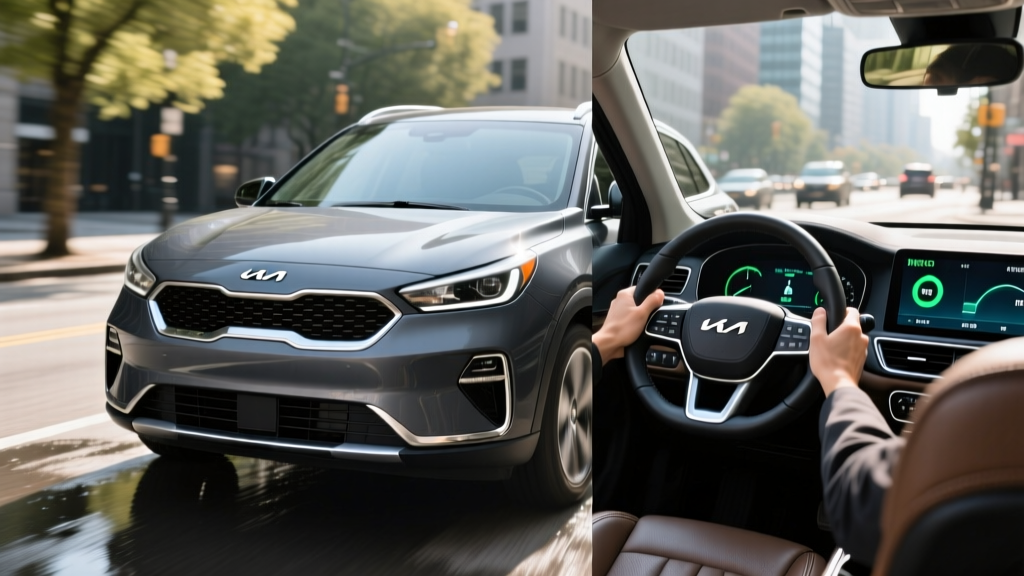
The 2025 Kia Niro Hybrid LX occupies a rare sweet spot in the compact crossover segment: it delivers class-leading fuel economy without requiring you to plug in, change your habits, or stretch your budget. At a starting MSRP of $26,990, the base LX trim undercuts most hybrid rivals while offering 53 MPG combined on the EPA cycle — a figure that routinely improves in real-world city driving thanks to aggressive regenerative braking and frequent engine-off operation.
For buyers weighing a conventional hybrid against a plug-in hybrid (PHEV) or a full battery-electric vehicle (BEV), the Niro Hybrid LX makes a compelling case for simplicity. No charging infrastructure required, no range anxiety, no home electrical upgrades — just fill up with regular unleaded and drive.
HEV vs. PHEV: Which Niro Is Right for You?
Kia sells the Niro in three electrified flavors, and confusing them is easy if you're new to the lineup. Here's the breakdown:
| Attribute | Niro Hybrid (HEV) | Niro Plug-In Hybrid (PHEV) | Niro EV (BEV) |
|---|---|---|---|
| Needs to plug in? | No | Yes (Level 1/2) | Yes (Level 1/2/DC) |
| Electric-only range | N/A (EV assist only) | 33 miles (EPA) | 239 miles (EPA) |
| Powertrain | 1.6L + 32 kW motor | 1.6L + 62 kW motor | 150 kW motor only |
| Combined HP | 139 hp | 180 hp | 201 hp |
| Battery | 1.56 kWh (self-charging) | 11.1 kWh usable | 64.8 kWh usable |
| Starting MSRP (2025) | $26,990 | $34,390 | $39,600 |
| Federal tax credit | None | Up to $3,750* | Up to $7,500* |
*Tax credit eligibility depends on buyer income, battery sourcing, and MSRP caps under IRS §30D rules. Verify current-year requirements at irs.gov.
The Niro Hybrid LX is the right choice if you lack reliable home charging access, want the lowest purchase price, and prioritize maximum fuel efficiency over electric-only driving. The PHEV variant suits drivers with short commutes and home Level 2 charging who want electric-only weekday driving with gas-engine flexibility for road trips. The full Niro EV targets those ready to commit to battery-electric with DC fast-charging capability.
Fuel Economy: EPA Ratings vs. Real-World MPG
The 2025 Kia Niro Hybrid LX carries an EPA rating of 53 MPG city, 54 MPG highway, and 53 MPG combined. These numbers place it among the most efficient non-plug-in crossovers on the market, trailing only the Toyota Prius (which is a liftback, not a crossover) in the broader hybrid segment.
| Driving Scenario | EPA Estimate | Real-World Expectation |
|---|---|---|
| City (stop-and-go) | 53 MPG | 55–60 MPG (regen-heavy routes improve) |
| Highway (70+ mph) | 54 MPG | 46–50 MPG (aero drag reduces hybrid advantage) |
| Combined (55/45 mix) | 53 MPG | 49–54 MPG |
| Cold weather (below 32°F) | N/A | 42–47 MPG (engine runs more for cabin heat) |
Hybrids like the Niro typically exceed their EPA city rating in real-world urban driving. Every deceleration event feeds energy back into the 1.56 kWh lithium-ion battery, allowing extended engine-off coasting and low-speed electric-only creeping. On suburban routes with frequent stops, owners regularly report 55–58 MPG on the trip computer.
Highway driving tells a different story. At sustained speeds above 70 mph, aerodynamic drag dominates and the hybrid system's regenerative advantage diminishes. Expect 46–50 MPG on long interstate trips — still excellent for a crossover, but noticeably below the EPA highway sticker. Cold weather further reduces efficiency because the gasoline engine must run longer to heat the cabin and maintain battery temperature.
According to fueleconomy.gov, the Niro Hybrid's combined annual fuel cost is approximately $1,150 based on 15,000 miles and $3.50/gallon regular unleaded — roughly $600 less per year than a comparable gas-only compact crossover averaging 30 MPG combined.
Powertrain and Performance Specs
The 2025 Niro Hybrid LX pairs a 1.6-liter four-cylinder Atkinson-cycle gasoline engine with a 32 kW (43 hp) permanent-magnet electric motor integrated into a 6-speed dual-clutch automatic transmission. Total system output is 139 horsepower and 195 lb-ft of torque, sent to the front wheels.
| Specification | 2025 Kia Niro Hybrid LX |
|---|---|
| Engine | 1.6L GDI 4-cyl Atkinson (104 hp) |
| Electric Motor | 32 kW (43 hp) |
| Combined System Output | 139 hp / 195 lb-ft |
| Transmission | 6-speed dual-clutch automatic (DCT) |
| Drivetrain | Front-wheel drive |
| Hybrid Battery | 1.56 kWh lithium-ion (NMC) |
| 0–60 mph | ~9.7 seconds |
| Curb Weight | ~3,108 lbs |
| Cargo Volume (rear seats up) | 22.8 cu ft |
| Cargo Volume (rear seats folded) | 54.5 cu ft |
| Towing Capacity | Not rated for towing |
| Fuel Tank | 11.1 gallons |
| Total Driving Range | ~588 miles (EPA combined) |
The dual-clutch transmission is a deliberate choice by Kia that sets the Niro apart from Toyota's e-CVT hybrids. The DCT delivers crisp, predictable gear changes without the rubber-band drone associated with continuously variable transmissions. The trade-off is occasional low-speed hesitation from a stop — the transmission must engage first gear and the electric motor must coordinate torque fill, which can produce a brief 0.5-second lag before acceleration builds. Once rolling, power delivery is smooth and linear.
With a 9.7-second 0–60 mph time, the Niro Hybrid LX is not quick by any performance metric. It's adequate for merging and passing but rewards patience over aggression. Drivers who want more punch should consider the Niro PHEV (180 hp, ~7.2 sec 0–60) or the Niro EV (201 hp, ~6.8 sec 0–60).
Battery Warranty, Reliability, and Replacement Cost
Hybrid Battery Warranty Coverage
- Duration: 10 years / 100,000 miles (whichever comes first)
- Powertrain warranty: 10 years / 100,000 miles
- Bumper-to-bumper: 5 years / 60,000 miles
- Coverage threshold: Battery capacity below 70% of original, or cell/module failure
Kia's hybrid battery warranty is among the longest in the industry, matching Hyundai's coverage and exceeding Toyota's 10-year/150,000-mile hybrid battery warranty in duration but falling slightly short on mileage for the battery component specifically (Toyota covers 150k miles on the hybrid battery in most states).
The Niro Hybrid's 1.56 kWh battery pack is small and operates within a narrow state-of-charge window — typically between 40% and 80% — which dramatically reduces degradation stress. Unlike a full EV battery that cycles through deep charge and discharge events daily, the Niro's hybrid battery is managed conservatively by the vehicle's control system. Most hybrid batteries from Kia/Hyundai outlast the warranty period without meaningful capacity loss.
Should a replacement be necessary out of warranty, expect a hybrid battery replacement cost between $2,000 and $3,500 for parts and labor at a Kia dealership. Independent hybrid specialists may offer refurbished packs for $1,200–$2,000. Given the small battery size and conservative usage profile, this is a low-probability event within the first 15 years of ownership.
In terms of overall vehicle reliability, Kia's 1.6L Kappa engine family and DCT have matured through several generations. Early-model Niro hybrids (2017–2019) had scattered reports of DCT clutch wear and 12V battery drain issues, but the 2023+ redesign addressed most of these with updated software and hardware. Current reliability ratings from major outlets place the Niro Hybrid in the average-to-above-average range for the compact crossover class.
Pricing, Trims, and Tax Credit Eligibility
The 2025 Kia Niro Hybrid LX starts at an MSRP of $26,990, including destination charge. This makes it one of the most affordable hybrid crossovers available in the U.S. market. Here's the full trim lineup:
| Trim | MSRP | Key Additions Over LX |
|---|---|---|
| LX | $26,990 | Base: 8" touchscreen, wireless CarPlay/Android Auto, Smart Cruise Control, Lane Keeping Assist |
| LXS | $28,390 | Blind-Spot Monitoring, Rear Cross-Traffic Alert, Smart Power Liftgate |
| EX | $30,590 | Heated front seats, Smart Key, LED interior lighting, Highway Driving Assist |
| SX Touring | $34,590 | Leather seats, Harman Kardon audio, sunroof, ventilated front seats, navigation |
Does the Niro Hybrid LX Qualify for a Federal Tax Credit?
No. The conventional Niro Hybrid (HEV) does not qualify for the federal §30D New Clean Vehicle Credit. That credit applies only to plug-in electric vehicles — battery-electric (BEV) and plug-in hybrid (PHEV) models with a minimum battery capacity of 7 kWh. The Niro Hybrid's 1.56 kWh battery falls well below that threshold.
If you're set on capturing a federal incentive, the Niro Plug-In Hybrid (starting at $34,390) may qualify for up to $3,750 under current §30D rules, depending on battery critical-mineral and component sourcing requirements that shift annually. The Niro EV may qualify for up to $7,500 if all sourcing and MSRP caps are met. Always verify current eligibility at irs.gov and consult a tax professional — income caps ($150K single / $300K joint), MSRP limits ($55K for SUVs/crossovers), and battery-sourcing rules all apply.
Some states and local utilities offer rebates for conventional hybrids, though these are less common and typically smaller ($500–$1,500) than EV incentives. Check your state energy office or utility provider for current programs.
Who Should Choose the Niro Hybrid LX?
Choose the Niro Hybrid LX if:
- You don't have access to home or workplace charging and don't want to rely on public infrastructure
- Your budget caps around $27,000–$30,000 and you want maximum fuel savings per dollar
- You drive a mix of city and highway miles and want proven hybrid reliability
- You prefer a crossover ride height and cargo space over a low-slung sedan like the Prius
- You want a total driving range exceeding 580 miles between fill-ups
Consider the Niro PHEV or a full EV if:
- You have home Level 2 charging and a short commute (under 30 miles round-trip) — the PHEV's 33-mile electric range covers most daily driving on electricity alone
- You want to qualify for a federal tax credit ($3,750–$7,500 depending on model and eligibility)
- You prioritize acceleration — the PHEV (180 hp) and EV (201 hp) are noticeably quicker
- You want to minimize or eliminate gasoline use and its associated cost volatility
Pros
- 53 MPG combined EPA — class-leading for a crossover
- Low $26,990 starting price with generous standard safety tech
- No charging infrastructure or habit changes required
- 10-year/100,000-mile hybrid battery and powertrain warranty
- Practical cargo space (22.8 cu ft rear up, 54.5 cu ft folded)
- Dual-clutch transmission avoids CVT drone
Cons
- 9.7-second 0–60 is leisurely; highway passing requires planning
- No all-wheel-drive option (FWD only)
- Not eligible for federal EV tax credit
- Low-speed DCT hesitation from a stop can feel unrefined
- Road noise is noticeable above 65 mph
- No DC fast-charging capability (not applicable to HEV, but limits trip flexibility vs. EV)
Frequently Asked Questions
How many MPG does the 2025 Kia Niro Hybrid LX get?
The EPA rates the 2025 Niro Hybrid LX at 53 MPG city, 54 MPG highway, and 53 MPG combined. In real-world city driving with frequent stops, owners commonly see 55–58 MPG. Highway driving at 70+ mph typically yields 46–50 MPG. Cold weather below freezing reduces combined efficiency to approximately 42–47 MPG due to increased engine operation for cabin heating.
Does the Niro Hybrid need to be plugged in?
No. The Niro Hybrid (HEV) is a conventional self-charging hybrid. Its small 1.56 kWh battery is charged exclusively through regenerative braking and the gasoline engine. You never plug it in — you simply refuel at a gas station like any conventional car.
How far can the Niro Hybrid drive on electricity alone?
The conventional Niro Hybrid cannot drive on electricity alone for any meaningful distance. The electric motor assists the gasoline engine and can propel the car at very low speeds (under ~15 mph) for short bursts in stop-and-go traffic, but the engine is always available and engages automatically. If you want true electric-only driving, the Niro Plug-In Hybrid offers 33 miles of EPA-rated electric range, and the Niro EV offers 239 miles.
Is the Kia Niro Hybrid reliable, and what does a battery replacement cost?
The Niro Hybrid benefits from Kia's 10-year/100,000-mile hybrid battery and powertrain warranty, one of the longest in the industry. The 1.56 kWh battery operates within a narrow charge window that minimizes degradation, and most hybrid batteries outlast their warranty without issue. If replacement is needed out of warranty, expect $2,000–$3,500 at a dealer or $1,200–$2,000 for a refurbished pack from an independent hybrid specialist. Overall vehicle reliability for the 2023+ redesign generation rates average to above average.
Does the 2025 Niro Hybrid LX qualify for a tax credit?
No. The conventional Niro Hybrid does not qualify for the federal §30D New Clean Vehicle Credit, which requires a plug-in vehicle with at least 7 kWh of battery capacity. The Niro PHEV may qualify for up to $3,750 and the Niro EV for up to $7,500, subject to income limits, MSRP caps, and battery-sourcing requirements. Check fueleconomy.gov and irs.gov for current eligibility details.
Hybrid vs. PHEV vs. EV — which Niro fits me best?
Choose the Hybrid (HEV) if you can't charge at home and want the simplest, lowest-cost ownership experience with excellent fuel economy. Choose the PHEV if you have home charging, a short commute, and want electric-only weekday driving with gas-engine backup for road trips. Choose the EV if you're ready to go fully electric, have charging access, and want the lowest per-mile fuel cost with zero tailpipe emissions. Each variant serves a different use case — there's no universally "best" option.