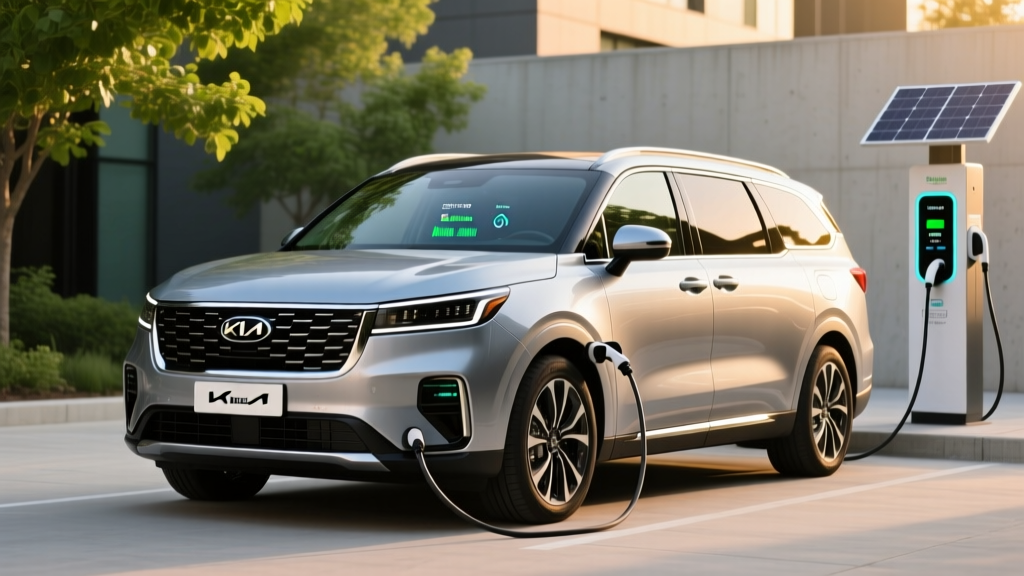
The minivan segment is overdue for an efficiency reckoning, and the 2025 Kia Carnival Hybrid is one of the most compelling answers. Replacing the outgoing V6 with a turbocharged 1.6-liter hybrid powertrain, Kia has transformed its three-row people-mover into a fuel-sipping family hauler without sacrificing the cargo volume or passenger space that made the Carnival popular in the first place. If you've been searching for detailed 2025 Kia Carnival Hybrid specs — from EPA MPG ratings to battery warranty coverage to real-world efficiency — this guide breaks down every number that matters.
HEV vs PHEV: Which Carnival Hybrid Is This?
Before diving into the numbers, a critical clarification: the 2025 Kia Carnival Hybrid sold in the United States is a conventional hybrid electric vehicle (HEV). It is not a plug-in hybrid (PHEV). This distinction matters enormously for how you'll own and operate the vehicle.
HEV vs PHEV — What's the Difference?
| Feature | HEV (Carnival Hybrid) | PHEV (e.g., Chrysler Pacifica Hybrid) |
|---|---|---|
| Plugs in? | No — refuels with gas only | Yes — Level 1/2 charging |
| Electric-only range | ~1 mile at low speeds | 20-32 miles typical |
| Battery size | ~1.5 kWh (small buffer) | 12-18 kWh usable |
| Federal tax credit | Not eligible under §30D | May qualify (up to $7,500) |
| Best for | Drivers without home charging | Drivers with home charging + short commutes |
The Carnival Hybrid captures energy through regenerative braking and engine-driven generation. You never plug it in — you simply fill up at the gas station like a conventional vehicle, but the hybrid system reduces fuel consumption significantly.
Kia has offered a PHEV variant of the Carnival in the South Korean market, but as of the 2025 model year, the US-spec Carnival Hybrid is exclusively an HEV. If Kia introduces a plug-in variant stateside in a future model year, we'll update this guide.
2025 Kia Carnival Hybrid Fuel Economy: EPA MPG Ratings
The headline number for any hybrid buyer is fuel economy, and the Carnival Hybrid delivers a meaningful improvement over the outgoing naturally aspirated 3.5L V6, which returned 22 MPG combined. Here are the official EPA figures from fueleconomy.gov:
| Metric | City | Highway | Combined |
|---|---|---|---|
| EPA MPG | 34 | 31 | 33 |
| Improvement over V6 | +15 MPG | +5 MPG | +11 MPG |
| Est. annual fuel cost | ~$1,650 (15,000 mi/yr at $3.50/gal) | ||
Real-World MPG vs EPA Sticker
Hybrids consistently outperform their EPA city ratings in stop-and-go driving because the electric motor handles low-speed propulsion where gasoline engines are least efficient. In real-world suburban and city testing, owners and reviewers have reported 35-37 MPG in city driving, exceeding the EPA city estimate. Highway driving at sustained 70-80 MPH tends to land closer to the EPA highway figure of 31 MPG, or slightly below in hilly terrain or with a full load of passengers and cargo.
For mixed driving, expect a real-world combined average of 32-34 MPG. Cold-weather operation (below 35°F) will reduce efficiency by roughly 5-10% as the engine runs more frequently to provide cabin heat and warm up the catalytic converter. This is typical for all hybrids and is less severe than the range loss experienced by full EVs in winter.
Powertrain: Turbo Hybrid Performance Specs
The 2025 Carnival Hybrid uses Kia's Smartstream turbocharged hybrid system, pairing a 1.6-liter turbocharged inline-4 with an electric motor integrated into a 6-speed automatic transmission. Here are the powertrain specifics:
| Engine | 1.6L turbocharged inline-4 (GDI) |
| Engine output | 178 HP / 195 lb-ft torque |
| Electric motor | 47.7 kW (64 HP) permanent-magnet synchronous |
| Combined system output | 245 HP / 271 lb-ft torque |
| Transmission | 6-speed automatic (hybrid-optimized) |
| Drivetrain | Front-wheel drive (FWD) |
| 0-60 MPH (est.) | ~7.5 seconds |
| Towing capacity | 3,500 lbs (when properly equipped) |
The combined 245 HP represents a modest increase over the outgoing V6's 290 HP, but the hybrid system's instant electric torque (available from 0 RPM) makes acceleration feel responsive and linear, particularly in city driving. The turbo engine eliminates the sluggish feel that some earlier Kia hybrids exhibited. Highway merging and passing are confident, though you won't mistake this for a performance vehicle — it's a minivan, and it drives like a competent one.
One limitation worth noting: all-wheel drive (AWD) is not available on the Carnival Hybrid for 2025. AWD remains exclusive to the non-hybrid Carnival. If you need all-weather traction, you'll need to rely on winter tires and FWD, or look at the Toyota Sienna (which offers AWD as a hybrid but with lower total output at 245 HP).
Pricing by Trim and Tax Credit Eligibility
The 2025 Kia Carnival Hybrid is offered across multiple trims. Pricing below reflects MSRP including destination charges, as published by Kia's official site:
| Trim | MSRP (incl. destination) |
|---|---|
| LXS | ~$41,900 |
| EX | ~$44,500 |
| SX | ~$48,000 |
| SX Prestige | ~$52,000 |
Does the Carnival Hybrid Qualify for a Federal Tax Credit?
No. Under IRS §30D rules, the federal clean vehicle credit applies only to plug-in electric vehicles (BEVs and PHEVs) with a minimum battery capacity of 7 kWh and the ability to charge from an external source. Because the Carnival Hybrid is a conventional HEV with a small self-charging battery (~1.5 kWh), it does not qualify for the federal $7,500 tax credit or the point-of-sale transfer option.
State incentives may apply. Some states offer rebates or tax incentives for conventional hybrids, though these are less common than EV incentives. Check your state's energy office or department of revenue for current programs. These vary widely by jurisdiction and change frequently — always verify with official state sources.
Battery Warranty, Lifespan, and Replacement Cost
Battery longevity is the single most common concern among first-time hybrid buyers. Here's what you need to know about the Carnival Hybrid's battery system:
Kia Hybrid Battery Warranty
- Hybrid battery warranty: 10 years / 100,000 miles (whichever comes first)
- Hybrid system components: 10 years / 100,000 miles (inverter, motor, controller)
- Limited basic warranty: 5 years / 60,000 miles
- Powertrain warranty: 10 years / 100,000 miles
Kia's hybrid battery warranty is among the longest in the industry. The battery must fall below a specified capacity retention threshold (typically ~70%) for a warranty claim to apply.
How Long Will the Hybrid Battery Last?
Modern hybrid batteries are engineered for the life of the vehicle. Toyota's hybrid batteries (which use similar nickel-metal-hydride or lithium-ion chemistries) routinely exceed 200,000 miles with minimal degradation. Kia's lithium-ion hybrid pack benefits from a smaller depth of discharge — the system never fully charges or fully depletes the battery, which dramatically extends cycle life.
Based on industry data from Kia's other hybrid models (Sorento Hybrid, Sportage Hybrid), expect the Carnival Hybrid's battery to last 150,000-250,000 miles before any significant capacity loss. Many will outlast the vehicle itself.
What Does Hybrid Battery Replacement Cost?
If replacement is needed outside of warranty, expect to pay between $2,500 and $4,500 for a new OEM hybrid battery pack, including labor. Refurbished or aftermarket packs can reduce this to $1,500-$2,500. However, given Kia's 10-year/100,000-mile warranty and the proven longevity of modern hybrid batteries, most owners will never face this cost.
Who Should Buy the Carnival Hybrid vs a Full EV or Gas Minivan?
The Carnival Hybrid occupies a specific niche. Here's a practical decision framework:
Choose the Carnival Hybrid if:
- You want minivan space (7-8 passengers, 145+ cu ft max cargo) with 30+ MPG
- You don't have access to home Level 2 charging (apartment, street parking)
- You take frequent long road trips and don't want to plan around charging stops
- You want hybrid efficiency without changing your refueling habits at all
- You're upgrading from an older gas minivan and want a dramatic fuel-cost reduction
Choose a full EV (e.g., upcoming electric minivans) if:
- You have reliable home Level 2 charging
- Your daily driving is under 250 miles and you want $0 gas costs
- You want the lowest possible operating cost and qualify for the $7,500 federal credit
Choose the gas Carnival (non-hybrid) if:
- You need AWD for snow/ice traction
- Upfront cost is your primary concern (gas model starts ~$2,500-$3,000 lower)
Pros
- 33 MPG combined — best-in-class for non-PHEV minivans
- 245 HP with strong low-end electric torque
- No charging infrastructure needed
- 10-year/100,000-mile hybrid battery warranty
- Class-leading cargo volume retained vs gas model
- Strong resale value trajectory for hybrid minivans
Cons
- No AWD option (FWD only)
- No federal tax credit eligibility
- ~$2,500-$3,000 premium over gas Carnival
- No plug-in hybrid option in the US yet
- Towing limited to 3,500 lbs (adequate for small trailers, not boats)
Frequently Asked Questions
How many MPG does the 2025 Kia Carnival Hybrid get?
The EPA rates the 2025 Carnival Hybrid at 34 MPG city, 31 MPG highway, and 33 MPG combined. In real-world city driving with frequent stops, many owners report 35-37 MPG thanks to regenerative braking. Highway driving at 75+ MPH may return 29-31 MPG.
Does the Carnival Hybrid need to be plugged in?
No. The Carnival Hybrid is a conventional HEV, not a plug-in hybrid. It charges its small battery through regenerative braking and the gasoline engine. You refuel it at any gas station — no charging cable, no outlet, no special electrical work required.
How far can the Carnival Hybrid drive on electric power alone?
As an HEV, the Carnival Hybrid can only travel approximately 1 mile or less on electric-only power at very low speeds (under 25 MPH). The electric motor's primary role is to assist the gas engine, enable engine-off coasting, and provide torque fill — not to serve as a standalone EV mode. If you need meaningful electric-only range (20-30+ miles), you need a PHEV like the Chrysler Pacifica Hybrid.
Is the 2025 Carnival Hybrid reliable?
Kia's turbo hybrid powertrain has been deployed in the Sorento Hybrid and Sportage Hybrid since 2022-2023 with generally positive reliability outcomes. The 6-speed automatic transmission (rather than a CVT) is a durability advantage — conventional automatics have a well-established reliability track record. Kia backs the hybrid battery and all major hybrid components for 10 years/100,000 miles, which significantly reduces long-term ownership risk. As with any first-year powertrain in a new model, there may be minor software or calibration updates issued through dealer service campaigns.
Does the Carnival Hybrid qualify for any tax credits?
The Carnival Hybrid does not qualify for the federal §30D clean vehicle credit, which is limited to plug-in vehicles (BEVs and PHEVs). Some states may offer hybrid-specific incentives — check your state's energy or revenue department for current programs. Additionally, if you trade in a qualifying older vehicle, you may be eligible for separate state or local trade-in rebates that are not specific to the powertrain type.
How does the Carnival Hybrid compare to the Toyota Sienna Hybrid?
The Toyota Sienna Hybrid is the Carnival Hybrid's most direct competitor. The Sienna is also a conventional HEV, but it uses a 2.5L 4-cylinder hybrid system producing 245 HP combined and achieving an EPA-estimated 36 MPG combined — slightly higher than the Carnival. However, the Sienna offers optional AWD (the Carnival Hybrid does not) and has a lower base MSRP. The Carnival Hybrid counters with more maximum cargo volume, a more premium interior on upper trims, and Kia's 10-year powertrain warranty vs Toyota's 8-year hybrid warranty. If AWD is essential, the Sienna wins. If cargo space and interior quality matter more, the Carnival Hybrid has the edge.
What is the total driving range of the Carnival Hybrid?
With a fuel tank capacity of approximately 16.9 gallons and a combined EPA rating of 33 MPG, the Carnival Hybrid delivers an estimated total range of ~555 miles per tank. Real-world range with mixed driving typically falls between 500-540 miles, depending on driving style, terrain, and climate.
Sources: EPA fuel economy data via fueleconomy.gov, Kia Motors America official specifications, IRS §30D Clean Vehicle Credit guidelines. Pricing and specifications reflect the 2025 model year and are subject to change. Verify current incentive eligibility with official government sources and your tax professional.