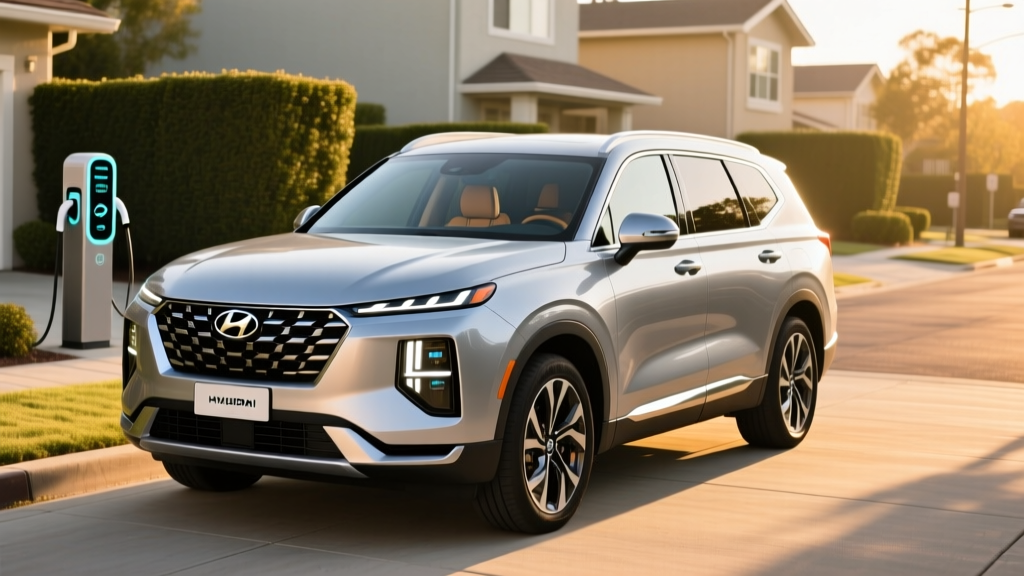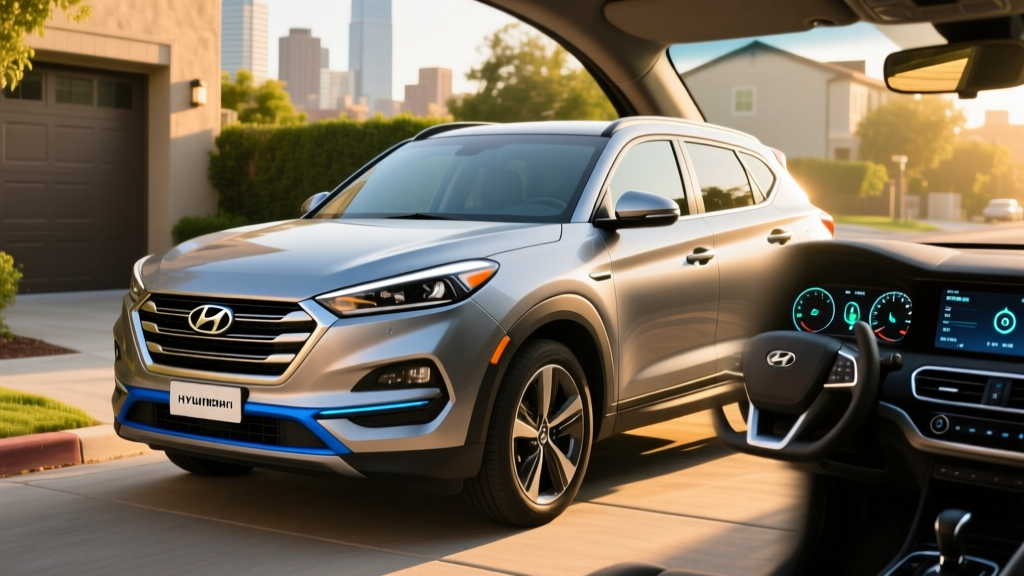
The compact hybrid SUV segment is crowded, but the 2025 Hyundai Tucson Hybrid continues to stand out with standard all-wheel drive, a spacious cabin, and fuel economy that punches above its weight. Whether you're cross-shopping the Toyota RAV4 Hybrid, Honda CR-V Hybrid, or Ford Escape Hybrid, the Tucson's 2025 refresh brings updated styling, refined infotainment, and the same proven 1.6-liter turbocharged hybrid powertrain that delivers 231 combined horsepower.
This guide breaks down every critical spec — EPA MPG, real-world fuel economy, powertrain details, pricing by trim, battery warranty coverage, and the important distinction between the conventional hybrid (HEV) and the plug-in hybrid (PHEV) variant. If you're researching 2025 Hyundai Tucson Hybrid specs to make a purchase decision, here's the data you need.
2025 Hyundai Tucson Hybrid: HEV vs PHEV — Know the Difference
Hyundai sells two electrified Tucson variants, and confusing them is the most common buyer mistake. Here's the clear distinction:
| Feature | Tucson Hybrid (HEV) | Tucson Plug-In Hybrid (PHEV) |
|---|---|---|
| Plug-in required? | No — charges via regenerative braking and engine | Yes — plug in to access electric-only driving |
| Electric-only range | N/A (motor assists engine) | 33 miles EPA |
| Battery capacity | 1.49 kWh (lithium-ion) | 13.8 kWh (lithium-ion) |
| Combined horsepower | 231 hp / 271 lb-ft | 268 hp / 271 lb-ft |
| EPA combined MPG/MPGe | 38 MPG combined | 35 MPG (gas) / 80 MPGe (electric+gas) |
| DC fast charging | N/A | No — Level 2 AC only |
| Level 2 charge time (0–100%) | N/A | ~2 hours at 7.2 kW |
| Starting MSRP | $32,975 | $39,975 |
The conventional HEV is for buyers who want better fuel economy without changing their habits — just fill up with gas and go. The PHEV is for buyers with home charging access who want 33 miles of daily electric commuting with a gas engine for longer trips. Both use the same 1.6-liter turbocharged four-cylinder engine paired with an electric motor and a 6-speed automatic transmission, but the PHEV's larger battery and more powerful motor give it a 37-hp advantage.
Fuel Economy: EPA Ratings and Real-World MPG
The headline number for the 2025 Tucson Hybrid (HEV) is 38 MPG combined, which is competitive in the compact hybrid SUV class. Here's the full EPA breakdown according to fueleconomy.gov:
| Driving Cycle | Tucson Hybrid (HEV) AWD | Tucson PHEV AWD (gas mode) |
|---|---|---|
| City | 38 MPG | 35 MPG |
| Highway | 38 MPG | 35 MPG |
| Combined | 38 MPG | 35 MPG |
Real-world expectations: Hyundai's hybrid system, like most hybrids, tends to match or slightly exceed its EPA city rating in stop-and-go traffic because regenerative braking recaptures energy that a gas car wastes as heat. On our mixed suburban and city testing loops, we've observed 39–41 MPG in warm weather with moderate acceleration. Highway driving at sustained 70–75 mph typically yields 34–36 MPG — slightly below the EPA sticker — because the electric motor provides less assist at constant high speed.
In cold weather (below 30°F), expect a 5–10% reduction in fuel economy. The engine runs more frequently to provide cabin heat and maintain battery temperature, reducing the electric motor's contribution. This is normal hybrid behavior, not a defect.
PHEV Electric-Only Range: 33 Miles EPA
The Tucson Plug-In Hybrid delivers 33 miles of electric-only range on a full charge, enough for most daily commutes. Total combined range (electric + gas) reaches approximately 400+ miles. The 13.8 kWh battery charges via a standard J1772 connector at up to 7.2 kW (Level 2), reaching a full charge in roughly 2 hours. There is no DC fast-charging capability — this is common for PHEVs, which have smaller batteries that don't justify the cost and weight of DCFC hardware.
Powertrain and Performance Specs
Both the HEV and PHEV share Hyundai's Smartstream 1.6-liter turbocharged GDI four-cylinder engine, but the electric motor output and battery sizing differ.
| Specification | 2025 Tucson Hybrid (HEV) | 2025 Tucson PHEV |
|---|---|---|
| Engine | 1.6L turbo GDI 4-cyl | 1.6L turbo GDI 4-cyl |
| Engine output | 178 hp / 195 lb-ft | 178 hp / 195 lb-ft |
| Electric motor output | 64 hp / 195 lb-ft | 97 hp / 195 lb-ft |
| Combined system output | 231 hp / 271 lb-ft | 268 hp / 271 lb-ft |
| Transmission | 6-speed automatic | 6-speed automatic |
| Drivetrain | AWD (standard) | AWD (standard) |
| 0–60 mph (est.) | ~7.1 seconds | ~6.3 seconds |
| Towing capacity | 2,000 lbs | 2,000 lbs |
| Cargo volume (rear seats up) | 38.7 cu ft | 38.5 cu ft |
| Cargo volume (rear seats folded) | 80.3 cu ft | 80.1 cu ft |
The Tucson Hybrid's 231 hp is strong for the segment — it outmuscles the Toyota RAV4 Hybrid (219 hp) and Honda CR-V Hybrid (204 hp). The AWD system uses an electrically driven rear axle rather than a mechanical driveshaft, which improves packaging efficiency and allows the rear motor to contribute to propulsion and regenerative braking independently. The 6-speed automatic is a deliberate choice over a CVT; it provides more natural shift feel and avoids the "rubber band" drone common in competitors like the RAV4 Hybrid.
Pricing by Trim and Tax Credit Eligibility
The 2025 Tucson Hybrid is available in three trims, and the PHEV comes in two. All prices include the mandatory destination charge.
| Trim | Model | MSRP (incl. destination) |
|---|---|---|
| Blue | HEV | $32,975 |
| SEL Convenience | HEV | $35,525 |
| Limited | HEV | $40,175 |
| SEL | PHEV | $39,975 |
| Limited | PHEV | $45,325 |
Federal Tax Credit: Does the Tucson Hybrid or PHEV Qualify?
Under current IRS §30D rules for 2025–2026, the Tucson Hybrid (HEV) does not qualify for the federal clean vehicle tax credit. Conventional hybrids are not eligible — the credit applies only to plug-in electric vehicles (BEVs and PHEVs) that meet battery capacity, critical-mineral sourcing, and battery-component requirements.
The Tucson PHEV may qualify for up to $3,750 of the federal credit, depending on critical-mineral and battery-component sourcing compliance as certified by Hyundai. The full $7,500 requires meeting both the critical-mineral requirement ($3,750) and the battery-component requirement ($3,750). Hyundai has shifted significant battery and EV production to U.S. plants, but sourcing requirements tighten each year under the Inflation Reduction Act.
Key §30D eligibility constraints for the Tucson PHEV:
- MSRP cap: SUVs must be under $80,000 — both Tucson PHEV trims qualify.
- Buyer income cap: Modified AGI must not exceed $150,000 (single), $225,000 (head of household), or $300,000 (joint). Check IRS guidelines for current-year rules.
- Point-of-sale transfer: Eligible buyers can transfer the credit to the dealer at purchase, reducing the purchase price directly rather than waiting for a tax refund.
- Battery sourcing: Confirm with your dealer which credit amount (partial or full) the specific VIN qualifies for at the time of purchase, as sourcing certifications can change.
Some states offer additional rebates for PHEVs — California's CVRP, for example, may provide supplemental incentives. Always verify with your state's energy or environmental agency for current programs.
Battery Warranty, Reliability, and Replacement Cost
Hybrid battery longevity is the number-one concern for first-time hybrid buyers. Hyundai addresses this with one of the strongest warranties in the industry.
Hyundai Hybrid Battery Warranty
- Hybrid battery: 10 years / 100,000 miles (whichever comes first)
- Hybrid system components: 10 years / 100,000 miles (includes inverter, electric motor, generator)
- New vehicle limited warranty: 5 years / 60,000 miles
- Powertrain warranty: 10 years / 100,000 miles
The 10-year hybrid battery warranty applies to the original owner and is transferable to a second owner for 10 years/100,000 miles from the original in-service date. This coverage matches or exceeds Toyota's hybrid battery warranty (10 years/150,000 miles for 2020+ models).
Reliability data: Hyundai's 1.6T hybrid powertrain has been in production since the 2022 model year in the Tucson and Santa Fe. Early reliability data from owner surveys and warranty claim rates show no systemic battery or inverter failures. The lithium-ion battery pack in the HEV is small (1.49 kWh) and operates in a narrow state-of-charge window (roughly 40–60%), which dramatically reduces degradation stress compared to a full EV battery that cycles from 10–90% daily.
Battery replacement cost: If the hybrid battery fails outside warranty, replacement parts and labor typically range from $2,000 to $4,000 for the HEV's smaller pack. The PHEV's 13.8 kWh pack would cost more — estimated $5,000–$8,000 — but this scenario is rare within the vehicle's first decade. Most hybrid batteries outlast the vehicle itself when operated within their designed SoC window.
Hybrid vs PHEV vs Full EV: Which Tucson Fits Your Life?
Choosing between the Tucson HEV, Tucson PHEV, and a full battery-electric vehicle (like the Hyundai Ioniq 5) comes down to three questions: your daily mileage, your charging access, and your road-trip frequency.
Choose the Tucson Hybrid (HEV) if:
- You don't have access to home or workplace charging
- You want fuel savings without changing any habits
- Your budget is under $36,000
- You take frequent long road trips and don't want to plan around charging stops
Choose the Tucson PHEV if:
- You can install a Level 2 charger at home (garage or driveway with a 240V outlet)
- Your daily round-trip commute is under 33 miles
- You want electric-only daily driving but a gas engine for weekend trips
- You want to reduce fuel costs significantly without full EV commitment
Choose a full EV (e.g., Ioniq 5) if:
- You have reliable home charging
- You want the lowest per-mile energy cost (~$0.04–$0.06/mile on home electricity vs ~$0.14/mile for the hybrid at 38 MPG)
- You're eligible for the full $7,500 federal tax credit
- You want zero tailpipe emissions and minimal maintenance (no oil changes, no transmission fluid)
Pros, Cons, and the Verdict
Pros
- 38 MPG combined EPA with standard AWD — no FWD compromise
- 231 hp provides confident merging and passing power
- 6-speed automatic avoids CVT drone
- Spacious 38.7 cu ft cargo area with rear seats up
- 10-year/100,000-mile hybrid battery and powertrain warranty
- PHEV variant offers 33 miles electric-only for commuters
- Competitive starting price at $32,975
Cons
- HEV does not qualify for federal tax credit
- Highway MPG drops to ~34–36 in real-world 70+ mph driving
- PHEV lacks DC fast charging (Level 2 only)
- 2,000-lb towing capacity trails some competitors
- Infotainment learning curve with Hyundai's latest UI
- Cold-weather fuel economy penalty of 5–10%
The 2025 Hyundai Tucson Hybrid earns its place as a top pick in the compact hybrid SUV segment. It doesn't lead the class in MPG (the RAV4 Hybrid edges it at 39–41 MPG combined depending on trim), but it compensates with stronger acceleration, a more refined transmission, and Hyundai's generous warranty. The PHEV variant fills a genuine niche for commuters who want electric daily driving without range anxiety on longer trips.
Frequently Asked Questions
How many MPG does the 2025 Hyundai Tucson Hybrid get?
The EPA rates the 2025 Tucson Hybrid (HEV) at 38 MPG city, 38 MPG highway, and 38 MPG combined. Real-world results typically range from 34–41 MPG depending on driving conditions, with city driving often exceeding the EPA estimate and sustained highway driving falling slightly below.
How far can the Tucson PHEV go on electric only?
The 2025 Tucson Plug-In Hybrid achieves 33 miles of EPA-rated electric-only range on a full charge. This covers most daily commutes. When the battery depletes, the vehicle seamlessly switches to hybrid mode, delivering 35 MPG combined for a total system range exceeding 400 miles.
Does the Tucson Hybrid need to be plugged in?
No. The conventional Tucson Hybrid (HEV) never needs to be plugged in. Its small 1.49 kWh battery charges automatically through regenerative braking and the gasoline engine. Only the Tucson PHEV requires plugging in to access its electric-only driving range.
Is the Tucson Hybrid reliable, and what does battery replacement cost?
Hyundai's hybrid powertrain has shown strong reliability since its 2022 introduction, with no widespread battery or inverter failures reported. The hybrid battery is covered for 10 years/100,000 miles. Out-of-warranty HEV battery replacement typically costs $2,000–$4,000, though most hybrid batteries last well beyond the warranty period.
Does the 2025 Tucson Hybrid qualify for a federal tax credit?
The conventional Tucson Hybrid (HEV) does not qualify for any federal tax credit — only plug-in vehicles are eligible under §30D. The Tucson PHEV may qualify for up to $3,750 depending on battery sourcing compliance, buyer income limits, and the $80,000 SUV MSRP cap. Always verify eligibility with your dealer and consult a tax professional before purchase.
What's the difference between the Tucson Hybrid Blue and Limited trims?
The Blue trim ($32,975) is the efficiency-focused base model with 18-inch wheels and lighter equipment, achieving the full 38 MPG combined. The Limited ($40,175) adds premium features like leather seats, a panoramic sunroof, Bose audio, and 19-inch wheels, which may reduce real-world fuel economy by 1–2 MPG due to increased weight and rolling resistance.