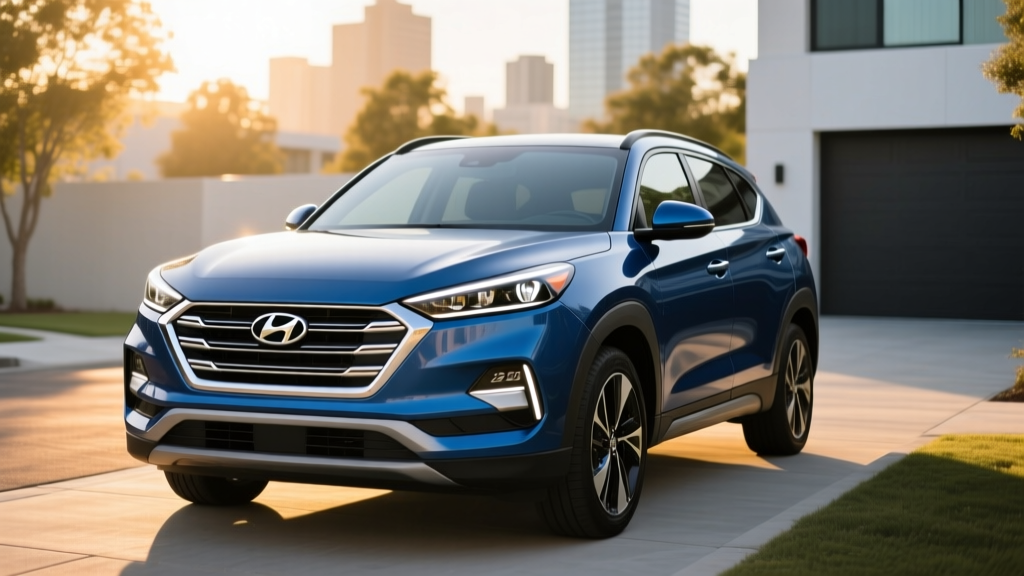
If you're shopping for a compact SUV that sips fuel without demanding a lifestyle change, the 2025 Hyundai Tucson lineup deserves a hard look. Hyundai offers the Tucson in three powertrain flavors: a conventional gas model, a traditional hybrid (HEV), and a plug-in hybrid (PHEV). This review focuses on the two electrified variants — the Tucson Hybrid and Tucson Plug-in Hybrid — breaking down real-world efficiency, electric-only range, pricing, and the ownership questions that actually matter before you sign.
HEV vs PHEV: What's the Difference in the Tucson Lineup?
Before diving into specs, let's eliminate the most common confusion. Hyundai sells two distinct electrified Tucsons, and they serve different buyers.
| Attribute | Tucson Hybrid (HEV) | Tucson Plug-in Hybrid (PHEV) |
|---|---|---|
| Needs to be plugged in? | No — charges via regenerative braking and engine | Yes — for electric-only driving benefit |
| Battery size | 1.49 kWh (small, assists engine) | 13.8 kWh usable (enables EV mode) |
| Electric-only range | Not applicable | 33 miles (EPA) |
| Combined horsepower | 231 hp | 268 hp |
| EPA combined MPG / MPGe | 38 MPG | 80 MPGe (EV mode) / 35 MPG (gas mode) |
| Starting MSRP (2025) | $33,465 (Blue trim) | $39,650 (SEL Convenience) |
| Federal tax credit | Not eligible | Not eligible under current §30D rules |
The conventional hybrid uses its small battery to assist the gas engine and capture energy from braking. You never plug it in — it works exactly like a gas car at the pump, just with better fuel economy. The PHEV has a much larger battery that you charge at home or at public Level 2 chargers, giving you a genuine electric-only commute before the gas engine kicks in.
Fuel Economy: EPA Numbers vs Real-World MPG
Tucson Hybrid (HEV) Efficiency
| Trim | City MPG | Highway MPG | Combined MPG |
|---|---|---|---|
| Blue | 38 | 38 | 38 |
| SEL Convenience / Limited | 37 | 36 | 37 |
Real-world expectation: Hyundai's hybrid system, like Toyota's, tends to outperform EPA city estimates in stop-and-go traffic where regenerative braking is most active. Owners commonly report 39-42 MPG in city driving on the Blue trim. Highway driving at sustained 70-80 mph speeds typically yields 34-36 MPG, slightly below the sticker. In cold weather (below 35°F), expect a 2-4 MPG drop as the engine runs more frequently to provide cabin heat. Source: fueleconomy.gov.
Tucson Plug-in Hybrid (PHEV) Efficiency
| Mode | City | Highway | Combined |
|---|---|---|---|
| Electric-only (MPGe) | 86 | 74 | 80 MPGe |
| Hybrid/gas mode (MPG) | 35 | 35 | 35 MPG |
Real-world electric range: The EPA rates the Tucson PHEV at 33 miles of electric-only range. In mild weather (55-75°F) with moderate speeds, expect to achieve 30-34 miles. In winter or at highway speeds above 65 mph, that figure drops to approximately 24-28 miles. Once the battery depletes, the PHEV operates as a conventional hybrid at ~35 MPG combined — about 3 MPG less than the dedicated HEV due to the added weight of the larger battery pack.
Powertrain, Battery, and Charging Specs
| Specification | HEV | PHEV |
|---|---|---|
| Engine | 1.6L turbocharged 4-cylinder | 1.6L turbocharged 4-cylinder |
| Engine output | 178 hp / 195 lb-ft | 178 hp / 195 lb-ft |
| Electric motor | 47.7 kW (64 hp) | 74.2 kW (99 hp) |
| Combined system output | 231 hp / 258 lb-ft | 268 hp / 258 lb-ft |
| Transmission | 6-speed automatic | 6-speed automatic |
| Drivetrain | AWD (HTRAC standard) | AWD (HTRAC standard) |
| Traction battery | 1.49 kWh lithium-ion | 13.8 kWh lithium-ion polymer |
| 0-60 mph (est.) | ~7.1 seconds | ~6.3 seconds |
| Towing capacity | 2,000 lbs | 2,000 lbs |
PHEV Charging Details
The Tucson PHEV charges via a standard J1772 connector (the same connector used by nearly all non-Tesla EVs for Level 2 charging). Here's what to expect:
- Level 1 (120V household outlet): ~1.4 kW — full charge in approximately 10-11 hours. Adequate for overnight charging if you drive less than 33 miles daily.
- Level 2 (240V home charger or public station): ~7.2 kW onboard charger — full charge in approximately 2 hours.
- DC fast charging: Not available. The Tucson PHEV does not support DC fast charging, which is typical for plug-in hybrids in this class.
The 2-hour Level 2 charge time is practical for topping up at workplace chargers or during errands, but the lack of DC fast charging means road trips will rely entirely on the hybrid powertrain once the battery depletes.
Pricing, Trims, and Tax Credit Eligibility
Here's what the 2025 Tucson electrified lineup costs before any incentives:
| Model / Trim | MSRP (incl. destination) |
|---|---|
| Hybrid Blue | $33,465 |
| Hybrid SEL Convenience | $36,615 |
| Hybrid Limited | $41,215 |
| PHEV SEL Convenience | $39,650 |
| PHEV Limited | $44,365 |
Does the Tucson Hybrid or PHEV Qualify for a Federal Tax Credit?
No. Under current IRS §30D rules, neither the Tucson Hybrid nor the Tucson Plug-in Hybrid qualifies for the federal clean vehicle tax credit. The §30D credit applies only to battery electric vehicles (BEVs) and certain fuel cell vehicles that meet strict battery sourcing, critical minerals, MSRP caps, and buyer income limits. Conventional hybrids are categorically excluded. While the Tucson PHEV has a plug, its 13.8 kWh battery and Hyundai's supply chain do not currently satisfy the domestic content and critical mineral thresholds required under the Inflation Reduction Act. Source: IRS.gov §30D guidelines.
State incentives may apply. Several states offer their own rebates or tax credits for PHEVs — for example, California's CVRP (if funded), Colorado's state tax credit, and various utility company rebates. Check your state energy office and local utility for current programs. These vary significantly by jurisdiction and change frequently.
Battery Warranty, Reliability, and Replacement Costs
- Hybrid/EV battery: 10 years / 100,000 miles (whichever comes first)
- Hybrid system components: 10 years / 100,000 miles
- Powertrain warranty: 10 years / 100,000 miles
- New vehicle limited warranty: 5 years / 60,000 miles
- Capacity retention threshold: Hyundai covers the hybrid/PHEV battery if it falls below approximately 70% of original capacity during the warranty period
Reliability assessment: Hyundai's hybrid powertrain has proven durable across the Tucson, Sonata, and Ioniq nameplates. The 1.6L turbocharged engine paired with the 6-speed automatic is a well-established combination. The HEV's small 1.49 kWh battery experiences shallow charge cycles, which significantly extends its lifespan — most hybrid batteries outlast the vehicle itself. The PHEV's 13.8 kWh pack sees deeper cycles but benefits from robust thermal management.
Battery replacement cost (out of warranty): If a hybrid battery fails outside the 10-year/100,000-mile window, replacement costs vary:
- Tucson HEV battery: Estimated $2,000–$3,500 (small battery, lower cost)
- Tucson PHEV battery: Estimated $5,000–$8,000 (larger pack, higher cost)
These figures include parts and labor at a dealership. Independent hybrid specialists may offer refurbished packs at lower cost. For context, most hybrid batteries last 150,000-200,000+ miles before significant degradation, and many vehicles are retired before the battery needs replacement.
Hybrid vs PHEV vs Full EV: Which Tucson Fits Your Life?
Choose the Tucson HEV if:
- You live in an apartment or lack access to home charging
- Your daily commute exceeds 40 miles
- You want maximum fuel savings with zero behavior change
- You frequently take long road trips
- Budget is a priority — starts ~$6,000 less than the PHEV
Choose the Tucson PHEV if:
- You can install a Level 2 charger at home (or have reliable workplace charging)
- Your daily commute is under 30 miles round-trip (covers most days on electricity alone)
- You want EV-like daily driving with gas-engine backup for road trips
- You value the extra 37 hp for passing and merging
- Your state or utility offers PHEV-specific rebates
Consider a full EV (e.g., Ioniq 5) if:
- You have reliable home Level 2 charging
- You want to eliminate gas station visits entirely
- Your daily driving is under 250 miles and you can plan road-trip charging
- You want to qualify for the $7,500 federal §30D tax credit (subject to eligibility)
- Lower per-mile "fuel" cost matters (electricity vs. gasoline)
The PHEV math, simplified: If you drive 25 miles per day and charge nightly, you might use gasoline only on weekend trips — potentially burning 5-8 gallons per month instead of 25-30. At $3.40/gallon, that's a savings of roughly $60-75/month. Over five years, that's ~$3,600-$4,500 in fuel savings compared to the gas-only Tucson, partially offsetting the PHEV's higher purchase price. The HEV saves less per mile but costs less upfront and requires no charging infrastructure.
Pros and Cons at a Glance
Pros
- Class-leading 38 MPG combined (HEV Blue)
- Standard HTRAC AWD on all hybrid trims
- 10-year/100,000-mile hybrid battery warranty
- PHEV offers genuine 33-mile electric commute
- Spacious interior with 38.7 cu ft cargo (rear seats up)
- Strong safety ratings (IIHS Top Safety Pick)
- Smooth, quiet hybrid operation in city driving
Cons
- No federal tax credit eligibility for either model
- PHEV lacks DC fast charging
- PHEV highway MPG (35) trails the HEV (38) due to battery weight
- Higher starting price than gas-only Tucson (~$4,500 premium for HEV)
- Infotainment learning curve; no physical volume knob on base trims
- Real-world electric range drops to ~25 miles in cold weather (PHEV)
- Limited trim availability — popular configurations sell out quickly
Frequently Asked Questions
How many MPG does the 2025 Hyundai Tucson Hybrid get?
The Tucson Hybrid Blue trim achieves an EPA-estimated 38 MPG city / 38 highway / 38 combined. Higher trims (SEL Convenience, Limited) are rated at 37 MPG combined due to additional weight from features and larger wheels. In real-world city driving, many owners report 39-42 MPG thanks to regenerative braking. Highway driving typically yields 34-36 MPG.
How far can the Tucson PHEV go on electric only?
The EPA rates the Tucson Plug-in Hybrid at 33 miles of electric-only range. In optimal conditions (mild weather, moderate speeds, flat terrain), expect 30-34 miles. In cold weather or at sustained highway speeds, plan for 24-28 miles before the gas engine engages. Total combined range (electric + full tank of gas) exceeds 400 miles.
Is the Tucson Hybrid reliable, and what does battery replacement cost?
Hyundai's hybrid system has demonstrated strong reliability across multiple model lines. The hybrid battery is covered by a 10-year/100,000-mile warranty. Out-of-warranty replacement costs are estimated at $2,000-$3,500 for the HEV and $5,000-$8,000 for the PHEV. Most hybrid batteries last 150,000+ miles, and many vehicles reach end-of-life before needing replacement. Hyundai's 10-year powertrain warranty is among the best in the segment.
Does the 2025 Tucson Hybrid or PHEV qualify for any tax credit?
Neither the Tucson Hybrid nor the Tucson PHEV qualifies for the federal §30D clean vehicle tax credit, which is limited to fully electric vehicles and certain fuel cell vehicles meeting strict battery sourcing requirements. However, some states (Colorado, California, and others) and local utilities offer separate rebates or credits for PHEVs. Check your state's energy office and utility provider for current programs, as these vary by jurisdiction and change frequently.
Do I need to plug in the Tucson Hybrid?
No. The conventional Tucson Hybrid (HEV) never needs to be plugged in. Its small 1.49 kWh battery charges automatically through regenerative braking and the gasoline engine. You fuel it exactly like a conventional gas car. Only the Tucson Plug-in Hybrid (PHEV) benefits from being plugged in to a Level 1 or Level 2 charger.
How does the Tucson Hybrid compare to the Toyota RAV4 Hybrid?
The RAV4 Hybrid is rated at 39-41 MPG combined depending on trim (fueleconomy.gov), slightly edging out the Tucson's 37-38 MPG. However, the Tucson offers a more upscale interior, standard turbocharged powertrain, and Hyundai's longer 10-year warranty versus Toyota's 8-year/100,000-mile hybrid battery coverage. The RAV4 Hybrid has a longer track record for long-term reliability, while the Tucson counters with more aggressive styling and tech features. Both are strong choices — test-drive both and compare dealer pricing in your area.