Quick Verdict: A Top-Tier Compact Hybrid SUV With Premium Features
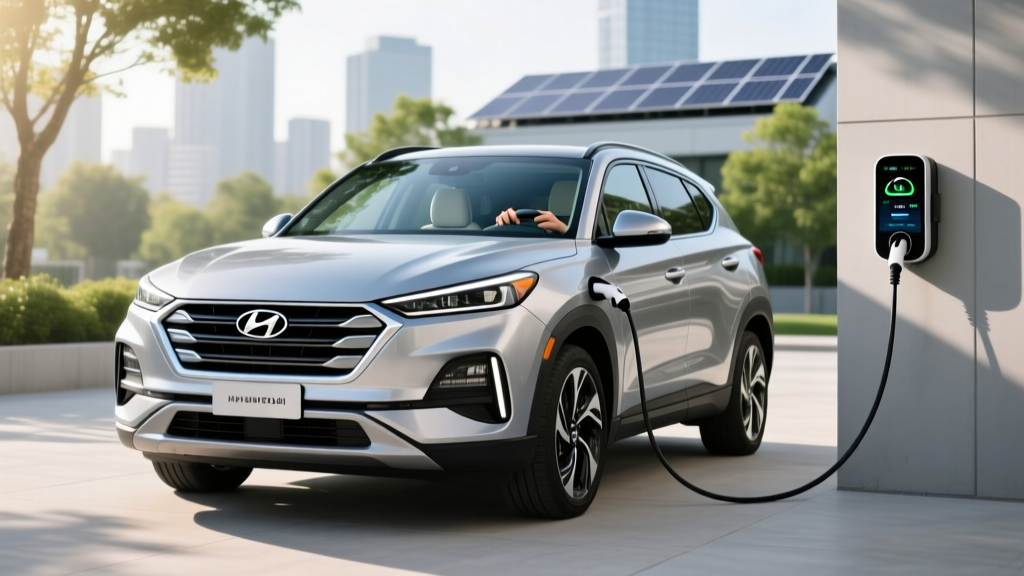
The 2025 Hyundai Tucson Hybrid Limited sits at the apex of Hyundai's compact SUV lineup, pairing a turbocharged 1.6-liter engine with an electric motor for a combined 231 horsepower and an EPA-estimated 38 MPG combined. At $40,285 (including destination), the Limited trim loads in features usually reserved for luxury brands — ventilated seats, a panoramic sunroof, Highway Driving Assist 2, and a digital key. For buyers who want SUV practicality without range anxiety or plugging in, this is one of the strongest hybrid options in the segment.
| Spec | 2025 Tucson Hybrid Limited |
|---|---|
| Powertrain | 1.6L turbo I4 + electric motor (HEV) |
| Combined HP / Torque | 231 hp / 271 lb-ft |
| Transmission | 6-speed automatic |
| Drivetrain | AWD (HTRAC standard) |
| EPA Fuel Economy | 38 city / 38 hwy / 38 combined MPG |
| Fuel Tank | 13.7 gallons |
| Total Range | ~520 miles |
| 0–60 mph | ~7.1 seconds |
| Cargo Volume | 38.7 cu ft (rear seats up) / 80.3 cu ft (folded) |
| Towing Capacity | 2,000 lbs |
| Base MSRP (Limited) | $40,285 (incl. destination) |
| Battery Warranty | 10 years / 100,000 miles |
HEV vs PHEV: Which Tucson Hybrid Is Right for You?
Hyundai sells the Tucson in three powertrain flavors: a conventional gas model, a standard hybrid (HEV), and a plug-in hybrid (PHEV). The Tucson Hybrid Limited reviewed here is the HEV — it does not plug in. It charges its small lithium-ion battery through regenerative braking and the gasoline engine. You fuel it like any conventional car and never need to think about charging infrastructure.
| Feature | Tucson Hybrid (HEV) | Tucson Plug-In Hybrid (PHEV) |
|---|---|---|
| Plugs in? | No | Yes (Level 1/Level 2) |
| Electric-only range | N/A | 33 miles (EPA) |
| Battery size | ~1.49 kWh | 13.8 kWh |
| Combined HP | 231 hp | 261 hp |
| EPA combined | 38 MPG | 35 MPG (gas) / 80 MPGe |
| Starting MSRP | $33,385 (Blue) | $39,585 (SEL) |
| Federal tax credit | None | Up to $7,500 (§30D, eligibility varies) |
| Best for | No home charging, simplicity | Home charging, short commutes |
If you can charge at home and your daily commute is under 33 miles round-trip, the Tucson PHEV lets you drive almost entirely on electricity during the week while retaining the gas engine for longer weekend trips. If you lack reliable charging access — apartment dwellers, street parkers, or frequent road-trippers — the HEV is the smarter pick. No plug, no behavior change, just better fuel economy.
Fuel Economy: EPA Numbers and Real-World MPG
The 2025 Tucson Hybrid Limited carries an EPA rating of 38 MPG city, 38 MPG highway, and 38 MPG combined, according to fueleconomy.gov. This is unusual — most vehicles rate higher in the city than on the highway, but Hyundai's hybrid system recaptures energy so effectively in stop-and-go driving that the city and highway numbers converge.
| Driving Scenario | EPA Estimate | Real-World Expectation |
|---|---|---|
| City (stop-and-go) | 38 MPG | 38–42 MPG (hybrids excel here) |
| Highway (70–75 mph) | 38 MPG | 34–37 MPG |
| Combined | 38 MPG | 36–40 MPG |
| Cold weather (below 30°F) | — | 32–35 MPG |
Real-world note: Hybrid owners consistently report that city and suburban driving yields the best results — often 40 MPG or above on routes with frequent deceleration that feeds energy back into the battery. Sustained highway speeds above 70 mph reduce efficiency, as the gasoline engine shoulders more of the load. In cold weather, expect a 5–10% drop as the engine runs longer to generate cabin heat and the battery operates less efficiently. With the 13.7-gallon tank, real-world total range lands between 470 and 520 miles depending on conditions.
Powertrain and Driving Dynamics
The Tucson Hybrid pairs a 1.6-liter turbocharged four-cylinder engine (producing 178 hp on its own) with a 47.7 kW electric motor integrated into the 6-speed automatic transmission. Combined output is 231 horsepower and 271 lb-ft of torque. Hyundai's HTRAC all-wheel-drive system is standard across all hybrid trims, using an electric motor on the rear axle that engages when the system detects slip or when extra traction is needed.
The result is a compact SUV that feels surprisingly eager. The 0–60 mph time of roughly 7.1 seconds puts it ahead of the Toyota RAV4 Hybrid (7.4 seconds) and comfortably ahead of the non-turbo Honda CR-V Hybrid. The 6-speed automatic is a deliberate choice by Hyundai — unlike the CVTs used in many competitors, it delivers familiar shift feel and avoids the rubber-band droning that some drivers dislike about continuously variable transmissions.
Driving modes include Eco, Normal, Sport, and Smart. Eco mode maximizes regenerative braking and softens throttle response for efficiency. Sport mode holds lower gears and sharpens throttle mapping. Smart mode learns your driving habits and adjusts automatically. In practice, most owners will leave it in Smart or Normal and enjoy the seamless transitions between electric and gas power.
Limited Trim: What You Get for $40,285
The Limited is the top-tier Tucson Hybrid trim, and Hyundai packs it with premium content. Standard equipment on the 2025 Tucson Hybrid Limited includes:
- Leather-trimmed seats with heated and ventilated front seats
- Heated rear seats and heated steering wheel
- Panoramic sunroof with power sunshade
- 10.25-inch digital instrument cluster + 10.25-inch touchscreen with navigation
- Wireless Apple CarPlay and Android Auto
- Harman Kardon premium audio (8 speakers)
- Highway Driving Assist 2 (HDA2) — adaptive cruise with lane centering and lane-change assist
- Digital Key 2 (use your smartphone as a key)
- Remote Smart Parking Assist
- Blind View Monitor, Surround View Monitor, and Reverse Parking Collision-Avoidance Assist
- 19-inch alloy wheels
- Hands-free smart power liftgate
The only factory option is paint color — premium colors like Shimmering Silver and Amazon Gray add $300–$400. At $40,285, the Tucson Hybrid Limited undercuts comparably equipped rivals like the Toyota RAV4 Hybrid Limited (~$41,500) and the Honda CR-V Hybrid Sport Touring (~$42,000) while offering a longer feature list.
Tax Credits and Ownership Costs
The 2025 Hyundai Tucson Hybrid (HEV) does not qualify for the federal §30D clean vehicle tax credit. That credit — up to $7,500 — is reserved for battery electric vehicles (BEVs) and plug-in hybrids (PHEVs) that meet battery sourcing, critical minerals, MSRP caps, and buyer income requirements as outlined on IRS.gov. Conventional hybrids like the Tucson HEV have been ineligible since the current credit structure took effect.
However, the Tucson Hybrid's ownership economics remain compelling without a federal credit:
- Fuel savings vs. gas Tucson: The non-hybrid Tucson AWD rates 26 MPG combined. At 15,000 miles/year and $3.40/gallon, the hybrid saves approximately $750/year in fuel costs.
- Insurance: Expect premiums 5–10% higher than the gas Tucson due to the higher MSRP and hybrid-specific repair considerations.
- Maintenance: Hyundai's hybrid system adds minimal maintenance. The regenerative braking system reduces wear on brake pads — many hybrid owners report original brake pads lasting 80,000+ miles.
- Depreciation: Hyundai hybrids have shown strong residual values, with the Tucson Hybrid retaining approximately 55–60% of its value at 5 years, competitive with the RAV4 Hybrid.
Some states and utilities offer rebates for hybrids. Check your local utility and state energy office for current programs, as these vary by jurisdiction and change frequently.
Battery Warranty, Reliability, and Replacement Costs
Hyundai Hybrid Battery Warranty: 10 years / 100,000 miles (whichever comes first). This covers the hybrid battery pack and all hybrid-system components including the electric motor, inverter, and related control modules. If the battery capacity drops below a defined threshold or any hybrid component fails within this period, Hyundai covers the repair or replacement at no cost.
Hyundai's 10-year/100,000-mile hybrid battery warranty is among the best in the industry — matching or exceeding Toyota's 10-year/150,000-mile coverage (which is slightly longer on mileage). The Tucson Hybrid's lithium-ion polymer battery pack is relatively small at approximately 1.49 kWh, which works in its favor: smaller packs experience less thermal stress and have proven highly durable in Hyundai's hybrid lineup.
Reliability: Hyundai's turbo-hybrid powertrain has been in production since the 2022 model year refresh, and long-term reliability data is building positively. The 1.6L turbocharged engine uses a timing chain (not a belt), reducing a common maintenance item. The 6-speed automatic is a conventional planetary-gear transmission — proven technology with decades of reliability history, unlike the CVTs found in some competitors that have drawn durability concerns.
Battery replacement cost: If the hybrid battery needs replacement outside of warranty, expect a cost in the range of $2,000 to $3,500 for the battery pack itself, plus labor. This is significantly less than EV battery replacement because the pack is small. In practice, hybrid battery failures before 150,000 miles are uncommon — most degrade gradually rather than failing catastrophically, and individual cells can sometimes be serviced rather than replacing the entire pack.
Tucson Hybrid vs. the Competition
| Spec | 2025 Tucson Hybrid Limited | 2025 RAV4 Hybrid Limited | 2025 CR-V Hybrid Sport Touring |
|---|---|---|---|
| Combined HP | 231 hp | 219 hp | 204 hp |
| EPA Combined MPG | 38 MPG | 39 MPG | 40 MPG |
| 0–60 mph | ~7.1 sec | ~7.4 sec | ~7.8 sec |
| Cargo (rear up) | 38.7 cu ft | 37.6 cu ft | 36.3 cu ft |
| MSRP (top trim) | $40,285 | ~$41,500 | ~$42,000 |
| Battery Warranty | 10 yr / 100k mi | 10 yr / 150k mi | 8 yr / 100k mi |
| Transmission | 6-speed auto | eCVT | eCVT |
The Tucson Hybrid trades 1–2 MPG against the RAV4 and CR-V hybrids but wins on power, cargo space, and price. If maximum fuel efficiency is your priority, the CR-V Hybrid's 40 MPG combined is the segment leader. If you want the most responsive acceleration and the most premium features for the dollar, the Tucson Hybrid Limited has the edge.
Who Should Buy the Tucson Hybrid Limited?
Choose the Tucson Hybrid (HEV) if:
- You don't have access to home or workplace charging
- You want better fuel economy without changing your refueling habits
- You take frequent road trips and don't want to plan around charging stops
- You want a premium-feeling compact SUV under $42,000
- You live in a cold climate where EV range loss is a concern
Choose the Tucson PHEV instead if:
- You can install a Level 2 charger at home
- Your daily commute is under 33 miles round-trip
- You want to drive on electricity most days while keeping a gas backup
- You may qualify for the §30D federal tax credit (check IRS eligibility)
Choose a full EV (like the Ioniq 5) if:
- You have reliable home charging
- You want zero tailpipe emissions and minimal maintenance
- Your daily driving is under 250 miles and you can plan for longer trips
- You want the lowest per-mile energy cost (electricity vs. gasoline)
Frequently Asked Questions
How many MPG does the 2025 Hyundai Tucson Hybrid get?
The EPA rates the 2025 Tucson Hybrid at 38 MPG city, 38 MPG highway, and 38 MPG combined. In real-world driving, city and suburban routes often yield 40+ MPG thanks to regenerative braking, while sustained highway driving at 75+ mph drops to 34–37 MPG. Cold weather can reduce efficiency by 5–10%.
Does the Tucson Hybrid need to be plugged in?
No. The Tucson Hybrid (HEV) is a conventional hybrid that charges its battery through regenerative braking and the gasoline engine. You refuel it at any gas station. If you want a Tucson that plugs in, look at the Tucson Plug-In Hybrid (PHEV), which offers 33 miles of electric-only range.
How far can the Tucson PHEV go on electric only?
The Tucson Plug-In Hybrid has an EPA-rated 33 miles of electric-only range, powered by its 13.8 kWh battery. After the electric range is depleted, it operates as a conventional hybrid rated at 35 MPG combined. Total range exceeds 400 miles. The PHEV can charge on Level 1 (120V, ~12 hours) or Level 2 (240V, ~2 hours) but does not support DC fast charging.
Does the Tucson Hybrid qualify for any tax credit?
The Tucson Hybrid (HEV) does not qualify for the federal §30D clean vehicle tax credit, which is limited to BEVs and PHEVs that meet specific battery sourcing, MSRP, and income requirements. The Tucson PHEV may qualify for up to $7,500 depending on your income, the vehicle's MSRP, and battery component sourcing — verify current eligibility at IRS.gov. Some state or utility incentives may apply to hybrids; check your local programs.
Is the Tucson Hybrid reliable, and what does battery replacement cost?
Hyundai covers the hybrid battery and all hybrid-system components with a 10-year/100,000-mile warranty, providing strong peace of mind. The 1.6L turbo-hybrid powertrain uses proven components including a timing chain and conventional 6-speed automatic. Out-of-warranty hybrid battery replacement typically costs $2,000–$3,500, though full failures before 150,000 miles are uncommon.
How does the Tucson Hybrid compare to a full EV?
A full EV like the Hyundai Ioniq 5 offers lower per-mile energy costs (~$0.04/mile vs. ~$0.09/mile for the Tucson Hybrid at current fuel prices), near-zero maintenance, and zero tailpipe emissions. However, EVs require home charging access, cost more upfront, and require planning for long road trips. The Tucson Hybrid is the better choice if you can't charge at home, drive in extreme cold, or regularly take trips exceeding 300 miles.
Pros
- 38 MPG combined with no plug-in requirement
- 231 hp — the most powerful in its hybrid class
- Limited trim loaded with premium features at a competitive price
- 10-year/100,000-mile hybrid battery warranty
- AWD standard on all hybrid trims
- Conventional 6-speed automatic (no CVT drone)
Cons
- 1–2 MPG behind RAV4 and CR-V hybrids
- No federal tax credit for the HEV variant
- Highway fuel economy drops at speeds above 75 mph
- Top-trim price exceeds $40,000
- No spare tire (tire repair kit included)