Quick Verdict: A Premium Midsize Hybrid That Punches Above Its Weight
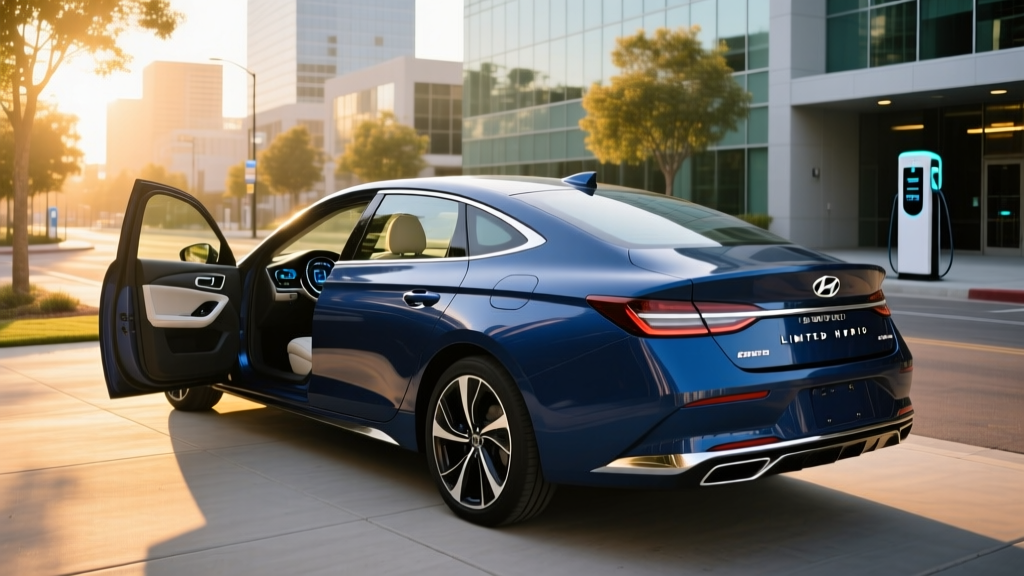
The 2025 Hyundai Sonata Limited Hybrid occupies a specific niche: buyers who want near-luxury midsize sedan comfort, genuine fuel savings, and zero lifestyle compromise — without plugging in. The Limited trim sits at the top of the Sonata Hybrid lineup, bundling a panoramic sunroof, ventilated front seats, a digital key, and Hyundai's full suite of driver-assistance tech into a package that starts at $38,250 (including destination).
Under the hood, Hyundai pairs a 2.0-liter four-cylinder engine with an electric motor integrated into the six-speed automatic transmission — a configuration that delivers 192 combined horsepower and an EPA-estimated 44 MPG combined. That figure is competitive with the Toyota Camry Hybrid and Honda Accord Hybrid, but the Sonata Limited distinguishes itself with a more feature-dense cabin and a design that still turns heads a year after its bold redesign.
Before we break down the numbers, it's worth clarifying what this car is — and isn't. The Sonata Hybrid is a conventional hybrid electric vehicle (HEV). It does not plug in. It has no electric-only range to speak of beyond low-speed maneuvering. If you're looking for a plug-in hybrid (PHEV), Hyundai does not currently offer a Sonata PHEV in the U.S. market for 2025. This matters because hybrid, plug-in hybrid, and full EV are fundamentally different ownership propositions.
HEV vs. PHEV vs. EV: Where the Sonata Hybrid Fits
| Category | Conventional Hybrid (HEV) | Plug-in Hybrid (PHEV) | Battery Electric (BEV) |
|---|---|---|---|
| Plug in to charge? | No — charges via regenerative braking and engine | Yes — Level 1 or Level 2 | Yes — Level 1, Level 2, or DC fast |
| Electric-only range | Negligible (low-speed assist only) | Typically 20–45 miles | 200–400+ miles |
| Battery size | ~1.0–2.0 kWh | ~10–25 kWh | ~60–120 kWh |
| Fuel source | Gasoline + regen | Gasoline + grid electricity | Grid electricity only |
| Federal tax credit (§30D) | Not eligible | Up to $7,500 (if eligible) | Up to $7,500 (if eligible) |
| Example | 2025 Sonata Hybrid | Toyota RAV4 Prime | Hyundai Ioniq 6 |
The Sonata Hybrid is ideal for drivers who lack reliable access to a charging outlet — apartment dwellers, street parkers, or those who simply don't want to think about charging. You fuel it like any gasoline car and the hybrid system handles the rest. The trade-off is that you'll never drive on electricity alone the way a PHEV owner might on their daily commute, and you won't access the federal EV tax credit that PHEVs and BEVs can qualify for under IRS §30D rules.
Fuel Economy: EPA Ratings and Real-World MPG
| Driving Cycle | EPA Estimate | Real-World Expectation |
|---|---|---|
| City | 44 MPG | 45–50 MPG (hybrids excel in stop-and-go) |
| Highway | 45 MPG | 39–43 MPG (aerodynamic drag limits regen benefit) |
| Combined | 44 MPG | 41–46 MPG depending on driving mix |
The 2025 Sonata Hybrid carries EPA ratings of 44 city / 45 highway / 44 combined MPG across all trims, including the Limited. These numbers come from Hyundai's Smartstream G2.0 hybrid powertrain, which uses a 2.0-liter Atkinson-cycle engine producing 150 horsepower and 139 lb-ft of torque, paired with a 39-kW (52-hp) electric motor embedded in the transmission. Combined system output is 192 horsepower.
In practice, conventional hybrids tend to exceed their EPA city ratings because stop-and-go traffic maximizes regenerative braking and electric motor assist. Highway driving is where hybrids lose their advantage somewhat — at sustained 70–80 MPH speeds, the gasoline engine does most of the work, and aerodynamic drag dominates. On a 200-mile highway loop at 75 MPH, expect closer to 39–41 MPG. In mixed suburban commuting with frequent stops, 46–48 MPG is achievable without any special effort.
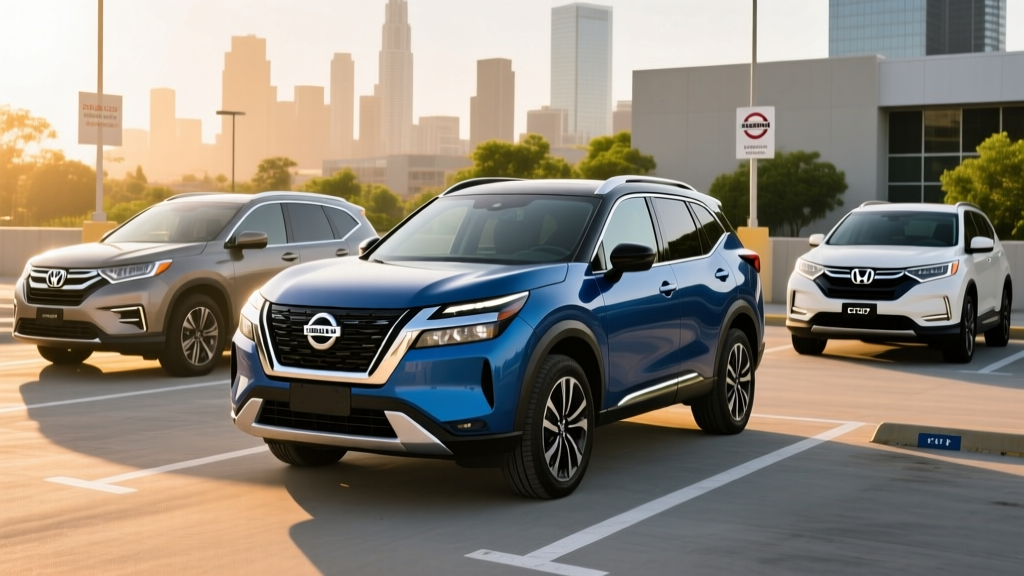
For context, the competing 2025 Toyota Camry Hybrid LE achieves an EPA-estimated 51 combined MPG, while the Camry SE Hybrid (with larger wheels and sportier tuning) drops to 44 combined — right where the Sonata sits. The Honda Accord Hybrid rates at 48 combined. The Sonata trades a few MPG for a more premium interior and a conventional automatic transmission feel that some drivers prefer over the CVT or e-CVT setups in competitors.
According to fueleconomy.gov, the Sonata Hybrid's annual fuel cost is estimated at approximately $1,350 based on 15,000 miles per year and current national average gas prices — roughly $400–$600 less per year than a comparable non-hybrid midsize sedan averaging 28 MPG combined.
Powertrain and Driving Dynamics
| Specification | 2025 Hyundai Sonata Limited Hybrid |
|---|---|
| Engine | 2.0L Atkinson-cycle 4-cylinder (150 hp / 139 lb-ft) |
| Electric Motor | 39 kW (52 hp / 151 lb-ft), integrated in transmission |
| Combined System Output | 192 hp |
| Transmission | 6-speed automatic (no CVT) |
| Drivetrain | Front-wheel drive |
| 0–60 MPH | ~7.5 seconds (est.) |
| Hybrid Battery | ~1.6 kWh lithium-ion |
| EPA Fuel Economy | 44 city / 45 hwy / 44 combined MPG |
| Fuel Tank | 13.2 gallons |
| Total Range | ~580 miles |
| Curb Weight | ~3,572 lbs |
Hyundai's decision to use a traditional six-speed automatic rather than a continuously variable transmission (CVT) is a deliberate choice. Under hard acceleration, the Sonata Hybrid shifts through actual gears, which feels more natural to drivers accustomed to conventional cars. There's no rubber-band drone. The trade-off is marginally less efficiency optimization compared to a Toyota-style e-CVT, but the driving experience is more engaging.
The 192-hp combined output places the Sonata Hybrid in the middle of the pack. The Accord Hybrid produces 204 hp; the Camry Hybrid delivers 225 hp with available all-wheel drive. The Sonata is adequate for highway merging and passing, but it doesn't feel quick. The electric motor's instant torque helps off the line, and the transition between electric assist and gasoline power is well-managed — you rarely feel the engine kick in or shut off.
Regenerative braking is moderate. Hyundai offers adjustable regen levels through the paddle shifters, but even at maximum, the Sonata Hybrid doesn't approach one-pedal driving territory. This is normal for HEVs — the small battery can't absorb energy as aggressively as a PHEV or BEV.
What the Limited Trim Adds
The Limited is the top-tier Sonata Hybrid trim, and for 2025 it carries an MSRP of $38,250 (including $1,150 destination). That's a meaningful premium over the Sonata Hybrid SEL ($31,250) and Hybrid SEL Premium ($34,250), but the equipment list justifies the gap for buyers who want near-luxury features without a luxury badge.
Standard on the Limited: panoramic curved display (12.3-inch digital cluster + 12.3-inch infotainment), ventilated front seats, heated rear seats, leather seating surfaces, a panoramic sunroof, Digital Key 2 (phone-as-key via NFC/UWB), a Bose 12-speaker premium audio system, a head-up display, Hyundai's Highway Driving Assist (HDA) with lane-centering and adaptive cruise control, and a surround-view monitor.
The Highway Driving Assist system is a Level 2 driver-assistance feature under SAE automation standards. It maintains speed, following distance, and lane centering on divided highways — but it requires continuous driver supervision. This is not autonomous driving. You must keep your hands on or near the wheel and your eyes on the road at all times.
Battery Warranty, Reliability, and Replacement Costs
Hyundai Hybrid Battery Warranty: 10 years / 100,000 miles (whichever comes first) for the hybrid battery pack and hybrid system components. This applies to the original owner. For subsequent owners, coverage transfers as 5 years / 60,000 miles unless otherwise specified by state law.
General Powertrain Warranty: 10 years / 100,000 miles (original owner).
Hybrid Battery Replacement Cost (out of warranty): Estimated $2,500–$4,000 for the hybrid battery pack, plus labor. This is significantly less than a PHEV or BEV battery replacement because the HEV battery is small (~1.6 kWh).
Hyundai's hybrid battery warranty is among the best in the industry, matching or exceeding most competitors. The 10-year/100,000-mile coverage provides genuine peace of mind, and real-world data from Hyundai's hybrid lineup (including the Ioniq Hybrid, now discontinued, and the Tucson Hybrid) suggests that hybrid battery failures before 150,000 miles are uncommon.
The ~1.6 kWh lithium-ion battery in the Sonata Hybrid is small and relatively inexpensive to replace compared to the 60–100+ kWh packs in full EVs. Even in a worst-case out-of-warranty scenario, a $3,000–$4,000 replacement is manageable — roughly equivalent to a major engine repair on a conventional vehicle. Most hybrid batteries in modern vehicles last well beyond the warranty period, with gradual capacity loss rather than sudden failure.
Hyundai's hybrid system has proven reliable in the brand's growing electrified lineup. The Sonata Hybrid specifically has not been flagged for systemic hybrid-system issues by the NHTSA or major reliability trackers. The conventional automatic transmission is also a reliability plus compared to some CVT designs that have drawn complaints in competing models.
Tax Credits and Incentives: What You Can (and Can't) Claim
Here's the straightforward answer: the 2025 Hyundai Sonata Hybrid does not qualify for the federal §30D plug-in electric vehicle tax credit. That credit — up to $7,500 for new vehicles — is reserved for plug-in hybrids (PHEVs) and battery electric vehicles (BEVs) that meet battery sourcing, critical mineral, MSRP cap, and buyer income requirements. Conventional hybrids like the Sonata Hybrid are not plug-in vehicles and are ineligible.
Some states offer their own incentives for hybrid vehicles, though these have become less common as state programs shift focus to PHEVs and BEVs. Check your state's environmental or energy agency for current programs. A few states historically offered rebates or HOV lane access for hybrids, but many of these have sunset or been restricted to plug-in vehicles.
What the Sonata Hybrid does offer is inherent fuel-cost savings. At 44 MPG combined versus a 28 MPG non-hybrid midsize sedan, a driver covering 15,000 miles per year saves approximately 196 gallons of gasoline annually — roughly $600–$700 at current prices. Over a five-year ownership period, that's $3,000–$3,500 in fuel savings, which partially offsets the hybrid premium over a gas-only sedan.
Who Should Choose the Sonata Hybrid (and Who Shouldn't)
Pros
- 44 MPG combined with no plug-in requirement or behavioral change
- Limited trim offers premium features rivaling entry-level luxury sedans
- 10-year/100,000-mile hybrid battery and powertrain warranty
- Conventional 6-speed automatic — no CVT drone
- ~580 miles of total range per tank
- Competitive pricing vs. Camry XLE Hybrid and Accord Hybrid Touring
Cons
- No federal tax credit eligibility (HEV, not PHEV/BEV)
- 192 hp is adequate but not quick — trails Camry and Accord hybrids
- Front-wheel drive only (no AWD option, unlike Camry Hybrid)
- Highway MPG drops to ~39–41 at sustained high speeds
- No plug-in variant available in the U.S. market
Choose the 2025 Sonata Limited Hybrid if: You want a feature-rich midsize sedan with strong fuel economy, you can't or don't want to charge at home, and you prefer a conventional automatic transmission over a CVT.
Choose a PHEV instead if: You have home charging access, your commute is under 30 miles, and you want to drive mostly on electricity while keeping a gas engine for road trips. Consider the Toyota RAV4 Prime or Hyundai Tucson PHEV.
Choose a full EV instead if: You have reliable home charging, want zero tailpipe emissions, want access to the $7,500 federal tax credit, and are comfortable with 250+ miles of range. The Hyundai Ioniq 6 or Tesla Model 3 are strong alternatives.
Choose the gas-only Sonata if: You drive fewer than 8,000 miles per year and the hybrid premium won't pay for itself in fuel savings within your ownership period.
Frequently Asked Questions
How many MPG does the 2025 Hyundai Sonata Hybrid get?
The EPA rates the 2025 Sonata Hybrid at 44 city / 45 highway / 44 combined MPG across all trims. In real-world city driving, owners often see 46–50 MPG thanks to regenerative braking. Highway driving at 75+ MPH typically returns 39–43 MPG.
Does the Sonata Hybrid need to be plugged in?
No. The Sonata Hybrid is a conventional hybrid (HEV). It charges its small battery through regenerative braking and the gasoline engine. You never plug it in — just fill it with gasoline like any other car.
Is there a plug-in hybrid (PHEV) version of the Sonata?
Hyundai does not offer a Sonata PHEV in the U.S. market for 2025. If you want a Hyundai PHEV, the Tucson PHEV and Santa Fe PHEV are available. For a midsize sedan PHEV, consider the Toyota Prius Prime.
Does the 2025 Sonata Hybrid qualify for a federal tax credit?
No. The federal §30D tax credit (up to $7,500) applies only to plug-in electric vehicles — PHEVs and BEVs — that meet battery sourcing, MSRP, and income requirements. Conventional hybrids like the Sonata Hybrid are not eligible. Check IRS guidelines for current rules.
How long will the hybrid battery last, and what does replacement cost?
Hyundai covers the hybrid battery for 10 years / 100,000 miles. Most modern hybrid batteries last well beyond 150,000 miles with gradual capacity loss. Out-of-warranty replacement is estimated at $2,500–$4,000 — far less than a full EV battery because the HEV pack is only ~1.6 kWh.
How does the Sonata Hybrid compare to the Camry Hybrid and Accord Hybrid?
The Camry Hybrid LE leads on fuel economy (51 MPG combined) and offers AWD. The Accord Hybrid is slightly more powerful (204 hp) and rates 48 MPG combined. The Sonata Hybrid matches the Camry SE Hybrid at 44 MPG but offers a more premium interior at the Limited trim level and uses a conventional automatic transmission instead of a CVT or e-CVT.
Is the Sonata Hybrid reliable?
Hyundai's hybrid powertrain has demonstrated strong reliability since its introduction across multiple models. The 10-year/100,000-mile powertrain and hybrid battery warranty is one of the longest in the industry. The conventional 6-speed automatic avoids the reliability concerns some CVTs have drawn. Check NHTSA for the latest safety and recall data.