Quick Verdict: The Efficiency Sweet Spot for Sedan Buyers
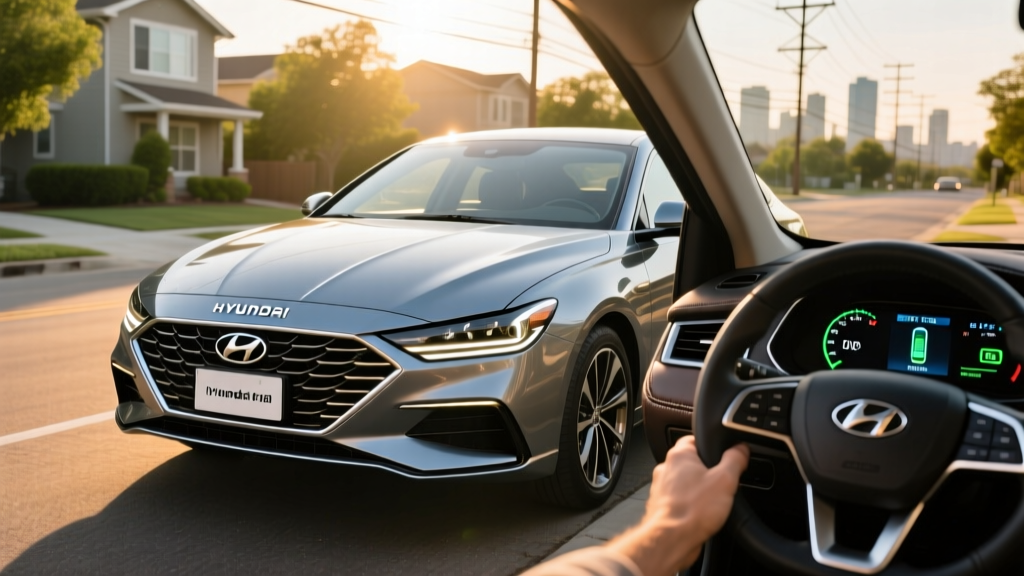
The 2025 Hyundai Sonata Hybrid SE occupies a specific niche: buyers who want exceptional fuel economy without plugging in, range-anxiety, or a steep learning curve. With an EPA-estimated 44 MPG combined, this conventional hybrid (HEV) squeezes maximum efficiency from every gallon while maintaining the straightforward refueling experience of a gas car. No charging cables, no plug-in routines — just fill up and go.
But does the real-world fuel economy match the sticker? And how does it stack up against plug-in hybrids or full EVs? This guide breaks down the Sonata Hybrid SE's powertrain, efficiency data, battery longevity, and total ownership picture so you can decide if it's the right electrified choice for your commute.
HEV vs PHEV vs EV: Where the Sonata Hybrid SE Fits
Before diving into specs, it's critical to understand what the Sonata Hybrid SE is — and what it isn't. Hyundai offers the Sonata in three distinct powertrains:
| Powertrain | Sonata Variant | Plug In? | Electric-Only Range | Best For |
|---|---|---|---|---|
| Conventional Hybrid (HEV) | Sonata Hybrid SE/SEL/Limited | No | ~1 mile at low speed | Maximum MPG, no behavior change |
| Plug-In Hybrid (PHEV) | Not offered for 2025 Sonata | Yes | N/A | Short EV commutes + gas flexibility |
| Battery Electric (BEV) | IONIQ 6 (separate model) | Yes | Up to 361 mi (EPA) | Zero tailpipe emissions, home charging |
Key distinction: The Sonata Hybrid SE is a conventional hybrid (HEV). It does not plug in. The small 1.6 kWh lithium-ion battery recharges through regenerative braking and the gasoline engine. You cannot drive it on electric power alone for meaningful distances — the electric motor assists the gas engine to reduce fuel consumption, but the engine remains the primary power source.
Hyundai discontinued the Sonata Plug-In Hybrid after the 2020 model year. If you need plug-in capability with electric-only commuting range, you'd need to look at competitors like the Toyota Prius Prime (44 miles EV range) or consider Hyundai's own IONIQ 6 as a full EV alternative.
Fuel Economy: EPA Ratings and Real-World MPG
The headline number for the 2025 Sonata Hybrid SE is its EPA-estimated fuel economy. Here's the full breakdown from fueleconomy.gov:
| Driving Cycle | EPA Estimated MPG |
|---|---|
| City | 44 MPG |
| Highway | 51 MPG |
| Combined | 47 MPG |
Why hybrids often beat their EPA city numbers: Conventional hybrids thrive in stop-and-go traffic where regenerative braking recaptures energy that would otherwise be lost as heat in the brake pads. The more you brake, the more the battery recharges, and the more the electric motor can assist. This is the opposite of a gas-only car, which gets its worst mileage in city traffic.
For comparison, the non-hybrid 2025 Sonata with the 2.5L four-cylinder achieves just 28 MPG combined — a 68% improvement when you choose the hybrid powertrain.
Powertrain Specs: What Moves the Sonata Hybrid SE
The Sonata Hybrid SE pairs a 2.0-liter gasoline direct-injection (GDI) four-cylinder engine with a permanent-magnet synchronous electric motor, connected through a 6-speed automatic transmission. Here's the complete powertrain breakdown:
| Specification | 2025 Sonata Hybrid SE |
|---|---|
| Engine | 2.0L GDI 4-cylinder |
| Engine Power | 150 hp @ 6,000 rpm / 139 lb-ft torque |
| Electric Motor | 39 kW (52 hp) / 151 lb-ft torque |
| Combined System Output | 192 hp |
| Transmission | 6-speed automatic with Active Shift Control |
| Hybrid Battery | 1.6 kWh lithium-ion (not plug-in) |
| 0–60 mph | ~7.7 seconds (estimated) |
| Drive Type | Front-wheel drive |
| Fuel Tank | 13.2 gallons |
| Total Range | ~620 miles (at 47 MPG combined) |
How it drives: The 192 combined horsepower provides adequate acceleration for highway merging and passing. The Active Shift Control technology synchronizes motor speed with engine speed during gear changes, reducing shift shock and improving efficiency. The transition between electric assist and engine power is nearly imperceptible — one of Hyundai's stronger hybrid calibrations.
The 1.6 kWh battery is small by EV standards (a typical EV carries 60–100 kWh), but that's by design. In a conventional hybrid, the battery's job is to buffer energy for short bursts of electric assist and regenerative capture, not to propel the car independently. This keeps weight down and eliminates the need for any plug-in infrastructure.
Pricing and Tax Credit Eligibility
The 2025 Sonata Hybrid SE is the base trim in the Sonata Hybrid lineup, offering the best value proposition for efficiency-focused buyers.
| Trim | MSRP | Destination | Total Starting Price |
|---|---|---|---|
| Sonata Hybrid SE | $29,750 | $1,195 | $30,945 |
| Sonata Hybrid SEL | $32,400 | $1,195 | $33,595 |
| Sonata Hybrid Limited | $36,250 | $1,195 | $37,445 |
- The 2025 Sonata Hybrid SE does NOT qualify for the $7,500 federal EV tax credit — that credit applies only to plug-in electric vehicles (BEVs and PHEVs) meeting specific battery-sourcing and MSRP requirements.
- Conventional hybrids (HEVs) are not eligible for §30D credits under current IRS rules.
- Some states offer separate incentives for hybrid vehicles — check your state's energy office or DMV for local rebates (amounts vary by jurisdiction).
Total cost perspective: While the Sonata Hybrid SE doesn't come with a federal tax credit, its ~$31,000 starting price and 47 MPG combined mean lower ongoing fuel costs. At $3.50/gallon gas and 12,000 miles/year, you'd spend roughly $894 annually on fuel — compared to $1,500 for the gas-only Sonata (28 MPG combined). That's ~$606 in annual fuel savings, recovering the hybrid premium over the gas Sonata in approximately 3–4 years depending on trim comparison.
Battery Longevity, Warranty, and Replacement Cost
Battery durability is the number-one concern for hybrid buyers. Here's what you need to know about the Sonata Hybrid SE's battery lifespan:
| Coverage | Term |
|---|---|
| Hybrid Battery Warranty | 10 years / 100,000 miles (original owner) |
| Hybrid Battery Warranty (transferable) | 8 years / 100,000 miles (subsequent owners) |
| Hybrid System Components | 10 years / 100,000 miles |
| Basic Vehicle Warranty | 5 years / 60,000 miles |
| Powertrain Warranty | 10 years / 100,000 miles |
Real-world battery lifespan: Hyundai's hybrid batteries have proven durable. The 1.6 kWh pack in the Sonata Hybrid operates within a conservative state-of-charge window (roughly 40–80%), which dramatically reduces degradation compared to a full EV that cycles from 10–100%. Most Hyundai hybrid batteries last well beyond the warranty period — 150,000+ miles without significant capacity loss is common based on owner reports from earlier Sonata Hybrid generations.
Out-of-warranty replacement cost: If the hybrid battery does require replacement beyond the warranty window, expect to pay between $2,000 and $3,500 for a new OEM battery pack including labor. Third-party refurbished packs may be available for $1,200–$2,000. This is significantly less than EV battery replacement ($5,000–$20,000) because the hybrid battery is far smaller.
Who Should Choose the Sonata Hybrid SE?
Choose the 2025 Sonata Hybrid SE if:
- You want maximum fuel economy without changing your refueling habits
- You lack access to home or workplace charging (no plug needed)
- Your commute involves significant stop-and-go or suburban driving
- You want a mid-size sedan with strong safety ratings and a comfortable ride
- You plan to keep the car 5+ years and want the security of a 10-year hybrid warranty
- You want ~$600/year in fuel savings over the gas Sonata without a huge upfront premium
Consider a full EV (like the IONIQ 6) instead if:
- You have reliable Level 2 home charging and want zero tailpipe emissions
- You qualify for the $7,500 federal EV tax credit (income and sourcing requirements apply)
- Your daily commute is under 100 miles round-trip and you rarely road-trip beyond 300 miles
- You want the lowest possible "fuel" cost (home electricity at ~$0.13/kWh = ~$0.04/mile vs. ~$0.08/mile for the hybrid)
Stick with the gas Sonata if:
- You drive fewer than 8,000 miles per year (fuel savings won't offset the hybrid price premium)
- Your driving is almost entirely highway at high speeds (the hybrid advantage narrows)
- Upfront cost is the primary deciding factor and you plan to sell within 3 years
Pros and Cons at a Glance
- 47 MPG combined (51 highway) — among the best in the mid-size sedan class
- No plug-in required — zero behavior change from a gas car
- 620+ mile total range on a single tank
- 10-year/100,000-mile hybrid battery warranty
- Competitive starting price at ~$31,000
- Smooth engine/motor transitions with Active Shift Control
- Strong standard safety suite (Hyundai SmartSense)
- No federal tax credit eligibility (HEV, not PHEV/BEV)
- Modest 192 hp — not a performance-oriented sedan
- No PHEV variant available for electric-only commuting
- Small trunk reduction vs. gas Sonata due to battery placement (~15.1 cu ft vs. 16.0 cu ft)
- FWD only — no AWD option unlike the Toyota Camry Hybrid
- Infotainment learning curve for first-time Hyundai owners
Frequently Asked Questions
How many MPG does the 2025 Hyundai Sonata Hybrid SE get?
The EPA estimates 44 MPG city, 51 MPG highway, and 47 MPG combined. Real-world results typically range from 43–48 MPG in mixed driving, with cold weather reducing efficiency by 5–10%. The hybrid system excels in city traffic where regenerative braking is most active.
Does the Sonata Hybrid SE need to be plugged in?
No. The 2025 Sonata Hybrid SE is a conventional hybrid (HEV), not a plug-in hybrid. The 1.6 kWh battery recharges automatically through regenerative braking and the gasoline engine. You refuel it exactly like any gas car — at a gas station.
Is the Sonata Hybrid available as a plug-in hybrid (PHEV)?
No. Hyundai discontinued the Sonata Plug-In Hybrid after the 2020 model year. The current Sonata lineup offers a conventional hybrid only. If you need plug-in capability, consider the Toyota Prius Prime (44 miles EV range) or the Hyundai Tucson PHEV (33 miles EV range) in SUV form.
How long will the hybrid battery last?
Hyundai covers the hybrid battery for 10 years/100,000 miles for the original owner (8 years/100,000 miles transferable). In practice, Hyundai's hybrid batteries routinely last 150,000+ miles without significant degradation thanks to conservative charge-window management. Out-of-warranty replacement runs $2,000–$3,500.
Does the 2025 Sonata Hybrid qualify for any tax credit?
Not at the federal level. The IRS §30D Clean Vehicle Credit applies only to plug-in vehicles (BEVs and PHEVs). Conventional hybrids like the Sonata Hybrid SE are excluded. Some states may offer separate hybrid incentives — check your state energy office for details.
How does the Sonata Hybrid SE compare to the Toyota Camry Hybrid?
The Camry Hybrid LE achieves 52 MPG combined (vs. 47 for the Sonata Hybrid SE) and offers available AWD. However, the Sonata Hybrid SE starts at a lower price (~$31,000 vs. ~$33,000 for the Camry Hybrid LE) and offers a longer warranty (10yr/100k vs. Toyota's 10yr/150k on hybrid battery but 3yr/36k basic). The Sonata also provides slightly more rear-seat legroom. Both are excellent choices — the Camry wins on pure MPG, the Sonata on value and warranty breadth.
What is the total driving range on a full tank?
With a 13.2-gallon fuel tank and 47 MPG combined, the Sonata Hybrid SE delivers approximately 620 miles of total range. Highway-heavy driving at 51 MPG could stretch this to 670+ miles. This eliminates range anxiety entirely — you'll stop for gas less often than in the gas-only Sonata.
Is the Sonata Hybrid SE reliable?
Hyundai's hybrid powertrain has demonstrated strong reliability across the Sonata and Tucson Hybrid lineups. The 2.0L engine is naturally aspirated (no turbo complexity), the 6-speed automatic avoids the durability concerns of some CVT designs, and the hybrid battery operates within a narrow charge window that minimizes wear. Hyundai's NHTSA safety ratings and standard Hyundai SmartSense suite (forward collision avoidance, lane keeping, blind-spot monitoring) add to the ownership security picture.