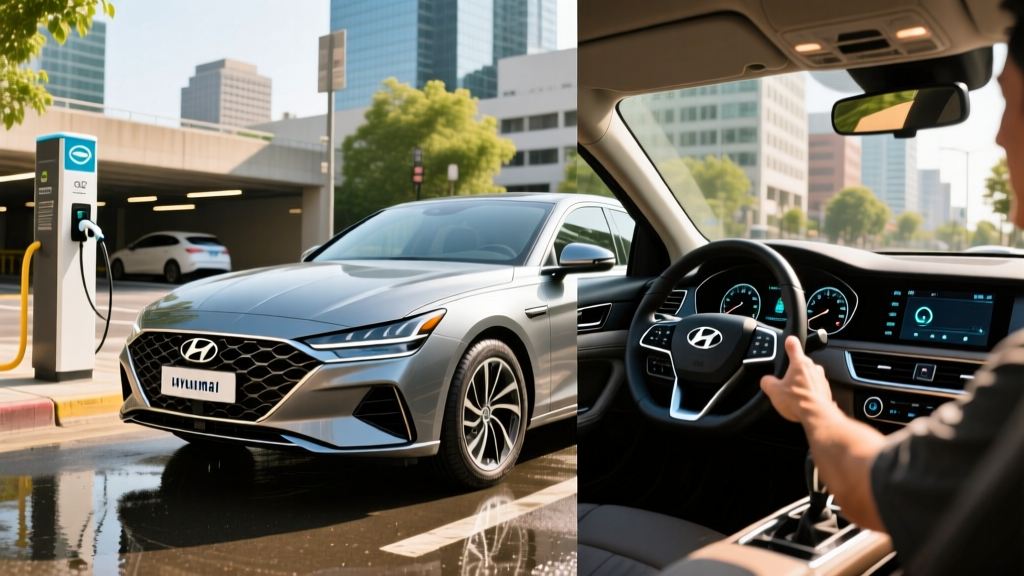
The midsize sedan segment has thinned out, but the 2025 Hyundai Sonata Hybrid remains a compelling choice for buyers who want electric-like efficiency without plugging in. With an EPA-estimated 47 MPG combined and a starting MSRP around $31,450, it sits at the intersection of practicality and fuel savings. But how does its hybrid system actually perform in real-world driving, and does the math work out compared to a plug-in hybrid or full battery-electric vehicle? We break down every number that matters.
2025 Hyundai Sonata Hybrid: Quick Verdict
The 2025 Sonata Hybrid is a conventional hybrid electric vehicle (HEV) — meaning it charges its own battery through regenerative braking and the gasoline engine. You never plug it in. If you want electric-only driving, you'd need to look at the discontinued Sonata Plug-In Hybrid (last sold in the US for the 2019 model year) or cross-shop a PHEV like the Toyota Prius Prime. For 2025, Hyundai offers the Sonata Hybrid in SEL and Limited trims, both powered by a 2.0-liter four-cylinder engine paired with an electric motor and a 6-speed automatic transmission.
| Spec | Value |
|---|---|
| Powertrain | 2.0L I4 + electric motor, 6-speed auto |
| Combined Horsepower | 192 hp |
| Engine Output | 150 hp / 139 lb-ft torque |
| Electric Motor Output | 39 kW (52 hp) / 151 lb-ft torque |
| EPA MPG (City / Hwy / Combined) | 44 / 51 / 47 (Blue trim est.); SEL/Limited: 44 / 47 / 45 |
| Fuel Tank Capacity | 13.2 gallons |
| Estimated Total Range | ~594 miles (47 MPG × 13.2 gal) |
| 0–60 mph | ~7.5 seconds (est.) |
| Battery Type | Lithium-ion polymer (~1.6 kWh usable) |
| Drivetrain | Front-wheel drive |
| Base MSRP (SEL) | $31,450 |
| Limited Trim MSRP | $35,900 |
Fuel Economy: EPA Ratings vs. Real-World MPG
According to fueleconomy.gov, the 2025 Sonata Hybrid achieves an EPA-estimated 44 MPG city, 51 MPG highway, and 47 MPG combined for the most efficient configuration. The SEL and Limited trims, which carry additional weight from features like leather seats and larger wheels, are rated at 44 city / 47 highway / 45 combined.
| Trim | City MPG | Highway MPG | Combined MPG |
|---|---|---|---|
| Blue (if available) | 44 | 51 | 47 |
| SEL | 44 | 47 | 45 |
| Limited | 44 | 47 | 45 |
Real-world expectations: Hybrids typically exceed their EPA city estimates because stop-and-go traffic maximizes regenerative braking and electric-motor usage. In mixed suburban driving, owners frequently report 46–50 MPG. Highway-only trips at 75+ mph tend to drop to 40–43 MPG, as the gasoline engine does most of the work at sustained speeds. In cold weather (below 35°F), expect a 5–10% reduction as the engine runs more frequently to provide cabin heat and warm up the catalytic converter.
At current national average gas prices (~$3.15/gallon in early 2026), the Sonata Hybrid costs roughly $0.067 per mile to fuel at 47 MPG combined. Compare that to a non-hybrid midsize sedan averaging 30 MPG at roughly $0.105 per mile — a savings of about $570 per year at 15,000 miles driven annually.
Hybrid vs. PHEV vs. Full EV: Which Powertrain Fits You?
The Sonata Hybrid is an HEV (hybrid electric vehicle). It's important to understand the distinction between the three main electrified powertrains before deciding:
| Feature | HEV (Sonata Hybrid) | PHEV (e.g., Prius Prime) | BEV (e.g., Tesla Model 3) |
|---|---|---|---|
| Plug in to charge? | No | Yes (optional) | Yes (required) |
| Electric-only range | ~1 mile at low speed | 25–45 miles | 250–360+ miles |
| Total range | ~594 miles | ~550+ miles (combined) | 250–360+ miles |
| Fuel/energy cost per mile | ~$0.067 | ~$0.04 (electric) / ~$0.07 (gas) | ~$0.03–$0.05 |
| Home charging needed? | No | Recommended | Essential |
| Federal tax credit (§30D) | No | Up to $7,500* | Up to $7,500* |
Choose the Sonata Hybrid (HEV) if: You don't have access to home or workplace charging, you want maximum range without range anxiety, and you prefer the lowest upfront cost with no change to your fueling habits.
Choose a PHEV if: You can charge at home overnight and your daily commute is under 30–40 miles, meaning you'd rarely burn gas on weekdays but still have a gas engine for road trips.
Choose a full EV (BEV) if: You have reliable home charging, your daily driving is under 250 miles, and you want the lowest per-mile energy cost plus minimal maintenance (no oil changes, no spark plugs).
Powertrain Deep Dive: 192 HP and Smart Hybrid Architecture
The Sonata Hybrid pairs a 2.0-liter naturally aspirated four-cylinder engine (150 hp, 139 lb-ft) with a 39 kW electric motor (52 hp, 151 lb-ft) integrated into the transmission housing. Combined system output is 192 horsepower. Unlike Toyota's planetary-gear hybrid system (e-CVT), Hyundai uses a traditional 6-speed automatic transmission, which gives the Sonata Hybrid a more familiar, stepped acceleration feel rather than the drone associated with CVTs.
The lithium-ion polymer battery pack stores approximately 1.6 kWh of usable energy — small by EV standards, but sufficient for low-speed electric assist, regenerative energy capture during braking, and brief electric-only crawling in traffic. The system seamlessly switches between electric-only, engine-only, and combined modes without driver input.
Acceleration to 60 mph takes approximately 7.5 seconds, which is adequate for merging and passing but won't feel sporty. The hybrid system's strength is low-end torque from the electric motor, making city driving feel responsive despite the modest horsepower figure.
Battery Warranty, Reliability, and Replacement Cost
Hyundai Hybrid Battery Warranty
Coverage: 10 years / 100,000 miles (whichever comes first) for the hybrid battery and hybrid system components.
Capacity retention threshold: Hyundai warrants the hybrid battery against defects and abnormal capacity loss. If the battery fails to hold sufficient charge to operate the hybrid system properly, it will be repaired or replaced under warranty.
Transferability: The 10-year/100,000-mile hybrid battery warranty is transferable to subsequent owners for Hyundai models from the 2020 model year onward, which helps resale value.
Hybrid battery reliability has proven excellent across the industry. Toyota's hybrid batteries routinely last 150,000–200,000+ miles before significant degradation, and Hyundai's lithium-ion polymer packs have shown similar durability. The Sonata Hybrid's battery is small (1.6 kWh) and operates within a conservative state-of-charge window — typically between 20% and 80% — which minimizes stress and extends cycle life.
Out-of-warranty replacement cost: If a hybrid battery does fail after the warranty period, replacement typically costs between $2,000 and $4,000 including labor at a dealership. Independent hybrid specialists may offer refurbished packs for $1,500–$2,500. Given the 10-year/100,000-mile warranty coverage and the proven longevity of modern hybrid batteries, most original owners will never face this expense.
Pricing, Trims, and Tax Credit Eligibility
The 2025 Hyundai Sonata Hybrid is offered in two trims:
- SEL ($31,450 MSRP): Includes 17-inch alloy wheels, leatherette seating, 12.3-inch digital cluster, 12.3-inch infotainment touchscreen with wireless Apple CarPlay/Android Auto, adaptive cruise control, lane-keeping assist, blind-spot monitoring, and forward collision-avoidance assist.
- Limited ($35,900 MSRP): Adds leather seats, ventilated front seats, heated rear seats, head-up display, surround-view monitor, Bose premium audio, highway driving assist, and a panoramic sunroof.
Federal tax credit: The conventional Sonata Hybrid (HEV) does not qualify for the IRS §30D Clean Vehicle Credit. The §30D credit applies only to plug-in electric vehicles (PHEVs and BEVs) with a minimum battery capacity of 7 kWh. The Sonata Hybrid's ~1.6 kWh battery falls well below this threshold.
However, some states offer rebates or reduced registration fees for conventional hybrids. Check your state's energy office or Alternative Fuels Data Center for local incentive details, as these vary widely by jurisdiction.
Pros, Cons, and the Bottom Line
Pros
- 47 MPG combined EPA — among the most efficient midsize sedans available
- No plug-in charging required — fuel it like a regular gas car
- 10-year/100,000-mile hybrid battery warranty
- Strong standard safety suite (Hyundai SmartSense)
- Comfortable ride, spacious rear seat, and large trunk (~16 cu ft)
- 6-speed automatic avoids the "rubber-band" CVT feel
Cons
- No electric-only driving range (unlike PHEVs)
- No federal tax credit eligibility
- Modest 192 hp — not a performance sedan
- AWD not available (FWD only)
- Highway MPG drops below EPA at sustained 75+ mph speeds
- Limited trim pushes $36K without luxury-badge prestige
Who Should Buy the 2025 Sonata Hybrid?
The Sonata Hybrid is ideal for high-mileage commuters, rideshare drivers, and cost-conscious buyers who want to minimize fuel spending without changing their fueling routine. If you drive 15,000–25,000 miles per year and lack access to home charging, the Sonata Hybrid saves you $500–$900 annually in fuel compared to a 30 MPG gas sedan — with zero behavioral adjustment.
If you have a garage or driveway where you can install a Level 2 charger, a PHEV like the Toyota Prius Prime (44 miles electric-only, up to $7,500 federal credit) may save you even more on short commutes. And if your daily driving stays under 200 miles with reliable home charging, a full EV like the Hyundai Ioniq 6 or Tesla Model 3 delivers lower per-mile costs and near-zero drivetrain maintenance.
Frequently Asked Questions
How many MPG does the 2025 Hyundai Sonata Hybrid get?
The EPA rates the most efficient 2025 Sonata Hybrid at 44 city / 51 highway / 47 combined MPG. The SEL and Limited trims are rated at 44/47/45. Real-world city driving often yields 46–50 MPG due to heavy regenerative braking, while sustained highway speeds above 75 mph typically return 40–43 MPG.
Does the Sonata Hybrid need to be plugged in?
No. The 2025 Sonata Hybrid is a conventional HEV (hybrid electric vehicle). It charges its battery entirely through regenerative braking and the gasoline engine. You simply fill it with gas like any other car. Hyundai does not currently offer a plug-in hybrid (PHEV) version of the Sonata for the US market.
Is the Sonata Hybrid reliable, and what does a battery replacement cost?
Hyundai's hybrid systems have demonstrated strong reliability, and the hybrid battery is covered by a 10-year/100,000-mile warranty. Modern lithium-ion hybrid batteries routinely last 150,000–200,000+ miles. If replacement is needed out of warranty, expect to pay $2,000–$4,000 at a dealership, or $1,500–$2,500 for a refurbished pack from an independent hybrid specialist.
Does the 2025 Sonata Hybrid qualify for a federal tax credit?
No. The IRS §30D Clean Vehicle Credit requires a minimum battery capacity of 7 kWh and plug-in capability. The Sonata Hybrid's ~1.6 kWh battery does not qualify. Only plug-in hybrids (PHEVs) and battery-electric vehicles (BEVs) are eligible for the up-to-$7,500 federal credit, subject to MSRP caps, buyer income limits, and battery-sourcing requirements. Consult a tax professional for your specific eligibility.
How does the Sonata Hybrid compare to the Toyota Camry Hybrid?
The 2025 Toyota Camry Hybrid (redesigned for 2025 on the fifth-generation platform) is rated at up to 51 MPG combined and offers available AWD. The Sonata Hybrid counters with a more traditional 6-speed automatic feel, a longer hybrid battery warranty (10yr/100k vs. Toyota's 10yr/150k), and a slightly lower starting price. Both are excellent — the Camry edges ahead on pure MPG and AWD availability, while the Sonata offers a more premium interior at the Limited trim level.
What is the total driving range on a full tank?
With a 13.2-gallon fuel tank and 47 MPG combined, the Sonata Hybrid can travel approximately 594 miles between fill-ups. Conservative highway driving or cold weather may reduce this to around 530–550 miles. That's one of the longest ranges of any midsize sedan, gas or hybrid.