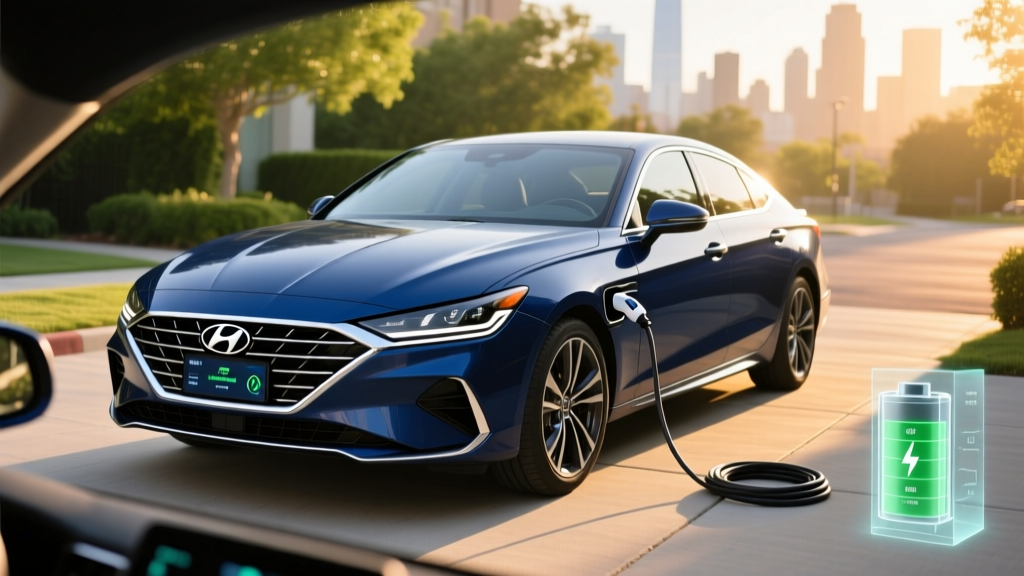
The midsize sedan segment has thinned out, but the 2025 Hyundai Sonata Hybrid remains one of the most compelling choices for buyers who want maximum fuel economy without plugging in. With an EPA-estimated 47 MPG combined and a starting price under $32,000, it occupies a practical sweet spot between conventional gas sedans and full electric vehicles. This guide covers every spec that matters — from real-world fuel economy to battery longevity — so you can decide if the Sonata Hybrid fits your commute, budget, and garage.
2025 Hyundai Sonata Hybrid at a Glance
| Specification | 2025 Sonata Hybrid |
|---|---|
| Powertrain Type | Conventional Hybrid (HEV) |
| Engine | 2.0L inline-4 GDI + electric motor |
| Combined Horsepower | 192 hp |
| Transmission | 6-speed automatic |
| EPA MPG (City / Hwy / Combined) | 50 / 43 / 47 |
| Fuel Tank Capacity | 13.2 gallons |
| Total Driving Range | ~620 miles |
| 0–60 mph (est.) | ~7.6 seconds |
| Hybrid Battery | ~1.6 kWh lithium-ion (self-charging) |
| Drivetrain | Front-wheel drive |
| Base MSRP (Blue trim) | $31,250 |
| Hybrid Battery Warranty | 10 years / 100,000 miles |
Fuel Economy: EPA Numbers vs. Real-World MPG
The headline number is what draws most buyers to the Sonata Hybrid: an EPA-estimated 47 MPG combined, with a remarkable 50 MPG city rating. That city figure is higher than the highway number — a hallmark of conventional hybrids, where regenerative braking and electric-motor assist shine in stop-and-go traffic.
| Driving Condition | EPA Estimate | Real-World Expectation |
|---|---|---|
| City | 50 MPG | 48–54 MPG (hybrids often exceed EPA in city) |
| Highway (70 mph cruise) | 43 MPG | 39–44 MPG (aerodynamic drag reduces hybrid advantage) |
| Combined | 47 MPG | 44–49 MPG depending on driving mix |
| Cold Weather (below 32°F) | — | 40–44 MPG (engine runs more for cabin heat) |
In real-world driving, many Sonata Hybrid owners report exceeding the EPA city estimate, particularly on commutes with frequent stops. Highway efficiency drops more noticeably because the electric motor contributes less at sustained high speeds, and the 2.0L engine carries more of the load. During cold-weather months, expect a 5–10% MPG reduction as the gasoline engine runs longer to provide cabin heating and maintain battery temperature.
According to fueleconomy.gov, the Sonata Hybrid's combined 47 MPG translates to an estimated annual fuel cost of approximately $1,150 (based on 15,000 miles/year at $3.50/gallon), saving roughly $3,500 in fuel over five years compared to the average new vehicle.
Powertrain: How the Hybrid System Works
The 2025 Sonata Hybrid pairs a 2.0-liter Smartstream GDI four-cylinder engine with an electric motor integrated into the transmission housing. The engine produces 150 horsepower and 139 lb-ft of torque on its own, while the electric motor adds 51 horsepower and 151 lb-ft. Combined system output is 192 horsepower.
Unlike some competitors that use continuously variable transmissions (CVTs), Hyundai employs a conventional 6-speed automatic. This gives the Sonata Hybrid a more natural acceleration feel — no rubber-band effect — at a slight cost to peak efficiency. The electric motor can propel the car at low speeds on battery alone for very short distances (roughly 1–2 miles at low speed), but this is not a plug-in vehicle. The battery recharges exclusively through regenerative braking and engine-generated power.
The 192-hp combined output is adequate for daily driving and highway merging. The 0–60 mph time of roughly 7.6 seconds won't win drag races, but torque delivery from the electric motor makes the car feel responsive from a stop. Front-wheel drive is standard; all-wheel drive is not offered on the hybrid.
Hybrid vs. PHEV vs. Full EV: Which Fits Your Garage?
Important distinction: The 2025 Sonata Hybrid is a conventional hybrid (HEV) — it never needs to be plugged in. Hyundai does not currently offer a plug-in hybrid (PHEV) version of the Sonata in the U.S. market for the 2025 model year. Here's how the three electrified paths compare:
| Factor | HEV (Sonata Hybrid) | PHEV (e.g., Tucson PHEV) | Full EV (e.g., Ioniq 6) |
|---|---|---|---|
| Plug-in required? | No | Yes (for EV range) | Yes |
| Electric-only range | ~1–2 mi (low speed) | 30–35 mi typical | 250–360 mi |
| Fuel/energy cost per mile | ~$0.07–0.08 | ~$0.04–0.06 (electric) / ~$0.09 (gas) | ~$0.03–0.05 |
| Home charging needed? | No | Recommended (120V or 240V) | Required (240V Level 2 ideal) |
| Starting price range | ~$31,250 | ~$38,000–$45,000 | ~$38,000–$55,000 |
| Federal tax credit | Not eligible | Up to $7,500 (if eligible) | Up to $7,500 (if eligible) |
| Best for | No garage/outlet access; long highway commutes | Short electric commutes + road-trip flexibility | Home charging access; daily commute under 100 mi |
Choose the Sonata Hybrid (HEV) if: You don't have access to a garage or outlet for charging, you drive a mix of city and highway miles, you want minimal upfront cost, and you prefer the simplicity of a gas station fill-up with dramatically better MPG.
Choose a PHEV if: You can charge at home, your daily commute is under 35 miles round-trip (covering most days on electricity), but you still want gas-engine range for longer trips without charging-infrastructure worry.
Choose a full EV if: You have reliable home Level 2 charging, your daily driving is under 100 miles, you want the lowest per-mile operating cost, and you're ready to plan longer road trips around DC fast-charging stops.
Pricing, Trims, and Tax Credit Eligibility
The 2025 Hyundai Sonata Hybrid is offered in three trims:
- Blue — $31,250 MSRP. The efficiency champion (47 MPG combined). Includes 17-inch alloy wheels, a 12.3-inch digital cluster, wireless Apple CarPlay/Android Auto, and Hyundai's full SmartSense ADAS suite.
- SEL — ~$33,750 MSRP. Adds heated front seats, proximity key with push-button start, wireless phone charging, and a 12.3-inch infotainment touchscreen. Same 47 MPG combined.
- Limited — ~$38,250 MSRP. Premium features including ventilated front seats, leather upholstery, a panoramic sunroof, Bose premium audio, and a head-up display. Drops slightly to 44 MPG combined due to larger 19-inch wheels and added weight.
Federal tax credit: The Sonata Hybrid is a conventional HEV, not a plug-in vehicle. It does not qualify for the IRS §30D Clean Vehicle Credit (up to $7,500), which applies only to plug-in electric vehicles and fuel-cell vehicles with a minimum battery capacity of 7 kWh. The Sonata Hybrid's ~1.6 kWh battery falls far below that threshold. Per IRS guidelines, only PHEVs and BEVs meeting battery-sourcing, MSRP, and buyer-income requirements qualify.
However, some states and local utilities offer rebates for conventional hybrids. Check your state energy office or utility provider for current programs. Hyundai also periodically offers manufacturer incentives — check the Hyundai USA Sonata Hybrid page for current offers.
Battery Warranty, Reliability, and Replacement Cost
Hyundai Hybrid Battery Warranty: 10 years / 100,000 miles (whichever comes first) for the original owner. This covers defects and capacity loss below a manufacturer-defined threshold. If you purchase certified pre-owned, Hyundai extends the remaining original warranty.
The Sonata Hybrid's lithium-ion battery pack is relatively small (~1.6 kWh) compared to a PHEV or full EV, which works in its favor for longevity. Smaller batteries experience shallower charge-discharge cycles, reducing stress on the cells. Hyundai has been building hybrid powertrains since the early 2010s, and real-world data from earlier Sonata Hybrid generations shows most original batteries lasting well beyond 150,000 miles with proper maintenance.
Is the Sonata Hybrid reliable? Hyundai's hybrid systems have earned solid reliability ratings. The 2025 model benefits from the fourth-generation Sonata Hybrid platform, which has addressed earlier complaints about transmission shudder and battery cooling. The conventional 6-speed automatic is a proven, well-understood component — no CVT belt or planetary-gear-set concerns.
Battery replacement cost: If the hybrid battery does need replacement outside warranty, expect a cost of approximately $2,500–$4,000 for the battery pack, plus $500–$1,000 in labor. This is significantly less than a full EV battery replacement (often $10,000–$20,000) because the pack is much smaller. Third-party refurbished hybrid batteries are available for $1,500–$2,500 as a cost-saving option for out-of-warranty vehicles.
Ownership Costs: 5-Year Comparison
| Cost Factor (5 years / 75,000 mi) | Sonata Hybrid (HEV) | Avg. Gas Sedan (30 MPG) | Comparable EV |
|---|---|---|---|
| Purchase price (base) | $31,250 | $27,500 | $42,000 |
| Fuel / electricity | ~$5,750 | ~$8,750 | ~$2,600 |
| Maintenance (oil, filters, brakes) | ~$2,200 | ~$3,500 | ~$1,200 |
| Federal tax credit | $0 | $0 | Up to –$7,500 |
| Insurance (est. average) | ~$7,500 | ~$7,000 | ~$8,500 |
| Estimated 5-yr total cost | ~$46,700 | ~$46,750 | ~$46,800 |
The Sonata Hybrid essentially matches a cheaper gas sedan on total cost of ownership while producing fewer emissions, and it comes very close to an EV's 5-year cost without requiring any charging infrastructure. Maintenance costs are lower than a gas-only car because regenerative braking extends brake-pad life (often 80,000+ miles on original pads), and the hybrid system reduces engine wear during low-speed driving.
Pros and Cons
Pros
- 47 MPG combined — among the highest in the midsize sedan class
- No plug-in required; works with any gas station
- 10-year / 100,000-mile hybrid battery warranty
- Natural 6-speed automatic (no CVT drone)
- Strong standard safety suite (SmartSense ADAS)
- Spacious cabin with 16.0 cu-ft trunk
- Competitive base price under $32,000
Cons
- No all-wheel-drive option
- No PHEV variant available in the U.S. market
- Highway MPG drops to 43 — less advantage at sustained speed
- Not eligible for the $7,500 federal EV tax credit
- Limited trim adds weight, dropping efficiency to 44 MPG combined
- 192 hp is adequate but not sporty
Frequently Asked Questions
How many MPG does the 2025 Hyundai Sonata Hybrid get?
The Blue and SEL trims achieve an EPA-estimated 50 city / 43 highway / 47 combined MPG. The Limited trim rates at 44 MPG combined due to larger wheels and added equipment. In real-world city driving, many owners report 48–54 MPG thanks to the hybrid system's regenerative braking advantage.
Does the Sonata Hybrid need to be plugged in?
No. The 2025 Sonata Hybrid is a conventional hybrid (HEV). The battery charges through regenerative braking and the gasoline engine. You simply fill up at a gas station as you would with any car. There is no charging port.
How far can the Sonata Hybrid drive on electric power alone?
Only about 1–2 miles at very low speeds (under 25 mph) in ideal conditions. This is not a plug-in hybrid — the electric motor primarily assists the gas engine for improved efficiency and smooth acceleration, not for extended electric-only driving. If you want 30+ miles of electric range, look at a PHEV like the Hyundai Tucson Plug-in Hybrid.
Is the Sonata Hybrid reliable?
Yes. Hyundai's fourth-generation hybrid system has proven reliable, with the 6-speed automatic transmission avoiding the complexity of CVTs. The hybrid battery is warrantied for 10 years / 100,000 miles. Earlier-generation Sonata Hybrids have demonstrated battery longevity well past 150,000 miles in typical use.
What does a Sonata Hybrid battery replacement cost?
Out of warranty, expect to pay approximately $2,500–$4,000 for a new OEM hybrid battery pack, plus $500–$1,000 in labor. Refurbished or aftermarket packs can reduce this to $1,500–$2,500. Given the 10-year warranty and the battery's small size, most owners will never face this cost.
Does the 2025 Sonata Hybrid qualify for any tax credit?
Not the federal §30D Clean Vehicle Credit — that credit requires a plug-in vehicle with at least 7 kWh of battery capacity. The Sonata Hybrid's ~1.6 kWh battery does not qualify. Some state and utility programs do offer hybrid incentives; check your local programs. If you want federal credit eligibility, consider a PHEV or full EV.
How does the Sonata Hybrid compare to the Toyota Camry Hybrid?
The Camry Hybrid (51 MPG combined for the LE trim) slightly edges out the Sonata on EPA fuel economy and offers an available AWD option. The Sonata Hybrid counters with a lower base price (~$31,250 vs. ~$33,000 for the Camry Hybrid LE), a more conventional transmission feel, and Hyundai's longer 10-year powertrain warranty. Both are excellent choices — the decision often comes down to styling preference and dealer pricing in your area.