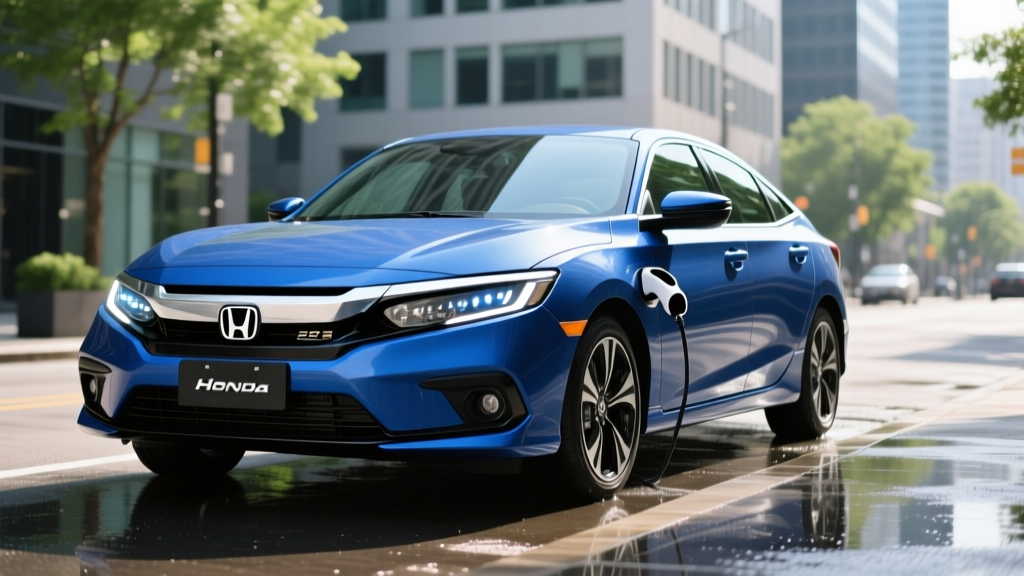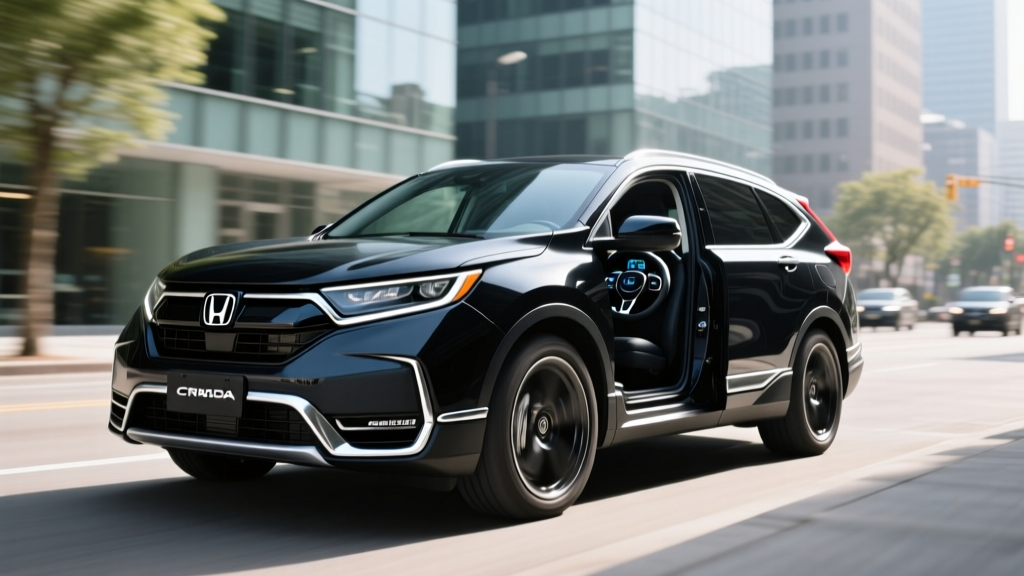
The 2025 Honda CR-V Hybrid Sport-L occupies a sweet spot in Honda's compact SUV lineup: it pairs the upscale leather-trimmed cabin of the Sport Touring with the value proposition of the base Sport hybrid, all while delivering an EPA-estimated 40 MPG combined. For buyers who want electrified efficiency without plugging in, charging anxiety, or a steep price premium, this trim deserves a serious look.
But the CR-V Hybrid is a conventional hybrid (HEV), not a plug-in hybrid (PHEV). That distinction matters enormously for ownership expectations, tax-credit eligibility, and daily driving habits. This guide breaks down exactly what the 2025 Honda CR-V Hybrid Sport-L delivers — with real-world fuel economy context, powertrain data, and a clear comparison to the PHEV and full-EV alternatives.
HEV vs PHEV: What the CR-V Hybrid Actually Is
Before diving into specs, let's eliminate the most common confusion in this segment. The 2025 Honda CR-V Hybrid is a self-charging hybrid electric vehicle (HEV). It has no plug, no electric-only driving mode of meaningful distance, and no external charging requirement. The gasoline engine and regenerative braking recharge a small battery that assists the engine and enables brief low-speed electric motoring.
HEV vs PHEV vs BEV at a Glance
| Feature | HEV (CR-V Hybrid) | PHEV (e.g., Toyota RAV4 Prime) | BEV (e.g., Tesla Model Y) |
|---|---|---|---|
| Plug-in charging? | No | Yes (Level 1/2) | Yes (Level 1/2/DC) |
| Electric-only range | ~1 mi at low speed | 35–42 mi typical | 250–330 mi (EPA) |
| Battery size | ~1.1 kWh (nominal) | 14–18 kWh usable | 60–82 kWh usable |
| Federal tax credit (§30D) | Not eligible | Up to $7,500* | Up to $7,500* |
| Gasoline required? | Yes, always | Yes, when battery depleted | No |
*§30D eligibility depends on MSRP caps, buyer income limits, and battery critical-mineral sourcing. See IRS §30D rules. Current as of 2025 tax year.
The CR-V Hybrid Sport-L will never require you to find a charger or install a Level 2 home station. You fuel it with gasoline like any conventional car, and the hybrid system handles the rest. This is its core appeal — and its core limitation versus a PHEV or BEV.
EPA Fuel Economy: How Many MPG Does the CR-V Hybrid Sport-L Get?
The 2025 Honda CR-V Hybrid Sport-L is available in both front-wheel drive (FWD) and all-wheel drive (AWD). The AWD variant is the more popular configuration and carries a slight efficiency penalty.
| Drivetrain | City MPG | Highway MPG | Combined MPG |
|---|---|---|---|
| FWD | 43 | 36 | 40 |
| AWD | 40 | 34 | 37 |
Source: EPA / fueleconomy.gov
Real-World MPG vs. EPA Sticker
Hybrids consistently outperform their EPA estimates in city driving, where regenerative braking and electric-motor assist do the most work. In our experience and aggregated owner reports, the CR-V Hybrid AWD commonly returns 38–42 MPG in mixed suburban driving, sometimes exceeding the EPA combined figure.
However, highway-heavy commutes tell a different story. At sustained 70–80 mph speeds, the gasoline engine does nearly all the work, and the hybrid advantage shrinks. Expect 32–35 MPG on long highway trips in the AWD model — close to the EPA highway figure but noticeably lower than the combined rating. Cold-weather operation (below 30°F) can drop city MPG by 3–5 points as the engine runs more frequently for cabin heat and battery conditioning.
Powertrain: Engine, Motors, and Horsepower
The 2025 CR-V Hybrid uses Honda's two-motor hybrid system, which pairs a 2.0-liter Atkinson-cycle four-cylinder engine with two electric motors — one for propulsion and one functioning primarily as a generator.
| Specification | Value |
|---|---|
| Engine | 2.0L Atkinson-cycle I-4 |
| Engine horsepower | 145 hp |
| Electric drive motor | 184 hp / 247 lb-ft torque |
| Combined system output | 204 hp / 247 lb-ft torque |
| Transmission | e-CVT (direct-drive with fixed gear ratio) |
| 0–60 mph (est.) | ~7.8 seconds |
| Drivetrain | FWD or Real Time AWD™ |
| Fuel tank capacity | 14.0 gallons |
| Total driving range (est.) | ~518 mi (AWD, combined) |
The two-motor system operates in three modes: EV Drive (electric motor only, at low speeds for short distances), Hybrid Drive (engine generates electricity to power the drive motor), and Engine Drive (engine directly powers the wheels at highway cruising speeds). The transitions are nearly seamless, and most drivers won't notice mode switches without watching the power-flow display.
Acceleration is adequate for merging and passing but not quick. The 204 combined horsepower moves the 3,800-lb SUV competently, though it won't feel sporty despite the "Sport" badge. The e-CVT eliminates shift shock but produces the characteristic engine drone under hard acceleration that some drivers find unrefined.
2025 Honda CR-V Hybrid Sport-L: Pricing and Tax Credits
The Sport-L sits in the middle of the CR-V Hybrid range, below the fully loaded Sport Touring but above the base Sport.
| Trim | MSRP (2025) | Drivetrain |
|---|---|---|
| Hybrid Sport (base hybrid) | $34,350 | FWD / AWD (+$1,500) |
| Hybrid Sport-L | $36,350 | FWD / AWD (+$1,500) |
| Hybrid Sport Touring | $40,850 | AWD standard |
MSRP includes destination charge. Source: Honda.com
Federal and State Tax Credit Eligibility
Here is the critical financial reality: the 2025 Honda CR-V Hybrid does not qualify for the federal §30D Clean Vehicle Credit. That credit — up to $7,500 — is reserved for plug-in electric vehicles (BEVs and PHEVs) with sufficient battery capacity. The CR-V Hybrid's ~1.1 kWh battery falls far below the 7 kWh minimum threshold.
- Federal §30D credit: Not eligible (HEV, battery below 7 kWh threshold)
- State hybrid incentives: Some states offer small rebates ($500–$1,500) for HEVs — check your state energy office
- Employer/insurance discounts: Some insurers and employers offer hybrid-purchase incentives — inquire directly
- Fuel-cost savings: At 37 MPG combined vs. 28 MPG for the gas CR-V, annual fuel savings of ~$400–$600 (at 15,000 mi/yr, $3.40/gal)
The value equation for the Sport-L rests on fuel savings over time, not upfront incentives. Over five years and 75,000 miles, the hybrid's fuel-cost advantage over the gasoline CR-V AWD (28 MPG combined) totals approximately $2,500–$3,200, which largely offsets the hybrid powertrain's ~$1,500 price premium over the gas EX-L equivalent.
Sport-L Trim: What You Get for the Money
The Sport-L's primary upgrade over the base Sport Hybrid is interior. You get leather-trimmed seats (vs. cloth), a leather-wrapped steering wheel, heated front seats, and a power-adjustable driver's seat. It also includes:
- 9-inch touchscreen with wireless Apple CarPlay and Android Auto
- Wireless phone charger
- 8-speaker audio system
- Power liftgate with hands-free access
- Honda Sensing® suite (adaptive cruise, lane-keeping, collision mitigation, road departure mitigation)
- 18-inch Berlina Black alloy wheels
- Blind-spot information system with cross-traffic monitor
What you don't get versus the Sport Touring: the Bose premium audio, heated rear seats, heated steering wheel, ventilated front seats, wireless CarPlay on the larger display, and the low-speed braking control system. For most buyers, the Sport-L delivers the amenities that matter without the $4,500 step up to Touring.
Battery Warranty, Reliability, and Replacement Cost
Hybrid battery longevity remains the number-one concern for first-time hybrid buyers. Honda's coverage is strong and consistent with industry leaders.
Honda CR-V Hybrid Battery Warranty
| Hybrid battery (IMA system) | 8 years / 100,000 miles (10 yr / 150,000 mi in CARB states*) |
| Powertrain warranty | 5 years / 60,000 miles |
| New vehicle limited warranty | 3 years / 36,000 miles |
*CARB states include CA, CO, CT, ME, MD, MA, NJ, NY, OR, RI, VT, WA, and others adopting California emissions standards. Coverage retains minimum 70% capacity during warranty period.
Is the CR-V Hybrid Reliable?
Honda's two-motor hybrid system has been in production since the 2014 Accord Hybrid and has proven durable. The CR-V Hybrid specifically has been on sale since the 2020 model year, and long-term owner data and reliability surveys from Consumer Reports and J.D. Power place it in the above-average to average range for the compact hybrid SUV segment.
The hybrid battery uses lithium-ion cells (not the older nickel-metal hydride chemistry) and operates within a narrow state-of-charge window managed by the battery management system. This conservative usage strategy — never fully charging or fully depleting the pack — is the primary reason hybrid batteries routinely outlast their warranty periods. Many Honda hybrid owners report 150,000+ miles with minimal battery degradation.
Battery Replacement Cost
If the hybrid battery does require replacement out of warranty, expect to pay $2,000–$4,000 at a Honda dealer (parts and labor). Independent hybrid-battery specialists offer refurbished packs for $1,200–$2,500. Individual cell module replacement — addressing only the degraded cells — can cost as little as $500–$1,000 at specialist shops. For context, this is significantly less than a BEV battery replacement ($8,000–$20,000+) because the hybrid pack is small (~1.1 kWh).
CR-V Hybrid vs. PHEV vs. Full EV: Which Should You Choose?
The decision between a conventional hybrid, a plug-in hybrid, and a full battery-electric vehicle depends on your charging access, driving patterns, and budget. Here's a practical framework:
Choose the CR-V Hybrid (HEV) if:
- You cannot install a home charger (apartment, street parking, landlord restrictions)
- Your budget caps around $36,000–$38,000 out the door
- You take frequent road trips and don't want to plan around DC fast chargers
- You want maximum simplicity — no plugs, no apps, no charging networks
- Your annual mileage is 10,000–15,000 miles (fuel savings justify the premium without a tax credit)
Choose a PHEV (e.g., Toyota RAV4 Prime, Hyundai Tucson PHEV) if:
- You can install a Level 2 charger at home and your commute is under 35 miles
- You want electric-only daily driving but gas flexibility for road trips
- You qualify for the §30D federal tax credit (income and sourcing requirements apply)
- You're willing to pay a $5,000–$8,000 premium over an HEV
Choose a full BEV (e.g., Tesla Model Y, Hyundai Ioniq 5) if:
- You have reliable home Level 2 charging and your daily drive is under 250 miles
- You want zero tailpipe emissions and the lowest per-mile fuel cost
- You qualify for the full $7,500 §30D credit, dramatically reducing effective price
- You're comfortable with public DC fast charging for road trips (or rarely take them)
Pros and Cons of the 2025 CR-V Hybrid Sport-L
Pros
- 40 MPG combined (FWD) — class-leading for the segment
- No plug-in charging required — zero infrastructure dependency
- Leather interior and premium features at $36,350 MSRP
- Strong 8-year/100,000-mile hybrid battery warranty (10 yr in CARB states)
- Honda Sensing ADAS suite standard on all trims
- Spacious cargo area (36.3 cu ft behind rear seats, 76.5 cu ft folded)
- Proven, durable two-motor hybrid powertrain
Cons
- No federal tax credit eligibility (HEV)
- AWD drops combined MPG to 37 — still good, but not class-leading
- ~7.8-second 0–60 time — adequate but not quick
- Engine drone under hard acceleration (e-CVT characteristic)
- Only ~1 mile of electric-only driving at low speeds
- Sport-L lacks ventilated seats, Bose audio, and heated rear seats (Touring-only)
- No DC fast-charging capability (not applicable to HEV, but limits EV-mode flexibility vs PHEV)
Frequently Asked Questions
How many MPG does the 2025 Honda CR-V Hybrid Sport-L get in real driving?
The EPA rates the AWD model at 40 city / 34 highway / 37 combined (FWD is 43/36/40). Real-world owner data shows city and suburban driving often yields 38–42 MPG combined, while sustained highway driving at 70+ mph drops to 32–35 MPG. Cold weather (below 30°F) reduces efficiency by roughly 5–10% due to increased engine operation for cabin heat.
Does the CR-V Hybrid need to be plugged in?
No. The CR-V Hybrid is a conventional hybrid (HEV). Its small lithium-ion battery recharges through regenerative braking and the gasoline engine. You never plug it in — you simply refuel with gasoline at any station.
Does the 2025 CR-V Hybrid qualify for any tax credit?
It does not qualify for the federal §30D Clean Vehicle Credit, which requires a plug-in vehicle with at least 7 kWh of battery capacity. The CR-V Hybrid's ~1.1 kWh battery does not meet this threshold. Some states and local utilities offer small rebates for hybrid purchases — check your state energy office or utility provider. Consult a tax professional for your specific situation.
How long will the CR-V Hybrid battery last, and what does replacement cost?
Honda warranties the hybrid battery for 8 years / 100,000 miles (10 years / 150,000 miles in CARB states). Real-world data from Honda's two-motor system shows batteries routinely lasting 150,000+ miles with minimal degradation. Out-of-warranty replacement costs $2,000–$4,000 at a dealer, or $1,200–$2,500 for a refurbished pack from an independent specialist.
Is the CR-V Hybrid Sport-L worth the premium over the Sport trim?
The Sport-L adds $2,000 over the base Sport Hybrid and brings leather seats, heated front seats, a power driver's seat, wireless phone charging, and a power liftgate. If you value a premium interior and plan to keep the vehicle 5+ years, the Sport-L offers strong value. If you're budget-focused and don't mind cloth seats, the base Sport Hybrid delivers identical fuel economy for $2,000 less.
How does the CR-V Hybrid compare to the Toyota RAV4 Hybrid?
The 2025 RAV4 Hybrid (Woodland Edition) returns an EPA-estimated 39 MPG combined with AWD — very close to the CR-V Hybrid's 37 MPG AWD. The RAV4 Hybrid starts around $33,000, giving it a slight price advantage, but the CR-V Hybrid offers a more refined ride, a quieter cabin, and a more modern interior design. Both are segment leaders; the choice often comes down to brand preference, dealer pricing, and styling.
Can the CR-V Hybrid drive on electric power alone?
Only at very low speeds (under ~25 mph) for approximately one mile or less. The EV Drive mode engages automatically during gentle starts and low-speed maneuvers but the gasoline engine starts seamlessly when more power is needed or the small battery depletes. This is not a vehicle you can commute in on electric power alone — for that, you need a PHEV or BEV.