Quick Verdict: The Compact Hybrid Benchmark
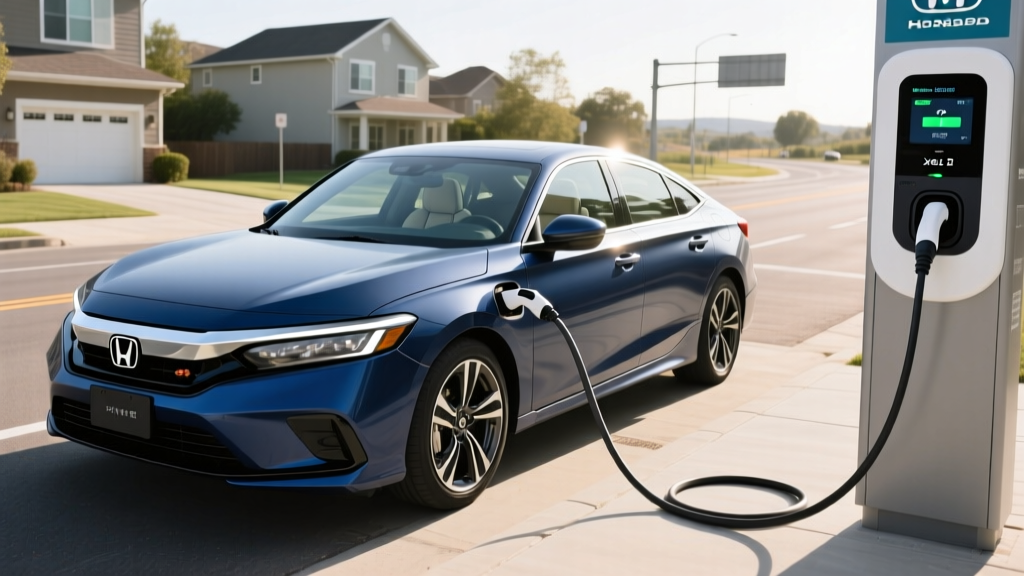
The 2025 Honda Civic Hybrid returns to the lineup after a multi-year hiatus, and it lands with a specific mission: deliver 50+ MPG without asking you to plug in, compromise on power, or sacrifice cargo space. Honda pairs a 2.0-liter Atkinson-cycle four-cylinder with a two-motor hybrid system producing a combined 200 horsepower — enough to make this the quickest non-Si Civic in the lineup while still achieving EPA estimates that rival the Toyota Prius.
This is a conventional hybrid (HEV), not a plug-in hybrid (PHEV). You never plug it in. The system recovers energy through regenerative braking and the engine to charge its small lithium-ion battery. If you're looking for electric-only driving range, this isn't the car — but if you want a set-it-and-forget-it fuel sipper with genuine performance, the 2025 Hybrid Civic makes a compelling case.
Conventional Hybrid (HEV): No plug. Small battery (typically 1–2 kWh). Engine and motor work together seamlessly. You just add gas. Examples: Civic Hybrid, Prius, Camry Hybrid.
Plug-in Hybrid (PHEV): Plugs in to charge. Larger battery (typically 10–20 kWh). Offers 20–50 miles of electric-only driving before the engine kicks in. Examples: Toyota RAV4 Prime, Chrysler Pacifica Hybrid.
The 2025 Civic Hybrid is an HEV. It has no electric-only range and requires no plug.
Fuel Economy: EPA Ratings and Real-World MPG
The EPA rates the 2025 Civic Hybrid at 50 MPG combined, with a city/highway split of 50 city / 47 highway for the Sport Hybrid trim. The Sport Touring Hybrid, with its larger 18-inch wheels and additional weight, drops slightly to 49 combined (49 city / 46 highway).
| Trim | City MPG | Highway MPG | Combined MPG |
|---|---|---|---|
| Sport Hybrid | 50 | 47 | 50 |
| Sport Touring Hybrid | 49 | 46 | 49 |
Source: fueleconomy.gov
Real-World MPG: What to Actually Expect
Honda's two-motor hybrid system excels in stop-and-go city driving, where the electric motor handles low-speed propulsion and regenerative braking recaptures energy constantly. In real-world testing by multiple outlets, the Civic Hybrid has matched or even exceeded its EPA city rating — some drivers report 52–54 MPG in urban commutes with moderate traffic.
Highway driving tells a different story. At sustained 70–80 mph speeds, the engine does most of the work, and real-world highway economy tends to settle around 43–46 MPG. Cold weather (below 40°F) can knock 3–5 MPG off combined figures due to increased engine runtime for cabin heating and reduced battery efficiency. Expect a realistic year-round combined average of 47–51 MPG depending on your commute mix.
Powertrain: 200 HP from a Two-Motor Hybrid System
The 2025 Civic Hybrid uses Honda's fourth-generation two-motor hybrid system, a setup shared in principle with the Accord Hybrid and CR-V Hybrid but tuned for the Civic's lighter platform.
| Specification | Detail |
|---|---|
| Engine | 2.0L Atkinson-cycle 4-cylinder (141 hp, 134 lb-ft) |
| Electric Motors | Two-motor system (drive + generator) |
| Combined System Output | 200 hp, 232 lb-ft torque |
| Transmission | e-CVT (no traditional gears) |
| Drivetrain | Front-wheel drive |
| 0–60 mph | ~7.1 seconds (est.) |
| Hybrid Battery | ~1.0 kWh lithium-ion (under rear seats) |
The key engineering detail: at low speeds, the Civic Hybrid operates primarily as a series hybrid — the engine spins a generator that powers the electric drive motor, which actually turns the wheels. At highway cruising speeds, a lock-up clutch connects the engine directly to the wheels for maximum efficiency. This is why the car feels responsive and torque-rich around town (electric motor delivery) while still achieving strong highway economy (direct mechanical drive).
The 232 lb-ft of torque arrives near-instantly from the drive motor, giving the Civic Hybrid a punchy feel off the line that the turbocharged 1.5L Civic (192 hp, 192 lb-ft) can't match at low RPM. Honda has also added paddle shifters that adjust regenerative braking intensity across four levels — not true one-pedal driving, but enough to slow the car significantly in traffic without touching the brake.
Pricing, Trims, and Tax Credit Eligibility
The 2025 Civic Hybrid is available in two trims, both positioned as premium offerings within the Civic lineup:
| Trim | MSRP (incl. destination) | Key Features |
|---|---|---|
| Sport Hybrid | $29,845 | 17" wheels, 7" touchscreen, wireless CarPlay/Android Auto, Honda Sensing suite |
| Sport Touring Hybrid | $32,845 | 18" wheels, 9" touchscreen, Bose 12-speaker audio, wireless charging, leather-trimmed seats, navigation |
Does the Civic Hybrid Qualify for a Federal Tax Credit?
No. The 2025 Civic Hybrid does not qualify for the federal §30D Clean Vehicle Credit. That credit — up to $7,500 — applies only to plug-in electric vehicles (BEVs and PHEVs) with sufficient battery capacity and compliant battery sourcing. Conventional hybrids like the Civic Hybrid are excluded under current IRS rules.
Some states and municipalities offer rebates or HOV lane access for hybrids, but these vary widely by jurisdiction. Check your state energy office or the AFDC incentives database for local programs.
Battery Warranty, Reliability, and Replacement Cost
Hybrid battery longevity is the single most common concern among first-time hybrid buyers. Here's what Honda provides:
• 8 years / 100,000 miles in most states
• 10 years / 150,000 miles in CARB states (CA, CT, ME, MD, MA, NJ, NY, OR, RI, VT, WA, and others adopting California emissions standards)
• Covers battery capacity loss below a defined threshold and defects
• Transferable to subsequent owners
Is the Civic Hybrid Reliable?
Honda's two-motor hybrid system is now in its fourth generation and has been deployed across millions of vehicles globally (Accord Hybrid, CR-V Hybrid, Insight). The architecture is well-proven. The e-CVT has no traditional belts, clutch packs, or gear sets to wear — it's fundamentally simpler than a conventional automatic transmission.
The Civic platform itself carries strong reliability ratings. The hybrid components add minimal complexity to routine maintenance: there's no alternator, no starter motor, and the regenerative braking system significantly extends brake pad life (many hybrid owners report 80,000+ miles on original pads).
What Does a Hybrid Battery Replacement Cost?
If the hybrid battery fails outside warranty coverage, replacement costs typically range from $2,000 to $4,000 including labor at a Honda dealership. Third-party hybrid battery specialists offer refurbished replacements for $1,500–$2,500. However, real-world data from Honda's earlier hybrid models (Insight, Accord Hybrid) shows that lithium-ion hybrid batteries routinely last 150,000–200,000+ miles with minimal degradation — the small battery sees shallow charge/discharge cycles that are far less stressful than the deep cycles in a full EV.
The conventional maintenance schedule is straightforward: oil changes every 7,500–10,000 miles (the engine runs less than in a gas car, so oil stays cleaner longer), cabin air filter, and standard fluid checks. There is no hybrid-specific routine maintenance required.
Who Should Buy the Civic Hybrid vs. a Full EV or Gas Car?
The Civic Hybrid occupies a specific niche. Here's how to decide if it's the right electrification step for you:
✓ Choose the Civic Hybrid If:
- You want 50 MPG without changing your fueling habits
- You lack access to home or workplace charging (apartment, street parking)
- You take frequent long road trips and don't want to plan around chargers
- You want a responsive, torque-rich compact sedan under $33,000
- You live in an extreme climate where EV range loss is a concern
- You want Honda Sensing ADAS and proven reliability
✗ Look at a Full EV or PHEV If:
- You have reliable Level 2 home charging and a mostly predictable commute
- You want zero tailpipe emissions and the lowest per-mile energy cost
- You want to access the $7,500 federal tax credit (§30D)
- You want electric-only driving for short trips (consider a PHEV)
- Your daily drive is under 40 miles round-trip (a BEV eliminates gas entirely)
- You want minimal long-term maintenance (no oil changes, no engine)
For buyers cross-shopping the segment: the Toyota Prius (57 MPG combined, $28,545) edges out the Civic on pure efficiency but trails on power (196 hp) and interior refinement. The Hyundai Elantra Hybrid (54 MPG combined, $27,150) offers strong value but less engaging driving dynamics. The Civic Hybrid's advantage is combining near-Prius efficiency with a genuinely sporty chassis and 200 hp.
Pros and Cons at a Glance
Pros
- 50 MPG combined EPA — among the best in any non-PHEV sedan
- 200 hp / 232 lb-ft — quickest base Civic in the lineup
- No plug required — zero lifestyle adjustment
- 600+ mile real-world range per tank
- Honda Sensing safety suite standard on all trims
- Strong resale value and proven hybrid reliability
- Regen paddles reduce brake wear significantly
Cons
- No federal tax credit eligibility (HEV, not PHEV/BEV)
- FWD only — no AWD option (unlike Prius)
- Only two trims available; no base-price hybrid option
- Highway MPG drops to ~43–46 in real-world driving
- 12.4-gallon tank limits range vs. some competitors
- Engine drone under hard acceleration (e-CVT characteristic)
- No spare tire — tire inflation kit only
Frequently Asked Questions
How many MPG does the 2025 Civic Hybrid get?
The EPA rates the Civic Hybrid Sport at 50 city / 47 highway / 50 combined MPG. The Sport Touring Hybrid is rated at 49 city / 46 highway / 49 combined. Real-world city driving often matches or slightly exceeds EPA figures (50–54 MPG), while sustained highway driving at 75+ mph typically yields 43–46 MPG.
Does the Civic Hybrid need to be plugged in?
No. The 2025 Civic Hybrid is a conventional hybrid (HEV). Its small lithium-ion battery charges through regenerative braking and the gasoline engine. You fuel it exactly like a regular car — just add gas.
How far can the Civic Hybrid drive on electric only?
The Civic Hybrid has no meaningful electric-only range. It can creep short distances at very low speeds on battery power alone (typically under 1 mile at parking-lot speeds), but it is not designed for EV-mode commuting. If electric-only driving is a priority, consider a PHEV like the Toyota Prius Prime (44 miles EV range) or a full BEV.
Is the hybrid battery expensive to replace?
Out-of-warranty hybrid battery replacement runs $2,000–$4,000 at a dealer, or $1,500–$2,500 from third-party specialists. However, Honda's hybrid batteries are covered for 8 years/100,000 miles (10 years/150,000 miles in CARB states), and real-world data shows these batteries commonly last 150,000–200,000+ miles. The shallow charge cycles in an HEV are far less stressful on battery chemistry than the deep cycles in a full EV.
Does the 2025 Civic Hybrid qualify for any tax credit?
The Civic Hybrid does not qualify for the federal §30D Clean Vehicle Credit, which is reserved for plug-in vehicles (BEVs and PHEVs). Some states and local utilities offer hybrid purchase rebates or incentives — check the Alternative Fuels Data Center for programs in your area.
How does the Civic Hybrid compare to the Toyota Prius?
The Prius delivers higher EPA fuel economy (57 MPG combined vs. 50) and offers an AWD option. The Civic Hybrid counters with more power (200 hp vs. 196), a more refined interior, sportier handling, and a quieter cabin at highway speeds. If maximum MPG is your sole priority, the Prius wins. If you want efficiency with engagement, the Civic Hybrid is the stronger pick.
Is the Civic Hybrid good in cold weather?
Yes — and this is a key advantage over full EVs. The gasoline engine provides cabin heat without draining a large battery, and cold-weather MPG loss is modest (typically 3–5 MPG combined in sub-40°F conditions). A full EV can lose 20–30% of its range in extreme cold; the Civic Hybrid loses roughly 6–10% of its fuel economy.