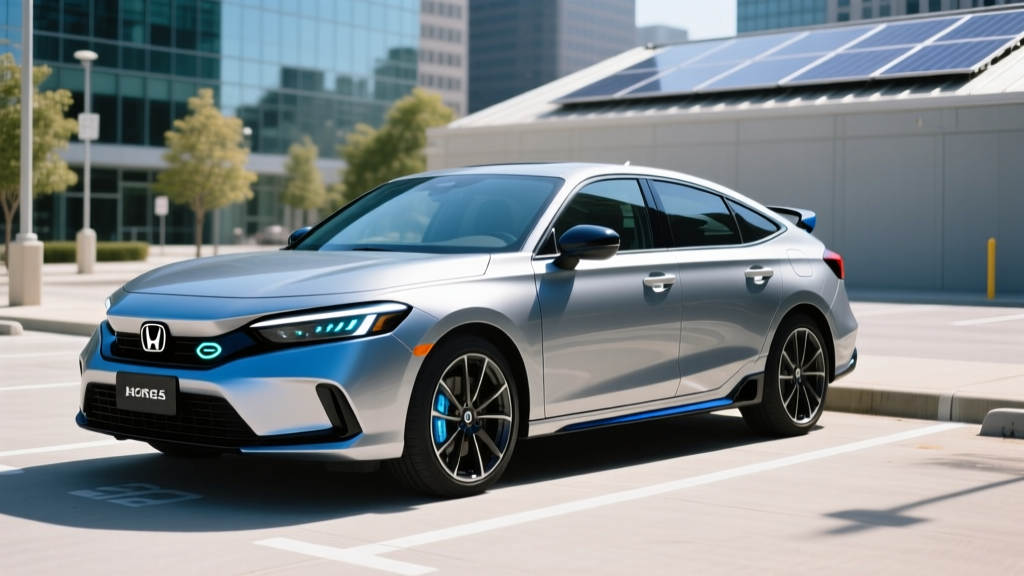
The 2025 Honda Civic Hatchback Hybrid pairs a practical cargo-friendly body with one of the most efficient powertrains in the compact segment. With an EPA-estimated 50 MPG combined, this conventional hybrid (HEV) squeezes maximum range from every gallon without ever needing to plug in. For buyers who want electrified efficiency without the charging logistics of a full EV or the limited electric-only range of a plug-in hybrid, the Civic Hatch Hybrid occupies a compelling middle ground.
We've spent time analyzing Honda's two-motor hybrid system, cross-referencing EPA data with real-world driving reports, and comparing the Civic Hatch Hybrid against its PHEV and BEV alternatives. Here's everything you need to know before you buy.
HEV vs PHEV: Where the Civic Hatch Hybrid Fits
Before diving into specs, it's essential to clarify what the 2025 Civic Hatchback Hybrid is — and what it isn't. This is a conventional hybrid (HEV), not a plug-in hybrid (PHEV). That distinction matters enormously for your daily routine and expectations.
| Feature | Conventional Hybrid (HEV) | Plug-In Hybrid (PHEV) | Battery Electric (BEV) |
|---|---|---|---|
| Plug-in charging required? | No | Yes (optional but recommended) | Yes (mandatory) |
| Electric-only range | Less than 1 mile at low speeds | 20–50 miles typical | 200–400+ miles |
| Primary fuel | Gasoline | Gasoline + electricity | Electricity only |
| Battery size | ~1–2 kWh | ~10–20 kWh | ~50–100+ kWh |
| Federal tax credit (§30D) | Not eligible | Up to $7,500 (if eligible) | Up to $7,500 (if eligible) |
| Home charging install needed? | No | Recommended (Level 2) | Essential (Level 2) |
The Civic Hatch Hybrid recovers energy through regenerative braking and its gasoline engine to charge its small lithium-ion battery pack. You simply fill up at any gas station and drive. The hybrid system seamlessly blends electric motor assist with the gasoline engine to maximize efficiency — particularly in stop-and-go city driving where electric motors shine.
Fuel Economy: EPA Ratings and Real-World MPG
The headline number for the 2025 Civic Hatchback Hybrid is its exceptional efficiency. Here's the full EPA breakdown according to fueleconomy.gov:
| Trim | City MPG | Highway MPG | Combined MPG | Annual Fuel Cost* |
|---|---|---|---|---|
| Sport Hybrid | 50 | 47 | 49 | $1,250 |
| Sport Touring Hybrid | 50 | 47 | 49 | $1,250 |
*Based on 15,000 miles/year at $3.50/gallon regular unleaded. Actual costs vary by region and driving habits.
Real-World MPG: What Owners Actually See
Honda's hybrid system — which uses a 2.0-liter Atkinson-cycle four-cylinder engine paired with two electric motors — tends to exceed its EPA city rating in real-world urban driving. Many owners report 52–55 MPG in city conditions where regenerative braking frequently recaptures energy and the electric motor handles low-speed propulsion.
Highway driving tells a different story. At sustained 70–80 mph speeds, expect fuel economy to dip to approximately 42–46 MPG. Hybrid systems are inherently less advantageous at constant highway speeds where the gasoline engine does most of the work and regenerative braking opportunities are minimal. Cold weather further reduces efficiency by roughly 5–10% as the engine runs more frequently to provide cabin heat and the battery's chemical reactions slow down.
With a 12.4-gallon fuel tank, total range sits around 600–620 miles per tank in mixed driving — enough for most drivers to visit a gas station only once every two to three weeks.
Powertrain and Performance Specs
The Civic Hatch Hybrid uses Honda's fourth-generation two-motor hybrid system, a setup that prioritizes smooth electric-like acceleration while maintaining the range security of a gas engine.
| Specification | 2025 Civic Hatchback Hybrid |
|---|---|
| Engine | 2.0L Atkinson-cycle 4-cylinder |
| Engine horsepower | 143 hp @ 6,000 rpm |
| Electric motor output | 184 hp / 232 lb-ft torque |
| Combined system output | 200 hp |
| Transmission | e-CVT (single-speed direct drive) |
| Drivetrain | Front-wheel drive |
| 0–60 mph | ~7.5 seconds (estimated) |
| Battery type | Lithium-ion |
| Battery capacity | ~1.0 kWh (nominal) |
| Cargo volume (behind rear seats) | 25.0 cu ft |
| Cargo volume (seats folded) | 47.1 cu ft |
The two-motor system operates in three modes: EV Drive (electric motor only, for short low-speed bursts), Hybrid Drive (engine generates electricity to power the motor), and Engine Drive (engine directly powers the wheels at highway speeds). In practice, the transitions are nearly imperceptible. The electric motor's instant 232 lb-ft of torque gives the Civic Hatch Hybrid a responsive, punchy feel around town that belies its efficiency focus.
Pricing, Trims, and Tax Credit Eligibility
The 2025 Civic Hatchback Hybrid is offered in two trims:
- Sport Hybrid: MSRP starting at approximately $30,750 (including destination)
- Sport Touring Hybrid: MSRP starting at approximately $33,750 (including destination)
The Sport Touring adds features like a Bose premium audio system, wireless phone charging, heated rear seats, navigation, and Honda's full suite of driver-assistance technology with enhanced low-speed braking assist.
Federal Tax Credit: Not Eligible
As a conventional hybrid (HEV), the 2025 Civic Hatchback Hybrid does not qualify for the IRS §30D Clean Vehicle Credit. That credit — up to $7,500 — applies only to plug-in electric vehicles (BEVs and PHEVs) that meet battery sourcing, MSRP caps, and buyer income requirements per IRS guidelines.
Some states may offer small incentives for high-efficiency hybrid vehicles, but these vary by jurisdiction. Check your state's energy office or DMV for current programs.
Battery Warranty, Reliability, and Replacement Cost
Hybrid battery longevity remains one of the top concerns for buyers transitioning from conventional gas cars. Honda addresses this with robust warranty coverage.
| Coverage | Term |
|---|---|
| Hybrid battery warranty | 8 years / 100,000 miles (10 years / 150,000 miles in CARB states*) |
| Hybrid system components | 8 years / 100,000 miles |
| Powertrain warranty | 5 years / 60,000 miles |
| New vehicle limited warranty | 3 years / 36,000 miles |
*CARB states include CA, CO, CT, ME, MA, NJ, NY, OR, RI, VT, WA, and others that have adopted California emissions standards. Check Honda's warranty documentation for your state's specific coverage.
How Long Do Honda Hybrid Batteries Actually Last?
Honda's hybrid batteries are engineered for the life of the vehicle. Real-world data from earlier Honda hybrid models (Insight, Accord Hybrid, CR-V Hybrid) suggests that lithium-ion hybrid battery packs routinely last 150,000–200,000+ miles before any significant capacity loss. Because the battery in a conventional hybrid is relatively small (~1 kWh) and is never deeply discharged — the system maintains a state-of-charge buffer between roughly 20% and 80% — degradation is minimal compared to the larger batteries in BEVs that undergo deeper charge cycles.
If replacement is ever needed outside of warranty, a Honda hybrid battery pack typically costs between $2,000 and $4,000 including labor at a dealership. Third-party refurbishment shops may offer reconditioned units for $1,500–$2,500. However, given Honda's track record with hybrid battery durability, most owners will never face this expense.
How the Civic Hatch Hybrid Compares: HEV vs PHEV vs EV
The right electrified vehicle depends on your driving patterns, charging access, and budget. Here's a decision framework:
Choose the Civic Hatch Hybrid (HEV) if:
- You don't have access to home or workplace charging
- You want maximum simplicity — no plugs, no charging apps, no range planning
- You drive a mix of city and highway miles and want consistently strong fuel economy
- Your budget is under $35,000 and you want low running costs
- You frequently take long road trips and don't want to plan around charging stops
Choose a PHEV (e.g., Toyota Prius Prime) if:
- You have reliable home charging (Level 1 or Level 2)
- Your daily commute is under 40 miles round-trip (you could drive mostly on electricity)
- You want to reduce gas consumption significantly but still need gas-engine range for road trips
- You want to potentially qualify for the $7,500 federal tax credit
Choose a full BEV (e.g., Chevy Bolt, Hyundai Kona Electric) if:
- You have reliable home Level 2 charging
- Your daily driving is under 250 miles and you're comfortable with public DC fast charging for road trips
- You want zero tailpipe emissions and the lowest per-mile fuel cost
- You want to qualify for federal and state EV incentives
The Civic Hatch Hybrid's biggest advantage over a PHEV or BEV is zero lifestyle change. You don't install a charger, download charging network apps, or alter your road trip habits. You simply drive a highly efficient car that happens to use an electric motor to supplement its gas engine.
Driving Impressions and Practical Ownership
The Civic Hatch Hybrid drives with the composed, planted feel that defines the current-generation Civic platform. The e-CVT doesn't suffer from the "rubber band" effect of older CVTs because Honda's system primarily uses the electric motor for propulsion, with the engine acting as a generator in most conditions. Acceleration from stops is immediate and linear — the electric motor's 232 lb-ft of torque is available from 0 rpm.
Regenerative braking is adjustable via steering-wheel-mounted paddle shifters, allowing you to increase regen for more one-pedal-like driving in city traffic or reduce it for a coasting feel on open roads. While not a true one-pedal driving experience like a BEV, it gives you granular control over energy recapture.
The hatchback body style adds genuine practicality: 25.0 cubic feet behind the rear seats is competitive with small crossovers, and the wide load floor makes it easy to carry bulky items. The Sport Touring trim's premium interior materials and Bose audio system punch above the Civic's price class.
Honda Sensing — the brand's suite of driver-assistance features — comes standard on all trims and includes adaptive cruise control, lane-keeping assist, forward collision warning, and automatic emergency braking. This is an SAE Level 2 driver-assistance system, meaning the driver must remain fully engaged and attentive at all times. It does not make the Civic a self-driving vehicle.
Pros, Cons, and Verdict
Pros
- 50 MPG combined EPA — among the best in any compact car
- No plug-in charging required; zero lifestyle adjustment from a gas car
- Strong 200 hp combined output with responsive electric-motor torque
- Excellent cargo versatility with 25 cu ft hatchback space
- 8-year/100,000-mile hybrid battery warranty (10/150k in CARB states)
- Honda Sensing driver-assist standard on all trims
- Refined, quiet cabin with premium feel in Sport Touring trim
Cons
- Not eligible for the $7,500 federal §30D tax credit (HEV, not PHEV/BEV)
- Highway MPG drops to ~42–46 in real-world 75+ mph driving
- No all-wheel-drive option (FWD only)
- Only two trims available (Sport and Sport Touring) — limited configuration options
- Infotainment system in Sport trim uses a smaller 7-inch display
Frequently Asked Questions
How many MPG does the 2025 Honda Civic Hatchback Hybrid get?
The EPA rates the Civic Hatch Hybrid at 50 MPG city, 47 MPG highway, and 49 MPG combined for both the Sport and Sport Touring trims. In real-world city driving, many owners report 52–55 MPG thanks to frequent regenerative braking. Highway driving at 70–80 mph typically yields 42–46 MPG.
Does the Civic Hatch Hybrid need to be plugged in?
No. The 2025 Civic Hatchback Hybrid is a conventional hybrid (HEV). It charges its small battery through regenerative braking and the gasoline engine. You never plug it in — just fill up at a gas station like any other car.
Does the 2025 Civic Hatch Hybrid qualify for a federal tax credit?
No. The IRS §30D Clean Vehicle Credit applies only to plug-in electric vehicles (BEVs and PHEVs) that meet specific battery sourcing, MSRP, and buyer income requirements. As a conventional hybrid, the Civic Hatch Hybrid does not qualify. Some states may offer separate incentives for high-efficiency vehicles — check your state's energy office for details.
How long will the hybrid battery last, and what does replacement cost?
Honda warranties the hybrid battery for 8 years/100,000 miles (10 years/150,000 miles in CARB states). Based on historical data from Honda's hybrid lineup, these batteries commonly last 150,000–200,000+ miles. If replacement is needed out of warranty, expect to pay $2,000–$4,000 at a dealership, or $1,500–$2,500 for a reconditioned unit from a third-party shop.
How does the Civic Hatch Hybrid compare to a PHEV like the Prius Prime?
The Toyota Prius Prime (a PHEV) offers about 44 miles of electric-only range and qualifies for a federal tax credit of up to $7,500 if you meet eligibility requirements. If you have home charging and a short commute, the Prius Prime could let you drive mostly on electricity. However, the Civic Hatch Hybrid is simpler (no charging needed), starts at a lower price, and offers comparable combined fuel economy when the PHEV's battery is depleted. Choose the PHEV if you can charge at home and want to minimize gas use; choose the Civic HEV if you want zero hassle.
Is the Civic Hatch Hybrid good for long road trips?
Yes. With approximately 600+ miles of total range per tank, the Civic Hatch Hybrid requires fewer fuel stops than most gas-only compact cars on long trips. There's no range planning or charging-stop logistics required. Highway comfort is strong, and the adaptive cruise control in Honda Sensing reduces fatigue on long drives.
What safety ratings does the 2025 Civic Hatch Hybrid have?
The current-generation Civic platform has earned top marks from both IIHS and NHTSA, including IIHS Top Safety Pick+ recognition. Honda Sensing driver-assist features come standard on every trim.
The 2025 Honda Civic Hatchback Hybrid isn't trying to reinvent transportation. It's doing something arguably more useful: taking one of the best compact hatchbacks on the market and making it dramatically more efficient without asking anything of the driver. At roughly $31,000 to $34,000, with 50 MPG combined and Honda's proven hybrid reliability, it's one of the most rational purchases in the electrified vehicle space — even if it never plugs in.