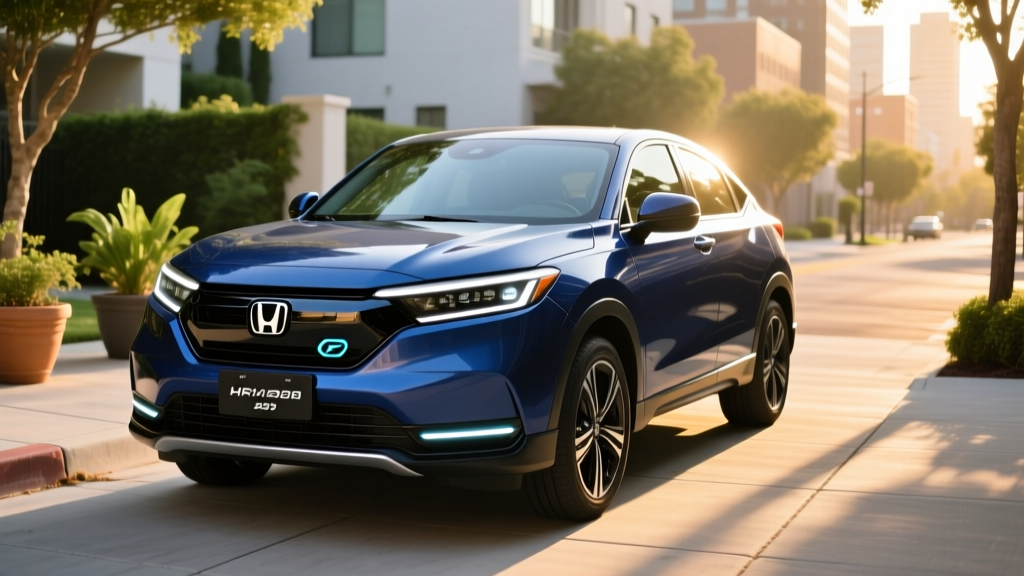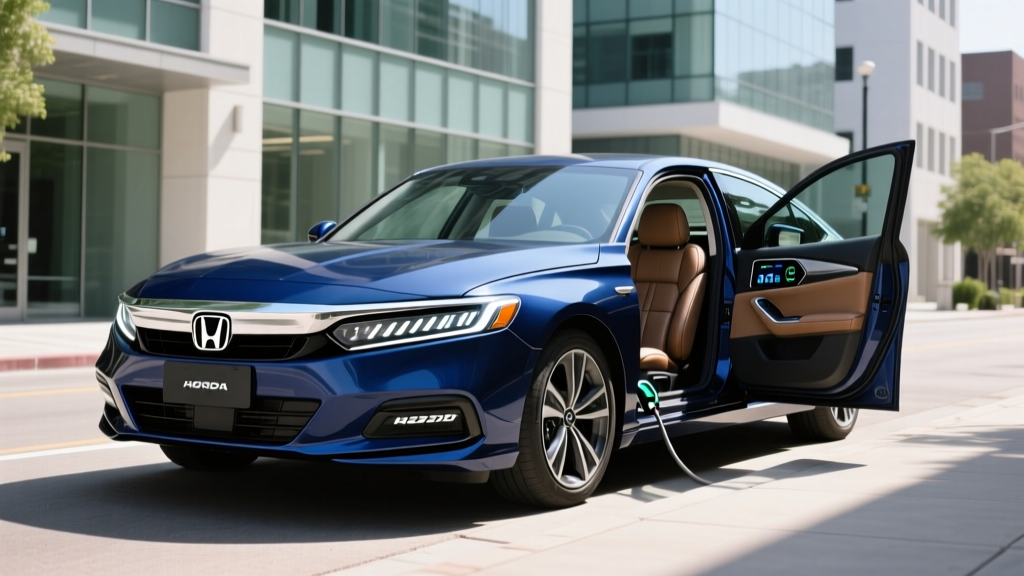
The midsize sedan segment has thinned considerably, but the 2025 Honda Accord Hybrid remains a benchmark for commuters who want maximum fuel efficiency without plugging in. With an EPA-estimated 48 MPG combined and a refined two-motor hybrid system producing 204 horsepower, the Accord Hybrid occupies a specific niche: buyers who need the range and refueling convenience of gasoline but want to minimize trips to the pump.
This guide breaks down every critical spec — real-world fuel economy, powertrain engineering, trim pricing, battery longevity, and where the Accord Hybrid fits against plug-in hybrids and full battery-electric vehicles in 2025.
HEV vs PHEV: What the Accord Hybrid Actually Is
Before examining the numbers, it's essential to classify what the 2025 Accord Hybrid is — and what it isn't.
Conventional Hybrid (HEV) — The Accord Hybrid
- No plug required. The battery recharges through regenerative braking and the gasoline engine.
- No electric-only driving range beyond very low-speed creeping (under ~1 mile at parking-lot speeds).
- Fuels exclusively with gasoline — you never need to find a charger.
- Eligible for no federal EV tax credit under current IRS §30D rules.
The Accord Hybrid is not a plug-in hybrid (PHEV). Honda does not offer a plug-in Accord in the US market. If you need 25–40 miles of electric-only commuting before the gas engine engages, you'd be looking at a PHEV like the Toyota Prius Prime or Hyundai Sonata PHEV. If you need 250+ miles of zero-emission driving, you'd be shopping a full BEV like the Tesla Model 3 or Hyundai Ioniq 6.
The Accord Hybrid's value proposition is simpler: dramatically better fuel economy than a gas-only midsize sedan, with zero changes to your refueling habits.
Fuel Economy: EPA Ratings and Real-World MPG
The 2025 Accord Hybrid is rated by the EPA at 48 MPG combined, with city and highway figures that reflect how hybrid systems actually work — they excel in stop-and-go driving where regenerative braking recaptures energy.
| Trim | City MPG | Highway MPG | Combined MPG |
|---|---|---|---|
| Sport / Sport-L / EX-L | 51 | 44 | 48 |
| Sport Touring | 50 | 43 | 47 |
For context, the gas-only 2025 Accord (1.5T turbo) achieves 31 MPG combined. The hybrid delivers a 55% improvement in overall fuel economy — a gap that translates to roughly 200 fewer gallons per year at 15,000 miles of driving.
Powertrain Specs: How Honda's Two-Motor Hybrid Works
The 2025 Accord Hybrid uses Honda's fourth-generation two-motor hybrid system, which operates differently from traditional parallel hybrids (like older Toyota systems) and closer to a series-hybrid architecture in most driving conditions.
| Specification | Detail |
|---|---|
| Engine | 2.0L DOHC Atkinson-cycle inline-4 |
| Engine Output | 146 hp / 134 lb-ft torque |
| Drive Motors | Two permanent-magnet AC motors |
| Primary Drive Motor Output | 181 hp / 247 lb-ft torque |
| Combined System Output | 204 hp / 247 lb-ft torque |
| Transmission | e-CVT (direct-drive with clutch lock-up) |
| Drivetrain | Front-wheel drive |
| Hybrid Battery | ~1.1 kWh lithium-ion (not plug-in) |
| Fuel Tank | 12.8 gallons |
| Total Driving Range | ~614 miles (EPA) |
| 0–60 mph | ~7.5 seconds |
Here's what makes Honda's system distinctive: in most city and suburban driving (under ~45 mph), the gasoline engine does not drive the wheels directly. Instead, it spins a generator motor that produces electricity, which then powers the drive motor. This means the car drives like an EV — smooth, linear torque delivery — while the engine runs at its most efficient RPM regardless of vehicle speed.
At highway speeds, a lock-up clutch engages, connecting the engine directly to the wheels for better efficiency in steady-state cruising. This is why the Accord Hybrid's highway MPG (43–44) trails its city rating (50–51) — the opposite of most conventional gas cars.
Pricing, Trims, and Tax Credit Eligibility
The 2025 Accord Hybrid is offered in four trims, all built on the same powertrain. Honda positions the hybrid as the premium option within the Accord lineup.
| Trim | MSRP (incl. destination) | Key Features |
|---|---|---|
| Sport Hybrid | $33,655 | 19" wheels, heated seats, wireless CarPlay/Android Auto |
| Sport-L Hybrid | $34,005 | Leather-trimmed seats, power passenger seat |
| EX-L Hybrid | $35,355 | 12.3" touchscreen, wireless charging, parking sensors |
| Sport Touring Hybrid | $38,895 | Bose audio, heated rear seats, low-speed braking, Wi-Fi hotspot |
Battery Longevity, Warranty, and Replacement Costs
Hybrid battery anxiety is the most common concern among first-time hybrid buyers. Here's what the data shows for Honda's system.
2025 Accord Hybrid Battery Warranty
- Hybrid battery (high-voltage): 8 years / 100,000 miles (10 years / 150,000 miles in CARB states including CA, NY, MA, and others)
- Hybrid system components: 8 years / 100,000 miles (inverter, converter, control units)
- Conventional powertrain: 5 years / 60,000 miles
- Capacity retention threshold: Honda covers the battery if it falls below ~70% of original capacity within the warranty period
Real-world longevity data: Honda's hybrid batteries have proven remarkably durable. Fleet data and owner reports indicate most Accord and Civic Hybrid batteries retain 85–92% of original capacity at 100,000 miles. Complete battery failures before 150,000 miles are uncommon with the current-generation lithium-ion packs.
Out-of-warranty replacement cost: If the high-voltage battery requires replacement after warranty expiration, expect a dealer-installed new battery to cost between $2,500 and $4,000 (parts and labor). Independent hybrid specialists and refurbished cell replacements can reduce this to $1,500–$2,500. For context, this is significantly less than a BEV battery replacement and comparable to a major transmission service on a conventional vehicle.
Maintenance advantage: The Accord Hybrid has no traditional transmission fluid changes, no starter motor, no alternator, and regenerative braking dramatically extends brake pad life (many owners report 60,000–80,000+ miles on original pads). Oil changes are typically needed every 7,500–10,000 miles, same as the gas Accord.
Who Should Choose the Accord Hybrid vs. a PHEV or Full EV?
The decision between HEV, PHEV, and BEV comes down to your daily routine, charging access, and driving patterns.
Accord Hybrid Strengths
- 50+ MPG city with zero behavior change
- 614-mile total range — no range anxiety
- No home charger installation needed
- Proven long-term reliability
- Refined, EV-like city driving feel
- Strong resale value
Accord Hybrid Limitations
- No electric-only commuting range
- No federal tax credit eligibility
- Still burns gasoline (emissions + fuel cost)
- FWD only — no AWD option
- Higher entry price than gas Accord (~$5,000 premium)
Decision Framework: Which Powertrain Fits You?
Choose the Accord Hybrid if: You drive 15,000+ miles/year, lack reliable home charging, live in an apartment or street-park, frequently take long road trips, or want the simplest path to 45+ MPG without infrastructure changes.
Choose a PHEV (Prius Prime, Tucson PHEV) if: You can install a Level 2 home charger, your daily commute is under 35 miles round-trip, you want some electric-only driving but still need gas-engine range for weekend trips, and you want to capture the §30D tax credit (up to $7,500 for eligible models).
Choose a full BEV (Model 3, Ioniq 6) if: You have reliable home charging, your daily driving is under 250 miles, you want zero tailpipe emissions, you're motivated by the lowest per-mile fuel cost ($0.04–$0.06/mi on home electricity vs. $0.12–$0.15/mi in the Accord Hybrid at current gas prices), and you're ready to plan road-trip charging.
Ownership Economics: 5-Year Cost Snapshot
Let's put real numbers to a 5-year, 75,000-mile ownership scenario for the Accord Hybrid Sport ($33,655 MSRP) compared to the gas-only Accord LX ($29,295 MSRP) and a comparable BEV (Tesla Model 3 RWD, ~$38,990 before credit).
| 5-Year Cost Factor | Accord Hybrid | Accord Gas (1.5T) | Model 3 RWD (after $7,500 credit) |
|---|---|---|---|
| Purchase Price (effective) | $33,655 | $29,295 | $31,490 |
| Fuel/Energy (75k mi) | $7,800 | $12,100 | $3,200 |
| Maintenance (est.) | $2,400 | $3,200 | $1,500 |
| Insurance (est.) | $8,500 | $7,800 | $9,200 |
| Total 5-Year Cost | $52,355 | $52,395 | $45,390 |
The Accord Hybrid effectively breaks even with the gas Accord over five years — you pay ~$4,360 more upfront but save ~$4,300 in fuel and maintenance. The real value is the 55% reduction in fuel consumption and significantly fewer emissions. The BEV wins on total cost if you qualify for the full $7,500 credit and charge primarily at home, but requires charging infrastructure and road-trip planning the Accord Hybrid never demands.
Frequently Asked Questions
How many MPG does the 2025 Accord Hybrid get?
The EPA rates the 2025 Accord Hybrid at 51 city / 44 highway / 48 combined MPG (Sport, Sport-L, EX-L trims). The Sport Touring trim drops slightly to 50/43/47 due to larger wheels and additional equipment weight. In real-world city driving, many owners report exceeding 50 MPG regularly, while sustained highway driving at 75 mph typically returns 41–43 MPG.
Can the Accord Hybrid drive on electric power only?
Only at very low speeds for very short distances (under ~1 mile at parking-lot speeds). The ~1.1 kWh battery is far too small for meaningful electric-only range. This is by design — the Accord Hybrid is a conventional HEV, not a plug-in. If you want 25–40 miles of electric-only commuting, you need a PHEV like the Toyota Prius Prime (44 miles EV range) or Hyundai Sonata PHEV (32 miles EV range).
Does the 2025 Accord Hybrid qualify for any tax credit?
No. The federal IRS §30D Clean Vehicle Credit applies only to plug-in electric vehicles (PHEVs and BEVs) with battery packs of at least 7 kWh that meet domestic battery-sourcing and critical-mineral requirements. The Accord Hybrid's ~1.1 kWh battery and non-plug-in design make it ineligible. Check your state energy office or utility provider — some local programs offer rebates for high-efficiency hybrid vehicles, but these vary by jurisdiction.
How long will the Accord Hybrid battery last and what does replacement cost?
Honda warranties the hybrid battery for 8 years/100,000 miles (10 years/150,000 miles in CARB states). Real-world data shows most Honda hybrid batteries retain 85–92% capacity at 100,000 miles, and many exceed 200,000 miles without replacement. If replacement is needed out of warranty, expect $2,500–$4,000 at a dealer, or $1,500–$2,500 through independent hybrid specialists using refurbished cells.
Is the Accord Hybrid reliable compared to the gas version?
Yes — and in some ways more so. Honda's hybrid system eliminates the traditional automatic transmission (no planetary gearsets or torque converter to fail), the starter motor, and the alternator. Regenerative braking extends brake pad life to 60,000–80,000+ miles. Honda's hybrid powertrains have consistently earned top reliability ratings from Consumer Reports and J.D. Power. The 2.0L Atkinson-cycle engine is naturally aspirated and less stressed than the turbocharged 1.5T in the gas Accord.
How does the Accord Hybrid compare to the Toyota Camry Hybrid?
The 2025 Toyota Camry (now hybrid-only) achieves up to 52 MPG combined with available AWD — a slight efficiency edge and a drivetrain option Honda doesn't offer. The Accord Hybrid counters with a more refined ride, larger trunk (16.7 vs. 15.1 cu ft), and a more premium interior in upper trims. Both are excellent choices; the Camry wins on AWD availability and a marginally lower starting price, while the Accord wins on driving dynamics and interior space.