Quick Verdict: The 2025 Highlander Hybrid Platinum at a Glance
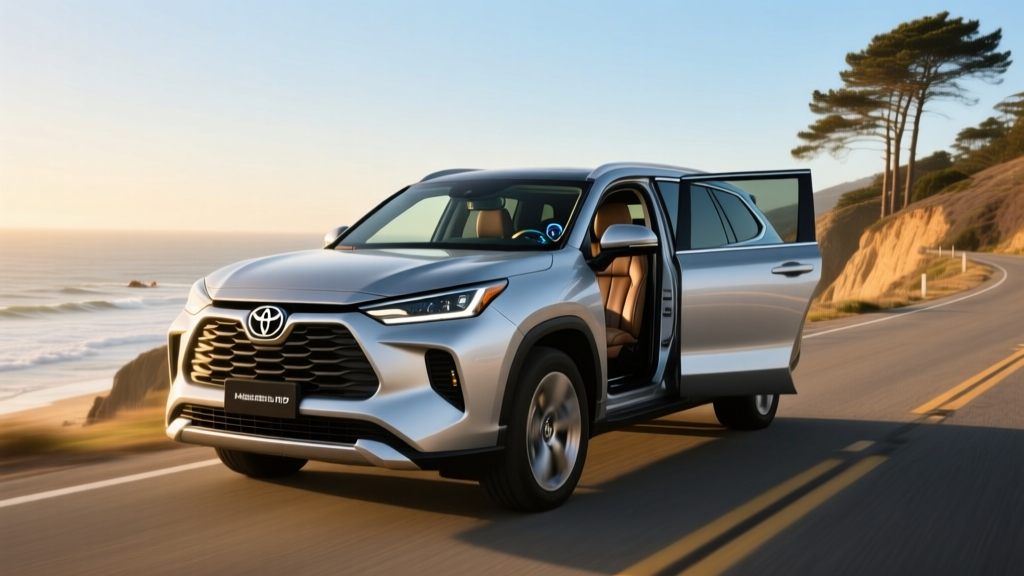
The 2025 Toyota Highlander Hybrid Platinum sits at the top of Toyota's three-row hybrid SUV lineup, pairing a 2.5-liter four-cylinder engine with two electric motors for a combined 243 horsepower. As a conventional hybrid (HEV) — not a plug-in — it requires no charging infrastructure and delivers an EPA-estimated 35 MPG combined. For families who want three-row utility, all-wheel drive, and low running costs without changing their refueling habits, this remains one of the most rational purchases in the midsize SUV segment.
At a starting MSRP of approximately $53,070 (including destination), the Platinum trim adds premium touches like a panoramic sunroof, heated and ventilated front seats, a 12.3-inch touchscreen, and Toyota's full suite of driver-assistance features. It won't qualify for a federal EV tax credit, but its total cost of ownership undercuts comparable gas-only competitors over five years thanks to fuel savings and Toyota's strong hybrid reliability record.
| Spec | Value |
|---|---|
| Powertrain | 2.5L I4 + 2 electric motors (AWD-i) |
| Combined Horsepower | 243 HP |
| EPA MPG (City / Hwy / Combined) | 35 / 35 / 35 |
| Fuel Tank Capacity | 17.1 gallons |
| Total Range | ~598 miles |
| 0–60 MPH | ~7.6 seconds |
| Drivetrain | Electronic AWD (AWD-i) |
| Seating | 7 passengers (2nd-row captain's chairs) |
| Cargo (behind 3rd / 2nd / 1st row) | 16.1 / 48.4 / 84.3 cu ft |
| Towing Capacity | 3,500 lbs |
| Hybrid Battery Warranty | 10 years / 150,000 miles |
| Base MSRP (Platinum AWD) | $53,070 |
HEV vs. PHEV: Why the Highlander Hybrid Is a Conventional Hybrid
Before we get deeper into fuel economy, let's clear up a common point of confusion. The Highlander Hybrid is a conventional hybrid electric vehicle (HEV). It does not have a plug. You cannot charge it from a wall outlet or public charger. Instead, it captures energy through regenerative braking and the gasoline engine to keep its small (~1.6 kWh) nickel-metal hydride (NiMH) traction battery charged. The electric motors assist the gas engine during acceleration and can propel the vehicle at very low speeds for short distances — but there is no meaningful electric-only range.
Toyota does not currently offer a plug-in hybrid (PHEV) version of the Highlander in the U.S. market. If you want a Toyota PHEV with three rows, you'd need to look at the Toyota Grand Highlander Hybrid (also an HEV, not a PHEV) or consider competitors like the Jeep Grand Cherokee 4xe or the now-discontinued Toyota RAV4 Prime (a two-row compact). Toyota's only current U.S. PHEVs are the RAV4 Prime, Prius Prime, and bZ-series-related models.
Fuel Economy: EPA Numbers vs. Real-World MPG
The EPA rates the 2025 Highlander Hybrid AWD at 35 MPG city, 35 MPG highway, and 35 MPG combined across all trims including the Platinum. That's a flat, consistent number — unusual in the hybrid world, where city MPG often exceeds highway. The reason: Toyota's hybrid synergy drive system recovers significant energy during stop-and-go driving, but the AWD-i system's rear motor adds slight mechanical drag at highway speeds, evening out the city/highway split.
| Driving Cycle | EPA MPG |
|---|---|
| City | 35 |
| Highway | 35 |
| Combined | 35 |
Real-world expectations: Owner-reported data on FuelEconomy.gov's My MPG tracker and forums like Toyota Nation suggest most drivers average between 32 and 37 MPG in mixed driving. City-heavy commutes with frequent stops can push toward 38–40 MPG. Sustained highway driving at 75+ MPH in cold weather (below 40°F) may drop to 30–32 MPG. These are modest variations — the hybrid system's consistency is a genuine strength.
Real-World Range Callout: With a 17.1-gallon tank and observed economy of 32–37 MPG, expect a real-world range of approximately 547 to 632 miles per tank. On a road trip with sustained 75 MPH highway driving in winter, plan for fuel stops every ~510 miles to avoid running the tank dangerously low.
Powertrain Deep Dive: 243 HP from Four Cylinders and Two Motors
The Highlander Hybrid's powertrain pairs a naturally aspirated 2.5-liter inline-four (producing 186 HP and 186 lb-ft of torque on its own) with a front electric motor (134 HP / 199 lb-ft) and a rear electric motor (54 HP / 89 lb-ft) that provides electronic all-wheel drive. Combined system output is 243 HP. Power flows through an electronically controlled continuously variable transmission (eCVT), which uses a planetary gearset rather than a traditional belt-and-pulley CVT — this is a proven, durable design Toyota has used for decades.
The rear motor only engages when the system detects slip or when additional traction is needed. Under normal dry-road cruising, the Highlander Hybrid operates primarily as a front-wheel-drive vehicle, which contributes to its efficiency. The 0–60 MPH time of approximately 7.6 seconds is adequate for merging and passing, though the Platinum's 4,500+ pound curb weight is noticeable during hard acceleration. The eCVT keeps engine RPMs managed smoothly — there's no rubber-band effect typical of older CVTs.
Pricing, Trims, and Tax Credit Eligibility
The 2025 Highlander Hybrid is offered in LE, XLE, Limited, and Platinum trims. The Platinum is the top-tier model:
- LE AWD: ~$40,970 MSRP
- XLE AWD: ~$44,970 MSRP
- Limited AWD: ~$49,070 MSRP
- Platinum AWD: ~$53,070 MSRP
The Platinum trim adds over the Limited: panoramic glass roof, heated and ventilated second-row seats, a bird's-eye view camera, head-up display, premium JBL audio (11 speakers), and unique 20-inch alloy wheels.
Federal Tax Credit Status: NOT ELIGIBLE
The 2025 Highlander Hybrid is a conventional hybrid (HEV), not a plug-in electric vehicle. Under IRS §30D rules, only battery electric vehicles (BEVs) and plug-in hybrids (PHEVs) with sufficient battery capacity and qualifying battery/mineral sourcing may receive the federal clean vehicle credit (up to $7,500). The Highlander Hybrid does not qualify.
Some states offer their own incentives for hybrids, but these are increasingly rare as state programs shift toward BEVs. Check your state's environmental or DMV website for current programs. No federal credit applies to HEVs.
Battery Warranty, Reliability, and Replacement Cost
Toyota Hybrid Battery Warranty: Toyota covers the hybrid battery in the 2025 Highlander Hybrid for 10 years or 150,000 miles (whichever comes first), transferable to subsequent owners. This applies in all 50 states. The hybrid system components (inverter, control module) are covered for 8 years / 100,000 miles.
Toyota's hybrid battery reliability record is among the best in the industry. The NiMH battery pack in the Highlander Hybrid is a mature, well-understood technology — far less energy-dense than lithium-ion but extremely durable under the moderate charge/discharge cycles a conventional hybrid demands. The battery never fully depletes or fully charges; it operates in a narrow state-of-charge window (roughly 40–80%) that minimizes degradation.
Replacement cost: If the hybrid battery fails outside of warranty, a new OEM replacement battery from Toyota currently costs approximately $3,000–$4,000 (parts only), with labor adding $500–$800. Third-party reconditioned batteries are available for $1,500–$2,500. Given the 10-year/150,000-mile warranty and Toyota's track record, most owners will never face this expense. Data from taxi fleets using Toyota hybrid systems regularly show batteries lasting 200,000+ miles without replacement.
Overall reliability: The Highlander Hybrid consistently earns above-average reliability scores. IIHS has named it a Top Safety Pick when equipped with specific headlights. Toyota's hybrid synergy drive system has been in production since 1997 (Prius), and the Highlander Hybrid specifically since 2006 — there are few powertrain designs with a longer proven track record.
Driving Impressions and Practical Ownership
The Platinum trim's 20-inch wheels and low-profile tires trade some ride comfort for visual appeal. You'll feel sharper impacts from potholes and expansion joints more than on the XLE's 18-inch setup. Road noise is well-managed at highway speeds, and the cabin is insulated from the engine drone that plagues some four-cylinder hybrids under hard acceleration.
The 12.3-inch infotainment screen runs Toyota's latest interface with wireless Apple CarPlay and Android Auto. Response times are acceptable but not class-leading. The panoramic sunroof in the Platinum brightens the cabin substantially but reduces headroom by about half an inch in the first row — noticeable for taller drivers.
Third-row space is tight for adults on anything beyond short trips. Cargo behind the third row is 16.1 cubic feet — enough for a week's groceries but tight for a family road trip without a roof box. Fold the third row and you get a useful 48.4 cu ft. The AWD-i system's 3,500-pound towing capacity is sufficient for a small boat trailer or lightweight camping trailer but falls short of body-on-frame competitors.
Highlander Hybrid vs. EV vs. Gas: Which Fits You?
Choose the 2025 Highlander Hybrid if:
- You need three rows and AWD without plugging in
- You drive 12,000–18,000 miles/year and want low fuel costs (~$1,500–$1,800/year at $3.50/gal)
- You don't have reliable home charging access for a BEV or PHEV
- You plan to keep the vehicle 8+ years (warranty coverage and proven reliability)
- You tow occasionally (up to 3,500 lbs)
Choose a full EV (like the Kia EV9 or Tesla Model X) if:
- You can install a Level 2 home charger (240V, ~$500–$2,000 install)
- Your daily driving is under 250 miles and you road-trip infrequently
- You want the lowest per-mile energy cost (~$0.04–$0.06/mile on home electricity vs. ~$0.10–$0.12/mile for this hybrid)
- You qualify for the full $7,500 federal tax credit under current IRS §30D rules
Choose a gas-only SUV if:
- You tow heavy loads regularly (5,000+ lbs)
- You drive very few miles per year (<8,000) and the hybrid premium won't pay back
- You're buying used and want the lowest entry price
Pros and Cons
Pros
- 35 MPG combined is excellent for a 4,500-lb three-row AWD SUV
- 10-year / 150,000-mile hybrid battery warranty
- No plug-in required — zero behavior change from a gas car
- Proven, mature hybrid powertrain with two decades of track record
- Strong resale value relative to segment
- Standard AWD across all hybrid trims
Cons
- No federal tax credit eligibility (HEV, not PHEV/BEV)
- Third row is cramped for adults
- 20-inch Platinum wheels compromise ride quality
- 3,500-lb towing limit trails V6 competitors
- Platinum trim pushes past $53K — near luxury territory
- No PHEV variant available in the U.S.
Frequently Asked Questions
How many MPG does the 2025 Highlander Hybrid Platinum get?
The EPA rates all 2025 Highlander Hybrid AWD trims at 35 MPG city, 35 highway, and 35 combined. Real-world owner data typically shows 32–37 MPG depending on driving mix, temperature, and speed. City-heavy driving favors the hybrid system; sustained high-speed highway driving in cold weather can dip to around 30–32 MPG.
Does the Highlander Hybrid need to be plugged in?
No. The Highlander Hybrid is a conventional hybrid (HEV). Its small traction battery charges through regenerative braking and the gasoline engine. There is no plug, no charging cable, and no electric-only range to manage. You refuel it exactly like a gas car.
Does the 2025 Highlander Hybrid qualify for a federal tax credit?
No. The federal clean vehicle credit under IRS §30D applies only to plug-in electric vehicles (BEVs and PHEVs) that meet battery sourcing and MSRP requirements. As a conventional hybrid, the Highlander Hybrid is not eligible for the $7,500 federal credit. Check your state's incentive programs, as a few states still offer modest rebates for hybrids.
How long will the Highlander Hybrid battery last and what does replacement cost?
Toyota warranties the hybrid battery for 10 years or 150,000 miles. Real-world data from Toyota's hybrid fleet (including Prius taxis) suggests these NiMH packs regularly exceed 200,000 miles. If replacement is needed out of warranty, expect $3,000–$4,000 for an OEM battery plus $500–$800 in labor. Reconditioned options run $1,500–$2,500.
Is the Highlander Hybrid available as a plug-in hybrid (PHEV)?
Not in the U.S. market. Toyota does not sell a Highlander PHEV stateside. If you want a Toyota with plug-in capability and similar size, the closest option is the Grand Highlander Hybrid (also an HEV) or the smaller RAV4 Prime PHEV (compact, two-row). For a three-row PHEV from another brand, the Jeep Grand Cherokee 4xe offers 25 miles of electric-only range but significantly lower overall reliability ratings.
How does the Platinum trim compare to the Limited?
The Platinum adds approximately $4,000 over the Limited and includes: panoramic glass roof, ventilated second-row seats, head-up display, bird's-eye view camera, 11-speaker JBL audio, heated steering wheel, and unique 20-inch wheels. The trade-off is a slightly firmer ride from the larger wheels and reduced first-row headroom from the panoramic roof mechanism.