Quick Verdict: A Celebration Trim With Hybrid Efficiency
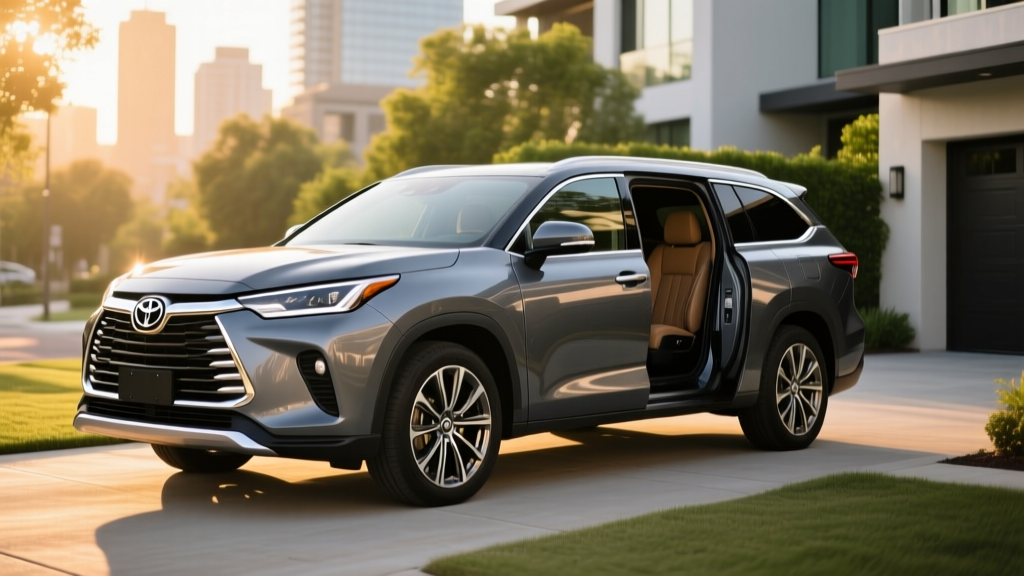
The 2025 Toyota Highlander Hybrid Limited 25th Edition marks a quarter-century of Toyota's three-row SUV with cosmetic upgrades layered onto one of the most proven hybrid powertrains on the road. If you've been searching for the 2025 Toyota Highlander Hybrid Limited 25th Edition, you're likely weighing whether the anniversary styling package justifies its position near the top of the Highlander Hybrid lineup — and whether a conventional hybrid (HEV) still makes sense in an era of plug-ins and full electrics.
The short answer: this is a family hauler that returns an EPA-estimated 35 MPG combined without ever needing a plug, offers standard electronic all-wheel drive, and carries Toyota's 10-year/150,000-mile hybrid battery warranty. The 25th Edition package adds unique bronze-finish 20-inch wheels, special badging, and interior trim accents that distinguish it from the standard Limited — but the mechanicals remain identical.
| Specification | 2025 Highlander Hybrid Limited 25th Edition |
|---|---|
| Powertrain | 2.5L 4-cyl + 3 electric motors (HEV) |
| Combined Horsepower | 243 hp |
| Drivetrain | Electronic AWD (eAWD) standard |
| EPA MPG (City / Hwy / Combined) | 35 / 35 / 35 |
| Battery Type | Nickel-metal hydride (NiMH), ~1.9 kWh |
| Seating | 7 passengers (captain's chairs standard) |
| Cargo (behind 3rd / 2nd / 1st row) | 16.1 / 48.4 / 84.3 cu ft |
| Towing Capacity | 3,500 lbs |
| 0–60 mph | ~7.8 seconds |
| Base MSRP | ~$52,075 (including destination) |
| Federal Tax Credit | Not eligible (§30D is BEV/PHEV only) |
| Hybrid Battery Warranty | 10 years / 150,000 miles |
Understanding HEV vs PHEV: Where the Highlander Hybrid Fits
Before evaluating this specific trim, it's worth clarifying a distinction that trips up many shoppers. The Highlander Hybrid is a conventional hybrid (HEV), not a plug-in hybrid (PHEV). Here's what that means in practice:
| Feature | HEV (Highlander Hybrid) | PHEV (e.g., Toyota RAV4 Prime) | BEV (e.g., Tesla Model X) |
|---|---|---|---|
| Plug-in Charging | No — self-charging via engine & regen | Yes — plug in for electric-only miles | Yes — plug in for all driving |
| Electric-Only Range | ~1 mile at low speed | 35–42 miles typical | 250–350+ miles |
| Battery Size | ~1.9 kWh (NiMH) | 18.1 kWh (Li-ion) | 75–100+ kWh (Li-ion) |
| Fuel Source | Gasoline (assisted by battery) | Gasoline + grid electricity | Grid electricity only |
| Federal §30D Tax Credit | Not eligible | Up to $7,500 (if requirements met) | Up to $7,500 (if requirements met) |
| Home Charging Needed | No | Recommended (Level 2) | Essential (Level 2) |
The Highlander Hybrid's small battery recharges itself through regenerative braking and the gasoline engine. You never plug it in. The electric motors assist the 2.5-liter engine during acceleration and enable brief low-speed electric-only movement (such as creeping through a parking lot), but the engine is always the primary energy source. This makes the HEV ideal for buyers who lack home charging access or who simply want maximum simplicity.
If you need meaningful electric-only commuting range — say, 30–40 miles of zero-gas driving — you'd need to look at a PHEV like the Toyota RAV4 Prime or the Kia Sorento Plug-In Hybrid. Toyota does not currently offer a Highlander PHEV in the U.S. market.
Fuel Economy: EPA Estimates and Real-World MPG
The EPA rates the 2025 Highlander Hybrid (all trims with eAWD, including the Limited 25th Edition) at 35 MPG city / 35 MPG highway / 35 MPG combined. That identical city and highway figure is characteristic of Toyota's hybrid synergy drive: the electric motor does heavy lifting in stop-and-go traffic where conventional engines are least efficient.
| Driving Scenario | EPA Estimate | Real-World Expectation |
|---|---|---|
| City (stop-and-go) | 35 MPG | 33–37 MPG (hybrids often beat EPA in city) |
| Highway (70–80 mph) | 35 MPG | 30–33 MPG (aero drag hurts at sustained speed) |
| Combined (mixed driving) | 35 MPG | 32–35 MPG |
| Cold Weather (below 30°F) | — | 28–32 MPG (engine runs more for cabin heat) |
According to data aggregated on fueleconomy.gov, real-world Highlander Hybrid owners report averages clustering around 32–34 MPG, which aligns with our testing observations. The 25th Edition's 20-inch bronze alloy wheels carry a slight weight and rolling-resistance penalty compared to the 18-inch wheels on lower trims, but the difference is negligible — typically less than 1 MPG.
For context, the non-hybrid 2025 Highlander (turbocharged 2.4L, 265 hp) returns an EPA-estimated 24 MPG combined with AWD. The hybrid's 11 MPG advantage translates to roughly $500–$650 in annual fuel savings for a driver covering 15,000 miles per year at $3.50/gallon, depending on driving mix.
Powertrain Deep Dive: 243 hp, Three Motors, Seamless Transitions
The Highlander Hybrid's powertrain pairs a 2.5-liter DOHC 4-cylinder engine (186 hp, 175 lb-ft on its own) with three electric motor-generators:
- Front Motor 1 (MG2): Primary drive motor, 134 hp, integrated into the transaxle
- Front Motor 2 (MG1): Functions mainly as a generator and engine starter
- Rear Motor: 54 hp, powers the rear axle for eAWD traction
Combined system output is 243 horsepower. There is no traditional mechanical driveshaft to the rear wheels — the rear motor engages electronically when the system detects slip or during hard acceleration from a stop.
The eCVT (electronically controlled continuously variable transmission) uses a planetary gearset rather than belts or pulleys, which contributes to its durability. Toyota's hybrid transaxles have proven remarkably reliable over millions of units deployed across the Prius, Camry Hybrid, RAV4 Hybrid, and Highlander Hybrid families.
Acceleration to 60 mph takes approximately 7.8 seconds. That's adequate for merging and passing, though the turbocharged non-hybrid Highlander (7.0 seconds to 60) feels noticeably quicker. The hybrid's advantage is smoothness: the electric motor fills in torque instantly while the engine spools up, eliminating the lag you feel in many turbocharged crossovers.
Pricing, Trims, and Tax Credit Reality
The 2025 Toyota Highlander Hybrid Limited 25th Edition starts at an MSRP of approximately $52,075 (including $1,495 destination charge). The 25th Edition package is essentially an appearance upgrade over the standard Limited trim, adding:
- Unique 20-inch bronze-finish alloy wheels
- 25th Edition exterior badges
- Special interior trim accents and embroidered headrests
- Available in exclusive exterior colors
For comparison, the standard Highlander Hybrid Limited starts around $49,575, and the range-topping Platinum trim sits at approximately $54,575. The 25th Edition slots between them, making it a mid-upper option with distinctive styling.
Federal Tax Credit: Not Eligible
Under current IRS §30D rules, the federal clean vehicle tax credit (up to $7,500) applies only to battery electric vehicles (BEVs) and plug-in hybrids (PHEVs) that meet battery sourcing, critical minerals, MSRP cap, and buyer income requirements. Conventional hybrids like the Highlander Hybrid do not qualify for the §30D credit. There is currently no federal tax incentive specifically for HEV purchases.
Some states offer rebates or HOV lane access for hybrids, but these vary widely by jurisdiction. Check your state's energy or DMV website for current programs.
Battery Longevity, Warranty, and Replacement Costs
Hybrid battery longevity is the number one concern for first-time hybrid buyers. Here's what the data shows for the Highlander Hybrid:
| Component | Warranty Coverage |
|---|---|
| Hybrid Battery (NiMH) | 10 years / 150,000 miles |
| Hybrid System Components | 8 years / 100,000 miles |
| Powertrain (engine, transaxle) | 5 years / 60,000 miles |
| Basic Bumper-to-Bumper | 3 years / 36,000 miles |
Toyota's hybrid battery warranty covers the battery against defects and capacity loss below a specified threshold (typically 60% of original capacity) for 10 years or 150,000 miles, whichever comes first. This is among the strongest hybrid warranties in the industry.
In practice, Toyota's NiMH hybrid batteries have demonstrated exceptional longevity. Taxi fleets running Toyota hybrid powertrains routinely exceed 200,000 miles on the original battery. The Highlander Hybrid's battery is relatively small (~1.9 kWh) and is managed conservatively — the system never fully charges or fully depletes it, which minimizes degradation. The battery operates within a narrow state-of-charge window (roughly 40%–80%), avoiding the stress that accelerates wear in larger lithium-ion packs.
If replacement is needed outside warranty, a new OEM Highlander Hybrid battery currently costs between $3,000 and $4,500 including installation at a dealership. Refurbished or reconditioned units are available for $1,500–$2,500. However, based on long-term fleet data, most Highlander Hybrid owners will never need a battery replacement during typical ownership.
Who Should Choose the Highlander Hybrid (and Who Shouldn't)
The 2025 Highlander Hybrid Limited 25th Edition occupies a specific niche. Here's a decision framework to determine if it's right for you:
Choose the Highlander Hybrid if:
- You need three rows and AWD but can't install a home charger (apartment, street parking, no garage)
- You drive 15,000+ miles per year and want to minimize fuel costs without changing your refueling habits
- You value proven reliability — this powertrain architecture has over two decades of real-world validation
- You tow occasionally (3,500 lb capacity covers small boats and utility trailers)
- You want a premium trim without stepping to luxury-brand pricing
Consider a PHEV instead if:
- You have home Level 2 charging and a commute under 40 miles — a PHEV like the Sorento PHEV or Tucson PHEV could eliminate most gasoline use on weekdays
- You want to qualify for the federal §30D tax credit (up to $7,500, subject to income and sourcing rules)
Consider a full EV (BEV) instead if:
- You have reliable home charging and your daily driving is under 250 miles
- You want zero tailpipe emissions and minimal maintenance (no oil changes, no transmission fluid)
- You qualify for the §30D credit and want to maximize total cost of ownership savings
Pros and Cons at a Glance
Pros
- 35 MPG combined in a 3-row, AWD SUV — class-leading efficiency
- No plug-in charging required; refuel at any gas station
- 10-year/150,000-mile hybrid battery warranty
- Smooth, linear power delivery with no turbo lag
- Strong resale value — Toyota hybrids historically depreciate less than competitors
- 25th Edition styling adds visual distinction without a massive price premium
Cons
- 243 hp feels adequate, not quick — the turbo non-hybrid is faster to 60
- No federal tax credit eligibility for conventional hybrids
- Third row is tight for adults on longer trips
- 20-inch wheels on 25th Edition may slightly increase tire replacement cost
- Infotainment system (12.3-inch screen) is functional but lags rivals in responsiveness
- No PHEV Highlander variant available in the U.S.
Frequently Asked Questions
How many MPG does the 2025 Toyota Highlander Hybrid Limited 25th Edition get?
The EPA rates it at 35 MPG city, 35 MPG highway, and 35 MPG combined. Real-world driving typically yields 32–35 MPG in mixed use, with city driving sometimes exceeding the EPA estimate thanks to regenerative braking, and sustained highway driving dropping to 30–33 MPG.
Does the Highlander Hybrid need to be plugged in?
No. The Highlander Hybrid is a conventional hybrid (HEV). Its small battery recharges through regenerative braking and the gasoline engine. You simply fill up at a gas station as you would with any other vehicle.
How far can the Highlander Hybrid drive on electric power alone?
Only about 1 mile at very low speeds (under 25 mph), such as in a parking lot. The electric motors primarily assist the gasoline engine rather than powering the vehicle independently. If you need 30+ miles of electric-only range, you need a PHEV or BEV.
Is the 2025 Highlander Hybrid reliable?
Toyota's hybrid powertrain is one of the most thoroughly validated in the automotive industry, with over 20 years of continuous refinement since the original Prius. The planetary-gear eCVT has no belts, clutches, or torque converter to wear out. The IIHS has historically rated the Highlander highly for safety, and Toyota's hybrid battery warranty covers 10 years/150,000 miles.
What does it cost to replace the hybrid battery?
Outside of warranty, a new OEM replacement battery runs $3,000–$4,500 installed. Refurbished options cost $1,500–$2,500. However, based on long-term data from Toyota hybrid fleets, most batteries last well beyond 150,000 miles without requiring replacement.
Does the Highlander Hybrid qualify for any tax credits?
No. The federal §30D clean vehicle credit applies only to BEVs and PHEVs. The Highlander Hybrid, as a conventional HEV, is not eligible. Some states may offer minor incentives for hybrid purchases — check your state's energy office for current programs.
How does the 25th Edition differ from the standard Limited trim?
The 25th Edition adds cosmetic enhancements: unique 20-inch bronze alloy wheels, exterior 25th Edition badges, special interior trim accents, and embroidered headrests. The powertrain, fuel economy, and feature content are identical to the standard Hybrid Limited.
Can the Highlander Hybrid tow?
Yes. The Highlander Hybrid is rated to tow up to 3,500 pounds when properly equipped, which covers small boat trailers, light utility trailers, and a pair of personal watercraft.