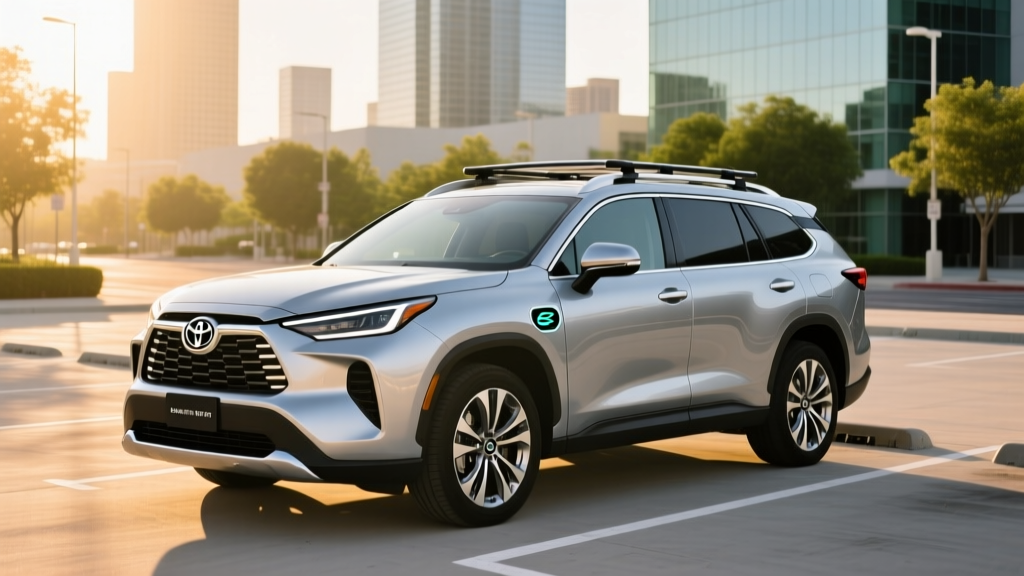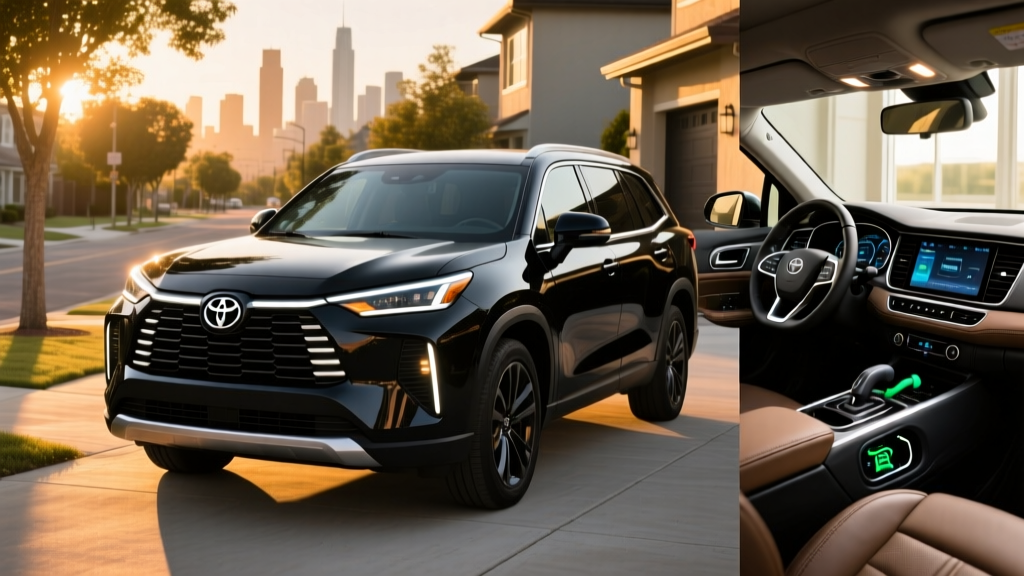
The 2025 Toyota Grand Highlander Hybrid Nightshade isn't just another three-row SUV with a darkened appearance package. Beneath its blacked-out exterior sits Toyota's Hybrid MAX powertrain — a turbocharged 2.4-liter four-cylinder paired with electric motors to produce 362 horsepower and 400 lb-ft of torque. For buyers who need serious family-hauling capability without the fuel penalty of a body-on-frame SUV, the Nightshade edition pairs aggressive styling with legitimate efficiency gains over the gas-only Grand Highlander.
In this guide, we break down the exact EPA fuel economy figures, real-world MPG expectations, powertrain details, pricing, and the hybrid battery warranty that matters most to long-term owners. We'll also clarify where this conventional hybrid (HEV) fits against plug-in hybrids and full EVs in today's market.
HEV vs PHEV: What the Grand Highlander Hybrid Actually Is
Conventional Hybrid (HEV): The Grand Highlander Hybrid is a self-charging hybrid. It uses a small battery (approximately 1.4 kWh usable) charged entirely through regenerative braking and the gas engine. You never plug it in. Electric motors assist the engine during acceleration and enable low-speed electric-only driving for short distances, but the vehicle always relies on gasoline for primary propulsion.
Plug-In Hybrid (PHEV): A PHEV like the Toyota RAV4 Prime carries a much larger battery (18.1 kWh) that you plug in to charge, enabling 20–40 miles of pure electric driving before the gas engine engages. Toyota does not currently offer the Grand Highlander as a PHEV.
This distinction matters because some shoppers confuse "hybrid" with "plug-in." The Grand Highlander Hybrid requires zero change to your refueling habits — you fill it at any gas station. The efficiency gains come from the electric motors recapturing energy during braking and reducing engine load, not from grid electricity.
Fuel Economy: EPA Ratings and Real-World MPG
The Hybrid MAX powertrain in the Grand Highlander Nightshade comes exclusively with all-wheel drive (AWD), which affects the EPA ratings compared to the standard Hybrid MAX FWD configuration. Here's the official breakdown from fueleconomy.gov:
| Configuration | City MPG | Highway MPG | Combined MPG |
|---|---|---|---|
| Hybrid MAX AWD (Nightshade) | 26 | 27 | 27 |
| Hybrid MAX FWD | 27 | 28 | 27 |
| Standard Hybrid AWD (non-MAX) | 34 | 34 | 34 |
| Gas-Only Turbo AWD | 20 | 26 | 22 |
Important context: The Nightshade trim is only available with the Hybrid MAX powertrain, which prioritizes performance (362 hp) over maximum efficiency. If your priority is peak MPG rather than performance, the standard Grand Highlander Hybrid (245 hp) achieves 34 MPG combined — but it's not available in the Nightshade appearance package.
Real-World MPG Expectations
Toyota's Hybrid MAX system behaves differently than the standard hybrid in daily driving:
- City driving: Expect 24–28 MPG. The turbo engine and heavier AWD system reduce the low-speed electric-motor advantage that makes conventional hybrids excel in stop-and-go traffic.
- Highway cruising: Expect 26–29 MPG at 70–75 mph. The turbo four operates efficiently at steady loads, and the electric motors provide minimal assistance at sustained speeds.
- Cold weather penalty: Anticipate a 2–4 MPG drop in freezing temperatures as the engine runs more frequently for cabin heat and the battery operates less efficiently.
- Towing: With a 5,000-lb max towing capacity (Hybrid MAX AWD), fuel economy drops to roughly 16–19 MPG when pulling a loaded trailer.
The 27 MPG combined EPA rating represents a 23% improvement over the gas-only Grand Highlander turbo AWD (22 MPG combined). Over 15,000 miles per year, that translates to roughly 125 fewer gallons consumed and approximately $400–$500 in annual fuel savings at $3.50/gallon.
Hybrid MAX Powertrain: 362 HP and AWD Performance
| Specification | 2025 Grand Highlander Hybrid Nightshade |
|---|---|
| Engine | 2.4L turbocharged 4-cylinder |
| Electric Motors | Front motor + rear motor (AWD) |
| Combined Horsepower | 362 hp |
| Combined Torque | 400 lb-ft |
| Transmission | 6-speed automatic |
| 0–60 mph | ~6.3 seconds |
| Drivetrain | AWD (standard on Nightshade) |
| Towing Capacity | 5,000 lbs |
| Hybrid Battery | ~1.4 kWh (NiMH), self-charging |
| Seating | 7 passengers (standard) |
| Cargo (behind 3rd row) | 20.6 cu ft |
| Cargo (max, all rows folded) | 97.5 cu ft |
The Hybrid MAX system uses a 6-speed automatic transmission rather than the e-CVT found in the standard Grand Highlander Hybrid. This gives the Nightshade a more traditional, responsive driving feel with distinct gear shifts — a deliberate choice by Toyota to match the sporty positioning of the Hybrid MAX badge. The rear electric motor provides on-demand AWD traction without a mechanical driveshaft, reducing weight and drivetrain losses.
At 6.3 seconds to 60 mph, the Nightshade outpaces most three-row hybrid competitors and matches several V6-powered midsize SUVs. The 400 lb-ft of torque arrives low in the rev range thanks to electric-motor assist, making highway merging and mountain-pass climbing effortless even when fully loaded.
Nightshade Edition: What You Get for the Price
The Nightshade appearance package adds blacked-out styling elements on top of the XLE-grade Hybrid MAX interior. For 2025, the key Nightshade-specific features include:
- Black 20-inch alloy wheels
- Blacked-out mirror caps, door handles, and window trim
- Dark badging and Nightshade emblems
- Black roof rails
- Available in Wind Chill Pearl, Midnight Black Metallic, Cement, and Blueprint exterior colors
Standard equipment on the Hybrid MAX Nightshade includes a 12.3-inch touchscreen with wireless Apple CarPlay and Android Auto, Toyota Safety Sense 3.0 (pre-collision, lane departure, adaptive cruise, lane tracing), heated and ventilated front seats, a panoramic glass roof, and a 11-speaker JBL audio system.
Pricing Breakdown
The 2025 Grand Highlander Hybrid MAX Nightshade carries an MSRP of approximately $54,290 (including destination). This positions it between the XLE Hybrid MAX ($50,555) and the Limited Hybrid MAX ($55,250).
Tax credit note: Conventional hybrids like the Grand Highlander Hybrid do not qualify for the federal §30D Clean Vehicle Credit. That credit — up to $7,500 — is reserved for battery electric vehicles (BEVs) and plug-in hybrids (PHEVs) meeting specific battery-sourcing, MSRP, and buyer-income requirements. Some states offer separate incentives for conventional hybrids, but these vary widely. Check your state's energy office or department of revenue for current programs.
Hybrid Battery Warranty and Long-Term Reliability
Toyota Hybrid Battery Warranty: 10 years / 150,000 miles (whichever comes first), covering capacity loss below a defined threshold and manufacturing defects.
Hybrid System Components Warranty: 8 years / 100,000 miles, covering the inverter, electric motors, and associated control electronics.
Transferability: Both warranties transfer to subsequent owners at no cost, supporting strong resale value.
Toyota's hybrid reliability track record spans more than 25 years, beginning with the original Prius in 1997. The Hybrid MAX system in the Grand Highlander uses a nickel-metal hydride (NiMH) battery pack — the same proven chemistry found across Toyota's hybrid lineup. Unlike the larger lithium-ion packs in EVs and PHEVs, this small ~1.4 kWh battery experiences shallow charge/discharge cycles, which dramatically extends its operational lifespan.
Battery Replacement Cost
If the hybrid battery does require replacement outside of warranty coverage, expect to pay between $3,000 and $5,000 for a new OEM unit, including labor. However, based on data from millions of Toyota hybrids on the road, the vast majority of hybrid batteries outlast 200,000 miles with minimal degradation. Independent shops also offer refurbished battery packs for $1,500–$2,500 as a cost-effective alternative for high-mileage vehicles.
For comparison, a full EV battery replacement (e.g., a 75+ kWh lithium-ion pack) typically costs $10,000–$20,000+. The Grand Highlander's small NiMH battery represents a fraction of that risk.
Overall Reliability Outlook
The Grand Highlander is built on Toyota's TNGA-K platform, shared with the Highlander, Sienna, and Lexus TX. Toyota consistently ranks at or near the top in J.D. Power dependability studies, and the hybrid powertrain has fewer wear components than a conventional turbo-only setup (the electric motors have no friction surfaces, and regenerative braking reduces brake-pad wear). Expect the Grand Highlander Hybrid to match or exceed the 200,000-mile lifespan common among well-maintained Toyota SUVs.
Grand Highlander Hybrid Nightshade vs the Competition
The Nightshade occupies a specific niche: a performance-oriented three-row hybrid with aggressive styling. Here's how it stacks up against key alternatives:
- vs. Kia Sorento Hybrid (261 hp, 34 MPG combined, ~$42,000): The Sorento Hybrid is more efficient and significantly cheaper but offers less power, less cargo space, and no sporty appearance package.
- vs. Mazda CX-90 PHEV (323 hp, 25 MPG + 26 mi electric, ~$52,000): The CX-90 PHEV offers plug-in capability and 26 miles of electric-only range for short commutes, but its gas-engine MPG drops to 25 once the battery depletes. It also has a smaller third row.
- vs. Ford Explorer Hybrid (318 hp, 23 MPG combined, ~$55,000): The Explorer Hybrid trails in both power and efficiency and has faced reliability concerns in early model years.
- vs. Grand Highlander Standard Hybrid (245 hp, 34 MPG combined, ~$47,000): If you don't need the Nightshade's styling or 362 hp, the standard hybrid saves ~$7,000 and delivers 7 more MPG combined.
Who Should Buy the Grand Highlander Hybrid Nightshade?
Pros
- 362 hp with 5,000-lb towing — genuine performance capability
- 27 MPG combined is 23% better than gas-only Grand Highlander
- Spacious third row and 97.5 cu ft max cargo
- 10-year / 150,000-mile hybrid battery warranty
- Toyota Safety Sense 3.0 standard
- No plugging in required — zero lifestyle change from gas
Cons
- 27 MPG trails the standard Hybrid's 34 MPG significantly
- $54,290 MSRP with no federal tax credit eligibility
- Nightshade package limits color and trim choices
- Hybrid MAX's 6-speed auto lacks the seamless feel of an e-CVT
- No PHEV option available if you want electric-only commuting
Decision Framework: Hybrid vs PHEV vs EV
Choose the Grand Highlander Hybrid Nightshade if: You need three rows, 5,000-lb towing, and strong acceleration without plugging in. You drive 15,000+ miles per year in mixed conditions and want a 23% fuel savings over gas without range anxiety or charging logistics. You value Toyota's hybrid reliability record and plan to own the vehicle 8–10 years.
Choose a PHEV (like the CX-90 PHEV) if: Your daily commute is under 30 miles round-trip, you have home charging access, and you want to drive mostly on electricity during the week while keeping gas flexibility for road trips.
Choose a full EV (like the Kia EV9 or Rivian R1S) if: You have reliable home Level 2 charging, your road trips are under 300 miles between stops, and you want zero tailpipe emissions with lower per-mile fuel costs (typically $0.04–$0.08/mile on electricity vs $0.14–$0.18/mile on gas for this vehicle).
Frequently Asked Questions
How many MPG does the 2025 Grand Highlander Hybrid Nightshade get?
The EPA rates the Hybrid MAX AWD Nightshade at 26 city / 27 highway / 27 combined MPG. In real-world mixed driving, expect 25–28 MPG. This is lower than the standard Grand Highlander Hybrid (34 MPG combined) because the Hybrid MAX powertrain prioritizes performance over maximum efficiency.
Does the Grand Highlander Hybrid need to be plugged in?
No. This is a conventional hybrid (HEV), not a plug-in hybrid (PHEV). The battery charges itself through regenerative braking and the gas engine. You refuel exclusively at gas stations.
Is the hybrid battery reliable and what does replacement cost?
Toyota covers the hybrid battery for 10 years / 150,000 miles. Based on decades of Toyota hybrid data, most batteries last well beyond 200,000 miles. Out-of-warranty replacement runs $3,000–$5,000 for a new OEM pack — far less than an EV battery replacement.
Does the Grand Highlander Hybrid qualify for a tax credit?
No. The federal §30D Clean Vehicle Credit applies only to plug-in hybrids (PHEVs) and battery electric vehicles (BEVs). Conventional hybrids like the Grand Highlander Hybrid are not eligible. Some states may offer separate hybrid incentives — check your state's energy office for details.
How does the Nightshade differ from other Grand Highlander Hybrid trims?
The Nightshade is a styling package built on the Hybrid MAX XLE grade. It adds black 20-inch wheels, blacked-out exterior trim, and dark badging. Mechanically, it's identical to other Hybrid MAX AWD models — same 362 hp, same 27 MPG combined. It is not available with the more efficient standard hybrid powertrain.
What's the real-world towing fuel economy?
When towing near the 5,000-lb maximum, expect 16–19 MPG depending on trailer profile, terrain, and speed. The Hybrid MAX's electric-motor torque assist helps reduce the fuel penalty compared to the gas-only turbo model, but towing always significantly impacts any vehicle's efficiency.