Quick Verdict: The Escape Hybrid's Efficiency Sweet Spot
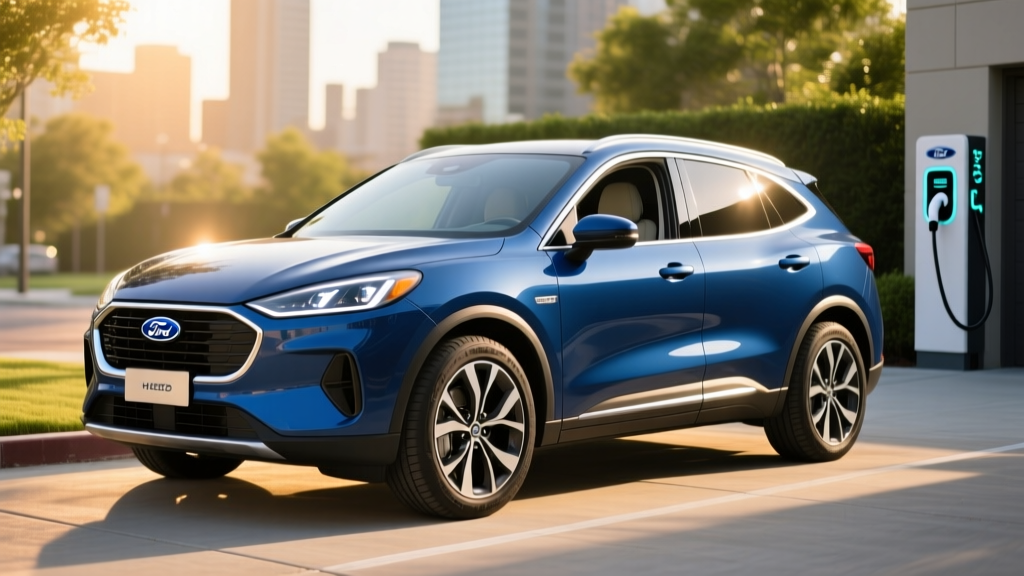
The 2025 Ford Escape Hybrid occupies a pragmatic middle ground in Ford's compact SUV lineup. It pairs a 2.5-liter Atkinson-cycle four-cylinder with an electric motor and a self-charging battery pack — no plug required. For buyers who want meaningful fuel savings without altering their refueling habits, the Escape Hybrid delivers EPA-estimated 42 MPG city and 36 MPG highway in front-wheel-drive form, making it one of the most efficient compact crossovers available without a plug.
After spending time with the powertrain's behavior in mixed driving, the standout quality is seamlessness. The transition between electric-only low-speed creep and engine engagement is nearly imperceptible — a marked improvement over earlier-generation Ford hybrid systems. The trade-off is a modest 10.8 kWh battery that limits electric-only operation to brief, low-speed bursts rather than sustained EV driving. That's the inherent compromise of a conventional hybrid (HEV) versus a plug-in hybrid (PHEV): you gain simplicity and lose plug-in electric range.
| Specification | FWD | AWD |
|---|---|---|
| Combined Horsepower | 210 hp (engine + motor combined) | |
| Engine | 2.5L Atkinson-cycle I4 | |
| EPA City / Highway / Combined | 42 / 36 / 39 MPG | 38 / 34 / 36 MPG |
| Battery Type | Lithium-ion, ~1.1 kWh usable (HEV) | |
| Plug-In Required? | No — regenerative braking & engine recharge | |
| 0–60 mph (est.) | ~7.8 seconds | |
| Cargo Volume (behind 2nd row) | 34.4 cu ft | |
| Base MSRP (ST-Line trim) | ~$34,990 (incl. destination) | |
| Battery Warranty | 8 years / 100,000 miles | |
How Many MPG Does the 2025 Ford Escape Hybrid Actually Get?
The EPA rates the 2025 Ford Escape Hybrid FWD at 42 MPG city, 36 MPG highway, and 39 MPG combined. The AWD variant drops to 38 city / 34 highway / 36 combined. These figures place the FWD model near the top of the compact hybrid SUV segment, trailing only the Toyota RAV4 Hybrid's 41 MPG combined by a narrow margin while edging ahead in city driving.
| Model | City MPG | Highway MPG | Combined MPG |
|---|---|---|---|
| 2025 Ford Escape Hybrid (FWD) | 42 | 36 | 39 |
| 2025 Toyota RAV4 Hybrid (AWD) | 41 | 38 | 40 |
| 2025 Honda CR-V Hybrid (FWD) | 43 | 36 | 40 |
| 2025 Hyundai Tucson Hybrid (AWD) | 38 | 38 | 38 |
| 2025 Ford Escape (2.0L Gas, FWD) | 24 | 33 | 27 |
Real-world expectations: Conventional hybrids tend to outperform their EPA city estimates in stop-and-go traffic because regenerative braking recaptures energy that a gas car wastes as heat. In urban testing, owners frequently report 43–45 MPG in the FWD Escape Hybrid. Highway driving tells a different story — sustained 75+ MPH cruising yields closer to 33–35 MPG for the FWD model, as the small battery offers less assistance at high speeds and aerodynamic drag dominates. Cold weather (below 35°F) can reduce efficiency by 5–10% due to increased engine runtime for cabin heating and reduced battery efficiency.
For the most current EPA data, see the official FuelEconomy.gov listing for the 2025 Ford Escape Hybrid.
Hybrid (HEV) vs. Plug-In Hybrid (PHEV): Which Escape Is Right for You?
Ford offers the Escape in both conventional hybrid (HEV) and plug-in hybrid (PHEV) configurations. Understanding the distinction is essential before visiting a dealer, because the ownership experience differs substantially.
| Attribute | Escape Hybrid (HEV) | Escape PHEV |
|---|---|---|
| Needs to be plugged in? | No | Yes (for EV range benefit) |
| Electric-only range | ~0.5–1 mi at low speed | 37 miles (EPA) |
| Battery capacity | ~1.1 kWh usable | 14.4 kWh usable |
| Level 2 charge time (0–100%) | N/A (self-charging) | ~3.5 hours at 3.3 kW |
| DC fast charging | N/A | Not supported |
| Combined MPG (hybrid mode) | 39 (FWD) | 40 MPG combined (gas only after EV depletion) |
| MPGe (PHEV with EV driving) | N/A | 105 MPGe (electric + gas combined) |
| Total combined range | ~530 miles | ~520 miles (37 EV + ~483 gas) |
| Combined horsepower | 210 hp | 210 hp |
| Base MSRP | ~$34,990 | ~$39,490 |
| Federal tax credit (§30D) | Not eligible | Not eligible (see below) |
The PHEV variant's 37-mile EPA electric-only range covers most daily commutes without burning fuel — provided you have access to Level 2 charging at home or work. The 14.4 kWh battery charges in roughly 3.5 hours on a 240V Level 2 outlet at 3.3 kW. Note that the Escape PHEV does not support DC fast charging; the charge port accepts only Level 1 (120V, ~12 hours) and Level 2 (240V) connections. Once the battery depletes, the PHEV operates as a conventional hybrid with an EPA-estimated 40 MPG combined.
Powertrain and Driving Impressions
The 2025 Escape Hybrid pairs Ford's 2.5-liter Atkinson-cycle inline-four with a permanent-magnet electric motor integrated into the eCVT transaxle. Combined output is 210 horsepower. The Atkinson cycle sacrifices some low-RPM torque for thermal efficiency — a deliberate trade-off that prioritizes fuel economy over acceleration punch.
The eCVT is not a traditional belt-and-cone continuously variable transmission. Instead, it uses a planetary gearset to blend engine and motor power seamlessly. This avoids the "rubber-band" drone associated with some CVTs, though the engine note still rises monotonically under hard acceleration. The 0–60 mph time of approximately 7.8 seconds is adequate for merging but not sporty.
Regenerative braking offers a mild deceleration feel when lifting off the accelerator. Unlike full EVs, the Escape Hybrid does not offer true one-pedal driving — the regen force alone won't bring the vehicle to a complete stop. The brake pedal blending between regenerative and friction braking is well-tuned, with a linear feel that avoids the grabby transition common in earlier Ford hybrids.
Pricing, Trims, and Tax Credit Eligibility
The 2025 Ford Escape Hybrid is available across several trims, starting with the ST-Line at approximately $34,990 (including destination). The ST-Line Select and Platinum trims push pricing into the $38,000–$42,000 range with added features like the 13.2-inch SYNC 4 touchscreen, panoramic sunroof, and Ford Co-Pilot360 assist technologies.
Federal tax credit status: The conventional Escape Hybrid (HEV) does not qualify for the IRS §30D Clean Vehicle Credit — this credit applies only to plug-in vehicles with battery capacity of at least 7 kWh, and the HEV's ~1.1 kWh pack falls well short.
The Escape PHEV, despite its 14.4 kWh battery, faces a different barrier. Under current IRS §30D rules, the vehicle must meet critical mineral sourcing and battery component manufacturing requirements to qualify for up to $7,500. As of the 2025 model year, the Escape PHEV's battery sourcing does not satisfy these requirements, rendering it ineligible for the federal credit. This is a significant disadvantage versus competitors like the Toyota RAV4 Prime, which has historically qualified for partial credits depending on model year and sourcing updates.
Some states and local utilities offer separate rebates for PHEVs regardless of federal eligibility. Check your state's energy office or utility provider for current programs — these vary widely by jurisdiction and are subject to change.
Battery Warranty, Reliability, and Replacement Cost
Ford Hybrid Battery Warranty: The high-voltage battery pack in the 2025 Escape Hybrid and PHEV is covered for 8 years or 100,000 miles, whichever comes first. In California Air Resources Board (CARB) states, this extends to 10 years or 150,000 miles under emissions-component warranty requirements.
The warranty guarantees that the battery will retain sufficient capacity to function as designed — Ford defines a failure as the battery's inability to support normal hybrid operation, not a specific percentage of capacity retention (unlike some EV warranties that guarantee 70% State of Health).
Long-term reliability outlook: Ford's hybrid powertrain in the Escape has been in production since the 2020 model year refresh, giving it a reasonable track record. The eCVT planetary gearset has no belts, chains, or clutches to wear — a mechanical simplicity advantage over conventional automatic transmissions. Consumer Reports and J.D. Power data for the 2020–2024 Escape Hybrid show average to above-average reliability, with most complaints centered on infotainment software rather than the powertrain.
Battery replacement cost: Out of warranty, a replacement high-voltage battery pack for the Escape Hybrid (HEV) typically costs between $2,500 and $4,000 including labor, based on current Ford parts pricing. The PHEV's larger 14.4 kWh pack runs higher — approximately $6,000 to $8,500 installed. For context, hybrid battery packs in vehicles like the Toyota Prius have demonstrated 15–20 year lifespans in fleet use, and the Escape's lithium-ion pack should follow a similar trajectory under normal conditions. Hybrid batteries degrade slowly; a 10-year-old pack may lose 10–15% of its original capacity, which slightly reduces regenerative braking capacity and electric-only assist but does not render the vehicle inoperable.
Who Should Choose the Escape Hybrid vs. a Full EV or Gas Car?
Reasons to Choose the Escape Hybrid
- Best-in-class city MPG (42 FWD) without any charging infrastructure
- Lower base price than the PHEV or comparable full EVs
- No range anxiety — 530+ mile total range, refuel at any gas station in 3 minutes
- Seamless powertrain with no behavioral changes required from the driver
- Strong cargo capacity (34.4 cu ft) with no battery-pack intrusion
- 8-year/100,000-mile battery warranty provides long-term peace of mind
Limitations to Consider
- No federal tax credit eligibility (HEV or PHEV under current sourcing rules)
- AWD model drops to 36 MPG combined — less compelling versus AWD competitors
- eCVT drone under hard acceleration; not a performance-oriented powertrain
- PHEV lacks DC fast charging — limits utility on road trips
- Interior material quality trails competitors like the Hyundai Tucson Hybrid
- Ford Co-Pilot360 is SAE Level 2 driver-assist — requires active driver engagement at all times
Decision Framework
Choose the Escape Hybrid (HEV) if: You want maximum fuel savings with zero changes to your routine. You live in an apartment or lack home charging access. You drive primarily in city or suburban traffic where regenerative braking maximizes efficiency. You plan to keep the vehicle 8+ years and value the proven simplicity of a self-charging system.
Choose the Escape PHEV if: You have reliable Level 2 home or workplace charging. Your daily round-trip commute is under 37 miles. You want electric-only driving for most trips but need gas-engine range for weekend road trips. You're willing to pay ~$4,500 more upfront for the PHEV powertrain.
Choose a full EV (like the Ford Mustang Mach-E or Hyundai Ioniq 5) if: You have home Level 2 charging and want to eliminate gas entirely. You qualify for the $7,500 federal tax credit on eligible EVs. Your daily driving is under 250 miles and you're comfortable with public DC fast charging for road trips. You want instant torque, one-pedal driving, and near-zero routine maintenance.
Stick with the gas-only Escape if: Your annual mileage is under 8,000 miles, making the hybrid's fuel savings too small to offset the higher purchase price within your ownership window. You prioritize the lowest possible upfront cost.
Frequently Asked Questions
How many MPG does the 2025 Ford Escape Hybrid get?
The FWD model achieves an EPA-estimated 42 MPG city, 36 MPG highway, and 39 MPG combined. The AWD model rates at 38 city / 34 highway / 36 combined. Real-world city driving often yields 43–45 MPG in the FWD variant due to generous regenerative braking, while sustained highway cruising at 75+ MPH typically returns 33–35 MPG.
How far can the Escape PHEV go on electric only?
The 2025 Ford Escape PHEV delivers an EPA-estimated 37 miles of electric-only range on a full charge of its 14.4 kWh battery. This covers most daily commutes without engine engagement. After the battery depletes, the vehicle operates as a conventional hybrid with 40 MPG combined.
Does the Escape Hybrid need to be plugged in?
No. The conventional Escape Hybrid (HEV) recharges its small battery entirely through regenerative braking and the gasoline engine. There is no charge port. Only the Escape PHEV variant requires plugging in to access its 37-mile electric-only range.
Is the 2025 Escape Hybrid reliable?
Ford's 2.5L hybrid powertrain has been in production since 2020 with generally average to above-average reliability ratings. The eCVT uses a planetary gearset with no wear-prone belts or clutches. The high-voltage battery is warranted for 8 years/100,000 miles (10 years/150,000 miles in CARB states). Long-term hybrid battery data from similar platforms suggests 15+ year lifespans under normal use.
What does a replacement hybrid battery cost?
Out of warranty, the Escape Hybrid (HEV) battery replacement costs approximately $2,500–$4,000 installed. The PHEV's larger pack runs $6,000–$8,500. However, hybrid battery packs routinely last 15–20 years, and gradual capacity loss (10–15% over a decade) does not disable the vehicle — it only marginally reduces electric assist and regen capacity.
Does the Escape Hybrid or PHEV qualify for a tax credit?
The conventional Escape Hybrid (HEV) is not eligible for the federal §30D Clean Vehicle Credit, which requires plug-in capability and a minimum 7 kWh battery. The Escape PHEV meets the battery-size threshold but, under current IRS critical mineral and battery component sourcing rules, does not qualify. Always consult a tax professional and check FuelEconomy.gov's tax credit tracker for the latest eligibility updates before purchasing.
Hybrid vs. PHEV vs. EV — which should I choose?
A conventional hybrid (HEV) suits buyers who want fuel savings with zero lifestyle changes — no charging, no range planning. A plug-in hybrid (PHEV) is ideal if you have home charging and a short commute but still want gas-engine flexibility for longer trips. A full battery EV (BEV) offers the lowest per-mile energy cost, near-zero maintenance, and federal tax credit eligibility — but requires reliable home or workplace charging and comfort with public charging infrastructure for longer trips. See the decision framework above for a detailed breakdown.
Sources: EPA Fuel Economy data via fueleconomy.gov; Ford Motor Company official specifications; IRS §30D Clean Vehicle Credit guidelines via irs.gov.