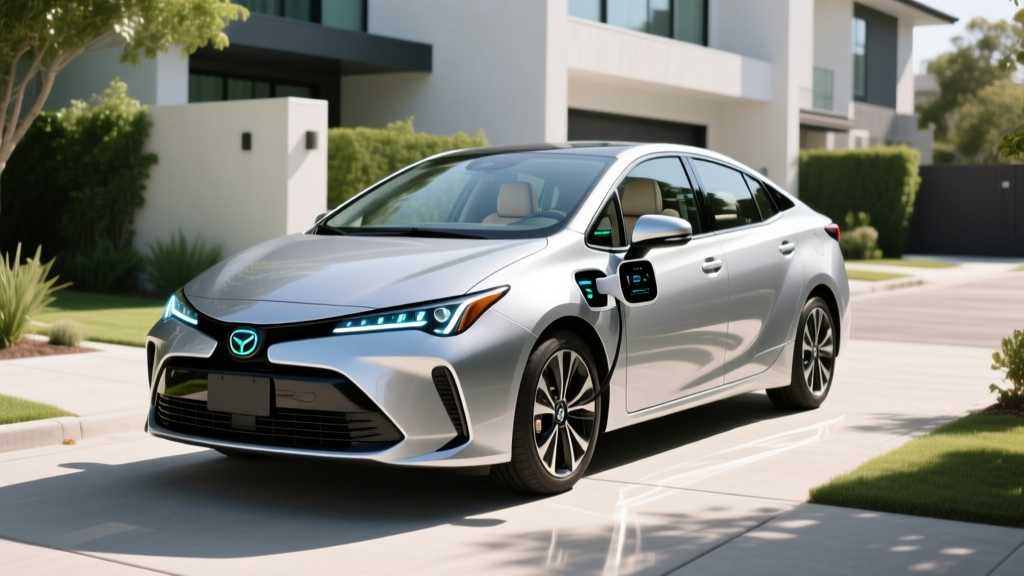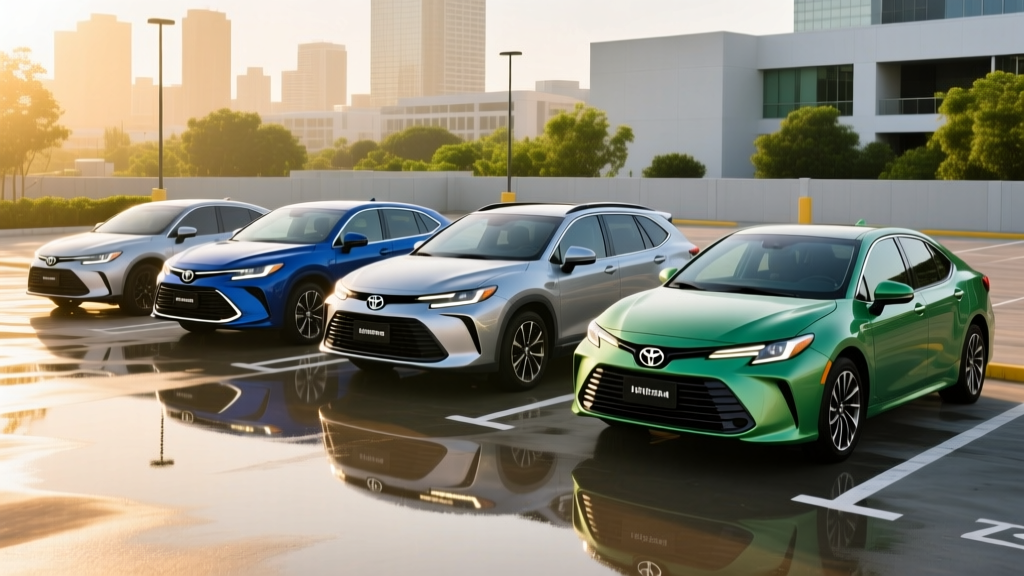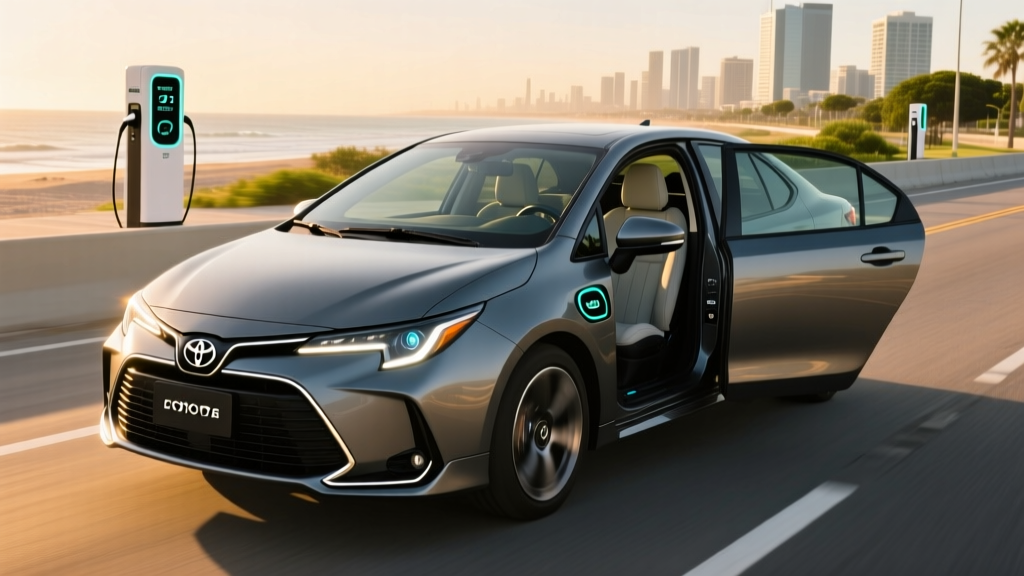
The 2025 Corolla Hybrid SE occupies a specific niche in Toyota's lineup: it's the sport-tuned trim of one of America's most fuel-efficient sedans, and it comes with standard electronic all-wheel drive. For buyers who want hybrid efficiency without the plug-in complexity or the premium of a full electric vehicle, the SE trim adds 16-inch alloy wheels, a sport-tuned suspension, and paddle shifters over the base LE Hybrid — all while returning an EPA-estimated 47 MPG combined.
This guide covers everything a data-driven buyer needs: exact EPA fuel economy across city and highway cycles, the fifth-generation Toyota Hybrid System powertrain, real-world MPG expectations, battery warranty coverage, pricing by trim, and whether the Corolla Hybrid SE makes more financial sense than a PHEV or BEV for your specific driving pattern.
HEV vs PHEV: Where the Corolla Hybrid Fits
Before examining specs, it's critical to distinguish what the Corolla Hybrid SE is — and isn't. It is a conventional hybrid electric vehicle (HEV), not a plug-in hybrid (PHEV). This distinction drives every ownership decision downstream.
Conventional Hybrid (HEV) vs Plug-In Hybrid (PHEV)
| Attribute | HEV (Corolla Hybrid SE) | PHEV (e.g., Prius Prime) |
|---|---|---|
| Plug-in charging required? | No — regenerative braking and engine recharge the battery | Yes — plug in to access electric-only range |
| Electric-only range | ~1 mile at low speed (not usable as EV mode) | 25–45 miles typical |
| Battery size | ~1.0 kWh (small, assists engine) | 10–18 kWh (large, powers EV driving) |
| Federal tax credit (§30D) | Not eligible | Up to $7,500 (subject to sourcing/income rules) |
| Upfront price premium over gas | ~$1,500–$2,000 | ~$4,000–$7,000 |
The Corolla Hybrid SE is an HEV. You never plug it in. The gas engine and regenerative braking handle all battery charging automatically.
Fuel Economy: EPA Ratings and Real-World MPG
The headline number for the 2025 Corolla Hybrid SE is its EPA-estimated fuel economy. Toyota's fifth-generation hybrid system pairs a 1.8-liter four-cylinder engine with two motor-generators and an electronic continuously variable transmission (eCVT). The SE trim includes standard electronic AWD, which adds a rear-mounted electric motor for traction but costs only a minimal fuel economy penalty versus the FWD LE Hybrid.
| Trim / Drivetrain | City MPG | Highway MPG | Combined MPG |
|---|---|---|---|
| LE Hybrid (FWD) | 53 | 46 | 50 |
| SE Hybrid (AWD) — This Review | 47 | 41 | 47 |
| XLE Hybrid (FWD) | 50 | 43 | 47 |
Source: EPA / fueleconomy.gov
Real-World MPG: What Owners Actually See
EPA estimates are standardized lab tests. Real-world results depend on driving style, terrain, and climate. For the Corolla Hybrid SE with AWD, here's what data from owner-reported logs and independent testing suggests:
- City/suburban driving: Hybrid systems shine here. Expect 48–52 MPG in stop-and-go traffic where regenerative braking recaptures energy frequently and the engine shuts off at stops.
- Highway cruising (65–75 mph): 39–43 MPG. Hybrids lose their advantage at sustained high speeds where the gasoline engine runs continuously and aerodynamic drag dominates.
- Cold weather (below 35°F): 40–44 MPG combined. The engine runs more often to provide cabin heat and warm the catalytic converter, reducing electric-motor assist time.
- Mixed real-world average: Most owners report 45–49 MPG in combined daily driving, which aligns closely with or slightly exceeds the EPA combined figure — a common trait of Toyota hybrids.
Powertrain and Performance Specs
The 2025 Corolla Hybrid SE uses Toyota's fifth-generation hybrid synergy drive. The system is proven across millions of Prius, Corolla, and Camry units on the road. Here's the complete powertrain breakdown:
| 2025 Corolla Hybrid SE — Powertrain Specifications | |
|---|---|
| Gasoline Engine | 1.8L 4-cylinder DOHC, 96 hp / 105 lb-ft |
| Front Electric Motor | Permanent magnet, 94 hp / 142 lb-ft |
| Rear Electric Motor (AWD) | Permanent magnet, 40 hp / 63 lb-ft |
| Net Combined System Output | 138 hp |
| Transmission | eCVT (planetary gearset, not a belt CVT) |
| Drivetrain | Electronic AWD (rear motor engages on demand) |
| Hybrid Battery | Lithium-ion, ~1.0 kWh (bipolar design, Gen 5) |
| 0–60 mph | ~9.0 seconds (estimated) |
| Fuel Tank Capacity | 11.4 gallons |
| Total Driving Range | ~535 miles (11.4 gal × 47 MPG) |
The SE trim's sport-tuned suspension and paddle shifters (which simulate six fixed gear ratios through the eCVT) don't change power output but do sharpen steering response and reduce body roll compared to the LE. This is a handling tune, not a power upgrade — 138 hp means the Corolla Hybrid SE is adequate for commuting and merging, not quick. Drivers prioritizing acceleration should look at the gas-only Corolla SE with its 169-hp 2.0L engine (0–60 in ~7.5 seconds), though that sacrifices 16 MPG combined.
Pricing, Trims, and Tax Credit Eligibility
The 2025 Corolla Hybrid SE starts at an MSRP of approximately $26,550 (including destination charge). This positions it roughly $1,500 above the LE Hybrid and $2,000 above the gas-only SE.
| Trim | MSRP (incl. dest.) | Drivetrain | EPA Combined |
|---|---|---|---|
| Corolla LE Hybrid | ~$24,050 | FWD | 50 MPG |
| Corolla SE Hybrid | ~$26,550 | AWD | 47 MPG |
| Corolla XLE Hybrid | ~$28,750 | FWD | 47 MPG |
Does the Corolla Hybrid Qualify for a Federal Tax Credit?
No. The Corolla Hybrid SE is a conventional HEV, and the IRS §30D New Clean Vehicle Credit applies only to plug-in electric vehicles (BEVs and PHEVs) with sufficient battery capacity. Conventional hybrids like this Corolla do not qualify for the federal $7,500 credit, nor do they qualify for most state EV rebates that require plug-in capability.
However, some states and local utilities offer smaller incentives for any high-efficiency vehicle. Check your state energy office or utility provider for possible rebates. Toyota also occasionally offers manufacturer cash-back or low-APR financing on hybrid models — check Toyota's current incentives page for your ZIP code.
Battery Warranty, Reliability, and Replacement Cost
Hybrid battery longevity is the single most common concern among first-time hybrid buyers. Toyota addresses this with one of the strongest hybrid battery warranties in the industry.
Toyota Hybrid Battery Warranty
- Coverage: 10 years / 150,000 miles (whichever comes first)
- What's covered: Hybrid battery pack, hybrid control module, inverter, and related hybrid-system components
- Capacity threshold: Toyota warrants the battery against abnormal capacity loss that prevents normal hybrid operation
- Transferability: Fully transferable to subsequent owners
This warranty applies to all 2025 Toyota hybrids, including the Corolla Hybrid SE.
Real-World Battery Longevity
Toyota's hybrid batteries have an exceptional track record. The Prius, which shares hybrid architecture with the Corolla Hybrid, regularly sees original batteries lasting 200,000–300,000 miles in taxi and rideshare fleets. The Gen 5 lithium-ion pack in the 2025 Corolla Hybrid uses a bipolar electrode design that improves thermal stability and cycle life over the older nickel-metal-hydride packs.
Because the Corolla Hybrid's battery is small (~1.0 kWh) and the system never fully depletes or fully charges it (Toyota maintains a roughly 40–80% state-of-charge buffer), the cells experience far less stress than a BEV's large pack. Degradation is minimal over the vehicle's expected 15+ year lifespan.
Battery Replacement Cost
If a hybrid battery does fail outside warranty, replacement costs for a Toyota Corolla Hybrid battery pack currently range from $2,000 to $3,500 including labor at a dealership. Independent hybrid specialists often offer refurbished packs for $1,200–$2,000. Given the 10-year/150,000-mile warranty and documented longevity, out-of-pocket replacement during typical ownership is rare.
Corolla Hybrid SE vs PHEV vs Full EV: Which Fits You?
The Corolla Hybrid SE isn't the only path to electrified efficiency. Here's a decision framework based on your actual driving pattern and charging access:
Choose the Corolla Hybrid SE (HEV) if:
- You cannot charge at home (apartment, street parking, no garage outlet)
- Your budget is under $28,000 and you want maximum fuel savings per dollar
- You drive 10,000–15,000 miles/year in mixed city/highway conditions
- You want AWD traction without the fuel penalty of a gas AWD sedan
- You don't want to think about charging — ever
Choose a PHEV (e.g., Prius Prime) if:
- You can charge at home (Level 1 120V outlet is sufficient for PHEVs)
- Your daily commute is under 40 miles round-trip (covers most PHEV electric-only range)
- You want EV-quiet daily driving but need gas-engine range for road trips
- You want to capture the $7,500 federal tax credit (subject to §30D sourcing and income rules)
Choose a Full EV (e.g., Tesla Model 3, Chevy Equinox EV) if:
- You can install a Level 2 home charger (240V, ~$500–$1,500 installation)
- You want zero tailpipe emissions and minimal maintenance (no oil changes, no engine)
- Your daily driving is under 250 miles and you're comfortable planning road-trip charging
- You want to capture the $7,500 federal credit and have low electricity rates
5-Year Fuel Cost Comparison
To put the Corolla Hybrid SE's efficiency in dollar terms, here's a 5-year / 75,000-mile fuel cost comparison assuming $3.40/gallon regular unleaded:
| Vehicle | Combined MPG | 5-Yr Fuel Cost | Savings vs Gas Corolla |
|---|---|---|---|
| 2025 Corolla SE (gas, 2.0L) | 31 MPG | $8,226 | — |
| 2025 Corolla Hybrid SE (AWD) | 47 MPG | $5,426 | +$2,800 |
| 2025 Corolla LE Hybrid (FWD) | 50 MPG | $5,100 | +$3,126 |
Based on 15,000 miles/year at $3.40/gallon. Actual costs vary with fuel prices and driving mix.
The Hybrid SE's ~$2,500 price premium over the gas SE pays back in fuel savings in roughly 4.5 years at current gas prices. If gas rises above $4.00/gallon, payback drops below 4 years. Factor in the hybrid's typically higher resale value (Kelley Blue Book consistently rates Toyota hybrids above gas counterparts), and the total cost of ownership favors the hybrid for most buyers who keep their cars 5+ years.
SE Trim Features and What You Get
The SE badge on the Corolla Hybrid brings specific equipment that differentiates it from the LE and XLE trims:
- Exterior: 16-inch graphite-colored alloy wheels, sport mesh grille, LED headlights and taillights, color-keyed side mirrors, rear spoiler
- Interior: Sport fabric-trimmed seats, leather-trimmed steering wheel with paddle shifters, 8-inch Toyota Audio Multimedia touchscreen, wireless Apple CarPlay and Android Auto
- Driving dynamics: Sport-tuned suspension (stiffer dampers, revised spring rates), sport driving mode, simulated 6-speed shift via paddles
- Safety (Toyota Safety Sense 3.0): Pre-collision system with pedestrian detection, full-speed dynamic radar cruise control, lane departure alert with steering assist, lane tracing assist, automatic high beams, road sign assist
- AWD system: Electronic on-demand AWD with rear motor — engages automatically during acceleration and low-traction conditions, disengages during steady cruising for efficiency
Notable omissions on the SE that are standard on the XLE: SofTex synthetic leather seats, heated front seats, wireless phone charging, and a 7-inch digital gauge cluster (the SE uses a 4.2-inch multi-information display within analog gauges).
Pros, Cons, and Verdict
Pros
- 47 MPG combined with standard AWD — best-in-class efficiency for an AWD sedan
- No plug-in required; zero lifestyle change from a gas car
- 10-year / 150,000-mile hybrid battery warranty
- Proven Gen 5 Toyota Hybrid System with exceptional reliability record
- ~535-mile total range between fill-ups
- Toyota Safety Sense 3.0 standard on all trims
- Sport suspension adds genuine handling improvement over LE
Cons
- 138 hp — noticeably slow for highway merging and passing
- No federal tax credit (HEV, not PHEV/BEV)
- Highway MPG drops to 41 — less impressive on long road trips
- Small 11.4-gallon fuel tank means more frequent stops despite great MPG
- SE lacks heated seats and wireless charging (XLE territory)
- Rear seat space is tight for adults over 6 feet
- eCVT drone under hard acceleration (common to all Toyota hybrids)
Frequently Asked Questions
How many MPG does the 2025 Corolla Hybrid SE get?
The EPA rates the 2025 Corolla Hybrid SE at 47 city / 41 highway / 47 combined MPG. In real-world driving, owners frequently see 45–52 MPG depending on conditions. City and suburban driving yields the highest numbers thanks to regenerative braking; sustained highway driving at 70+ mph returns closer to 39–43 MPG.
Does the Corolla Hybrid SE need to be plugged in?
No. The Corolla Hybrid SE is a conventional hybrid (HEV). The battery charges through regenerative braking and the gasoline engine. You fuel it exactly like a gas car — at a gas station. There is no plug, no charging cable, and no home charger needed.
Does the 2025 Corolla Hybrid qualify for any tax credit?
The Corolla Hybrid SE does not qualify for the federal §30D clean vehicle credit, which is reserved for plug-in vehicles (BEVs and PHEVs). Some states or utilities may offer small efficiency rebates — check your local programs. If you want the $7,500 federal credit, you'll need a PHEV like the Prius Prime or a full BEV.
Is the Corolla Hybrid battery reliable? What does replacement cost?
Toyota hybrid batteries have an outstanding reliability record, with many lasting 200,000+ miles. The 2025 Corolla Hybrid includes a 10-year / 150,000-mile hybrid battery warranty. If replacement is needed outside warranty, expect $2,000–$3,500 at a dealer or $1,200–$2,000 for a refurbished pack from an independent specialist.
How does the AWD system work on the Corolla Hybrid SE?
The Corolla Hybrid SE uses an electronic on-demand AWD system. A separate 40-hp electric motor powers the rear wheels when the system detects acceleration, low traction, or slippery conditions. During steady-speed cruising, the rear motor disengages entirely to maximize fuel economy. There is no mechanical driveshaft connecting the front and rear axles.
Hybrid vs PHEV vs EV — which should I choose?
Choose the Corolla Hybrid (HEV) if you can't charge at home, want zero behavior change, and drive 10K–15K miles/year. Choose a PHEV if you can plug in at home, commute under 40 miles daily, and want the federal tax credit. Choose a full EV if you have Level 2 home charging, want zero emissions and minimal maintenance, and are comfortable with road-trip charging planning. The Corolla Hybrid SE is the lowest-friction entry into electrified driving.
What's the difference between the Corolla Hybrid SE and the LE?
The SE adds standard AWD (the LE is FWD-only), 16-inch alloy wheels, a sport-tuned suspension, paddle shifters, a sport mesh grille, and a rear spoiler. The LE Hybrid returns 50 MPG combined (3 MPG more) and costs ~$2,500 less. Choose the SE for the sport appearance and AWD traction; choose the LE for maximum fuel economy and value.
Sources: EPA fueleconomy.gov, Toyota.com Corolla specifications, IRS §30D New Clean Vehicle Credit. Pricing and specifications reflect 2025 model year as published by Toyota Motor North America. Always verify current pricing and incentive eligibility with your local dealer and tax professional.