Quick Verdict: The Everyday Hybrid Done Right
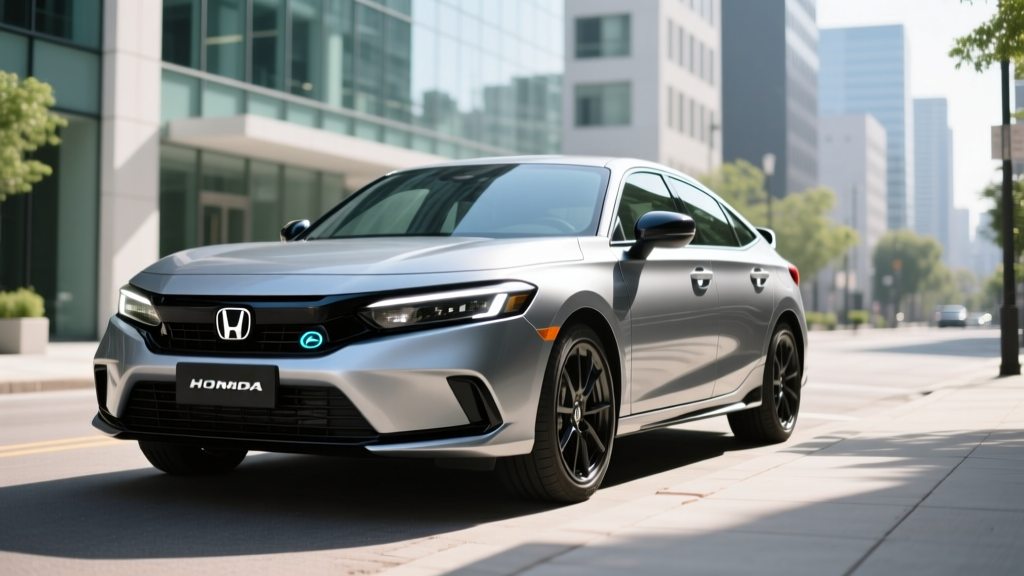
The 2025 Honda Civic Sport Hybrid sits in a rare sweet spot: it delivers 50 MPG combined without asking you to plug in, compromise on power, or pay a steep premium. Honda's two-motor hybrid system pairs a 2.0-liter Atkinson-cycle engine with dual electric motors for a combined 200 horsepower and 232 lb-ft of torque — figures that make it quicker off the line than most compact sedans wearing a hybrid badge. At a starting MSRP of $31,450 (including destination), it undercuts the Toyota Prius XSE on price while matching or beating it on interior space and driving refinement.
This is a conventional hybrid (HEV), not a plug-in. You will never need to find a charger. The battery recharges through regenerative braking and the engine, making it ideal for apartment dwellers, street parkers, and anyone who simply wants to spend less at the pump without altering their routine.
Fuel Economy: EPA Numbers and Real-World MPG
The EPA rates the 2025 Civic Sport Hybrid at 50 MPG city, 47 MPG highway, and 49 MPG combined. These are strong numbers for a compact sedan, and they translate into roughly 470 miles of total range from the 12.4-gallon fuel tank.
| Metric | Value |
|---|---|
| City MPG | 50 |
| Highway MPG | 47 |
| Combined MPG | 49 |
| Fuel Tank Capacity | 12.4 gal |
| Total Range (est.) | ~470 miles |
| Annual Fuel Cost* | ~$1,050 |
*Based on 15,000 miles/year at $3.50/gallon regular unleaded. Source: fueleconomy.gov
Powertrain: 200 HP from Honda's Fourth-Gen Two-Motor System
The Civic Sport Hybrid uses Honda's fourth-generation two-motor hybrid system, a fundamentally different architecture from the single-motor assist systems found in older hybrids. Here, two electric motors handle distinct roles:
- Propulsion motor: 184 HP / 232 lb-ft — drives the front wheels directly in most conditions
- Generator motor: Acts as a starter, generator, and regenerative-braking unit
- 2.0L Atkinson-cycle 4-cylinder engine: 146 HP — primarily generates electricity, with a direct mechanical link to the wheels at highway speeds via a lock-up clutch
The combined system output is rated at 200 HP. The result is a 0–60 MPH time of approximately 7.2 seconds — quicker than the non-hybrid Civic Sport (which uses a 2.0L naturally aspirated engine at 158 HP) and competitive with turbocharged compact sedans. The electric-dominant torque delivery gives the car an EV-like feel around town, with smooth, linear acceleration and minimal engine noise until you demand full power.
| Spec | Value |
|---|---|
| Engine | 2.0L Atkinson-cycle I-4 |
| System Horsepower | 200 HP |
| System Torque | 232 lb-ft |
| Drivetrain | Front-wheel drive |
| Transmission | e-CVT (no traditional gears) |
| 0–60 MPH | ~7.2 seconds |
| Drive Modes | Econ, Normal, Sport, Individual |
HEV vs. PHEV vs. EV: Which Powertrain Fits You?
The Civic Sport Hybrid is a conventional hybrid (HEV). Honda does not currently offer a plug-in hybrid (PHEV) version of the Civic in the U.S. market. Understanding the distinction matters before you shop:
HEV (This Car)
No plug needed. The battery recharges via the engine and regenerative braking. You fuel up at any gas station. Best for: drivers without home charging access, those who want simplicity.
PHEV
Plug in for 25–50 electric miles, then the gas engine takes over. Requires a Level 2 home charger for best value. Best for: commuters with short electric-range trips and home charging.
Full EV (BEV)
100% electric, no gas. Requires home or reliable public charging. 250–400+ mile range. Best for: drivers with home charging who want zero tailpipe emissions and lowest per-mile cost.
→ Choose the Civic Sport Hybrid (HEV) if you lack home charging, drive 30+ miles daily in mixed conditions, and want maximum flexibility without plugging in.
→ Choose a PHEV (like the Toyota Prius Prime, 44 mi electric) if you have a garage or driveway for a Level 2 charger and your commute falls within the electric-only range.
→ Choose a BEV (like the Hyundai Ioniq 6 or Tesla Model 3) if you have reliable home charging, want the lowest fuel cost per mile, and are comfortable with public fast-charging on road trips.
Pricing, Trims, and Tax Credit Eligibility
The 2025 Civic Sport Hybrid is offered in two trims:
| Trim | MSRP (incl. destination) |
|---|---|
| Sport Hybrid | $31,450 |
| Sport Touring Hybrid | $34,450 |
The Sport Touring Hybrid adds leather-trimmed seats, a Bose 12-speaker audio system, wireless Apple CarPlay/Android Auto, a 10.2-inch digital instrument cluster, and Honda's full Honda Sensing suite with low-speed braking control and traffic jam assist.
Federal Tax Credit: Does It Qualify?
The 2025 Civic Sport Hybrid does not qualify for the federal §30D clean vehicle tax credit (up to $7,500). Under current IRS rules, only plug-in electric vehicles (BEVs and PHEVs) with sufficient battery capacity are eligible. Conventional hybrids (HEVs) have not qualified for the federal credit since the original Hybrid Tax Credit expired for Honda vehicles in 2008.
However, some states offer their own incentives for hybrid purchases. Check your state's energy office or department of environmental quality for current programs. These vary widely and change frequently, so consult official state sources rather than dealer claims.
Battery Warranty, Reliability, and Replacement Cost
Hybrid battery longevity is the single most common concern among first-time hybrid buyers. Honda addresses this with robust warranty coverage:
• Hybrid battery: 8 years / 100,000 miles (10 years / 150,000 miles in CARB states including CA, NY, MA, and others)
• Hybrid system components (inverter, motor, control unit): 8 years / 100,000 miles
• Powertrain warranty: 5 years / 60,000 miles
• New vehicle limited warranty: 3 years / 36,000 miles
Real-World Battery Longevity
Honda's hybrid battery packs use lithium-ion cells, and data from earlier-generation Honda hybrids (Insight, Accord Hybrid) suggests these packs routinely last 150,000–200,000+ miles before significant capacity loss. The Civic's hybrid battery is relatively small (approximately 1.1 kWh usable) and is kept within a narrow state-of-charge window by the vehicle's battery management system — never fully charged or fully depleted — which dramatically extends cycle life.
Battery Replacement Cost
If the hybrid battery does fail outside of warranty, a replacement from Honda typically runs between $2,000 and $4,000 including labor, depending on the dealership and region. Third-party refurbished packs are available for approximately $1,200–$2,500. Given the battery's small size compared to a full EV pack (which can cost $10,000–$20,000+ to replace), this is a manageable worst-case scenario — and one that the vast majority of owners will never face within the vehicle's useful life.
Reliability Track Record
Honda's hybrid systems have a strong reliability record. The two-motor architecture has fewer wear components than a traditional automatic transmission (no torque converter, no conventional gear sets), and regenerative braking reduces wear on the friction brake pads. It is common for Civic Hybrid owners to report 80,000+ miles on original brake pads. NHTSA and IIHS safety ratings should be checked for the latest crash-test results, as the Civic historically earns top marks.
Who Should Buy the 2025 Civic Sport Hybrid?
Pros
- 49 MPG combined EPA — ~$1,050/year in fuel
- 200 HP with EV-like low-end torque
- No plug-in charging required
- Spacious interior with 14.8 cu ft trunk
- Standard Honda Sensing ADAS suite
- Strong battery warranty (8–10 yr)
- Low brake wear from regen braking
Cons
- No PHEV or EV variant available
- No federal tax credit eligibility
- AWD not offered (FWD only)
- Engine drone under hard acceleration
- Sport trim lacks premium features (see Touring)
- Towing not recommended
Frequently Asked Questions
How many MPG does the 2025 Civic Sport Hybrid get?
The EPA rates it at 50 MPG city, 47 MPG highway, and 49 MPG combined. In real-world driving, most owners report matching or slightly exceeding the city figure in warm weather, while sustained highway driving at 75+ MPH tends to yield the low-to-mid 40s.
Does the Civic Sport Hybrid need to be plugged in?
No. This is a conventional hybrid (HEV). The battery charges through regenerative braking and the gasoline engine. You only ever need to fill up at a gas station, just like a traditional car.
How far can it go on electric power alone?
The Civic Sport Hybrid can operate in EV mode for very short distances — typically under 1 mile at low speeds (under 25 MPH) when the battery has sufficient charge. It is not designed for meaningful electric-only driving like a PHEV. The electric motors assist the engine continuously rather than powering the car independently for extended distances.
Does the 2025 Civic Hybrid qualify for any tax credit?
It does not qualify for the federal §30D clean vehicle credit, which is limited to plug-in vehicles (BEVs and PHEVs). Some states may offer hybrid-specific incentives — check your state's official energy or environmental agency for current programs.
Is the hybrid battery reliable, and what does replacement cost?
Honda's hybrid batteries have a strong longevity record, commonly lasting 150,000–200,000+ miles. The battery is warranted for 8 years/100,000 miles (10 years/150,000 miles in CARB states). Out-of-warranty replacement typically costs $2,000–$4,000 from a dealer, or $1,200–$2,500 for a refurbished unit.
How does the Civic Sport Hybrid compare to the Toyota Prius?
The 2025 Prius LE achieves 57 MPG combined (vs. the Civic's 49), but the Civic offers 200 HP compared to the Prius's 194 HP, a more spacious rear seat, and a more conventional driving feel. The Prius also offers AWD on certain trims and a PHEV variant (Prius Prime). If maximum MPG is your priority, the Prius wins. If you want a more engaging drive with strong efficiency, the Civic Sport Hybrid is the stronger pick.
What is the 5-year cost of ownership versus the gas Civic?
Over 5 years and 75,000 miles, the Civic Sport Hybrid saves approximately $2,500–$3,500 in fuel costs compared to the non-hybrid Civic Sport (which gets roughly 33 MPG combined). The hybrid's $3,000–$4,000 price premium is typically recouped within 3–4 years of average driving, after which the fuel savings are pure gain. Insurance costs are generally comparable between the two.