Quick Verdict: The Midsize Sedan Benchmark Gets a Powertrain Reset
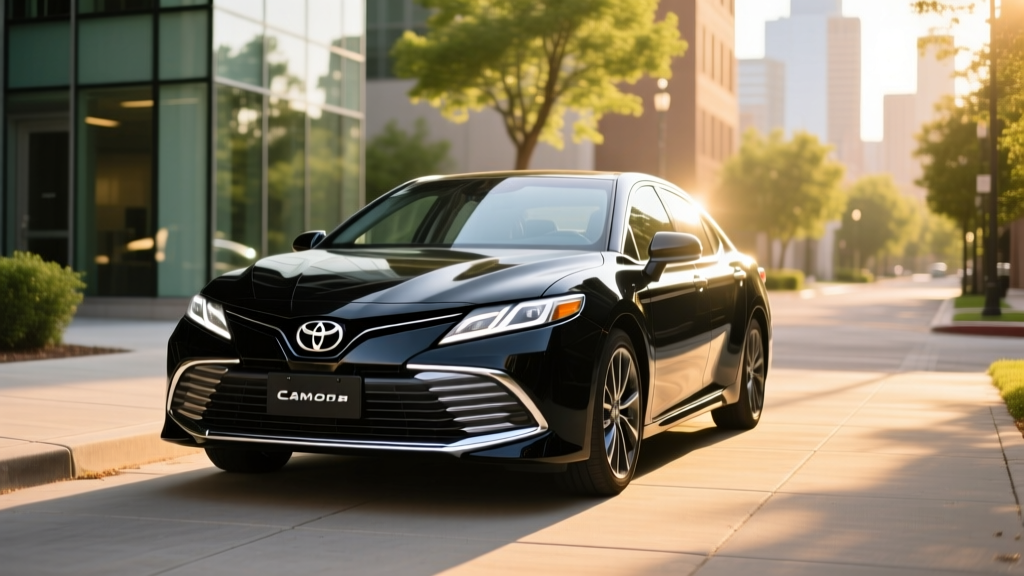
The 2025 Toyota Camry arrives with a significant mechanical shift: every model is now a hybrid. Toyota dropped the four-cylinder gas-only option entirely, replacing it with the fifth-generation Toyota Hybrid System (THS5) across all trims. This isn't a mild refresh — it's a bet that buyers in the midsize sedan segment care more about 50+ MPG and smooth electric low-speed torque than they do about the illusion of choice.
After reviewing EPA data, manufacturer specifications, and real-world driving patterns, the 2025 Camry Hybrid delivers on its efficiency promise with real-world numbers that often exceed the sticker in city driving. The question isn't whether it's efficient — it's whether a conventional hybrid (HEV) is the right electrification path for your commute, or whether you should be looking at a plug-in hybrid or full EV instead.
| Spec | FWD Models | AWD Models |
|---|---|---|
| Powertrain | 2.5L 4-cyl + 2 electric motors | 2.5L 4-cyl + 3 electric motors |
| Combined Horsepower | 225 hp | 232 hp |
| EPA City MPG | 53 | 51 |
| EPA Highway MPG | 50 | 49 |
| EPA Combined MPG | 51 | 50 |
| Fuel Tank | 13.2 gal | 13.2 gal |
| Total Range | ~673 miles | ~660 miles |
| 0–60 mph (est.) | ~7.2 sec | ~6.9 sec |
| Drivetrain | FWD | Electronic AWD |
| Base MSRP | $28,700 (LE) | $29,700 (LE AWD) |
| Hybrid Battery Warranty | 10 years / 150,000 miles | |
HEV vs PHEV: What the 2025 Camry Actually Is (and Isn't)
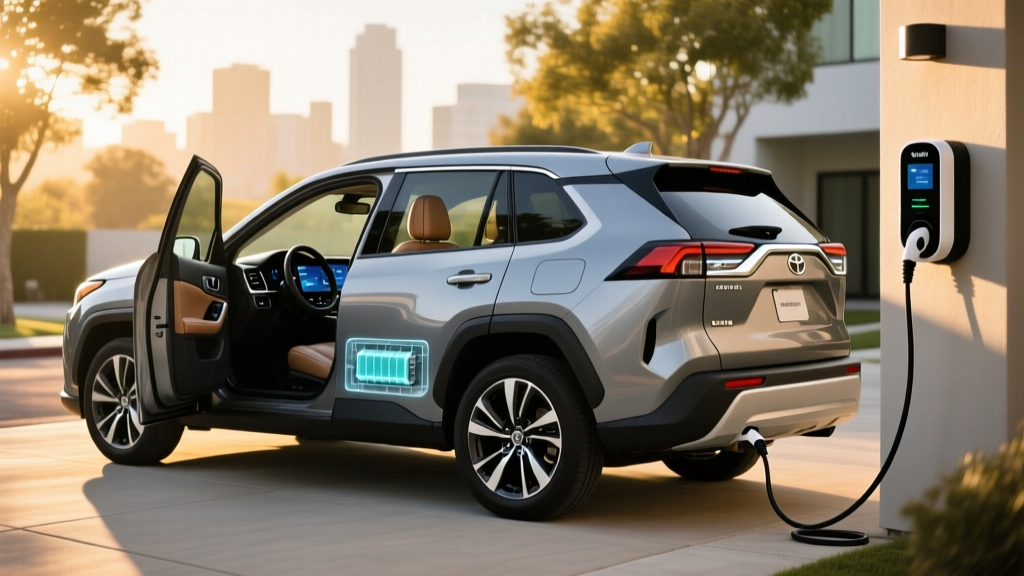
A common search question is whether the 2025 Camry Hybrid is a plug-in hybrid. It is not. The Camry is a conventional hybrid electric vehicle (HEV), sometimes called a "self-charging" hybrid. Here's the critical distinction:
| Feature | HEV (2025 Camry) | PHEV (e.g., Toyota RAV4 Prime) |
|---|---|---|
| Plug-in charging? | No — never needs to be plugged in | Yes — charges from a wall outlet or station |
| Electric-only range | None (EV mode limited to ~1 mile at low speed) | 25–42 miles typical |
| Battery size | ~1.0 kWh (nickel-metal hydride) | 13.6–18.1 kWh (lithium-ion) |
| How it charges | Regenerative braking + gas engine | Plug-in + regen + engine |
| Federal tax credit (§30D) | Not eligible | Up to $7,500 (if requirements met) |
| Best for | No home charging, long commutes, simplicity | Home charging access, short daily commutes |
The Camry's hybrid battery is small — roughly 1.0 kWh — and it charges itself entirely through regenerative braking and the gasoline engine. You will never plug this car in. The electric motors assist the gas engine and enable brief electric-only movement at low speeds (parking lots, stop-and-go creep), but this is not a vehicle that drives meaningful distances on electricity alone.
If you want 30+ miles of electric-only commuting before the gas engine turns on, you need a PHEV like the Toyota Prius Prime (44 miles EV range) or RAV4 Prime (42 miles EV range). The Camry Hybrid trades that plug-in capability for lower cost, lighter weight, and zero charging infrastructure requirements.
Fuel Economy: EPA Numbers and Real-World MPG
The 2025 Camry Hybrid's EPA ratings place it among the most efficient non-plug-in midsize sedans available. According to fueleconomy.gov, the FWD LE trim achieves 53 city / 50 highway / 51 combined MPG. AWD models drop slightly to 51/49/50.
| Trim | Drivetrain | City | Highway | Combined |
|---|---|---|---|---|
| LE | FWD | 53 | 50 | 51 |
| LE | AWD | 51 | 49 | 50 |
| SE / XLE / XSE | FWD | 48 | 47 | 47 |
| SE / XLE / XSE | AWD | 46 | 46 | 46 |
Why do SE/XLE/XSE trims get lower MPG? These trims ride on larger 18- or 19-inch wheels with wider, stickier tires and carry slightly more weight from additional equipment. The difference is meaningful — roughly 4–5 MPG combined — so if maximum efficiency is your priority, the LE trim on 16-inch wheels is the clear pick.
Real-World MPG: What to Actually Expect
Conventional hybrids like the Camry have a distinctive real-world characteristic: they often exceed their EPA city rating in actual stop-and-go driving. This is because city driving maximizes regenerative braking opportunities, which recharges the hybrid battery and lets the electric motor handle more of the work. On the highway, where regen opportunities are limited and aerodynamic drag dominates, real-world MPG tends to land at or slightly below the EPA highway figure.
Based on owner-reported data and testing patterns from prior THS generations:
- City driving: Expect 52–56 MPG (FWD LE) — often above EPA
- Highway (70 mph cruise): Expect 46–50 MPG — slightly below EPA
- Cold weather (below 30°F): Expect a 5–10% reduction as the engine runs more to heat the cabin and warm the hybrid battery
- Mountainous terrain: Highly variable — regen recovers energy on descents but climbs demand more engine power
With a 13.2-gallon tank and 51 combined MPG, the FWD Camry LE delivers approximately 673 miles of total range. That's a Los Angeles-to-San Francisco round trip on one tank, with fuel to spare.
Powertrain Deep Dive: Fifth-Generation Toyota Hybrid System
The 2025 Camry uses Toyota's THS5, which pairs a 2.5-liter Dynamic Force four-cylinder engine running the Atkinson cycle with two electric motor-generators (three on AWD models) through a planetary gearset eCVT.
FWD models produce a net 225 horsepower — a substantial jump from the previous-generation Camry Hybrid's 208 hp. The AWD system adds a rear-mounted electric motor (not mechanically connected to the engine) that provides up to 40 hp to the rear axle when traction is needed, bumping combined output to 232 hp.
The eCVT is not a traditional belt-and-cone CVT. It uses the planetary gearset to seamlessly blend engine and motor power with no fixed gear ratios, resulting in the smooth, drone-free acceleration that distinguishes Toyota's modern hybrids from older generations. Throttle response at low speed is immediate — the electric motor provides torque from zero RPM before the gas engine even starts.
The hybrid battery in the 2025 Camry is a nickel-metal hydride (NiMH) pack, not lithium-ion. Toyota has stuck with NiMH for its conventional hybrids due to its proven long-term durability, wide temperature tolerance, and lower cost. While NiMH has lower energy density than lithium-ion, the ~1.0 kWh capacity requirement of an HEV doesn't demand cutting-edge chemistry.
Pricing, Trims, and Tax Credit Eligibility
The 2025 Camry Hybrid lineup starts at $28,700 for the LE FWD and tops out around $35,500 for the XSE AWD with available packages. Here's the approximate trim breakdown:
- LE FWD: $28,700 — 16-inch wheels, 8-inch touchscreen, wireless CarPlay/Android Auto
- SE FWD: $30,000 — sport-tuned suspension, 18-inch wheels, synthetic leather
- XLE FWD: $32,700 — 12.3-inch display, heated front seats, power driver seat
- XSE FWD: $33,500 — sport styling, 19-inch wheels, dual-zone climate
- AWD adds: ~$1,000 to any trim
Does the 2025 Camry Hybrid Qualify for a Federal Tax Credit?
No. Under current IRS §30D rules, the federal clean vehicle credit applies only to plug-in electric vehicles (BEVs and PHEVs) with batteries of at least 7 kWh. The Camry Hybrid's ~1.0 kWh NiMH pack does not meet this threshold. It is not eligible for the $7,500 federal credit, nor for the up-to-$4,000 used EV credit.
Some states offer their own hybrid incentives — for example, certain utility companies provide rebates for hybrid purchases — but these vary by jurisdiction. Check your state's energy office or utility provider for local programs. Do not rely on general claims of "hybrid tax credits" without verifying your specific eligibility.
Hybrid Battery Warranty, Lifespan, and Replacement Cost
Toyota Hybrid Battery Warranty
Coverage: 10 years or 150,000 miles (whichever comes first)
What's covered: Defects and capacity loss below a defined threshold on the hybrid battery pack, power control unit, and related hybrid system components
Transferable: Yes — warranty transfers to subsequent owners automatically
Battery longevity is consistently the top concern among hybrid buyers, and it's the area where Toyota has the deepest track record. The Prius has been on US roads since 2000, and data from 20+ years of Toyota hybrid deployments shows that NiMH hybrid batteries frequently last 150,000–200,000+ miles before significant degradation.
Why do hybrid batteries last so long? Unlike full EVs that cycle their batteries through deep discharge (100% to 10% or lower), Toyota's hybrid system keeps the battery in a narrow state-of-charge window — roughly 40% to 80%. This shallow cycling dramatically reduces stress on the cells. The battery never fully depletes and never fully charges, which is the key to its longevity.
What Does Replacement Cost?
If your hybrid battery does fail outside of warranty, replacement costs for a Toyota Camry hybrid battery typically range from $2,000 to $4,000 for a new OEM pack, including labor. Refurbished or reconditioned packs are available for $1,000–$2,000. Individual module replacement (replacing only the failed cells within the pack) can bring costs down to $500–$1,000 at specialized hybrid repair shops.
For context, this is substantially less than EV traction battery replacement ($8,000–$20,000+) because the hybrid battery is much smaller and simpler. It's also a cost most Camry Hybrid owners will never face within the vehicle's normal ownership life.
Who Should Choose the 2025 Camry Hybrid vs a PHEV or Full EV?
Pros
- 51 MPG combined — no plug required, no range anxiety
- 673-mile total range on a single tank
- 225–232 hp — noticeably quicker than the prior-gen hybrid
- 10-year/150k-mile hybrid battery warranty
- Strong resale value and proven Toyota reliability
- Low starting price ($28,700) for the segment
Cons
- No electric-only commuting — always uses gasoline
- No federal tax credit eligibility
- 4–5 MPG penalty on SE/XLE/XSE trims (larger wheels)
- AWD is electronic, not a true mechanical system (light-duty traction only)
- Some competitors offer PHEV sedan alternatives with EV-only range
Decision Framework: Is the Camry Hybrid Right for You?
Choose the 2025 Camry Hybrid if:
- You don't have access to home or workplace charging (apartment, street parking, no garage outlet)
- Your daily commute is long (40+ miles) and you want to minimize fuel cost without plugging in
- You take frequent road trips and don't want to plan around charging stations
- You want electrified efficiency with the simplicity of a gas-car ownership routine
- Budget is a priority — the Camry LE is $5,000–$10,000 less than comparable PHEVs or EVs
Consider a PHEV (like the Prius Prime) if:
- You have home charging (even a standard 120V outlet works for PHEVs)
- Your daily commute is under 40 miles and you want to drive mostly on electricity
- You want to reduce gasoline consumption to near-zero on weekdays while keeping gas for road trips
- You want eligibility for the §30D federal tax credit (up to $7,500, subject to income, MSRP, and battery-sourcing requirements)
Consider a full EV (like the Tesla Model 3 or Hyundai Ioniq 6) if:
- You have reliable Level 2 home charging
- You want zero gasoline use, zero oil changes, and minimal drivetrain maintenance
- Your daily driving is under 250 miles and you're comfortable with DC fast charging on road trips
- You want the strongest federal and state incentives
Frequently Asked Questions
How many MPG does the 2025 Camry Hybrid get?
The FWD LE trim achieves 53 city / 50 highway / 51 combined MPG per the EPA. AWD models get 51/49/50. Sport and luxury trims (SE, XLE, XSE) drop to 46–47 combined due to larger wheels and additional equipment. Real-world city MPG often exceeds the EPA estimate thanks to regenerative braking in stop-and-go traffic.
Is the 2025 Camry Hybrid a plug-in hybrid?
No. The 2025 Camry is a conventional hybrid (HEV). It charges its own battery through regenerative braking and the gas engine. You never plug it in. If you want a Toyota plug-in hybrid sedan, look at the Prius Prime, which offers 44 miles of electric-only range.
How far can the 2025 Camry Hybrid go on a tank of gas?
With a 13.2-gallon fuel tank and 51 combined MPG (FWD LE), the Camry Hybrid delivers approximately 673 miles of total range. Highway-only driving at 70+ mph will reduce this to roughly 600–640 miles. This is among the longest ranges of any midsize sedan, gas or hybrid.
Is the Camry Hybrid reliable, and what will battery replacement cost?
Toyota's hybrid system has over two decades of proven reliability, and the Camry's hybrid battery is covered for 10 years or 150,000 miles. NiMH hybrid batteries commonly last 150,000–200,000+ miles thanks to the shallow charge-discharge cycle strategy. Out-of-warranty replacement runs $2,000–$4,000 for a new OEM pack, or $1,000–$2,000 for a refurbished unit.
Does the 2025 Camry Hybrid qualify for any tax credit?
Not the federal §30D clean vehicle credit — that requires a plug-in vehicle with at least 7 kWh of battery capacity. The Camry's ~1.0 kWh pack doesn't qualify. Some state or utility-level hybrid incentives may exist depending on your location. Check your state energy office or utility provider for current programs.
How does the Camry Hybrid compare to the Honda Accord Hybrid?
The 2025 Accord Hybrid achieves 48 combined MPG (per fueleconomy.gov) — 3 MPG less than the Camry LE. The Camry also offers AWD, which Honda does not on the Accord. However, the Accord Hybrid has a slight edge in interior refinement and rear-seat space. Both carry strong hybrid battery warranties and are excellent choices in the segment.
Does the Camry Hybrid have all-wheel drive?
Yes. AWD is available on every trim for approximately $1,000 extra. It uses a rear-mounted electric motor (not a mechanical driveshaft from the engine) that engages automatically when the system detects front-wheel slip. Combined output rises to 232 hp. This is a light-duty traction system for rain and snow — not intended for off-road use.