Quick Verdict: A Luxury SUV That Actually Commutes on Electricity
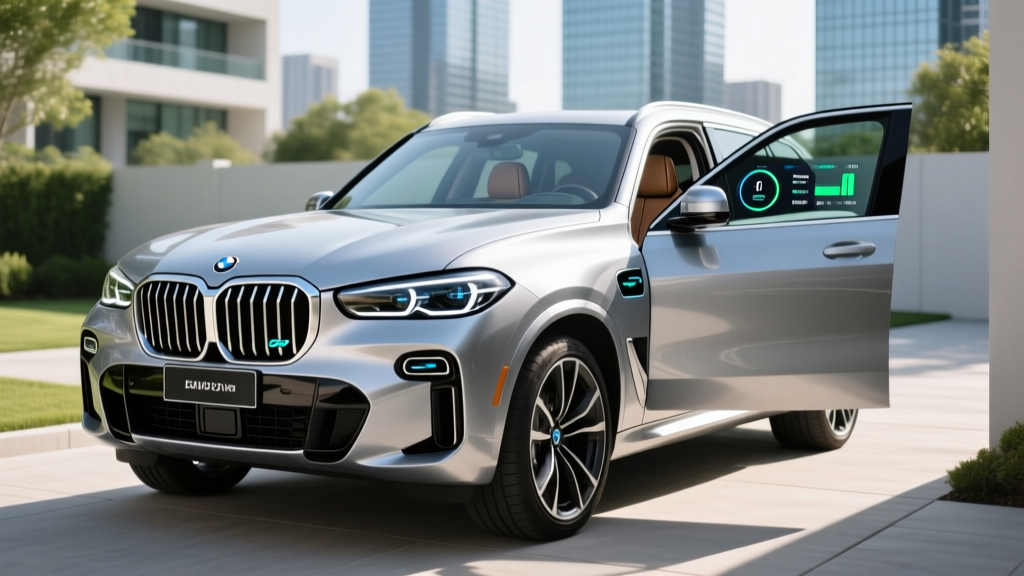
The 2025 BMW X5 xDrive50e isn't a conventional hybrid — it's a plug-in hybrid (PHEV) that pairs a turbocharged inline-six with a potent electric motor for a combined 483 horsepower. With an EPA-rated 38 miles of electric-only range, it covers most daily commutes without burning a drop of fuel, then switches to hybrid mode for weekend road trips with zero range anxiety. Starting at $73,900, the xDrive50e targets luxury SUV buyers who want EV-like daily driving but aren't ready to commit to a full battery-electric vehicle.
This guide breaks down everything that matters: real-world efficiency vs. EPA stickers, charging logistics, the HEV vs. PHEV distinction, tax credit eligibility, and whether this powertrain fits your lifestyle better than a full EV or a conventional hybrid like the X5 xDrive40i's mild-hybrid setup.
HEV vs. PHEV: Why the X5 xDrive50e Is a Plug-In, Not a Conventional Hybrid
BMW's current X5 lineup uses two distinct electrification strategies, and confusing them is easy. Here's the critical difference:
Conventional Hybrid (HEV) — X5 xDrive40i Mild Hybrid
- No plug required. The 48-volt mild-hybrid system recovers energy during braking and assists the gas engine.
- No electric-only driving. The electric motor cannot propel the vehicle on its own.
- Battery: ~1 kWh (too small for EV mode).
- Benefit: Slightly improved fuel economy and smoother stop/start. No behavior change required.
Plug-In Hybrid (PHEV) — X5 xDrive50e
- Plug-in required for EV benefits. A 25.7 kWh (usable) battery powers a dedicated electric motor for zero-emission driving.
- 38 miles EPA electric-only range. Covers most commutes entirely on electricity.
- Gas engine kicks in when the battery depletes or when you demand full power.
- Benefit: Daily EV driving + unlimited gas range for long trips. Best of both worlds if you can charge at home.
The xDrive50e is the PHEV. If you're looking for a "BMW X5 hybrid" and expecting to simply fill it with gas and never plug in, that's the mild-hybrid xDrive40i. The xDrive50e demands a charging routine to unlock its value proposition.
Powertrain Specs: 483 HP From Inline-Six + Electric Motor
| Specification | 2025 BMW X5 xDrive50e |
|---|---|
| Gas Engine | 3.0L turbocharged inline-6 (312 hp) |
| Electric Motor | Integrated in transmission (184 hp) |
| Combined Output | 483 hp / 516 lb-ft torque |
| Battery (usable) | 25.7 kWh (NMC chemistry) |
| EPA Electric Range | 38 miles |
| EPA MPGe (combined) | 56 MPGe |
| EPA MPG (gas-only, combined) | 22 MPG combined (20 city / 24 highway) |
| 0-60 mph | 4.6 seconds |
| Total Range (gas + electric) | ~440 miles |
| Drivetrain | xDrive AWD |
| Base MSRP | $73,900 (+ $995 destination) |
The inline-six is BMW's B58 engine — widely regarded as one of the most reliable turbocharged six-cylinders in the luxury segment. Combined with the electric motor integrated into the 8-speed automatic transmission, the xDrive50e delivers seamless power delivery. The 0-60 mph time of 4.6 seconds makes this one of the quickest PHEV SUVs in its class, rivaling the V8-powered X5 M50i from the previous generation.
Electric-Only Range: 38 EPA Miles vs. Real-World Expectations
EPA vs. Real-World Electric Range
EPA Rating: 38 miles (electric only)
Real-World Expectation: 30–36 miles in mixed driving; 25–30 miles in cold weather (below 40°F) or sustained highway speeds above 70 mph. City driving with regenerative braking recapture can push closer to the EPA figure or slightly beyond.
Why the variance? The EPA PHEV test cycle includes low-speed city segments that favor EV efficiency. Highway driving, cold temperatures (which increase battery resistance and cabin heating load), and aggressive acceleration all reduce usable electric range.
For context, the average American one-way commute is roughly 16 miles, according to the Bureau of Transportation Statistics. That means most X5 xDrive50e owners who charge at home can complete daily round-trip commutes entirely on electricity — only engaging the gas engine for longer weekend trips, errands beyond the electric envelope, or when the battery is depleted.
One practical note: the xDrive50e offers multiple drive modes. In "Electric" mode, the vehicle prioritizes battery-only propulsion up to ~84 mph. In "Hybrid" mode, the powertrain intelligently blends gas and electric based on route, speed, and battery state. BMW's predictive hybrid management can even use navigation data to save battery for urban segments where electric driving is most efficient.
Charging the X5 xDrive50e: Level 1, Level 2, and the DC Fast Charge Question
Here's a critical spec that catches some buyers off guard: the 2025 BMW X5 xDrive50e does not support DC fast charging. It is limited to AC charging only. This is common among PHEVs (the Porsche Cayenne E-Hybrid and Volvo XC90 Recharge share this limitation), but it means you cannot use Electrify America or Tesla Supercharger stations to top up the battery on road trips.
| Charging Level | Power | 0–100% Time | Practical Use |
|---|---|---|---|
| Level 1 (120V household outlet) | ~1.4 kW | ~18–20 hours | Overnight top-up only; won't fully recharge in one night |
| Level 2 (240V, home or public AC) | 7.4 kW (max onboard charger) | ~3.5–4 hours | Full recharge overnight or during workday |
| DC Fast Charging | Not supported | N/A | Not available — PHEV battery is too small to justify |
The 7.4 kW onboard charger is the key figure. With a properly installed Level 2 home charger (such as a BMW Wallbox or third-party unit like the ChargePoint Home Flex), you'll replenish the full 25.7 kWh usable battery in roughly 3.5 to 4 hours. That means an overnight charge is more than sufficient — even if you arrive home with a near-empty battery, you'll wake up to a full charge every morning.
Home Level 2 installation typically costs $800–$2,000 depending on whether your electrical panel needs upgrading. A dedicated 40-amp or 50-amp 240V circuit is standard. For the xDrive50e, even a 32-amp circuit (delivering ~7.7 kW) will max out the onboard charger, so there's no benefit to installing a 48-amp or 80-amp circuit specifically for this vehicle.
Fuel Economy: EPA MPG and Real-World Hybrid Efficiency
| Driving Mode | City | Highway | Combined |
|---|---|---|---|
| Charge-Depleted (gas only, hybrid mode) | 20 MPG | 24 MPG | 22 MPG |
| Charge-Sustaining (EV + gas blended) | 56 MPGe | — | 56 MPGe |
| Electric Only | 2.1 kWh/mi | — | 2.1 kWh/mi |
What does MPGe mean? MPGe (miles per gallon equivalent) converts electricity consumption into a gasoline-comparable figure. One gallon of gasoline contains about 33.7 kWh of energy, so 56 MPGe means the X5 uses the energy equivalent of one gallon to travel 56 miles when operating in its blended charge-sustaining mode.
Real-world MPG vs. EPA: When the battery is depleted and you're driving on gas alone, expect the 22 MPG combined figure to hold reasonably true. In city driving, PHEVs often exceed their EPA city estimate because regenerative braking recaptures energy in stop-and-go traffic. On sustained highway trips at 75+ mph, expect closer to 21–23 MPG — aerodynamic drag dominates at higher speeds, and the heavy battery pack adds curb weight (~5,500 lbs).
The real efficiency story depends entirely on your charging habits. If you plug in every night and drive fewer than 38 miles per day, your effective fuel consumption could be near zero for daily commuting. Owners who never plug in are essentially driving a heavy, mildly efficient luxury SUV — and paying for the PHEV premium without capturing its benefit.
Pricing, Trims, and Federal Tax Credit Eligibility
The 2025 BMW X5 xDrive50e starts at $73,900 (plus $995 destination), placing it roughly $7,000 above the mild-hybrid xDrive40i. Standard equipment includes adaptive LED headlights, the BMW Curved Display with iDrive 8.5, heated front seats, a panoramic moonroof, and the Driving Assistant Professional suite.
§30D Federal Tax Credit — Current Rules (IRS)
As of the current tax year, the BMW X5 xDrive50e does not qualify for the full $7,500 federal EV tax credit under IRS §30D. Here's why:
- Battery sourcing requirements: The §30D credit requires a percentage of critical minerals and battery components to be sourced from the US or free-trade-agreement countries. BMW's battery supply chain for the X5 PHEV does not currently meet these thresholds.
- PHEV minimum battery: The xDrive50e's 25.7 kWh battery meets the §30D minimum capacity requirement (at least 7 kWh), so battery size isn't the disqualifier.
- MSRP cap: SUVs must be under $80,000 MSRP. The base xDrive50e at $73,900 clears this, but optioned-up builds can exceed the cap.
- Income limits: Modified AGI caps apply ($300K joint / $225K head of household / $150K single).
Bottom line: Check the latest IRS clean vehicle credit page before purchasing. Credit eligibility can shift as manufacturers adjust supply chains. Some state-level incentives (California's CVRP, for example) may still apply — check your state's energy office.
Without the federal credit, the value proposition rests on fuel savings and the driving experience. If you spend $3.50/gallon on premium fuel and drive 12,000 miles per year, the PHEV's electric commuting could save roughly $1,200–$1,800 annually in fuel costs versus the xDrive40i — depending on your local electricity rates and how consistently you charge.
Battery Warranty, Reliability, and Long-Term Ownership Costs
Battery & Powertrain Warranty
- High-Voltage Battery: 8 years / 80,000 miles (whichever comes first), covering capacity loss below 70% of original capacity.
- Powertrain (engine + transmission + electric motor): 4 years / 50,000 miles
- Limited Vehicle Warranty: 4 years / 50,000 miles
- Complimentary Maintenance: 3 years / 36,000 miles
Battery replacement cost (out of warranty): Estimated $12,000–$18,000 for the high-voltage battery pack, based on current BMW PHEV parts pricing. This is a significant figure, but BMW's B58-based PHEV powertrain has a strong reliability record in the X5 and 7 Series applications.
BMW's PHEV systems have proven robust in real-world use. The B58 inline-six is now in its second generation and is widely considered one of BMW's most reliable engines — a significant departure from the N63 V8 issues that plagued earlier X5 models. The electric motor, integrated into the ZF 8-speed transmission, has fewer moving parts than a standalone motor and benefits from the same cooling system.
PHEV battery degradation is generally less severe than full EV battery degradation because the battery is smaller and operates within a narrower state-of-charge window (BMW buffers the top and bottom of the pack to protect longevity). Expect 85–90% capacity retention after 5 years of typical use, based on data from earlier BMW PHEV models like the 330e and 530e.
For reliability ratings, consult IIHS and J.D. Power vehicle dependability studies. The current-generation X5 (G05 platform) has scored well in crash testing and build quality surveys.
Who Should Buy the X5 xDrive50e — and Who Shouldn't
Choose the X5 xDrive50e (PHEV) If:
- You can install a Level 2 charger at home and your daily commute is under 35 miles round-trip.
- You want luxury SUV refinement with near-silent electric commuting but need gas range for frequent road trips or towing (3,500-lb capacity with the xDrive50e).
- You live in a region with extreme cold where full EV range loss (20–40%) is a dealbreaker.
- You want to reduce fuel consumption and emissions without the behavioral change of planning charging stops on road trips.
Choose the X5 xDrive40i (Mild Hybrid) If:
- You cannot charge at home (apartment, street parking, no garage access).
- Your daily driving regularly exceeds 50+ miles, negating most PHEV benefit.
- You want lower upfront cost and don't want to manage plug-in routines.
Choose a Full EV (BMW iX, Tesla Model X, Rivian R1S) If:
- You want zero tailpipe emissions and the lowest possible per-mile energy cost.
- You have reliable home charging and your road trips are within DC fast-charging network coverage.
- You want to eliminate oil changes, spark plugs, and gas-engine maintenance entirely.
Pros and Cons at a Glance
Pros
- 38-mile electric range covers most daily commutes
- 483 hp combined — genuinely quick for a luxury SUV (4.6s 0-60)
- Seamless transitions between EV and hybrid modes
- B58 inline-six is proven reliable
- No range anxiety on road trips — gas engine takes over
- Premium interior with BMW's latest iDrive 8.5
- Regenerative braking is well-calibrated, not grabby
Cons
- No DC fast charging — AC only (7.4 kW max)
- $73,900 starting price with no current federal tax credit
- 22 MPG gas-only is modest for a 5,500-lb SUV
- Heavy curb weight impacts handling vs. non-hybrid X5
- Electric range drops significantly in cold weather
- Options can push MSRP past the $80K tax-credit cap
- Requires home charging to realize value — useless as a "gas-only" PHEV
Frequently Asked Questions
How many MPG does the 2025 BMW X5 hybrid get?
When the battery is depleted and the X5 xDrive50e operates as a conventional hybrid, it achieves an EPA-rated 22 MPG combined (20 city / 24 highway). When you factor in electric-only driving with regular charging, the combined rating is 56 MPGe. Real-world gas-only highway driving typically yields 21–23 MPG at 75 mph.
How far can the BMW X5 xDrive50e go on electric only?
The EPA rates the xDrive50e at 38 miles of electric-only range. In real-world conditions, expect 30–36 miles in moderate temperatures and mixed driving, dropping to 25–30 miles in freezing weather or at sustained highway speeds. The vehicle can reach up to 84 mph in electric-only mode.
Does the 2025 BMW X5 xDrive50e qualify for a federal tax credit?
As of the current tax year, the X5 xDrive50e does not qualify for the $7,500 §30D federal clean vehicle credit due to battery sourcing requirements that BMW's supply chain does not currently meet. State-level incentives may still apply. Always verify eligibility on the IRS website and consult a tax professional before purchasing.
Is the BMW X5 PHEV reliable? What about battery replacement cost?
BMW's B58-based PHEV powertrain has a strong reliability record. The high-voltage battery is warranted for 8 years/80,000 miles against capacity loss below 70%. Out-of-warranty battery replacement is estimated at $12,000–$18,000, though most owners will never need this based on degradation data from earlier BMW PHEVs.
Can the BMW X5 xDrive50e use DC fast chargers?
No. The X5 xDrive50e supports only AC charging — Level 1 (120V) and Level 2 (240V, up to 7.4 kW). It cannot use DC fast-charging stations like Electrify America or Tesla Superchargers. The 25.7 kWh battery recharges fully in about 3.5–4 hours on a Level 2 home charger.
Hybrid vs. PHEV vs. EV — which X5 powertrain fits me?
The mild-hybrid xDrive40i (no plug) is best for buyers who can't charge at home. The PHEV xDrive50e is ideal for home-chargers with sub-35-mile commutes who also take road trips. A full EV like the BMW iX is right for those who want zero emissions, lowest per-mile cost, and have reliable charging access. See our decision framework above for a detailed breakdown.
Sources: EPA Fuel Economy, BMW Group PressClub, IRS Clean Vehicle Credits. Specifications reflect 2025 model year as published. Pricing and credit eligibility subject to change.