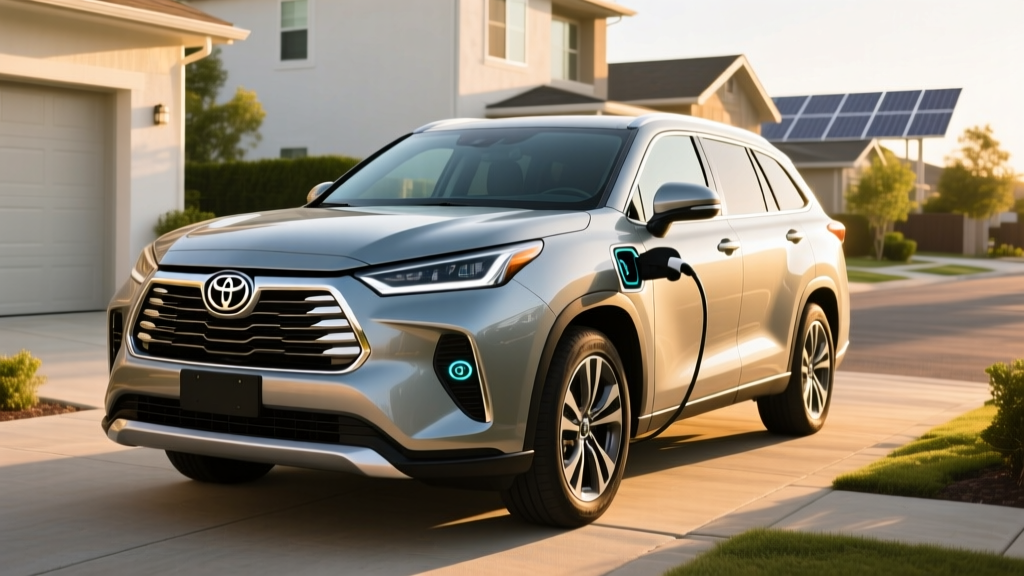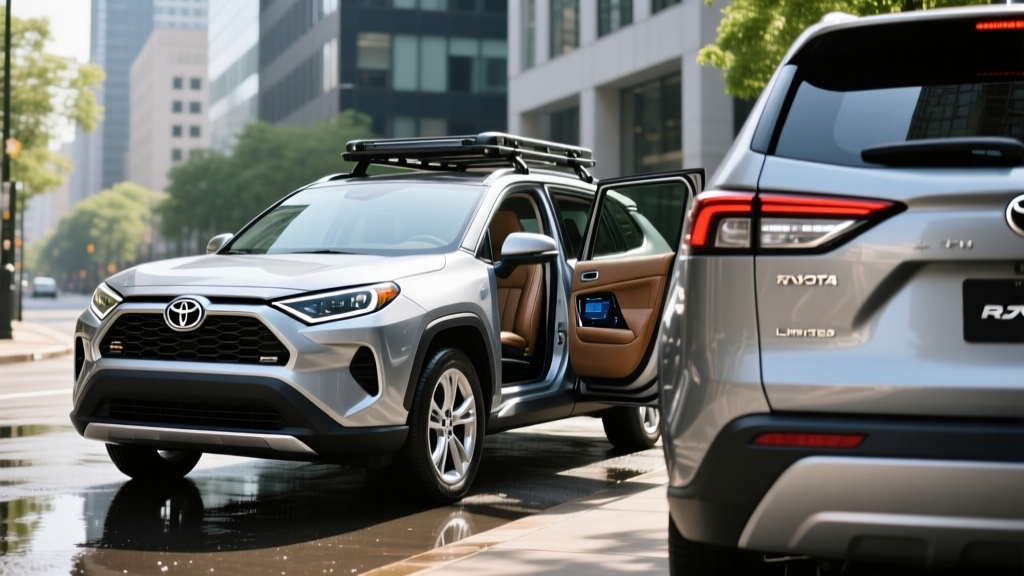
The 2024 Toyota RAV4 Hybrid Limited sits near the top of Toyota's compact crossover lineup, blending a proven series-parallel hybrid system with premium features. Unlike a plug-in hybrid (PHEV) or battery-electric vehicle (BEV), this conventional hybrid (HEV) requires no charging infrastructure — it generates electricity internally through regenerative braking and its gasoline engine. For buyers who want electrified efficiency without altering their refueling habits, the RAV4 Hybrid Limited remains one of the most practical options on the market.
In this review, we break down EPA fuel economy versus real-world results, the powertrain engineering, what the Limited trim actually gets you, total ownership costs, and how it stacks up against the RAV4 Prime PHEV and full-electric alternatives.
2024 Toyota RAV4 Hybrid Limited: Core Specifications
| Specification | Value |
|---|---|
| Powertrain | 2.5L 4-cyl + 3 electric motors (AWD-i) |
| Combined Horsepower | 219 hp |
| EPA MPG (City / Hwy / Combined) | 41 / 38 / 41 |
| Drivetrain | Electronic On-Demand AWD |
| 0–60 mph | ~7.4 seconds |
| Fuel Tank | 14.5 gallons |
| Total Range | ~594 miles (EPA est.) |
| Cargo Volume (behind rear seats) | 37.5 cu ft |
| Hybrid Battery Warranty | 10 years / 150,000 miles |
| Base MSRP (Limited AWD) | $40,455 (before destination) |
Fuel Economy: EPA Ratings vs. Real-World MPG
The EPA rates the 2024 RAV4 Hybrid at 41 MPG city, 38 MPG highway, and 41 MPG combined. These figures apply across all RAV4 Hybrid trims equipped with AWD-i, including the Limited.
| Driving Cycle | EPA Rating | Real-World Expectation |
|---|---|---|
| City | 41 MPG | 42–45 MPG (regenerative braking maximizes electric motor use at low speeds) |
| Highway | 38 MPG | 35–38 MPG (aerodynamic drag and sustained engine operation reduce hybrid advantage) |
| Combined | 41 MPG | 38–42 MPG depending on driving mix and climate |
With a 14.5-gallon fuel tank, the EPA-estimated total range is approximately 594 miles. In mixed real-world driving, owners typically see 520–580 miles between fill-ups.
HEV vs. PHEV: RAV4 Hybrid vs. RAV4 Prime
Toyota offers the RAV4 in two electrified flavors. Understanding the difference is critical before you visit the dealer:
- RAV4 Hybrid (HEV): A conventional, self-charging hybrid. You never plug it in. A small battery (~1.6 kWh) is recharged by the engine and regenerative braking. It cannot drive on electric power alone for meaningful distances.
- RAV4 Prime (PHEV): A plug-in hybrid with a larger 18.1 kWh battery. It offers 42 miles of electric-only range before the gasoline engine engages. It can be charged via a wall outlet or Level 2 charger but does not support DC fast charging.
| Attribute | RAV4 Hybrid Limited (HEV) | RAV4 Prime XSE (PHEV) |
|---|---|---|
| Combined HP | 219 hp | 302 hp |
| EPA Combined MPG | 41 MPG | 94 MPGe (EV mode) / 38 MPG (gas-only) |
| Electric-Only Range | N/A (not a plug-in) | 42 miles |
| Battery Capacity | ~1.6 kWh (NiMH) | 18.1 kWh (Li-ion) |
| Plug-In Charging | No | Yes — Level 1 (~12 hr) or Level 2 (~2.5 hr) |
| DC Fast Charging | N/A | No |
| 0–60 mph | ~7.4 sec | ~5.7 sec |
| MSRP (comparable trim) | ~$40,455 | ~$47,675 |
| Federal Tax Credit (§30D) | Not eligible | Not eligible (Toyota credit exhausted) |
The RAV4 Prime is significantly quicker and offers genuine electric-only commuting for shorter trips. However, it costs roughly $7,000 more, has a longer wait time at dealers, and is no longer eligible for the federal EV tax credit because Toyota exceeded the manufacturer cap under previous rules, and current IRS §30D battery-sourcing requirements disqualify it.
Powertrain Deep Dive: How the Hybrid System Works
The RAV4 Hybrid uses Toyota's fourth-generation Hybrid Synergy Drive with a 2.5-liter Dynamic Force four-cylinder engine producing 176 hp and 163 lb-ft of torque on its own. Two front-mounted electric motor-generators supplement the engine, while a third, independent rear motor powers the rear axle for all-wheel drive — eliminating the need for a mechanical driveshaft.
Total system output is 219 hp. The eCVT (electronically controlled continuously variable transmission) uses a planetary gearset rather than belts or cones, which contributes to Toyota's reputation for hybrid powertrain durability. There are no traditional transmission bands, clutches, or torque converters to wear out.
The AWD-i system engages the rear motor automatically when slippage is detected or during hard acceleration. It's not a heavy-duty off-road system, but it handles rain, snow, and light gravel competently. Towing capacity is rated at 1,750 pounds — adequate for a small trailer but not much more.
What the Limited Trim Adds
The Limited is the top non-Prime RAV4 Hybrid trim. Key features over the mid-range XLE include:
- SofTex synthetic leather seats with heated front seats and heated steering wheel
- 12.3-inch Toyota Audio Multimedia touchscreen with wireless Apple CarPlay and Android Auto
- Qi wireless phone charging pad
- Power liftgate with hands-free operation
- 18-inch alloy wheels (shared with XLE; the XSE gets 19-inch)
- Panoramic glass roof (optional; adds ~$1,600)
- JBL premium audio system with 11 speakers (standard on Limited)
- Toyota Safety Sense 2.5+ suite: pre-collision braking, full-speed adaptive cruise, lane tracing assist, blind-spot monitor with rear cross-traffic alert
With destination charge and common options (panoramic roof, roof rack, mud guards), a well-equipped RAV4 Hybrid Limited typically stickers between $42,000 and $44,500.
Battery Warranty, Lifespan, and Replacement Cost
The RAV4 Hybrid uses a nickel-metal hydride (NiMH) battery pack — a chemistry Toyota has deployed for over two decades with exceptional longevity data. Unlike the lithium-ion packs in PHEVs and BEVs, NiMH batteries degrade more gradually and are less sensitive to extreme temperatures.
Real-world failure data from fleet and consumer reports suggests Toyota hybrid batteries commonly last 180,000–250,000 miles before significant capacity loss. When replacement is needed, a new OEM battery pack for the RAV4 Hybrid costs approximately $3,000–$4,500 including labor at a Toyota dealer. Refurbished or aftermarket options are available for $1,500–$2,500.
For context, the RAV4 Prime's larger lithium-ion PHEV battery carries the same 10-year/150,000-mile warranty, but replacement costs are significantly higher — estimated at $8,000–$12,000 — due to the larger capacity and more complex pack architecture.
Pricing, Tax Credits, and Total Cost of Ownership
| Item | Amount |
|---|---|
| Base MSRP (Limited AWD) | $40,455 |
| Destination Charge | $1,350 |
| Typical As-Tested Price | $42,500–$44,500 |
| Federal Tax Credit (§30D) | $0 — conventional HEVs are not eligible |
| State Hybrid Rebates | Varies — some states (CA, CO, NY) offer $500–$1,500 for HEVs |
| Estimated Annual Fuel Cost (12,000 mi/yr) | ~$1,050 (at $3.60/gal regular) |
| Comparable Gas RAV4 Annual Fuel Cost | ~$1,680 (28 MPG combined, same assumptions) |
| Annual Fuel Savings vs. Gas Model | ~$630/year |
The RAV4 Hybrid Limited does not qualify for the federal §30D Clean Vehicle Credit. That credit is reserved for plug-in vehicles (PHEVs and BEVs) with battery capacities of at least 7 kWh. Since the RAV4 Hybrid's battery is approximately 1.6 kWh and it cannot be plugged in, it is ineligible regardless of buyer income or MSRP.
However, the fuel savings add up. Over a 5-year ownership period at 12,000 miles per year, the hybrid saves roughly $3,150 in fuel compared to the gasoline RAV4 AWD (28 MPG combined). That nearly closes the ~$3,500 price premium of the hybrid over the gas model, and the hybrid's higher resale value typically puts the buyer ahead.
Hybrid vs. PHEV vs. Full EV: Which Powertrain Fits You?
- Choose the RAV4 Hybrid (HEV) if: You lack home charging access, drive a mix of city and highway, want zero lifestyle changes, and value proven long-term reliability. Ideal for apartment dwellers and high-mileage commuters.
- Choose the RAV4 Prime (PHEV) if: You can install a Level 2 charger at home, your daily commute is under 40 miles, and you want electric-only weekday driving with gas-engine flexibility for road trips.
- Choose a full EV (e.g., Tesla Model Y, Hyundai Ioniq 5) if: You have reliable home charging, your daily driving is under 250 miles, you want zero tailpipe emissions, and you're ready to learn DC fast-charging logistics for road trips.
The RAV4 Hybrid's biggest advantage is its infrastructure independence. You refuel at any gas station in under five minutes. There's no range anxiety, no charging-app frustration, and no panel upgrade required. The trade-off is that you still buy gasoline — you just buy significantly less of it.
Pros and Cons
Pros
- 41 MPG combined with no plug-in required
- Standard AWD across all hybrid trims
- 10-year / 150,000-mile hybrid battery warranty
- Proven powertrain with 20+ years of Toyota hybrid data
- Strong resale value — RAV4 Hybrid holds value better than gas counterpart
- Comfortable Limited trim with premium features
Cons
- No federal tax credit eligibility
- Limited trim pricing pushes past $43,000 with options
- 1,750-lb towing capacity is modest for the class
- Engine noise under hard acceleration (eCVT drone)
- No DC fast charging (not applicable — HEV)
- Dealer markups remain common on RAV4 Hybrid in many markets
Frequently Asked Questions
How many MPG does the 2024 RAV4 Hybrid Limited get?
The EPA rates it at 41 MPG city, 38 MPG highway, and 41 MPG combined. In real-world city-heavy driving, many owners report 42–45 MPG. Highway cruising at 75 mph typically yields 35–38 MPG.
Does the RAV4 Hybrid need to be plugged in?
No. The RAV4 Hybrid is a conventional (self-charging) hybrid. It generates all its own electricity through the gasoline engine and regenerative braking. You simply refuel at a gas station as you would with any other car.
Is the RAV4 Hybrid reliable, and what does battery replacement cost?
Toyota's hybrid system is among the most reliable in the industry, with NiMH battery packs commonly lasting 180,000–250,000 miles. The battery is warrantied for 10 years / 150,000 miles. If replacement is eventually needed, expect to pay $3,000–$4,500 for a new OEM pack.
Does the 2024 RAV4 Hybrid qualify for a federal tax credit?
No. The federal §30D Clean Vehicle Credit applies only to plug-in vehicles (PHEVs and BEVs) with battery packs of at least 7 kWh. The RAV4 Hybrid's ~1.6 kWh battery makes it ineligible. Some states offer small hybrid rebates — check your state's energy office for current programs.
Should I get the RAV4 Hybrid or the RAV4 Prime PHEV?
If you can charge at home and commute under 42 miles daily, the RAV4 Prime offers electric-only weekday driving and 302 hp. If you lack home charging, drive long distances regularly, or want to save $7,000+ upfront, the RAV4 Hybrid is the smarter pick. Both carry Toyota's 10-year hybrid battery warranty.
How does the RAV4 Hybrid compare to a full EV like the Tesla Model Y?
The Model Y offers ~310 miles of electric range, lower per-mile fueling cost, and eligibility for the $7,500 federal credit (subject to income and sourcing rules). However, it requires home charging infrastructure, costs more upfront, and involves DC fast-charging planning for road trips. The RAV4 Hybrid is simpler, cheaper to buy, and infrastructure-independent — at the cost of ongoing gasoline purchases.
Sources: fueleconomy.gov (EPA), Toyota Motor Corporation, IRS §30D Clean Vehicle Credit, IIHS Safety Ratings.