Quick Verdict: The 2024 Toyota RAV4 Hybrid LE at a Glance
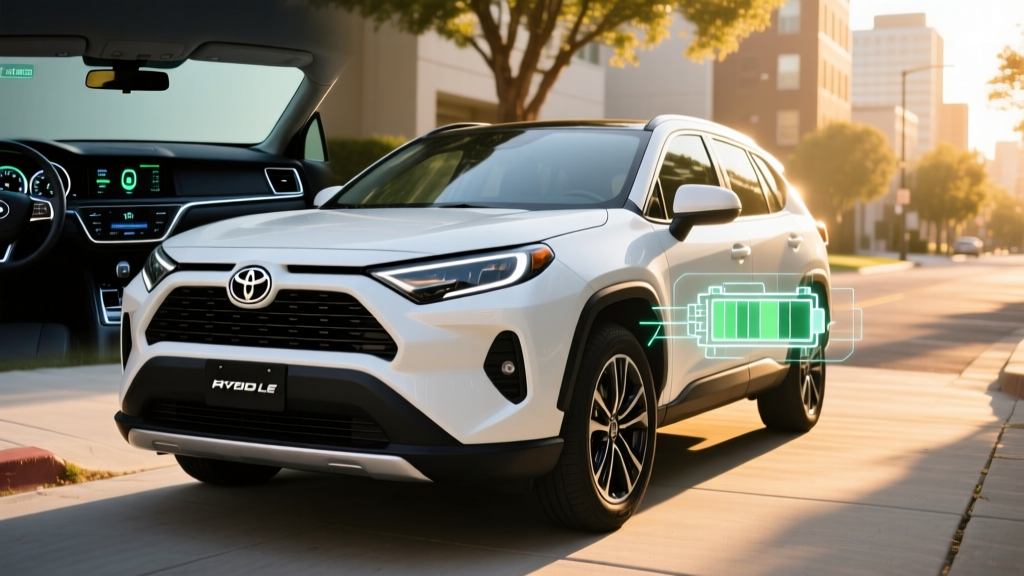
The 2024 Toyota RAV4 Hybrid LE remains one of the most practical compact SUVs on the market for buyers who want electrified efficiency without changing their fueling habits. It requires no plug, no charging routine, and no range calculations — you simply fill it with gas and drive. With an EPA-estimated 41 MPG city / 38 MPG highway / 40 MPG combined, standard electronic all-wheel drive, and a starting MSRP of $32,345 (including destination), the LE trim delivers the core RAV4 Hybrid value proposition at the lowest entry price.
For 2026 buyers shopping used or certified pre-owned 2024 models, this trim continues to represent a strong total-cost-of-ownership play. Toyota's hybrid system is among the most proven in the industry, with millions of miles of real-world data backing its reliability. Below, we break down every number that matters — fuel economy, powertrain output, battery warranty, and how the RAV4 Hybrid LE compares to its plug-in sibling (the RAV4 Prime) and full-electric alternatives.
| Spec | Value |
|---|---|
| EPA Fuel Economy (City / Hwy / Combined) | 41 / 38 / 40 MPG |
| Combined Horsepower | 219 hp |
| Engine | 2.5L 4-cyl Dynamic Force + 3 electric motors |
| Drivetrain | Electronic AWD (standard) |
| 0–60 mph | ~7.4 seconds |
| Hybrid Battery | 1.6 kWh (sealed NiMH), self-charging |
| Cargo Volume (behind rear seats) | 37.5 cu ft |
| Base MSRP (incl. destination) | $32,345 |
| Hybrid Battery Warranty | 10 years / 150,000 miles |
| Federal Tax Credit (§30D) | Not eligible (HEV, not PHEV/BEV) |
HEV vs PHEV: What the RAV4 Hybrid Actually Is
A common point of confusion in the RAV4 lineup is the difference between the RAV4 Hybrid and the RAV4 Prime. Both use Toyota's hybrid synergy drive, but they operate very differently.
HEV vs PHEV — Key Differences in the RAV4 Lineup
| Feature | RAV4 Hybrid (HEV) | RAV4 Prime (PHEV) |
|---|---|---|
| Plugs in to charge? | No — self-charging via regen & engine | Yes — 18.1 kWh battery, Level 1/2 charging |
| Electric-only range | ~1 mile at very low speed | 42 miles (EPA) |
| Combined horsepower | 219 hp | 302 hp |
| EPA combined MPGe (electric mode) | N/A | 94 MPGe |
| EPA combined MPG (gas mode) | 40 MPG | 38 MPG |
| Base MSRP (2024) | $32,345 | $44,515 |
| Federal §30D tax credit | Not eligible | Eligibility varies by battery sourcing & buyer income |
The 2024 Toyota RAV4 Hybrid LE is a conventional hybrid (HEV). It captures energy through regenerative braking and uses its gasoline engine to keep the small 1.6 kWh nickel-metal hydride (NiMH) battery charged. You never plug it in. The electric motors assist the gas engine during acceleration and enable brief electric-only movement at very low speeds (parking lots, stop-and-go creep), but this is not a vehicle designed for sustained electric-only driving.
If you want meaningful electric-only range — enough to cover a daily commute without burning gas — the RAV4 Prime PHEV is the choice, though it commands a roughly $12,000 premium and requires access to a Level 1 or Level 2 charger to realize its benefit.
Fuel Economy: EPA Numbers and Real-World MPG
The EPA rates the 2024 RAV4 Hybrid LE at 41 MPG city, 38 MPG highway, and 40 MPG combined, per fueleconomy.gov. These figures apply to all RAV4 Hybrid trims with the LE's 18-inch wheels — higher trims with larger wheels may see a 1–2 MPG reduction.
| Driving Cycle | EPA MPG |
|---|---|
| City | 41 MPG |
| Highway | 38 MPG |
| Combined | 40 MPG |
Real-World MPG: What Owners Actually See
Toyota's hybrid system excels in city driving, where frequent braking regenerates the battery and the electric motor handles low-speed propulsion. Many owners report exceeding the EPA city estimate, with real-world city figures of 42–45 MPG in moderate weather and stop-and-go traffic. This is one of the few vehicles where the EPA city number is arguably conservative.
Highway driving is a different story. At sustained 70–80 mph speeds, the gasoline engine does most of the work, and aerodynamic drag reduces efficiency. Expect 35–37 MPG on the highway in real-world conditions, especially with roof cargo boxes or in headwinds. Cold weather (below freezing) typically reduces hybrid efficiency by 5–10% due to increased engine runtime for cabin heating and reduced battery efficiency.
Over a 12,000-mile annual driving mix, the EPA combined 40 MPG translates to roughly 300 gallons per year. At $3.50/gallon, that's approximately $1,050 in annual fuel cost — a meaningful savings over the gas-only RAV4 LE (30 MPG combined), which would consume about 400 gallons ($1,400) annually.
Powertrain: 219 HP with Electronic AWD
The 2024 RAV4 Hybrid LE uses Toyota's fourth-generation hybrid system built around a 2.5-liter Dynamic Force four-cylinder engine. Here's how the power breaks down:
- Gas engine: 176 hp / 163 lb-ft torque (2.5L Atkinson-cycle 4-cylinder)
- Front electric motor: 118 hp / 149 lb-ft (integrated into transaxle)
- Rear electric motor: 54 hp / 89 lb-ft (powers rear axle for AWD)
- Net combined system output: 219 hp
The combined output is not a simple addition of the individual figures — Toyota calculates net system horsepower based on the maximum combined output achievable under normal driving conditions. The result is a 0–60 mph time of approximately 7.4 seconds, which is competitive for the compact SUV segment and noticeably quicker than the gas-only RAV4's ~8.7-second run.
The electronic AWD system (called AWD-i) uses the rear electric motor to power the rear wheels independently. There is no mechanical driveshaft connecting the front and rear axles. The system engages the rear motor automatically during acceleration, low-traction conditions, and cornering, then disengages it during steady cruising to maximize efficiency. It is not designed for serious off-road use but handles rain, light snow, and gravel roads competently.
Battery Warranty, Lifespan, and Replacement Cost
Hybrid Battery Warranty — 2024 RAV4 Hybrid
Coverage: 10 years or 150,000 miles (whichever comes first), transferable to subsequent owners.
What's covered: Defects in materials or workmanship, and battery capacity loss below a defined threshold (typically ~60–70% of original capacity, though Toyota does not publish an exact percentage).
Additional coverage: Hybrid system components including the inverter, transaxle, and hybrid control module are also covered under the same 10-year/150,000-mile warranty.
Toyota's hybrid battery track record is among the best in the industry. The NiMH battery pack in the RAV4 Hybrid is small (1.6 kWh) and operates within a narrow state-of-charge window — typically between 40% and 80% — which significantly reduces degradation stress. Toyota's hybrid control system deliberately avoids full charges and full discharges to maximize battery lifespan.
In practice, RAV4 Hybrid batteries routinely last well beyond 150,000 miles without significant capacity loss. Taxi fleet data and high-mileage owner reports commonly show 200,000+ miles on the original hybrid battery. Complete battery failure before 150,000 miles is uncommon and would typically be covered under warranty.
If replacement is eventually needed out of warranty, a new OEM hybrid battery for the RAV4 Hybrid costs approximately $3,000–$4,500 including labor at a Toyota dealer. Refurbished/remanufactured batteries are available for roughly $1,500–$2,500. This is dramatically less expensive than a full EV traction battery replacement, which can exceed $10,000–$20,000.
Pricing, Tax Credits, and Ownership Economics
The 2024 Toyota RAV4 Hybrid LE started at $32,345 (MSRP including $1,395 destination charge). As a conventional hybrid, it does not qualify for the federal §30D clean vehicle tax credit. The IRS restricts that credit to plug-in electric vehicles (BEVs and PHEVs) meeting specific battery sourcing, MSRP, and buyer income requirements. The RAV4 Hybrid, lacking a plug and having a battery far below the §30D minimum capacity threshold, is ineligible.
Some states and municipalities offer their own incentives for hybrid vehicles, though these are less common than EV incentives. Check your state's energy office or department of environmental quality for current programs. A few utilities offer minor rebates for hybrid purchases, but these are typically $250–$500 — not comparable to the $7,500 federal EV credit.
5-Year Total Cost of Ownership Estimate
Compared to the gas-only 2024 RAV4 LE (MSRP ~$29,825, 30 MPG combined), the Hybrid LE costs roughly $2,500 more upfront but saves approximately $350–$450 per year in fuel. Over five years and 60,000 miles, the fuel savings roughly offset the price premium. The hybrid also tends to hold its value well — Toyota RAV4 Hybrids consistently rank among the top compact SUVs for resale value, according to industry depreciation data.
Insurance costs for the RAV4 Hybrid are generally comparable to the gas model, sometimes $5–$15/month higher depending on the insurer. Maintenance costs are similar to the gas RAV4 — the hybrid system adds no scheduled maintenance items. There are no spark plugs to change on the Atkinson-cycle engine at the same intervals as a conventional engine, and regenerative braking extends brake pad life significantly.
Who Should Choose the RAV4 Hybrid LE vs Alternatives
Pros
- 41 MPG city — real-world city driving often exceeds EPA
- No plug required — zero lifestyle change from gas cars
- Standard AWD at no extra cost
- 10-year/150,000-mile hybrid battery warranty
- Strong resale value
- 37.5 cu ft cargo room with rear seats up
- Proven 4th-gen Toyota hybrid system
Cons
- No federal tax credit eligibility
- Highway MPG drops to ~35–37 real-world
- LE trim is basic — cloth seats, smaller infotainment screen
- Cannot drive on electric power alone beyond ~1 mile
- Not as quick as the RAV4 Prime (302 hp, 5.7s 0–60)
- Cabin noise under hard acceleration (CVT drone)
Decision Framework: RAV4 Hybrid LE vs RAV4 Prime vs Full EV
Choose the RAV4 Hybrid LE if: You want maximum MPG with zero change to your fueling routine, you lack reliable home or workplace charging access, your budget is under $35,000, and you drive a mix of city and highway miles.
Choose the RAV4 Prime (PHEV) if: You can charge at home (Level 2 recommended), your daily commute is under 42 miles round-trip, you want the option of gas-free daily driving with a gas engine backup for road trips, and you can absorb the ~$12,000 higher price (partially offset if you qualify for the §30D credit).
Choose a full EV (e.g., Tesla Model Y, Hyundai Ioniq 5) if: You have reliable home Level 2 charging, your daily driving is under 250 miles, you want to eliminate gasoline entirely, you want access to the full $7,500 federal tax credit (on eligible models), and you're comfortable with public DC fast charging for road trips.
Reliability, Safety, and What to Expect Long-Term
Toyota's hybrid powertrain is one of the most thoroughly validated in automotive history. The Hybrid Synergy Drive system has been in continuous production since the 1997 Prius, with cumulative global sales exceeding 20 million hybrid vehicles. The RAV4 Hybrid specifically has been in production since the 2016 model year, and its current-generation powertrain (introduced for 2019) has shown no systemic reliability issues in NHTSA complaint databases or long-term fleet data.
The 2024 RAV4 Hybrid earned strong safety marks. The NHTSA gave it a 5-Star Overall Safety Rating, and the IIHS named it a Top Safety Pick when equipped with specific headlights. Toyota Safety Sense 2.5+ comes standard on the LE trim, including pre-collision braking with pedestrian detection, full-speed adaptive cruise control, lane departure alert with steering assist, and automatic high beams.
Long-term ownership considerations are favorable. The RAV4 Hybrid's timing chain (not a belt) is designed to last the life of the engine. The e-CVT transaxle has no traditional clutch packs or bands to wear out. Brake pads often last 80,000–100,000 miles thanks to regenerative braking handling much of the deceleration. The primary maintenance items remain oil changes (every 10,000 miles), tire rotations, and cabin air filter replacement.
Frequently Asked Questions
How many MPG does the 2024 RAV4 Hybrid LE actually get?
The EPA rates it at 41 city / 38 highway / 40 combined. In real-world driving, city MPG often exceeds the EPA estimate (42–45 MPG is common), while highway MPG tends to run slightly below (35–37 MPG at sustained 70+ mph speeds). Cold weather reduces efficiency by roughly 5–10%.
Does the RAV4 Hybrid need to be plugged in?
No. The RAV4 Hybrid is a conventional hybrid (HEV). It charges its own battery through regenerative braking and the gasoline engine. There is no plug, no charging cable, and no need for any charging infrastructure.
How far can the RAV4 Hybrid drive on electric power alone?
Effectively about 0.5–1 mile at very low speeds (under 25 mph) in ideal conditions. This is not a meaningful electric-only driving range — it's a byproduct of the hybrid system enabling smooth stop-and-go operation. For substantial electric-only range, you need the RAV4 Prime PHEV (42 miles EPA electric-only).
Does the 2024 RAV4 Hybrid qualify for any federal tax credit?
No. The federal §30D clean vehicle credit applies only to plug-in electric vehicles (BEVs and PHEVs) that meet battery capacity, sourcing, MSRP, and buyer income requirements. The RAV4 Hybrid is a conventional HEV and is not eligible. Some states or utilities may offer minor hybrid incentives — check local programs.
How long will the RAV4 Hybrid battery last, and what does replacement cost?
Toyota warranties the hybrid battery for 10 years or 150,000 miles. In practice, these batteries routinely last 200,000+ miles. If replacement is needed out of warranty, expect $3,000–$4,500 for a new OEM battery at a dealer, or $1,500–$2,500 for a refurbished unit. This is far less than an EV battery replacement.
Is the RAV4 Hybrid LE better than the gas RAV4 LE?
For most buyers, yes. The hybrid costs ~$2,500 more upfront but delivers 10 MPG better combined fuel economy, standard AWD (which is a $1,400 option on the gas model), more horsepower (219 vs 203), and better resale value. The payback period on the price premium is typically 4–5 years at average driving distances, and the hybrid's higher resale value often closes the gap further at trade-in time.
What is the difference between the RAV4 Hybrid and the RAV4 Prime?
The RAV4 Hybrid (HEV) never plugs in and gets 40 MPG combined. The RAV4 Prime (PHEV) plugs in, offers 42 miles of electric-only range, produces 302 hp, and gets 94 MPGe in electric mode / 38 MPG in gas mode. The Prime costs ~$12,000 more but may qualify for partial federal tax credits and offers gas-free commuting for shorter trips.