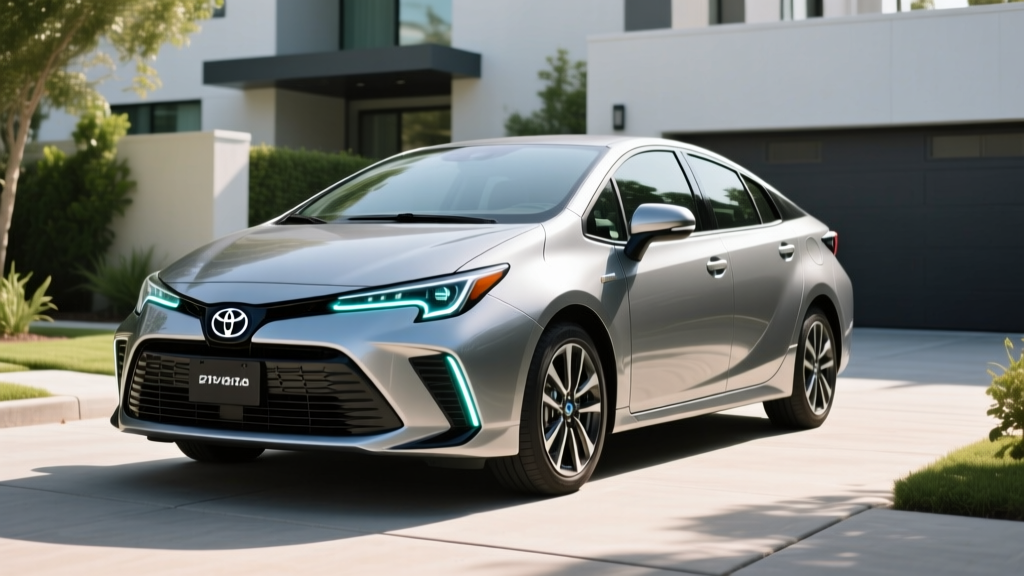
The 2024 Toyota Prius hybrid didn't just get a facelift — it got a complete reinvention. Toyota swapped the sluggish, appliance-like persona of previous generations for a sleek fastback silhouette, a 194-horsepower powertrain, and a chassis that actually rewards the driver. But the headline act remains what it always was: exceptional fuel economy. With EPA ratings reaching 57 MPG combined, the 2024 Prius hybrid sits at the top of the non-plug-in efficiency leaderboard. We spent time analyzing EPA data, owner reports, and Toyota's spec sheets to give you the real picture — not the brochure version.
2024 Toyota Prius Hybrid: Quick Verdict
If you want maximum fuel efficiency without plugging in, the 2024 Prius is still the benchmark. The LE trim delivers the best MPG (57/52/56 city/highway/combined), while the XLE and Limited trims trade a few miles per gallon for all-wheel drive, more power, and upgraded tech. This is a conventional hybrid (HEV), meaning it generates its own electricity through regenerative braking and the gasoline engine — no plug, no charging cable, no range anxiety. You just fill up with gas and drive.
The 2024 Toyota Prius (HEV) is a conventional hybrid. It has a small battery (~1.0 kWh) that charges via regen and the engine. You never plug it in. The 2024 Toyota Prius Prime (PHEV) is the plug-in variant with a larger 13.6 kWh battery, 44 miles of electric-only range, and the ability to charge from a wall outlet. This review focuses on the standard Prius HEV. We cover the Prime in a separate guide.
Fuel Economy: EPA Ratings and Real-World MPG
The EPA rates the 2024 Prius hybrid differently depending on trim and drivetrain. Front-wheel-drive models maximize efficiency, while all-wheel-drive (AWD) trims add a rear electric motor that costs a few MPG but provides traction confidence.
| Trim | Drivetrain | City MPG | Highway MPG | Combined MPG |
|---|---|---|---|---|
| LE | FWD | 57 | 56 | 57 |
| XLE | AWD | 49 | 50 | 49 |
| Limited | AWD | 49 | 50 | 49 |
Source: EPA fueleconomy.gov
Real-World MPG: What Owners Actually See
Toyota hybrids have a well-documented tendency to exceed EPA city ratings in stop-and-go driving, where regenerative braking recaptures the most energy. On the highway, where the gasoline engine does more of the work, real-world MPG tends to align closely with or dip slightly below the sticker.
Based on aggregated owner data from Fuelly and real-world testing by automotive outlets:
- City / suburban driving (LE FWD): 55–62 MPG — many owners report beating the 57 EPA city figure in warm weather with moderate traffic.
- Highway (70–75 mph, LE FWD): 48–54 MPG — aerodynamic drag at higher speeds and the smaller battery's limited assist reduce efficiency.
- Cold weather penalty: Expect a 5–10% drop in winter. The engine runs more frequently to heat the cabin and maintain battery temperature, reducing time spent in electric-only mode.
- AWD trims (XLE/Limited): Typically 46–52 MPG combined in mixed real-world use, consistent with the 49 MPG EPA rating.
Powertrain and Performance Specs
The fifth-generation Prius uses Toyota's latest hybrid synergy drive, pairing a 2.0-liter four-cylinder engine with electric motors. The result is a dramatic power increase over the previous generation's 121 hp.
| Specification | FWD (LE) | AWD (XLE / Limited) |
|---|---|---|
| Engine | 2.0L 4-cyl | 2.0L 4-cyl |
| Combined System Horsepower | 194 hp | 196 hp |
| Front Electric Motor | 83 kW (111 hp) | 83 kW (111 hp) |
| Rear Electric Motor | — | 30 kW (41 hp) |
| Hybrid Battery | ~1.0 kWh lithium-ion | ~1.0 kWh lithium-ion |
| Transmission | eCVT | eCVT |
| 0–60 mph | ~7.2 seconds | ~7.0 seconds |
The jump from 121 hp (2022 model) to 194–196 hp transforms the driving experience. Highway merging is confident, and the car no longer feels strained at speed. The eCVT remains smooth, though it still drones under hard acceleration — a characteristic of Toyota's planetary-gear hybrid system.
Pricing, Trims, and Tax Credit Eligibility
The 2024 Prius hybrid is priced competitively, especially given the standard safety tech and fuel savings.
| Trim | MSRP (incl. destination) | Key Features |
|---|---|---|
| LE | $29,045 | 8-inch touchscreen, TSS 3.0, wireless CarPlay/Android Auto, 15" alloys |
| XLE | $32,495 | AWD, 19" alloys, SofTex seats, wireless charging, power liftgate |
| Limited | $35,740 | AWD, 12.3-inch display, JBL audio, heated/ventilated front seats, panoramic roof |
Does the 2024 Prius Hybrid Qualify for a Federal Tax Credit?
No. The standard 2024 Toyota Prius (HEV) does not qualify for the federal §30D Clean Vehicle Credit. Under current IRS rules, only plug-in electric vehicles (BEVs) and plug-in hybrids (PHEVs) with a minimum battery capacity of 7 kWh are eligible. The Prius HEV's ~1.0 kWh battery falls well below that threshold.
If you want a Prius that does qualify, the 2024 Prius Prime (PHEV) with its 13.6 kWh battery may be eligible for up to $3,750 under §30D, subject to income caps, MSRP limits, and critical-mineral sourcing requirements. Consult the IRS qualified vehicles list and a tax professional before relying on credit eligibility.
Battery Warranty, Reliability, and Replacement Cost
Hybrid battery longevity is consistently the top concern among first-time hybrid buyers. Toyota addresses this with one of the strongest hybrid battery warranties in the industry.
• Hybrid battery: 10 years / 150,000 miles (whichever comes first)
• Hybrid system components (inverter, control module, etc.): 8 years / 100,000 miles
• Powertrain: 5 years / 60,000 miles
• Basic: 3 years / 36,000 miles
Applies to 2020+ model-year Toyotas sold in the U.S. Earlier models had 8-year/100,000-mile battery coverage.
Real-World Hybrid Battery Lifespan
Toyota's hybrid batteries have an excellent longevity track record. Data from fleet operators, taxi services, and high-mileage owners shows that Prius hybrid batteries routinely last 150,000–200,000+ miles before significant degradation. Unlike full EV batteries that lose range visibly over time, the Prius's small hybrid battery operates within a narrow state-of-charge window (roughly 40–80%), which dramatically reduces stress and extends cycle life.
If replacement is needed outside warranty, a new OEM hybrid battery for the current-generation Prius typically costs $2,000–$3,500 including labor. Third-party reconditioned batteries are available for $1,000–$2,000. For context, the vast majority of Prius owners will sell or trade the vehicle before facing this expense.
Overall Reliability
The Prius nameplate carries a top-tier reliability reputation. Toyota's hybrid synergy drive has been in production since 1997 with iterative improvements. The eCVT transmission has no traditional clutches or bands to wear out — it uses a planetary gearset with no friction components. IIHS named the 2024 Prius a Top Safety Pick+ when equipped with specific headlights, and NHTSA awarded it a 5-star overall safety rating.
2024 Prius Hybrid vs Prius Prime vs Full EV: Which Is Right for You?
Choosing between a conventional hybrid, plug-in hybrid, and full electric vehicle depends on your driving patterns, charging access, and budget.
| Factor | Prius HEV | Prius Prime (PHEV) | Full EV (e.g., Model 3, Ioniq 6) |
|---|---|---|---|
| Plug in to charge? | No | Yes (optional) | Yes (required) |
| Electric-only range | ~1 mi (low speed) | 44 mi (EPA) | 250–360 mi |
| Fuel cost per mile | ~$0.06 | ~$0.04 (electric) / $0.08 (gas) | ~$0.03–$0.05 |
| Home charging needed? | No | Recommended | Essential |
| Federal tax credit | None | Up to $3,750* | Up to $7,500* |
| Starting MSRP | $29,045 | $34,045 | $38,000+ |
* Tax credit eligibility subject to IRS §30D income caps, MSRP limits, and battery sourcing rules. Verify at IRS.gov.
Choose the Prius HEV if: You don't have access to home charging (apartment, street parking), you want the lowest purchase price, or you simply don't want to think about plugging in. It's the most hassle-free path to 50+ MPG.
Choose the Prius Prime (PHEV) if: You have a garage or driveway with a standard 120V outlet, your daily commute is under 40 miles, and you want to drive mostly on electricity while keeping the gas engine for road trips. The $3,750 credit helps close the price gap.
Choose a full EV if: You can install a Level 2 home charger, your daily driving is under 250 miles, you want the lowest per-mile fuel cost, and you're ready to plan around public charging on road trips.
Pros and Cons of the 2024 Toyota Prius Hybrid
- Class-leading 57 MPG combined (LE FWD)
- 194 hp — genuinely quick for a hybrid
- Striking fastback design sheds the "boring" image
- 10-year / 150k-mile hybrid battery warranty
- Standard Toyota Safety Sense 3.0 (AEB, lane-keep, adaptive cruise)
- 600+ mile real-world range per tank
- No plug-in required — works for apartment dwellers
- Tight rear headroom due to sloping roofline
- Cargo space (23.8 cu ft) trails some crossovers
- No federal tax credit for the HEV variant
- AWD trims drop to 49 MPG combined
- eCVT drone under hard acceleration
- Base LE's 8-inch screen feels small for 2024
- Road noise noticeable on coarse pavement
Frequently Asked Questions
How many MPG does the 2024 Toyota Prius hybrid get?
The EPA rates the 2024 Prius LE (FWD) at 57 city / 56 highway / 57 combined MPG. AWD trims (XLE, Limited) are rated at 49 city / 50 highway / 49 combined. In real-world city driving, many owners report matching or slightly exceeding the EPA city figure thanks to Toyota's regenerative braking system. Highway driving at 75 mph typically yields 48–54 MPG for the FWD model.
Does the 2024 Prius hybrid need to be plugged in?
No. The standard 2024 Prius is a conventional hybrid (HEV). Its small lithium-ion battery charges exclusively through regenerative braking and the gasoline engine. You never plug it in — just refuel at any gas station. If you want a plug-in Prius, look at the Prius Prime (PHEV), which offers 44 miles of electric-only range.
Is the 2024 Prius hybrid reliable, and what does a battery replacement cost?
Yes — the Prius has one of the strongest reliability records of any vehicle on the road. Toyota covers the hybrid battery for 10 years or 150,000 miles. Real-world data shows Prius hybrid batteries routinely lasting 150,000–200,000+ miles thanks to the narrow state-of-charge operating window that minimizes degradation. Out-of-warranty replacement costs $2,000–$3,500 for a new OEM battery, though most owners will never need one.
Does the 2024 Toyota Prius qualify for any tax credit?
The standard Prius HEV does not qualify for the federal §30D Clean Vehicle Credit because it is not a plug-in vehicle. The Prius Prime (PHEV) may qualify for up to $3,750, depending on your income, the vehicle's MSRP, and battery component sourcing. Some states offer additional hybrid or PHEV rebates — check your state's energy office for details. Always verify current eligibility on IRS.gov and consult a tax professional.
How does the 2024 Prius compare to the Hyundai Ioniq Hybrid or Honda Accord Hybrid?
The Prius LE's 57 MPG combined edges out the Hyundai Ioniq Hybrid (54 MPG combined, though the Ioniq was discontinued after 2022) and the Honda Accord Hybrid (48 MPG combined). The Prius also offers more cargo versatility as a hatchback versus the Accord's sedan trunk. The Accord Hybrid delivers a more refined ride and more rear-seat room, but at a higher starting price (~$33,000). The Prius remains the efficiency-per-dollar leader in the hybrid segment.