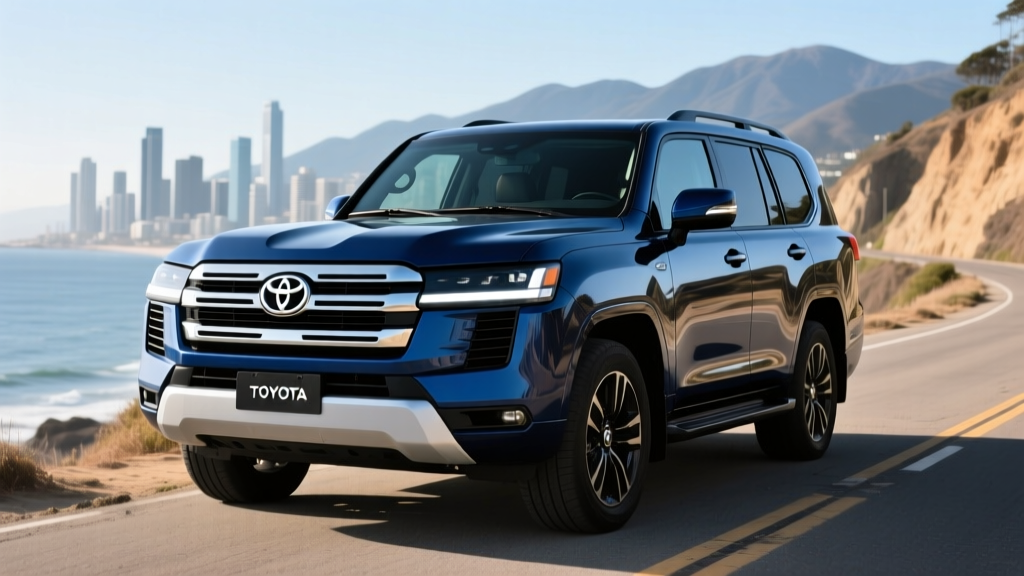
The 2024 Toyota Land Cruiser returned to North America after a three-year hiatus, and it came back exclusively as a hybrid. Built on the TNGA-F body-on-frame platform shared with the Tacoma and 4Runner, this new Land Cruiser ditches the old 5.7L V8 for the i-FORCE MAX hybrid powertrain — a turbocharged four-cylinder paired with an electric motor. The result is more torque, better efficiency, and a significantly lower starting price than the outgoing 200 Series.
But "hybrid" means different things to different buyers. Before we get into the numbers, it's essential to clarify exactly what kind of hybrid the Land Cruiser is — and what it isn't.
HEV vs PHEV: What Kind of Hybrid Is the Land Cruiser?
The 2024 Toyota Land Cruiser is a conventional hybrid (HEV), not a plug-in hybrid (PHEV).
This means you never plug it in. The 1.87 kWh nickel-metal hydride (NiMH) battery pack charges exclusively through regenerative braking and the gasoline engine. There is no electric-only driving mode and no external charging port. The hybrid system assists the engine during acceleration, recovers energy during deceleration, and enables brief engine-off coasting — but the gas engine is always the primary power source.
If you're comparing this to a PHEV like the Toyota RAV4 Prime — which offers 42 miles of electric-only range and requires plugging in to access its full efficiency benefit — the Land Cruiser operates differently. Think of it as a gas vehicle that uses hybrid technology to improve MPG without changing your fueling habits. You fill up at the pump, exactly as you would with any conventional SUV.
Fuel Economy: EPA Ratings and Real-World MPG
The EPA rates the 2024 Land Cruiser at 22 MPG city / 25 MPG highway / 23 MPG combined across both the 1958 and Land Cruiser trims. For a 6,000-pound body-on-frame SUV, those numbers represent a meaningful improvement over the outgoing 200 Series, which returned just 13/18/14 MPG with its 5.7L V8.
| Driving Condition | EPA Estimate | Real-World Expectation |
|---|---|---|
| City | 22 MPG | 22–24 MPG (hybrids excel in stop-and-go) |
| Highway | 25 MPG | 23–25 MPG (aero drag hurts at 75+ mph) |
| Combined | 23 MPG | 22–24 MPG |
| Off-Road / Low-Speed Trail | N/A | 15–18 MPG (heavy throttle, low gears) |
| Towing (5,000 lb trailer) | N/A | 12–15 MPG |
Real-world note: Toyota's hybrid systems tend to match or slightly exceed EPA city estimates because regenerative braking recovers more energy in stop-and-go traffic than the test cycle captures. Highway efficiency, however, can drop if you regularly drive above 75 mph or carry heavy cargo — the Land Cruiser's boxy shape creates substantial aerodynamic drag. Owners reporting on fueleconomy.gov's My MPG tracker have logged averages between 21 and 24 MPG in mixed driving, closely tracking the EPA combined figure.
With a 17.9-gallon fuel tank, expect a real-world range of approximately 390–430 miles per tank in normal mixed driving. That range shrinks considerably when towing or running trails in 4Low.
i-FORCE MAX Powertrain: Specs and Performance
The i-FORCE MAX powertrain pairs a 2.4-liter turbocharged inline-four engine with a 48-horsepower electric motor integrated between the engine and the eight-speed automatic transmission. Here's the complete breakdown:
| Specification | 2024 Toyota Land Cruiser |
|---|---|
| Engine | 2.4L turbocharged I-4 |
| Electric Motor | 48 HP / 184 lb-ft (integrated in bell housing) |
| Combined System Output | 326 HP / 465 lb-ft torque |
| Transmission | 8-speed automatic (Direct Shift) |
| Hybrid Battery | 1.87 kWh NiMH (sealed, no plug) |
| Drivetrain | Full-time 4WD with locking center differential |
| 0–60 MPH | ~6.5 seconds (est.) |
| Towing Capacity | 6,000 lbs (max, properly equipped) |
| Curb Weight | ~5,070–5,215 lbs (trim dependent) |
| Ground Clearance | 8.7 inches |
The 465 lb-ft of combined torque is the headline number. That's 63 lb-ft more than the old 5.7L V8 produced, and the electric motor delivers its torque instantly at low RPM. The result is surprisingly responsive acceleration from a standstill, even with nearly 5,200 pounds to move. The turbo four-cylinder does get vocal under hard acceleration — it lacks the V8's refinement — but the torque delivery makes it a non-issue in daily driving.
The hybrid system also enables a stop-start function that kills the engine at red lights and restarts it seamlessly via the electric motor. In city driving, you'll notice the engine cycling off frequently during coasting and light-load situations, which is where the Land Cruiser recovers most of its efficiency advantage over a conventional gas SUV.
Trims, Pricing, and Tax Credit Eligibility
The 2024 Land Cruiser is offered in two trims:
| Trim | MSRP | Key Features |
|---|---|---|
| 1958 | $55,950 | Round LED headlights, 8" touchscreen, cloth seats, 18" wheels |
| Land Cruiser | $60,950 | Rectangular LED headlights, 12.3" touchscreen, SofTex seats, 20" wheels, front stabilizer disconnect |
Destination charge adds $1,495 to both trims. Fully loaded with options and accessories, a Land Cruiser trim can push past $66,000.
Federal tax credit: The 2024 Toyota Land Cruiser hybrid does not qualify for the federal §30D clean vehicle tax credit. That credit is restricted to plug-in electric vehicles (BEVs and PHEVs) with sufficient battery capacity and compliant battery sourcing. Conventional hybrids like the Land Cruiser are excluded under current IRS rules. Some states offer modest rebates for hybrid purchases — check your state's energy office for current programs — but there is no federal incentive for this vehicle.
For buyers specifically seeking a tax-credit-eligible Toyota SUV, the RAV4 Prime PHEV may qualify for partial credits depending on battery sourcing and your income level, though availability has been constrained. Consult a tax professional before making purchase decisions based on credit eligibility.
Battery Warranty, Reliability, and Replacement Costs
Hybrid Battery Warranty: Toyota covers the Land Cruiser's hybrid battery for 10 years or 150,000 miles (whichever comes first) from date of first use. This applies in all 50 states. The broader powertrain warranty covers 5 years / 60,000 miles, and the basic bumper-to-bumper warranty covers 3 years / 36,000 miles.
The 1.87 kWh NiMH pack in the Land Cruiser is small by electrified-vehicle standards, and that's actually an advantage for longevity. NiMH chemistry is well-proven — Toyota has used it in the Prius since 1997 — and the small capacity means the battery experiences shallow charge-discharge cycles rather than deep ones. Toyota's hybrid battery management system also maintains a buffer, never allowing the pack to fully deplete or fully charge, which reduces degradation.
Reliability track record: Toyota's hybrid systems are among the most reliable powertrains in the industry. The Prius, Camry Hybrid, and RAV4 Hybrid have demonstrated hybrid battery lifespans regularly exceeding 200,000 miles with minimal capacity loss. The i-FORCE MAX system is newer (introduced in the Tundra for 2022), so long-term data is still accumulating, but the fundamental architecture — a small NiMH pack with a bell-housing electric motor — is mechanically straightforward.
Replacement cost: If the hybrid battery fails outside warranty, expect a replacement to cost between $3,000 and $5,000 including parts and labor at a Toyota dealer. Independent hybrid specialists may offer refurbished packs for $2,000–$3,500. For context, this is significantly less than a full EV battery replacement ($8,000–$20,000+) because the pack is small and uses mature NiMH chemistry rather than large-format lithium-ion cells.
The turbocharged engine is a newer design and introduces complexity (turbo, direct + port injection, intercooler) that naturally aspirated engines lack. Long-term reliability of the 2.4L turbo remains to be fully established, though Toyota's turbo four-cylinders in the Tacoma and Highlander have shown solid early durability data.
Who Should Buy the Land Cruiser Hybrid?
Pros
- 465 lb-ft torque from a hybrid system that needs no plug
- 23 MPG combined — 64% better than the old V8 Land Cruiser
- Genuine off-road capability: locking center diff, Multi-Terrain Select, Crawl Control
- 10-year / 150,000-mile hybrid battery warranty
- 6,000-lb towing capacity
- Strong resale value (Land Cruiser nameplate heritage)
Cons
- No federal tax credit (HEV, not PHEV/BEV)
- Turbo four-cylinder sounds coarse under hard acceleration
- Only two rows of seating (no third-row option unlike the old 200 Series)
- $55,950+ starting price with limited trim selection
- Fuel economy drops sharply when towing (12–15 MPG)
- Cargo space is modest for its exterior footprint (41.5 cu ft behind 2nd row)
The Right Buyer
The 2024 Land Cruiser hybrid is ideal if you need a rugged, body-on-frame SUV with real off-road hardware and want better fuel economy than a traditional gas 4x4 — without changing your fueling routine. You don't have home charging access, you take road trips into remote areas, or you simply don't want to think about plugging in. You value Toyota's reliability reputation and plan to keep the vehicle 10+ years.
Consider a PHEV Instead If...
You have home Level 2 charging, your daily commute is under 35 miles, and you want to drive on electricity most weekdays while keeping a gas engine for road trips. The RAV4 Prime (42 miles EV range, 94 MPGe) or a Wrangler 4xe (22 miles EV range) offer plug-in versatility, though neither matches the Land Cruiser's off-road refinement or towing capacity.
Consider a Full EV Instead If...
You have reliable home charging, rarely tow, and want to eliminate gas station visits entirely. The Rivian R1S offers three rows, strong off-road capability, and 300+ miles of range — but starts above $75,000 and can't match the Land Cruiser's proven long-term reliability data.
Land Cruiser Hybrid vs. the Competition
| Vehicle | Type | Combined MPG/MPGe | HP / Torque | Starting MSRP |
|---|---|---|---|---|
| 2024 Toyota Land Cruiser | HEV | 23 MPG | 326 HP / 465 lb-ft | $55,950 |
| 2024 Jeep Wrangler 4xe | PHEV | 49 MPGe / 20 MPG gas | 375 HP / 470 lb-ft | $51,795 |
| 2024 Lexus GX 550 | Gas (no hybrid) | 17 MPG | 349 HP / 479 lb-ft | $64,250 |
| 2024 Ford Bronco (2.7L V6) | Gas (no hybrid) | 18 MPG | 330 HP / 415 lb-ft | $41,795 |
The Land Cruiser occupies a unique position: it's the only conventional hybrid in this off-road SUV segment. The Wrangler 4xe offers plug-in capability but sacrifices cargo space to its battery and has a rougher ride on pavement. The Lexus GX 550 shares the TNGA-F platform and twin-turbo V6 but returns just 17 MPG combined and costs nearly $10,000 more. The Bronco undercuts on price but offers no hybrid efficiency and a less refined on-road experience.
Frequently Asked Questions
How many MPG does the 2024 Toyota Land Cruiser hybrid get?
The EPA rates it at 22 city / 25 highway / 23 combined MPG. In real-world mixed driving, most owners report 21–24 MPG. City driving tends to match or slightly exceed the EPA estimate thanks to regenerative braking, while sustained highway driving above 75 mph and towing will drop efficiency below the combined figure.
Do I need to plug in the Land Cruiser hybrid?
No. The 2024 Land Cruiser is a conventional hybrid (HEV), not a plug-in hybrid (PHEV). The 1.87 kWh battery charges entirely through regenerative braking and the gasoline engine. You fuel it exactly like any other gas vehicle — at the pump.
Can the Land Cruiser drive on electric power alone?
Only in very limited circumstances. The hybrid system can propel the vehicle at low speeds for brief distances (typically under a mile at parking-lot speeds) when conditions allow, but there is no dedicated EV mode and no meaningful electric-only range. The gas engine is always the primary power source.
Does the 2024 Land Cruiser qualify for any tax credit?
No federal tax credit is available. The IRS §30D clean vehicle credit applies only to plug-in vehicles (BEVs and PHEVs) meeting battery sourcing, MSRP, and buyer income requirements. Conventional hybrids are excluded. Check your state's energy office for any local hybrid incentives, which are typically modest ($250–$1,000 where available).
How long will the Land Cruiser hybrid battery last?
Toyota's NiMH hybrid batteries routinely last 200,000+ miles in models like the Prius and Camry Hybrid. The Land Cruiser's hybrid battery is covered by a 10-year / 150,000-mile warranty. Replacement cost, if needed outside warranty, is estimated at $3,000–$5,000 — significantly less than a full EV battery replacement.
Is the Land Cruiser hybrid good for towing?
It's rated to tow 6,000 pounds when properly equipped, which covers most boat trailers, small campers, and utility trailers. However, expect fuel economy to drop to 12–15 MPG while towing at highway speeds. The 465 lb-ft of torque provides confident acceleration with a load, but the turbocharged four-cylinder will be audible under heavy towing strain.
Hybrid vs PHEV vs EV — which is right for me?
Choose the Land Cruiser HEV if: You want improved MPG without changing your fueling habits, you drive in remote areas with no charging infrastructure, or you need maximum towing and off-road capability with zero range compromise.
Choose a PHEV if: You can charge at home, your daily driving is under 30–40 miles, and you want to commute on electricity while keeping a gas engine for longer trips.
Choose a full EV if: You have reliable home charging, want to eliminate gas entirely, and your driving patterns fit within 250–350 miles between charges (or you're willing to plan DC fast-charging stops on road trips).