Quick Verdict: The 2024 Toyota Highlander Hybrid LE in 2026
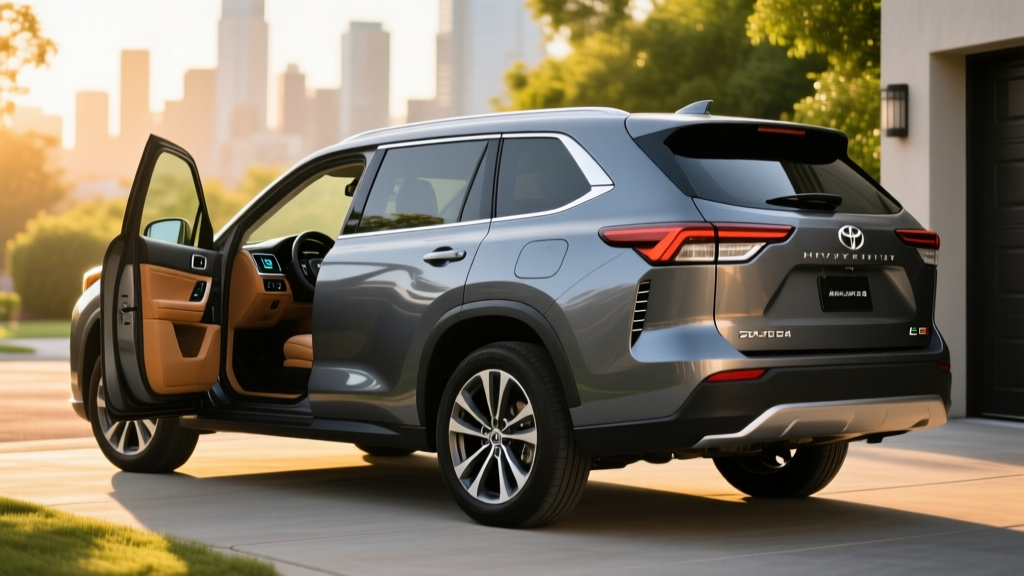
The 2024 Toyota Highlander Hybrid LE remains one of the most practical three-row SUVs on the used and remaining-new market. With an EPA-estimated 36 MPG combined, standard all-wheel drive, and Toyota's proven hybrid synergy drive system, it occupies a specific niche: families who need three rows, want to minimize fuel costs, and aren't ready — or able — to plug in. As of 2026, this model is available through certified pre-owned programs and some remaining new inventory, and it continues to hold strong resale value thanks to its reliability reputation.
This is a conventional hybrid (HEV), not a plug-in hybrid. You never plug it in. The gasoline engine and regenerative braking charge the battery automatically. If you want electric-only driving, you'd need to look at a PHEV like the Toyota RAV4 Prime — but no three-row Toyota PHEV exists in this generation.
Fuel Economy: EPA MPG and Real-World Numbers
The headline number for any hybrid buyer is fuel economy. The 2024 Highlander Hybrid LE delivers strong EPA ratings across the board, but real-world results often differ depending on your driving mix.
| Metric | EPA Estimate | Real-World Expectation |
|---|---|---|
| City MPG | 36 MPG | 34–38 MPG (hybrids excel in stop-and-go) |
| Highway MPG | 35 MPG | 30–33 MPG (sustained 75+ mph reduces hybrid advantage) |
| Combined MPG | 36 MPG | 33–36 MPG |
| Annual Fuel Cost (15,000 mi) | ~$1,850* | Varies by region and fuel price |
*Source: fueleconomy.gov, based on 45% highway / 55% city driving and national average fuel prices.
Toyota's hybrid system recovers energy during braking and low-speed driving, which is why city MPG matches or slightly exceeds highway MPG — the opposite of most gas-only vehicles. On a 400-mile highway road trip at 75 mph with A/C running, expect closer to 31–32 MPG. In suburban and city commuting, owners frequently report 37–39 MPG in temperate weather.
Cold weather reduces efficiency by roughly 10–15% due to increased engine idling for cabin heat and reduced battery efficiency. In sub-freezing conditions, expect combined MPG in the low 30s.
Powertrain: 243 HP Hybrid Synergy Drive
The 2024 Highlander Hybrid LE uses Toyota's fourth-generation hybrid system paired with a 2.5-liter inline-four engine. Here's the full powertrain breakdown:
| Specification | Detail |
|---|---|
| Engine | 2.5L DOHC 4-cylinder (186 hp, 186 lb-ft) |
| Front Electric Motor | 134 hp, 199 lb-ft |
| Rear Electric Motor (AWD) | 40 hp, 89 lb-ft |
| Net Combined Horsepower | 243 hp |
| Transmission | Continuously Variable (eCVT) |
| Drivetrain | Electronic On-Demand AWD (standard) |
| 0–60 mph | ~7.8 seconds |
| Towing Capacity | 3,500 lbs |
| Hybrid Battery | 1.87 kWh (sealed NiMH, self-charging) |
The 1.87 kWh battery is small by EV standards — and that's intentional. This is a conventional hybrid, so the battery acts as a buffer, not a primary energy source. It captures braking energy and assists the gas engine during acceleration. You cannot plug it in, and it has no electric-only driving range to speak of (perhaps a few hundred yards at very low speeds).
The electronic AWD system uses the rear electric motor to power the rear wheels only when slip is detected or during hard acceleration. There's no mechanical driveshaft connecting the front and rear axles, which reduces weight and parasitic loss — a key reason the hybrid achieves better MPG than the gas-only Highlander's AWD system.
HEV vs PHEV vs EV: Which Fits Your Family?
Three-row SUV buyers in 2026 face a genuine choice between conventional hybrids, plug-in hybrids, and full electric vehicles. Each has trade-offs:
HEV vs PHEV vs EV — At a Glance
| Factor | HEV (Highlander Hybrid) | PHEV (e.g., Kia Sorento PHEV) | BEV (e.g., Kia EV9) |
|---|---|---|---|
| Plug in required? | No | Yes (for EV range) | Yes (always) |
| Electric-only range | None | 30–32 miles | 230–310 miles |
| Total range | ~600+ miles | ~430 miles (EV + gas) | 230–310 miles |
| Fuel cost per mile | ~$0.12 | ~$0.06 (EV mode) / $0.12 (gas) | ~$0.04–$0.06 |
| Federal tax credit | None | Up to $7,500 (§30D) | Up to $7,500 (§30D) |
| Home charging needed | No | Recommended (Level 2) | Essential (Level 2) |
| Three-row availability | Yes | Limited | Limited (EV9, TX) |
Choose the Highlander Hybrid (HEV) if: You lack access to home charging, regularly take long road trips, want three rows, and prefer the lowest-complexity ownership experience. No plug, no range anxiety, no charging-curve math.
Choose a PHEV if: You have a garage or driveway where you can install a Level 2 charger, your daily commute is under 30 miles, and you want electric-only weekday driving with gas-engine flexibility for weekend trips. Note that as of 2026, no Toyota three-row PHEV exists in the US market.
Choose a full EV if: You have reliable home charging, your daily driving is under 250 miles, you want the lowest per-mile fuel cost, and you're comfortable with DC fast charging on road trips. Three-row EVs like the Kia EV9 and Rivian R1S exist but start at significantly higher prices ($55,000+).
Pricing, Tax Credits, and Total Cost
The 2024 Toyota Highlander Hybrid LE carried an original MSRP of $40,220 (including destination). As of 2026, remaining new inventory is scarce, and most buyers will encounter this model through certified pre-owned (CPO) channels or the used market, where prices typically range from $34,000–$39,000 depending on mileage and condition.
Federal Tax Credit Eligibility
The 2024 Highlander Hybrid LE does NOT qualify for the federal §30D new clean vehicle tax credit. This credit applies only to plug-in electric vehicles (PHEVs and BEVs) with batteries above a certain kWh threshold. Conventional hybrids like this one are ineligible regardless of buyer income or MSRP.
However, if you purchase this model used from a dealer in 2026, you may qualify for the Used Clean Vehicle Credit (§25E) — up to $4,000 or 30% of the sale price (whichever is less) — but this credit also applies only to plug-in vehicles (PHEVs and BEVs), not conventional HEVs. The Highlander Hybrid LE is ineligible for both credits.
Source: IRS.gov — Clean Vehicle Credits. Tax eligibility is complex; consult a tax professional.
Despite the lack of tax credits, the Highlander Hybrid's fuel savings are meaningful. Compared to the gas-only 2024 Highlander (24 MPG combined with AWD), the hybrid saves approximately $450–$550 per year in fuel costs at 15,000 miles driven annually and $3.50/gallon. Over a typical 8-year ownership period, that's $3,600–$4,400 in fuel savings — which largely offsets the hybrid's price premium over the gas model.
Reliability and Battery Warranty
Toyota's hybrid systems have been in production since 1997 (Prius), and the Highlander Hybrid has used the current-generation synergy drive since the 2020 model year refresh. This is one of the most proven hybrid powertrains on the market.
Battery & Hybrid System Warranty
| Component | Warranty Coverage |
|---|---|
| Hybrid Battery | 10 years / 150,000 miles (whichever comes first) |
| Hybrid System Components | 8 years / 100,000 miles |
| Powertrain (engine, trans) | 5 years / 60,000 miles |
| Basic Bumper-to-Bumper | 3 years / 36,000 miles |
Source: Toyota Warranty Guide. Coverage applies to original 2024 model year; CPO vehicles may have extended coverage.
The hybrid battery in the Highlander is a 1.87 kWh nickel-metal hydride (NiMH) pack — not the lithium-ion chemistry found in EVs. NiMH is less energy-dense but extremely durable and well-understood. Toyota's own data and owner surveys show hybrid battery failures are rare before 150,000 miles, and many units last well beyond 200,000 miles.
Battery replacement cost: If the hybrid battery does fail outside warranty, expect to pay $3,000–$4,500 for a new OEM replacement including labor. Refurbished or aftermarket units can reduce this to $1,500–$2,500. Given the 10-year/150,000-mile warranty, most original owners will never face this cost.
For comparison, a full EV battery replacement (e.g., a 77 kWh pack in a comparable electric SUV) can cost $10,000–$18,000. The hybrid's tiny battery is a fraction of that expense — a genuine advantage for long-term cost predictability.
What It's Like to Live With: Daily Driving Notes
The LE is the base trim, which means you get a well-equipped vehicle but miss some premium features found on higher trims (XLE, Limited, Platinum). Here's what matters for daily ownership:
- Seating: 8-passenger capacity with a second-row bench (higher trims offer 7-passenger captain's chairs). The third row fits children or adults on short trips but is tight for long journeys.
- Cargo: 16.1 cu ft behind the third row, 48.4 cu ft behind the second row, 84.3 cu ft with both rows folded. Competitive for the segment.
- Infotainment: 8-inch touchscreen with wireless Apple CarPlay and Android Auto on the 2024 model year. Adequate but smaller than competitors' 12.3-inch screens.
- Safety: Toyota Safety Sense 2.5+ is standard — adaptive cruise control, lane-keeping assist, automatic emergency braking, and lane departure alert. This is an SAE Level 2 driver-assist system, meaning the driver must remain fully engaged at all times. It is not self-driving.
- Noise: The eCVT keeps the engine at optimal RPM, which can produce a droning sound under hard acceleration. At cruising speeds, the cabin is reasonably quiet.
- Ride quality: The LE rides on 18-inch wheels with a comfort-oriented suspension tune. It absorbs bumps well but isn't sporty.
Pros and Cons
✓ Pros
- 36 MPG combined in a three-row AWD SUV — best-in-class efficiency
- No plug-in required — zero charging infrastructure dependency
- Standard AWD with electronic rear motor
- 10-year/150,000-mile hybrid battery warranty
- Proven Toyota reliability and strong resale value
- 3,500-lb towing capacity
- Toyota Safety Sense 2.5+ standard
✗ Cons
- No federal or state tax credit eligibility
- Third row is tight for adults on long trips
- LE trim's 8-inch screen feels dated vs competitors
- eCVT drone under hard acceleration
- Not a plug-in — no electric-only driving mode
- 243 hp is adequate but not quick for a 4,500-lb SUV
- Limited new inventory in 2026 (mostly CPO/used)
Frequently Asked Questions
How many MPG does the 2024 Toyota Highlander Hybrid LE get?
The EPA rates it at 36 MPG city, 35 MPG highway, and 36 MPG combined. In real-world driving, city commuters often see 37–39 MPG, while sustained highway driving at 75+ mph yields 30–33 MPG. Cold weather reduces these figures by roughly 10–15%.
Does the Highlander Hybrid need to be plugged in?
No. This is a conventional hybrid (HEV), not a plug-in hybrid (PHEV). The battery charges automatically through regenerative braking and the gasoline engine. You fuel it exactly like a regular gas car — at the pump.
Does the 2024 Highlander Hybrid qualify for any tax credit?
No. The federal §30D clean vehicle credit and the §25E used vehicle credit apply only to plug-in vehicles (PHEVs and BEVs). Conventional hybrids like the Highlander Hybrid are not eligible for any federal tax credit. Some states may offer separate incentives, but these are rare for HEVs. Consult IRS.gov or a tax professional for your specific situation.
How long will the hybrid battery last, and what does replacement cost?
Toyota covers the hybrid battery for 10 years or 150,000 miles. Real-world data shows most Toyota hybrid batteries last 150,000–200,000+ miles before significant degradation. A new OEM replacement costs $3,000–$4,500; refurbished units run $1,500–$2,500. Most original owners will never need a replacement under warranty.
Is the Highlander Hybrid reliable?
Yes. Toyota's hybrid synergy drive is one of the most proven electrified powertrains in the world, with over 25 years of production history. The Highlander Hybrid consistently earns above-average reliability ratings from Consumer Reports and J.D. Power. The eCVT transmission has no traditional gears or belts to wear out, reducing long-term maintenance costs compared to conventional automatic transmissions.
How does the Highlander Hybrid compare to a full electric three-row SUV?
A full EV like the Kia EV9 (279 miles EPA, ~$55,000) offers lower per-mile fuel costs and zero tailpipe emissions, but requires home charging infrastructure, costs significantly more upfront, and has less total range for road trips. The Highlander Hybrid sacrifices nothing in refueling convenience — you fill up at any gas station in 5 minutes — while still cutting fuel costs roughly 35% compared to the gas-only Highlander. If you lack home charging or regularly drive 400+ miles between stops, the hybrid is the more practical choice in 2026.
What's the difference between the LE and higher Highlander Hybrid trims?
The LE is the base trim. The XLE ($43,220 original MSRP) adds SofTex seats, a power liftgate, second-row captain's chairs (7-passenger), and a larger 12.3-inch screen on some model years. The Limited ($47,820) adds leather, a panoramic roof, and premium audio. All trims share the identical 243 hp hybrid powertrain and 36 MPG combined rating — the LE gives you the best value if you prioritize efficiency and price over luxury features.