Quick Verdict: A Luxury Hybrid That Doesn't Ask You to Plug In
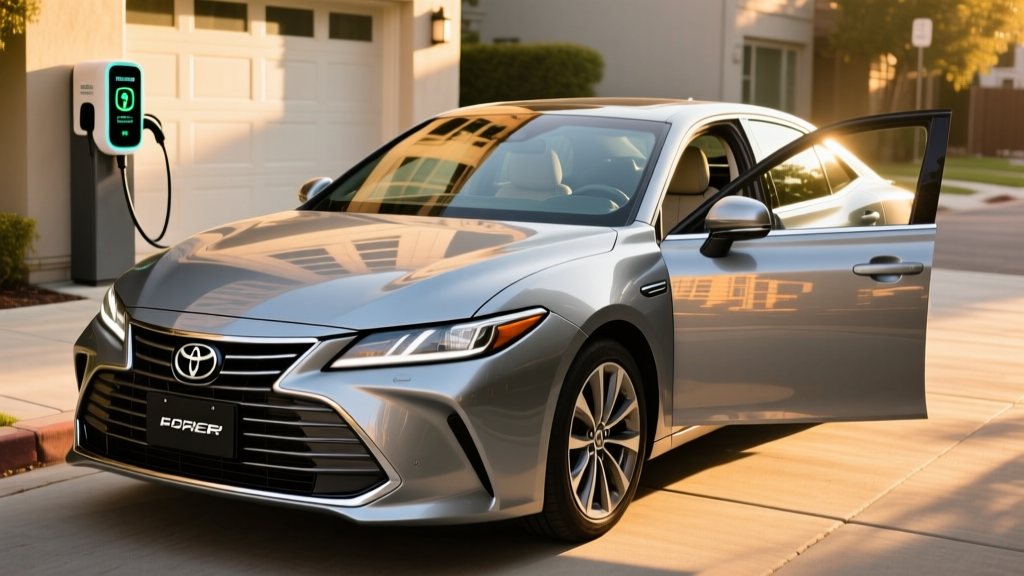
The 2024 Toyota Crown Hybrid occupies a specific niche: a lifted, tech-forward sedan that delivers genuine hybrid fuel economy without requiring a charger, a lifestyle change, or a garage outlet. Toyota offers the Crown with two distinct hybrid powertrains — a standard Hybrid system focused on efficiency and a Hybrid MAX system tuned for performance. Neither is a plug-in hybrid (PHEV); both are self-charging conventional hybrids (HEVs) that recapture energy through regenerative braking and the gasoline engine.
For buyers who want electrified efficiency but lack reliable home charging access, the Crown Hybrid makes a compelling case. The base powertrain returns an EPA-estimated 41 MPG combined, while the Hybrid MAX sacrifices some efficiency for a 5.1-second 0–60 mph time. Below, we break down every number that matters — from real-world fuel economy to battery warranty coverage — so you can decide whether the Crown fits your next purchase.
| Specification | Standard Hybrid (XLE/Limited) | Hybrid MAX (Platinum/Nightshade) |
|---|---|---|
| Combined Horsepower | 236 HP | 340 HP |
| Engine | 2.5L 4-cyl + 2 electric motors | 2.4L turbo 4-cyl + electric motor |
| EPA City / Highway / Combined | 42 / 41 / 41 MPG | 29 / 32 / 30 MPG |
| Drivetrain | AWD (eAWD rear motor) | AWD (mechanical) |
| 0–60 mph | ~7.6 sec | ~5.1 sec |
| Transmission | eCVT | 6-speed automatic |
| Fuel Tank | 14.5 gal | 14.5 gal |
| Approx. Total Range | ~595 mi | ~435 mi |
| Base MSRP | $41,445 (XLE) | $46,995 (Nightshade) |
| Battery Warranty | 10 yr / 150,000 mi | 10 yr / 150,000 mi |
HEV vs. PHEV: The Crown Is a Conventional Hybrid — Here's What That Means
A common source of confusion in the hybrid market is the distinction between a conventional hybrid (HEV) and a plug-in hybrid (PHEV). The 2024 Toyota Crown is exclusively an HEV. You never plug it in. The small traction battery charges through regenerative braking and the gasoline engine. There is no electric-only driving mode of meaningful distance, no charge port, and no dependency on charging infrastructure.
| Feature | HEV (Crown Hybrid) | PHEV (e.g., RAV4 Prime) | BEV (e.g., Tesla Model 3) |
|---|---|---|---|
| Plug-in Required? | No | Yes (for EV range) | Yes |
| Electric-Only Range | None (low-speed assist only) | 25–42 mi typical | 250–360+ mi |
| Fuel / Energy | Gasoline only | Gasoline + electricity | Electricity only |
| Home Charger Needed? | No | Recommended (Level 2) | Essential |
| Federal Tax Credit (§30D) | Not eligible | Up to $7,500 (if eligible) | Up to $7,500 (if eligible) |
| Best For | No garage/outlet, apartment dwellers | Home charging + short commutes | Home charging, low-cost miles |
If you have access to a garage or dedicated outlet and a commute under 35 miles, a PHEV like the RAV4 Prime could eliminate most gasoline use on weekdays while preserving road-trip flexibility. If you have reliable Level 2 home charging and want to eliminate tailpipe emissions entirely, a BEV makes financial sense over a 5-year ownership horizon. But if you park on the street, live in an apartment, or simply don't want to think about charging, the Crown's HEV system delivers meaningful fuel savings with zero behavioral change.
Fuel Economy: EPA Numbers and Real-World MPG
The standard 2024 Toyota Crown Hybrid (XLE and Limited trims) carries an EPA rating of 42 city / 41 highway / 41 combined MPG. That is an unusually flat city/highway split for a hybrid — most HEVs favor city driving where regenerative braking and low-speed electric assist shine. The Crown's eAWD system, which uses a rear-mounted electric motor for all-wheel drive, imposes a small highway efficiency penalty compared to FWD-only hybrids like the Camry Hybrid (which achieves 52 MPG combined in its LE trim).
| Trim / Powertrain | City MPG | Highway MPG | Combined MPG | Est. Annual Fuel Cost* |
|---|---|---|---|---|
| XLE (Standard Hybrid) | 42 | 41 | 41 | ~$1,550 |
| Limited (Standard Hybrid) | 42 | 41 | 41 | ~$1,550 |
| Nightshade (Hybrid MAX) | 29 | 32 | 30 | ~$2,100 |
| Platinum (Hybrid MAX) | 29 | 32 | 30 | ~$2,100 |
*Based on 15,000 miles/year, 55% city driving, and $3.50/gallon regular unleaded per fueleconomy.gov estimates. Actual costs vary by region and driving habits.
Real-World MPG: What Owners Actually See
Toyota's hybrid systems tend to perform close to — and sometimes above — EPA estimates in mixed real-world driving, particularly in city and suburban conditions where regenerative braking recaptures the most energy. For the standard Crown Hybrid, owners and independent testers have reported 39–44 MPG in mixed driving. Highway-only trips at 75+ mph will pull the figure toward the lower end of that range, around 37–39 MPG, as aerodynamic drag dominates and the electric motor contributes less.
The Hybrid MAX powertrain is a different story. Its 2.4L turbocharged engine and performance-oriented tuning prioritize acceleration over efficiency. Expect 27–31 MPG in real-world mixed driving — respectable for a 340-HP AWD sedan, but not a fuel-cost standout. If your priority is saving money at the pump, the standard Hybrid is the clear choice, delivering roughly 595 miles of total range per tank versus 435 miles for the MAX.
Powertrain Deep Dive: Two Hybrid Systems, Two Very Different Characters
Standard Hybrid (XLE, Limited): 236 HP
The volume powertrain pairs a 2.5-liter naturally aspirated four-cylinder engine with two motor-generators through Toyota's eCVT (planetary gearset, not a belt-driven CVT). Combined output is 236 horsepower. A third, smaller electric motor on the rear axle provides electronic all-wheel drive (eAWD) — there is no mechanical driveshaft connecting front and rear. This system can send up to roughly 50% of available torque rearward when traction demands it, but under normal cruising conditions, the Crown operates as a front-wheel-drive car for efficiency.
The result is smooth, linear acceleration and seamless transitions between electric-only, engine-only, and combined modes. The 0–60 mph time of approximately 7.6 seconds is adequate for merging and passing, though not sporty. The eCVT keeps the engine in its most efficient RPM range, which is the core of how Toyota achieves 41 MPG in a 4,100-pound vehicle.
Hybrid MAX (Nightshade, Platinum): 340 HP
The Hybrid MAX swaps the naturally aspirated engine for a 2.4-liter turbocharged four-cylinder and replaces the eCVT with a conventional 6-speed automatic transmission. Combined output jumps to 340 horsepower and 400 lb-ft of torque. All-wheel drive is mechanical via a traditional driveshaft, not electric. The 0–60 mph time drops to approximately 5.1 seconds — genuinely quick for a large sedan.
The trade-off is fuel economy (30 MPG combined vs. 41) and refinement. The turbo four can sound coarse under hard acceleration, and the 6-speed lacks the seamless efficiency optimization of the eCVT. The Hybrid MAX is for buyers who want hybrid-badge credibility and AWD traction but prioritize performance over cost-per-mile savings.
Pricing, Trims, and Tax Credit Eligibility
The 2024 Toyota Crown Hybrid lineup starts at $41,445 for the XLE (standard Hybrid) and climbs to $53,495 for the Platinum (Hybrid MAX). Here is the trim-by-trim breakdown:
- XLE — $41,445 (Standard Hybrid, 236 HP, 41 MPG)
- Limited — $46,845 (Standard Hybrid, 236 HP, 41 MPG, upgraded interior/tech)
- Nightshade — $46,995 (Hybrid MAX, 340 HP, 30 MPG, black exterior accents)
- Platinum — $53,495 (Hybrid MAX, 340 HP, 30 MPG, top-tier features)
Federal Tax Credit: Does the Crown Hybrid Qualify?
No. Under IRS §30D rules, the federal Clean Vehicle Credit (up to $7,500) applies only to plug-in electric vehicles — battery-electric vehicles (BEVs) and plug-in hybrids (PHEVs) with a battery capacity of at least 7 kWh. The Toyota Crown Hybrid is a conventional HEV with a small, self-charging battery (approximately 1.6 kWh equivalent, not externally chargeable). It does not qualify for the §30D federal tax credit, the point-of-sale transfer, or any current federal EV incentive.
Some states offer separate incentives for hybrids, but these are uncommon and vary by jurisdiction. Check your state's energy or environmental agency for current programs. A tax professional can confirm whether any local credits apply to your situation. For full federal credit rules, see IRS.gov Clean Vehicle Tax Credits.
Battery Warranty, Lifespan, and Replacement Cost
Hybrid battery longevity is consistently the top concern among first-time hybrid buyers. Toyota addresses this with one of the strongest hybrid battery warranties in the industry:
Toyota Hybrid Battery Warranty: 10 years or 150,000 miles (whichever comes first), applicable to all 2024 Crown Hybrid trims. This covers the hybrid traction battery against defects and excessive capacity loss. The warranty is transferable to subsequent owners.
In practice, Toyota's nickel-metal hydride (NiMH) and lithium-ion hybrid batteries have demonstrated strong longevity. Data from high-mileage Prius and Camry Hybrid fleets shows that Toyota hybrid batteries frequently last 150,000–200,000+ miles before significant degradation, and many exceed the vehicle's useful life without replacement. The Crown's hybrid battery is smaller and less stressed than a PHEV or BEV battery because it operates within a narrow state-of-charge window (roughly 40–80%), which minimizes degradation.
If Replacement Is Needed
Should the hybrid battery require replacement outside warranty coverage, expect a cost of approximately $2,000–$4,000 for a refurbished or new Toyota hybrid battery pack, plus labor. Independent hybrid specialists often offer refurbished units at the lower end of that range. This is significantly less than a BEV battery replacement, which can exceed $10,000–$20,000.
Reliability Track Record
Toyota's hybrid powertrains are among the most proven in the automotive industry, with over 25 years of real-world deployment since the original Prius. The eCVT design has no belts, no clutch packs, and no traditional friction components to wear out — it is a planetary gearset that is mechanically simple and durable. The Crown's standard hybrid system uses the fifth generation of Toyota's Hybrid System (THS), which has been well-received in the RAV4 Hybrid and Camry Hybrid. The Hybrid MAX is newer and more complex (turbo engine + conventional automatic), so long-term reliability data is thinner, but Toyota's overall powertrain warranty covers 5 years / 60,000 miles for the drivetrain.
Who Should Buy the 2024 Toyota Crown Hybrid?
Pros
- 41 MPG combined (standard Hybrid) with no plug-in required
- Standard AWD across all trims
- 10-year / 150,000-mile hybrid battery warranty
- Elevated ride height for easier entry/exit than a traditional sedan
- Hybrid MAX offers genuine performance (340 HP, 5.1s 0–60)
- Toyota Safety Sense 3.0 standard (adaptive cruise, lane-keeping, pre-collision)
- ~595 miles of total range per tank (standard Hybrid)
Cons
- No federal tax credit eligibility (HEV, not PHEV/BEV)
- Hybrid MAX drops to 30 MPG — modest for a hybrid badge
- Rear headroom is tight due to the sloping roofline (38.0 inches)
- Cargo space is 15.2 cu ft — below midsize sedan rivals
- No spare tire (tire repair kit only)
- Base price ($41,445) is steep for a Toyota-badged sedan
Decision Framework
Choose the Crown Hybrid (Standard) if: You want 40+ MPG, AWD, and Toyota reliability without installing a home charger. You drive 12,000–15,000 miles per year in mixed city/highway conditions and want to minimize fuel costs without behavioral change.
Choose the Crown Hybrid MAX if: You want the elevated seating position and tech of the Crown but prioritize acceleration and passing power over fuel savings. You're cross-shopping the BMW 5 Series or Genesis G80 and want something more efficient than a pure gas car.
Look at a PHEV instead if: You have home charging access and a commute under 35 miles. A RAV4 Prime (42 miles electric-only) or Prius Prime (44 miles) could eliminate most weekday gasoline use while still offering road-trip flexibility.
Look at a BEV instead if: You have reliable Level 2 home charging, want the lowest cost per mile, and are eligible for the $7,500 federal credit. A Tesla Model 3 or Hyundai Ioniq 6 will deliver dramatically lower fueling costs over 5 years.
Frequently Asked Questions
How many MPG does the 2024 Toyota Crown Hybrid get?
The standard Crown Hybrid (XLE and Limited trims) achieves an EPA-estimated 42 city / 41 highway / 41 combined MPG. The Hybrid MAX (Nightshade and Platinum trims) is rated at 29 city / 32 highway / 30 combined MPG. In real-world mixed driving, owners report 39–44 MPG for the standard Hybrid and 27–31 MPG for the MAX.
Does the Toyota Crown Hybrid need to be plugged in?
No. The Crown Hybrid is a conventional hybrid (HEV), not a plug-in hybrid (PHEV). It charges its battery through regenerative braking and the gasoline engine. There is no charge port and no electric-only driving range of any meaningful distance.
Is the Toyota Crown available as a plug-in hybrid?
No. Toyota does not offer a Crown PHEV in the United States. If you want a Toyota plug-in hybrid sedan, the closest option is the Prius Prime (44 miles electric-only range, 52 MPG combined once the battery is depleted). For a Toyota PHEV with AWD and more space, the RAV4 Prime offers 42 miles of electric-only range.
How long will the Crown Hybrid battery last?
Toyota warranties the Crown's hybrid battery for 10 years or 150,000 miles. Based on Toyota's long track record with hybrid batteries in the Prius, Camry Hybrid, and RAV4 Hybrid, most hybrid batteries last 150,000–200,000+ miles before needing replacement. The battery operates in a narrow charge window to minimize degradation.
What does a Toyota Crown Hybrid battery replacement cost?
Out-of-warranty replacement typically costs $2,000–$4,000 for the battery pack plus labor, depending on whether you choose a new OEM unit or a refurbished pack from an independent hybrid specialist. This is significantly less than a full EV battery replacement.
Does the 2024 Toyota Crown Hybrid qualify for a tax credit?
Not for the federal §30D Clean Vehicle Credit, which applies only to plug-in vehicles (BEVs and PHEVs). The Crown Hybrid is a conventional HEV and is not eligible. Some states may offer small incentives for hybrids — check your state energy office. Consult a tax professional for your specific situation.
Is the Crown Hybrid good for highway driving?
Yes, though its advantage over non-hybrid cars narrows at sustained highway speeds. The standard Hybrid's 41 MPG highway rating is strong, but regenerative braking — where hybrids recapture the most energy — is minimal at constant speed. Expect 37–41 MPG on the highway depending on speed, terrain, and temperature. Toyota Safety Sense 3.0 with full-speed adaptive cruise control and lane-centering makes it a comfortable highway cruiser.
How does the Crown Hybrid compare to the Camry Hybrid?
The Camry Hybrid is more efficient (up to 52 MPG combined in the LE FWD trim) and less expensive (starting around $29,000), but it is a traditional low-slung sedan. The Crown offers an elevated ride height (roughly 2 inches higher seating), standard AWD, a more premium interior, and available Hybrid MAX performance. You pay roughly $12,000 more for the Crown and sacrifice ~11 MPG for the higher seating position and standard AWD.